AI-Powered Supply Chains: Transforming Retail for 15% Efficiency Boost by 2025
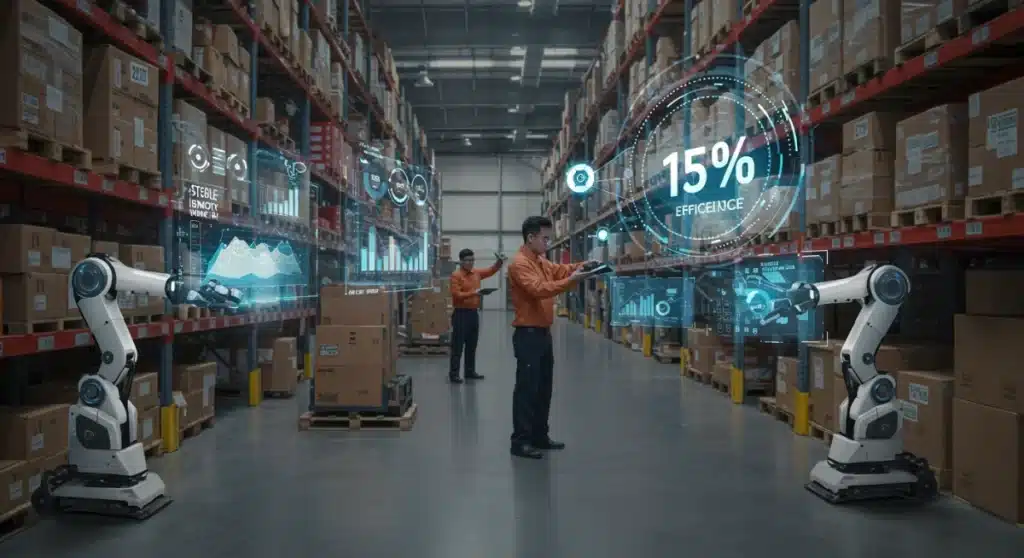
AI-powered supply chains are fundamentally reshaping traditional retail by 2025, promising a significant 15% efficiency boost through advanced automation, predictive analytics, and optimized logistics, transforming how businesses operate and deliver value.
The retail landscape is on the cusp of an unprecedented transformation, with artificial intelligence emerging as the primary catalyst. By 2025, the integration of AI-powered supply chains is projected to deliver a remarkable 15% efficiency boost, fundamentally disrupting traditional retail models. This isn’t merely an incremental change; it’s a paradigm shift that promises to redefine everything from inventory management to customer experience.
The foundational shift: AI in demand forecasting and inventory management
The bedrock of any efficient retail operation lies in its ability to accurately predict demand and manage inventory. Historically, these tasks have been fraught with human error and reliance on historical data, often leading to overstocking or stockouts. AI is now providing a sophisticated solution, leveraging vast datasets and complex algorithms to forecast with unparalleled precision.
This section explores how AI’s analytical prowess is revolutionizing these critical areas, moving beyond simple statistical models to incorporate real-time market trends, social media sentiment, and even weather patterns. The result is a more responsive and resilient supply chain that can proactively adapt to changing consumer behaviors and external disruptions.
Predictive analytics: Beyond historical data
Traditional demand forecasting often relied on historical sales data, which, while useful, struggled to account for sudden shifts or emerging trends. AI, however, can process and interpret a multitude of dynamic variables, offering a far more nuanced and accurate picture of future demand.
- Real-time market signals: AI continuously monitors online searches, social media trends, and news events to detect nascent demand patterns.
- External factor integration: Algorithms incorporate macroeconomic indicators, regional events, and even local weather forecasts to refine predictions.
- Seasonal and cyclical adjustments: AI dynamically adapts to seasonal fluctuations and long-term cycles, minimizing the impact of predictable variations.
Optimized inventory: The end of guesswork
With precise demand forecasts, retailers can optimize inventory levels like never before, striking a delicate balance between meeting customer expectations and minimizing carrying costs. This optimization extends across the entire inventory lifecycle, from raw materials to finished goods.
AI-driven systems can automatically trigger reorders, recommend optimal stock levels for individual SKUs, and even suggest product transfers between stores based on localized demand. This proactive approach significantly reduces waste and improves cash flow, directly contributing to the projected 15% efficiency boost.
In essence, AI in demand forecasting and inventory management transforms a reactive process into a highly proactive and adaptive one. Retailers gain the ability to anticipate market shifts rather than merely responding to them, creating a significant competitive advantage and laying the groundwork for a more agile and profitable enterprise.
Automating logistics: Speed, precision, and cost reduction
Beyond the warehouse, AI is orchestrating a revolution in logistics, making the movement of goods faster, more precise, and considerably less expensive. The traditional complexities of routing, load optimization, and last-mile delivery are being streamlined by intelligent systems that can make real-time decisions, vastly improving operational efficiency.
This section delves into how AI-powered automation is transforming the physical movement of products, from initial supplier pickup to the final customer delivery. The impact on speed and cost reduction is profound, directly contributing to the overall 15% efficiency gain anticipated across the retail sector.
Intelligent routing and fleet management
AI algorithms are capable of analyzing countless variables—traffic conditions, delivery schedules, vehicle capacity, and even fuel prices—to determine the most efficient routes. This optimization goes beyond simple GPS navigation.
- Dynamic route optimization: Routes are continuously adjusted in real-time to avoid delays, respond to unexpected events, and minimize transit times.
- Load consolidation: AI identifies opportunities to combine shipments, maximizing vehicle utilization and reducing the number of trips required.
- Predictive maintenance: AI monitors vehicle performance to predict potential breakdowns, allowing for proactive maintenance and minimizing costly downtime.
Warehouse automation: The rise of smart facilities
Modern warehouses are no longer just storage facilities; they are highly automated hubs powered by AI. Robotics, automated guided vehicles (AGVs), and intelligent sorting systems work in concert to manage goods with minimal human intervention.
These smart facilities can process orders faster, reduce picking errors, and optimize storage layouts based on demand patterns. The seamless integration of AI ensures that products move efficiently through the warehouse, reducing labor costs and accelerating fulfillment times.
By automating these crucial logistical processes, AI not only accelerates delivery but also significantly reduces the operational overhead associated with transportation and warehousing. This tangible reduction in costs and increase in speed is a cornerstone of the projected efficiency improvements, enabling retailers to offer faster service at competitive prices.
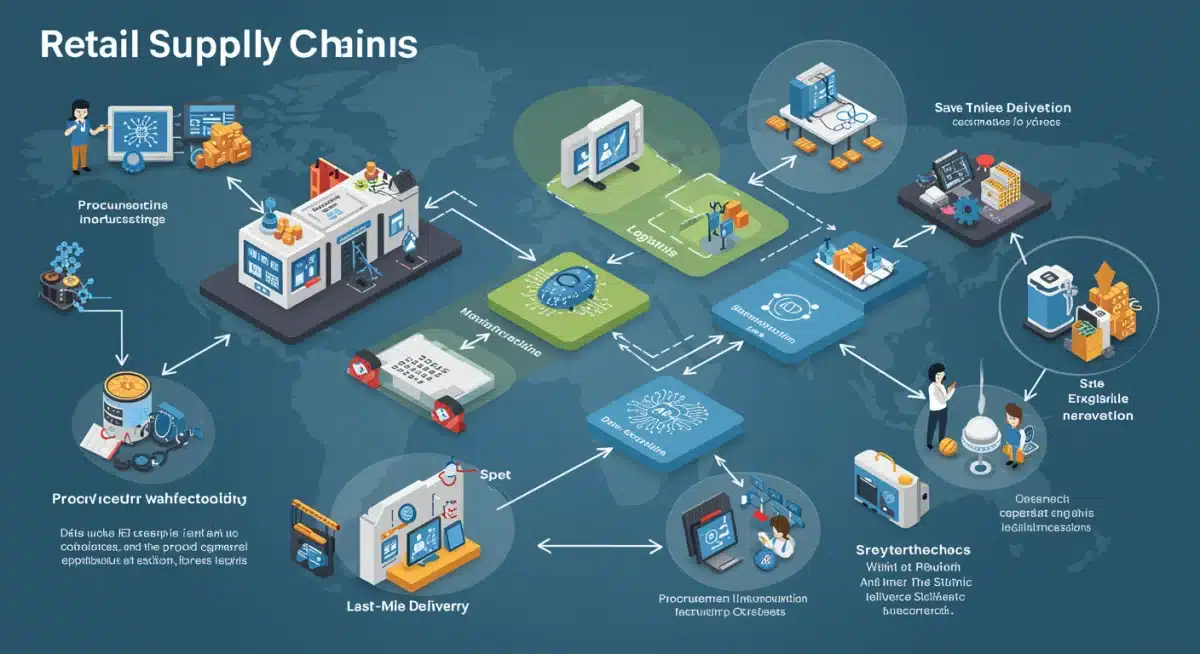
Enhancing resilience: Mitigating risks with AI
The global supply chain has proven vulnerable to various disruptions, from natural disasters to geopolitical events. AI is emerging as a powerful tool for enhancing resilience, enabling retailers to anticipate, adapt to, and mitigate risks more effectively than ever before. This proactive risk management is a critical component of achieving and sustaining the promised 15% efficiency boost.
This section explores how AI systems are providing unprecedented visibility and analytical capabilities to identify potential vulnerabilities, model disruption scenarios, and recommend adaptive strategies, transforming supply chains from fragile to robust.
Proactive risk identification
AI can scour vast amounts of data—news feeds, weather reports, geopolitical analyses, supplier performance metrics—to identify emerging risks before they escalate. This early warning system allows businesses to take preventative measures.
- Supplier risk assessment: AI continuously evaluates supplier stability, financial health, and geopolitical exposure to identify potential points of failure.
- Geographic vulnerability mapping: Systems can map supply chain routes against potential hazard zones, such as areas prone to extreme weather or political instability.
- Demand shift detection: AI can flag sudden changes in consumer preferences or market conditions that could impact product flow and require rapid adjustments.
Adaptive response strategies
Once a risk is identified, AI doesn’t just stop at alerting; it can also propose and evaluate various response strategies. This capability is crucial for minimizing the impact of disruptions and maintaining operational continuity.
For example, if a key shipping route is compromised, AI can instantly calculate alternative routes, assess their cost and time implications, and even suggest alternative suppliers. This agility ensures that supply chains can pivot quickly, maintaining product availability and customer satisfaction even in challenging circumstances.
By integrating AI into risk management, retailers can move away from reactive crisis management to a proactive approach that builds inherent resilience into their supply chains. This not only protects against financial losses but also safeguards brand reputation and customer trust, reinforcing the long-term benefits of AI adoption.
The impact on traditional retail models and labor
The widespread adoption of AI-powered supply chains will inevitably reshape traditional retail models and have significant implications for the workforce. While the efficiency gains are undeniable, understanding these impacts is crucial for a smooth transition. This section examines how existing retail structures will need to evolve and the changing nature of jobs within the sector, ensuring a balanced perspective on disruption.
The shift isn’t about replacing humans entirely but rather augmenting human capabilities and redefining roles to focus on higher-value tasks, fostering innovation and strategic decision-making.
Evolution of retail operations
Traditional brick-and-mortar stores will likely transform into hybrid models, acting as experience centers, fulfillment hubs, or even micro-warehouses. The emphasis will shift from pure transaction to customer engagement and hyper-local service. Online retailers, too, will benefit from faster and more reliable delivery, setting new customer expectations.
- Omnichannel integration: AI will seamlessly connect online and offline operations, providing a unified customer experience regardless of the touchpoint.
- Personalized experiences: With better data and faster fulfillment, retailers can offer highly customized product recommendations and services.
- Reduced physical footprint: Optimized supply chains may lead to less need for extensive back-of-store inventory, freeing up space for customer-facing initiatives.
Reshaping the retail workforce
While some manual tasks may be automated, AI also creates new roles requiring different skill sets, particularly in data analysis, AI system management, and human-robot collaboration. The workforce will need to adapt through upskilling and reskilling initiatives.
For instance, warehouse workers might transition from manual picking to overseeing robotic fleets, and logistics managers will focus more on strategic network optimization rather than day-to-day routing. This evolution necessitates investment in training and education to prepare employees for the jobs of the future.
Ultimately, the impact of AI on retail models and labor is a story of transformation rather than replacement. Retailers who embrace these changes proactively, investing in both technology and their human capital, will be best positioned to thrive in the new AI-driven landscape, harnessing the full potential of a 15% efficiency boost while creating new opportunities.
Implementing AI: Challenges and strategic considerations
While the benefits of AI-powered supply chains are compelling, their implementation is not without challenges. Successfully integrating AI requires careful planning, significant investment, and a strategic approach to overcome technical, ethical, and organizational hurdles. Understanding these considerations is paramount for retailers aiming to achieve the promised 15% efficiency boost by 2025.
This section outlines the key challenges businesses face and the strategic considerations necessary to navigate the complex landscape of AI adoption, ensuring a smooth and effective transition.
Data infrastructure and quality
AI systems are only as good as the data they consume. Many traditional retail operations struggle with siloed, inconsistent, or poor-quality data, which can severely hinder AI’s effectiveness. Establishing a robust data infrastructure is a foundational step.
- Data integration: Consolidating data from disparate systems (POS, ERP, WMS) into a unified platform is critical.
- Data cleansing: Ensuring data accuracy, completeness, and consistency is essential for reliable AI insights.
- Data privacy and security: Implementing strong governance frameworks to protect sensitive data is non-negotiable.
Talent gap and organizational change
The scarcity of AI talent and the inherent resistance to change within organizations pose significant barriers. Retailers need to cultivate a culture that embraces innovation and invests in upskilling their workforce.
This involves not only hiring AI specialists but also training existing employees to work alongside AI systems and interpret their outputs. Change management strategies are crucial to ensure buy-in from all levels of the organization, fostering an environment where AI is seen as an enabler rather than a threat.
Successfully navigating the implementation of AI requires more than just technological prowess; it demands a holistic strategy that addresses data foundational issues, cultivates the right talent, and manages organizational change effectively. By carefully considering these challenges, retailers can unlock the full potential of AI, driving transformative efficiency gains and securing their competitive edge in the evolving market.
Future outlook: Beyond 2025 and sustained innovation
The projected 15% efficiency boost by 2025 is just the beginning of AI’s transformative journey in retail supply chains. Looking beyond this immediate horizon, the trajectory of innovation suggests even more profound changes, with AI becoming an even more pervasive and intelligent force. This section explores the long-term vision, anticipating how AI will continue to evolve and drive sustained improvements, pushing the boundaries of what’s possible in retail logistics and customer experience.
The future entails a continuous cycle of learning, adaptation, and integration, where AI systems become increasingly sophisticated and interconnected, paving the way for truly autonomous and hyper-efficient supply networks.
Hyper-personalization and autonomous operations
As AI matures, its ability to understand and predict individual consumer preferences will lead to hyper-personalized retail experiences. Supply chains will become so agile that they can cater to individual needs with unprecedented speed and customization. This includes everything from personalized product recommendations to bespoke delivery options.
Furthermore, the vision of fully autonomous supply chains, where AI systems manage most processes from procurement to last-mile delivery with minimal human intervention, is becoming increasingly plausible. Drones, autonomous vehicles, and self-optimizing warehouses will work in concert, creating a seamless and self-regulating ecosystem.
Ethical AI and sustainability
The future of AI in retail supply chains will also heavily emphasize ethical considerations and sustainability. AI will play a crucial role in optimizing resource usage, minimizing waste, and ensuring transparent and ethical sourcing practices. This includes using AI to track carbon footprints, identify sustainable suppliers, and optimize packaging to reduce environmental impact.
The focus will not just be on efficiency and profit but also on creating a more responsible and environmentally conscious supply chain. AI’s analytical capabilities will provide the insights needed to make informed decisions that benefit both businesses and the planet.
Beyond 2025, AI will not only sustain but accelerate the pace of innovation in retail supply chains. The continuous evolution of AI technologies promises a future where retail is not only dramatically more efficient and resilient but also more personalized, ethical, and sustainable. Retailers who invest in continuous AI integration and adaptation will be at the forefront of this enduring transformation.
| Key Aspect | Impact and Benefit |
|---|---|
| Demand Forecasting | AI provides unprecedented accuracy, reducing stockouts and overstocking by integrating diverse real-time data. |
| Logistics Automation | Optimizes routing, enhances warehouse efficiency, and speeds up last-mile delivery, cutting operational costs. |
| Risk Mitigation | AI identifies potential disruptions proactively, enabling adaptive strategies to maintain supply chain resilience. |
| Retail Transformation | Reshapes traditional models, creates new job roles, and drives a shift towards hyper-personalized customer experiences. |
Frequently asked questions about AI in retail supply chains
The primary benefit is a significant increase in operational efficiency, projected to be around 15% by 2025. This is achieved through enhanced demand forecasting, optimized logistics, and proactive risk management, leading to cost savings and improved customer satisfaction.
AI improves demand forecasting by analyzing vast datasets, including real-time market trends, social media sentiment, and external factors like weather. This allows for more accurate predictions, minimizing stockouts and overstocking compared to traditional methods.
While AI will automate some manual tasks, it is more likely to redefine roles and create new opportunities. Human workers will shift towards supervising AI systems, data analysis, and strategic decision-making, requiring upskilling and reskilling initiatives.
Key challenges include ensuring high-quality data infrastructure, integrating disparate data sources, addressing the talent gap in AI expertise, and managing organizational change. Overcoming these requires strategic planning and investment.
AI enhances resilience by providing proactive risk identification through continuous monitoring of global events and supplier performance. It also helps in developing adaptive response strategies to mitigate the impact of disruptions quickly and effectively.
Conclusion
The integration of AI into retail supply chains is not merely an incremental improvement; it represents a fundamental reshaping of the industry. The projected 15% efficiency boost by 2025 underscores AI’s capacity to deliver tangible, transformative benefits, from hyper-accurate demand forecasting and automated logistics to enhanced resilience against disruptions. While challenges in implementation exist, the strategic adoption of AI promises a future where retail operations are not only more efficient and cost-effective but also more adaptable, sustainable, and capable of delivering unparalleled customer experiences. Retailers who embrace this intelligent evolution will undoubtedly lead the market in the years to come.