Future of Payments: 3 New Techs for US Retail Customer Experience
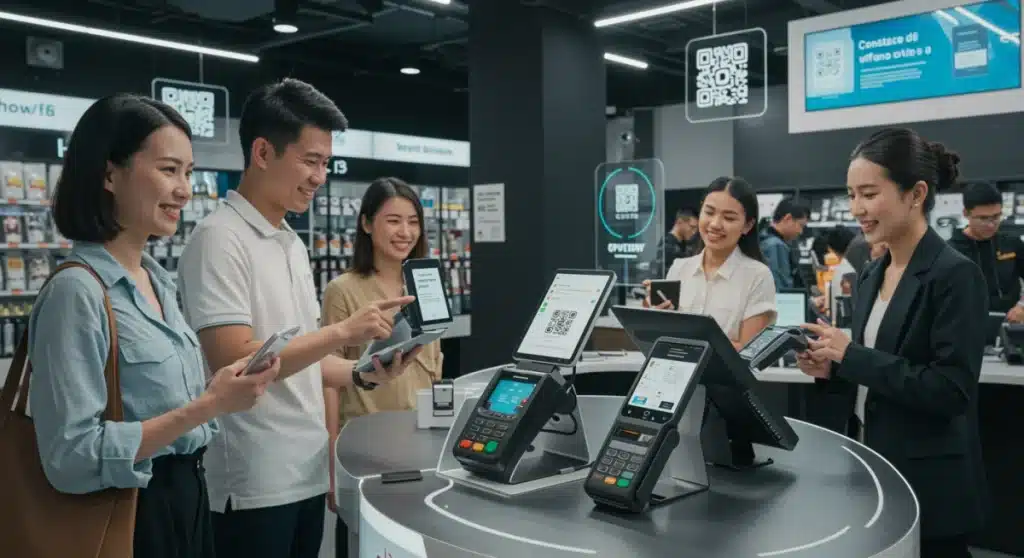
The future of payments in US retail involves adopting three new technologies—contactless payments, biometric authentication, and embedded finance—to enhance customer experience and reduce transaction time by a target of 25%.
The landscape of commerce is in constant flux, and the way consumers pay for goods and services stands at the forefront of this evolution. In the United States, retailers are increasingly recognizing that the checkout process is not merely a transactional step but a critical touchpoint influencing overall customer satisfaction. The imperative to innovate is clear: to enhance the customer experience and significantly reduce transaction times. This article delves into the transformative potential of adopting three new technologies that are poised to redefine the future payment technologies in US retail, aiming for a remarkable 25% reduction in transaction time.
The evolving retail payment landscape
The retail payment landscape in the US has undergone a dramatic transformation over the past decade. From cash and checks, consumers have shifted towards cards, and now, increasingly, digital and mobile payment methods. This evolution is driven by consumer demand for convenience, speed, and security, as well as technological advancements that make new payment options feasible.
Retailers face the dual challenge of meeting these expectations while also streamlining their operations. The traditional checkout line, once a staple of the retail experience, is now often viewed as a bottleneck that can lead to frustration and lost sales. Therefore, understanding the current state and anticipating future trends is crucial for any US retailer looking to thrive in a competitive market.
Consumer shifts and expectations
- Demand for speed: Consumers expect faster transactions, with minimal waiting times.
- Digital preference: A growing number of shoppers prefer using their smartphones or digital wallets.
- Security concerns: Data breaches heighten the need for secure payment solutions.
- Seamless integration: Payments should feel like a natural part of the shopping journey, not an interruption.
As retailers strategize for the coming years, integrating advanced payment solutions becomes non-negotiable. The goal isn’t just to process payments, but to transform the entire checkout interaction into a positive and efficient part of the customer journey, directly impacting loyalty and repeat business. This foundational shift sets the stage for exploring specific technologies.
Contactless payments: speeding up transactions
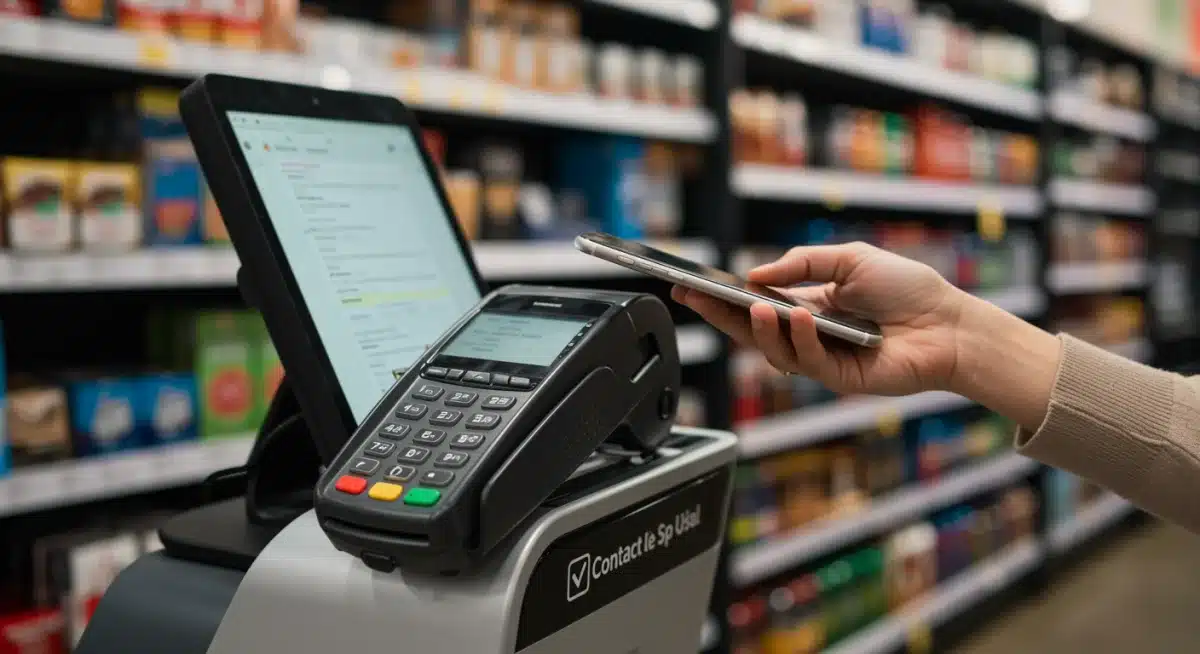
Contactless payment technology, often facilitated by NFC (Near Field Communication), has rapidly gained traction in US retail. This method allows customers to simply tap their card or mobile device on a compatible terminal to complete a purchase, eliminating the need to swipe, insert, or sign. Its benefits extend beyond mere convenience, impacting both the speed of transactions and overall customer satisfaction.
The widespread adoption of contactless payments has been accelerated by global events, which highlighted the hygienic advantages of touch-free interactions. However, its core appeal lies in its efficiency, significantly cutting down the time spent at the point of sale. This makes it a cornerstone technology for retailers aiming to reduce transaction times by 25% or more.
Benefits for retailers and consumers
- Reduced checkout times: Transactions are often completed in seconds, leading to shorter lines.
- Enhanced customer satisfaction: A quicker, smoother checkout experience improves the overall shopping journey.
- Increased security: Tokenization and encryption protect sensitive payment information.
- Improved hygiene: Minimizing physical contact with payment terminals is a plus for many customers.
Implementing contactless payment systems requires compatible POS hardware and software, but the return on investment often comes quickly through increased throughput and happier customers. As more banks issue contactless cards and mobile wallets become ubiquitous, retailers who embrace this technology will find themselves better positioned to meet modern consumer expectations.
Biometric authentication: enhancing security and convenience
Biometric authentication represents a significant leap forward in payment security and convenience. This technology uses unique biological characteristics—such as fingerprints, facial recognition, or iris scans—to verify a customer’s identity for a transaction. Unlike passwords or PINs, biometrics are inherently personal and difficult to replicate, offering a robust layer of security.
In a retail setting, biometric payments can drastically simplify the checkout process. Imagine a customer paying for groceries with just a glance at a terminal, or authorizing a purchase with a fingerprint. This not only speeds up the transaction but also removes the friction associated with remembering credentials or carrying physical payment methods. The potential for reducing transaction time while simultaneously boosting security is immense.
Key advantages of biometric payments
- Unparalleled security: Biometric data is unique to an individual, making fraud significantly harder.
- Streamlined user experience: Eliminates the need for cards, phones, or passwords, simplifying payment.
- Faster transactions: Authentication can occur almost instantaneously, accelerating checkout.
- Reduced chargebacks: Stronger authentication helps minimize fraudulent transactions and associated costs.
While the initial investment in biometric hardware might be higher, the long-term benefits in terms of security, efficiency, and customer satisfaction are compelling. As this technology matures and becomes more accessible, it is poised to become a standard feature in forward-thinking retail environments across the US, truly embodying the future payment technologies.
Embedded finance: seamless shopping experiences
Embedded finance refers to the integration of financial services directly into non-financial platforms or applications. In the context of retail, this means offering payment, credit, or insurance options seamlessly within the shopping journey itself, often without the customer ever leaving the retailer’s ecosystem. Think of ‘buy now, pay later’ options presented at checkout, or financing directly integrated into a product page.
This technology goes beyond just payment processing; it redefines how customers interact with financial aspects of their purchase. By embedding these services, retailers can create a frictionless experience, remove barriers to purchase, and potentially increase conversion rates. The goal is to make financial decisions as intuitive and integrated as browsing products, contributing significantly to a smoother customer journey and reduced perceived transaction time.
Impact on customer journey and retailer benefits
- Increased conversions: Easier access to credit or payment plans can facilitate larger purchases.
- Enhanced loyalty: A seamless, integrated financial experience fosters trust and repeat business.
- New revenue streams: Retailers can earn commissions or interest on embedded financial products.
- Personalized offers: Data from embedded finance can inform tailored promotions and services.
Embedded finance requires strategic partnerships with financial institutions or the development of in-house capabilities. However, the reward is a deeply integrated customer experience that differentiates a retailer from its competitors, driving both satisfaction and sales. This holistic approach to payments and finance is a powerful component of the future payment technologies in US retail.
Implementing new payment technologies in US retail
Adopting new payment technologies is not merely about installing new hardware; it requires a comprehensive strategy that considers integration, security, and customer education. Retailers in the US must carefully plan their rollout to ensure a smooth transition and maximize the benefits of these innovations. The objective remains clear: to enhance customer experience and achieve a 25% reduction in transaction time.
A phased approach often proves most effective, starting with pilot programs in select locations to identify and address any challenges before a wider rollout. Training staff is also paramount, as they are the direct point of contact for customers and need to be proficient in assisting with new payment methods. Furthermore, clear communication with customers about the new options and their benefits can drive adoption.
Strategic considerations for adoption
- System integration: Ensuring new payment systems work seamlessly with existing POS and inventory management.
- Data security and compliance: Adhering to PCI DSS and other relevant data protection regulations.
- Customer education: Informing shoppers about how to use new payment methods and their advantages.
- Scalability: Choosing solutions that can grow with the business and adapt to future demands.
The successful implementation of these technologies can transform the retail environment, making transactions quicker, more secure, and more enjoyable for customers. This strategic adoption is critical for retailers looking to maintain a competitive edge and thrive in the rapidly evolving market.
Measuring impact and future outlook
Once new payment technologies are implemented, it’s crucial for US retailers to rigorously measure their impact. This involves tracking key performance indicators (KPIs) such as average transaction time, customer satisfaction scores, payment processing error rates, and conversion rates. The goal of a 25% reduction in transaction time is ambitious but achievable with the right technologies and strategic execution.
Beyond quantitative metrics, qualitative feedback from both customers and staff is invaluable. Understanding their experiences can help fine-tune processes and uncover unforeseen benefits or challenges. The retail landscape is dynamic, and continuous evaluation ensures that payment strategies remain aligned with evolving consumer preferences and technological advances.
Key metrics and continuous evolution
- Transaction speed: Monitor the average time from initiation to completion of a payment.
- Customer feedback: Use surveys and direct input to gauge satisfaction with new payment methods.
- Security incident rates: Track any breaches or fraud attempts to assess security efficacy.
- Adoption rates: Measure how many customers are using the new payment options.
The future of payments is not a static destination but a continuous journey of innovation. Retailers must remain agile, willing to experiment with emerging technologies, and committed to placing the customer experience at the heart of their payment strategy. By doing so, they can ensure long-term success and a competitive advantage in the US retail market.
| Key Payment Technology | Primary Benefit for Retail |
|---|---|
| Contactless Payments | Significantly reduces checkout time and enhances customer convenience. |
| Biometric Authentication | Boosts security and simplifies transactions, removing physical payment methods. |
| Embedded Finance | Integrates financial services seamlessly, improving conversion and loyalty. |
| AI-Powered Analytics | Optimizes payment flows and personalizes customer offers based on data. |
Frequently asked questions about payment innovation
Adopting new payment technologies offers several benefits, including enhanced customer experience through faster checkouts, increased transaction security, and greater convenience. Retailers also stand to gain from improved operational efficiency, reduced labor costs, and access to valuable data for personalized marketing and sales strategies.
Contactless payments reduce transaction times by eliminating the need for card insertion, swiping, or signature capture. Customers simply tap their card or mobile device, and the transaction is processed almost instantly. This speeds up queues, especially during peak hours, leading to a smoother and quicker checkout experience for everyone.
Yes, biometric authentication offers a high level of security. It uses unique biological characteristics, which are extremely difficult to replicate or steal. Unlike passwords, biometrics cannot be forgotten. This method significantly lowers the risk of fraud and unauthorized access, making transactions more secure than traditional methods.
For the average retail customer, embedded finance means a more seamless and integrated shopping experience. It allows financial services, like ‘buy now, pay later’ options or product financing, to be offered directly within the retailer’s platform at the point of decision, simplifying access to financial tools without leaving the transaction flow.
Retailers might face challenges such as the initial cost of upgrading infrastructure, ensuring seamless integration with existing systems, and staff training. Additionally, customer adoption can be slow if not properly communicated, and maintaining compliance with evolving data security regulations requires continuous effort and vigilance.
Conclusion
The journey towards a more efficient and customer-centric retail experience in the US is intrinsically linked to the adoption of sophisticated payment technologies. Contactless payments, biometric authentication, and embedded finance are not just buzzwords; they are tangible solutions that offer significant improvements in transaction speed, security, and overall customer satisfaction. By strategically integrating these innovations, US retailers can confidently aim for and achieve a 25% reduction in transaction times, setting a new benchmark for excellence in the retail sector. The future of payments is here, and those who embrace it will undoubtedly lead the market.