Real-time Data’s Impact on US Supply Chain: 10% Cost Reduction

Real-time data analytics is fundamentally reshaping US supply chains, empowering businesses to achieve significant cost reductions and operational efficiencies by providing immediate, actionable insights into complex logistics and inventory management.
The landscape of modern commerce demands agility and precision, making the ability to leverage real-time data supply chain insights not just an advantage, but a necessity for businesses operating in the United States. This immediate access to information is proving to be a game-changer, driving unprecedented levels of optimization and offering a clear path to substantial cost reductions.
Understanding the Real-time Data Imperative in Supply Chains
The traditional supply chain model, often reliant on historical data and periodic updates, struggles to keep pace with today’s dynamic market conditions. Real-time data, however, offers a continuous, up-to-the-minute snapshot of operations, from raw material sourcing to final product delivery. This constant flow of information allows businesses to react swiftly to disruptions, anticipate demand shifts, and optimize resource allocation.
In the US market, where competition is fierce and consumer expectations are high, the ability to make informed decisions rapidly can be the difference between thriving and merely surviving. Real-time data provides the clarity needed to identify bottlenecks, mitigate risks, and seize opportunities that might otherwise be missed. It’s about transforming raw information into strategic intelligence that fuels efficiency and profitability.
The Shift from Reactive to Proactive Strategies
Historically, supply chain management was largely reactive, addressing issues after they occurred. Real-time data fundamentally alters this paradigm, enabling a proactive approach where potential problems are identified and resolved before they escalate. This shift saves time, reduces waste, and prevents costly operational interruptions.
- Predictive Analytics: Leveraging real-time data to forecast future trends and potential disruptions.
- Dynamic Routing: Adjusting transportation routes in real-time based on traffic, weather, or delivery changes.
- Automated Alerts: Setting up systems that notify relevant personnel immediately when critical thresholds are met or exceeded.
By empowering timely interventions, real-time data minimizes the ripple effect of minor issues, preventing them from becoming major crises. This proactive stance is a cornerstone of achieving the ambitious goal of a 10% cost reduction within six months, as it directly impacts operational efficiency and reduces unforeseen expenses.
Ultimately, understanding the imperative of real-time data means recognizing its power to transform every facet of the supply chain, moving from a system of delayed responses to one of immediate, intelligent action. This foundational understanding is crucial for any US business aiming for sustained growth and competitive advantage.
Key Technologies Powering Real-time Supply Chain Visibility
Achieving true real-time visibility in a complex supply chain requires a robust technological infrastructure. Several key innovations are at the forefront, enabling the continuous collection, processing, and analysis of vast amounts of data. These technologies work in concert to provide a comprehensive, up-to-the-minute view of operations.
The integration of these technologies allows for a holistic approach to data management, ensuring that information flows seamlessly across different stages of the supply chain. From sensor data on individual products to sophisticated analytics platforms, each component plays a vital role in building an intelligent and responsive network.
Internet of Things (IoT) and Sensor Technology
IoT devices and sensors are perhaps the most fundamental components of real-time data collection. These small, interconnected devices can be embedded in products, vehicles, and warehouse infrastructure to monitor a wide array of parameters. They provide granular data that was previously unattainable.
- Asset Tracking: GPS and RFID sensors enable precise tracking of goods in transit and within warehouses.
- Environmental Monitoring: Sensors can monitor temperature, humidity, and other conditions crucial for perishable goods.
- Equipment Performance: IoT devices on machinery provide data on operational status, predicting maintenance needs.
The sheer volume of data generated by IoT devices necessitates powerful processing capabilities. Cloud computing platforms are essential for storing and analyzing this data, making it accessible from anywhere and enabling scalable solutions for businesses of all sizes. Edge computing further enhances this by processing data closer to its source, reducing latency and allowing for quicker decision-making in critical scenarios.
Furthermore, Artificial Intelligence (AI) and Machine Learning (ML) algorithms are crucial for making sense of the deluge of real-time data. These advanced analytics tools can identify patterns, predict outcomes, and automate decision-making processes, transforming raw data into actionable insights. Their ability to learn and adapt makes them invaluable for optimizing complex supply chain operations.
Strategies for Achieving a 10% Cost Reduction in Six Months
The promise of real-time data extends beyond mere visibility; it offers concrete pathways to significant cost savings. For US businesses, targeting a 10% reduction in supply chain costs within a six-month timeframe is an ambitious yet achievable goal with the right strategies and technological adoption. This requires a focused approach that leverages data-driven insights across various operational areas.
The key lies in identifying specific areas where real-time data can have the most immediate and profound impact. This often involves a thorough audit of current processes, pinpointing inefficiencies, and then deploying targeted data solutions to address them. The iterative nature of data analytics allows for continuous refinement and optimization, ensuring sustained cost-saving benefits.
Optimizing Inventory and Warehousing Costs
One of the largest cost centers in any supply chain is inventory management and warehousing. Real-time data provides the precision needed to optimize these areas, reducing holding costs, minimizing waste, and improving inventory turnover.
- Demand Forecasting Accuracy: Using real-time sales data and external factors to improve prediction of future demand, reducing overstocking and stockouts.
- Warehouse Layout Optimization: Analyzing movement patterns within warehouses to streamline picking, packing, and shipping processes.
- Dynamic Replenishment: Automating inventory reordering based on real-time consumption rates and supplier lead times.
By achieving greater accuracy in demand forecasting, businesses can significantly reduce the capital tied up in excess inventory. Real-time insights into warehouse operations also allow for more efficient use of space and labor, directly impacting operational expenditures. This proactive management of inventory is a major contributor to the targeted 10% cost reduction.
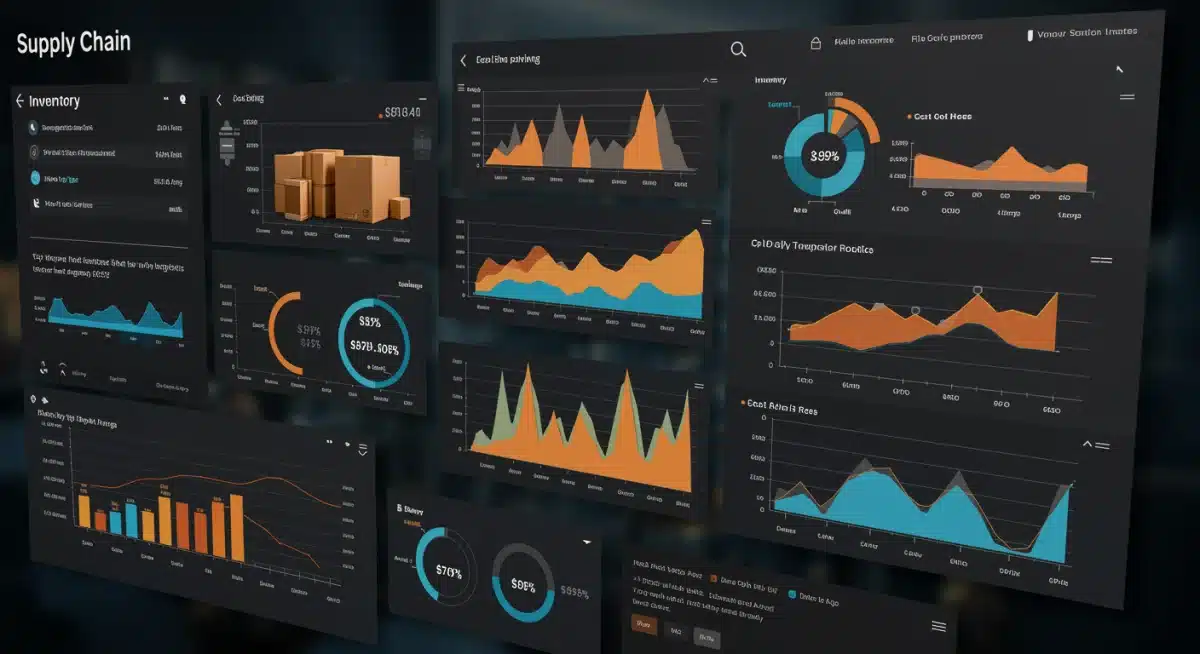
Furthermore, real-time data enables better negotiation with suppliers by providing clear visibility into purchasing volumes and performance. It also facilitates a more strategic approach to transportation logistics. By monitoring routes, fuel consumption, and delivery times in real-time, companies can identify the most cost-effective shipping methods and consolidate loads more efficiently, leading to substantial savings in freight expenses.
Enhancing Operational Efficiency Through Data-Driven Decision Making
Beyond direct cost reduction, real-time data profoundly enhances overall operational efficiency within the supply chain. This improvement stems from the ability to make faster, more informed decisions, leading to smoother processes, fewer errors, and increased productivity across the board. The impact is felt from the factory floor to the customer’s doorstep.
Data-driven decision-making transforms the supply chain from a series of disconnected processes into a cohesive, intelligent network. It empowers managers and employees at all levels to act with confidence, knowing their decisions are backed by the most current and relevant information available. This fosters a culture of continuous improvement and responsiveness.
Streamlining Logistics and Transportation
Logistics and transportation are areas ripe for efficiency gains through real-time data. The ability to monitor vehicles, routes, and traffic conditions in real-time allows for dynamic adjustments that minimize delays and optimize resource utilization.
- Route Optimization: Real-time traffic and weather data enable dynamic re-routing to avoid delays and reduce fuel consumption.
- Fleet Management: Monitoring vehicle performance and driver behavior in real-time to improve safety, efficiency, and maintenance scheduling.
- Last-Mile Delivery: Optimizing delivery schedules and routes for final-mile logistics, a critical and often costly stage.
The immediate feedback provided by real-time tracking systems helps in identifying and resolving issues as they arise, preventing cascading delays that can impact the entire supply chain. This proactive management of logistics not only reduces transportation costs but also significantly improves customer satisfaction through more reliable delivery times.
Moreover, real-time data facilitates better collaboration with logistics partners. By sharing up-to-the-minute information on shipments, companies can coordinate more effectively, reducing wait times at docks and improving the overall flow of goods. This collaborative approach is essential for building a resilient and efficient supply chain network capable of navigating the complexities of the modern market.
Mitigating Risks and Improving Resilience with Real-time Data
Supply chains are inherently vulnerable to a myriad of risks, from natural disasters and geopolitical events to supplier failures and sudden shifts in demand. Real-time data plays a crucial role in enhancing the resilience of these networks, allowing businesses to anticipate, respond to, and recover from disruptions more effectively. This capability is invaluable for maintaining operational continuity and protecting profitability.
The proactive identification of potential risks, combined with the ability to swiftly implement contingency plans, transforms a vulnerable supply chain into a robust and adaptable one. Real-time data provides the early warning signals necessary to navigate uncertainty and minimize the financial and reputational damage caused by unforeseen events.
Early Warning Systems and Predictive Risk Analysis
By continuously monitoring a wide range of internal and external data sources, businesses can develop sophisticated early warning systems. These systems leverage real-time information to detect anomalies and predict potential disruptions before they fully materialize.
- Supplier Performance Monitoring: Tracking supplier reliability, quality, and delivery times in real-time to identify potential weaknesses.
- Geopolitical and Weather Monitoring: Integrating external data feeds to anticipate regional disruptions that could impact logistics or sourcing.
- Demand Volatility Detection: Identifying sudden shifts in consumer demand that may require rapid adjustments to production or inventory.
The ability to perform predictive risk analysis allows companies to pivot strategies, secure alternative suppliers, or reroute shipments proactively. This reduces the reliance on reactive measures, which are often more costly and less effective. Real-time data empowers supply chain managers to be strategic planners rather than crisis managers, ensuring greater stability and predictability in operations.
Furthermore, enhancing resilience also involves improving communication and transparency across the entire supply chain ecosystem. Real-time data platforms facilitate the sharing of critical information among partners, fostering a collaborative environment where risks can be jointly assessed and managed. This collective intelligence strengthens the entire network, making it more robust against a wide spectrum of challenges.
Case Studies: US Companies Leveraging Real-time Data for Success
The theoretical benefits of real-time data in supply chain optimization are compelling, but its practical application in the US market provides even more convincing evidence of its transformative power. Numerous American companies across various sectors have successfully implemented real-time data strategies, achieving significant cost reductions and operational improvements, often exceeding initial expectations.
These success stories highlight diverse approaches and demonstrate that irrespective of industry size or complexity, the strategic adoption of real-time data can yield tangible and measurable results. They serve as powerful examples for other businesses looking to embark on their own data-driven transformation journeys.
Retail Giant’s Inventory Revolution
A major US retail chain, grappling with high inventory holding costs and frequent stockouts, implemented a comprehensive real-time data platform. By integrating point-of-sale data with warehouse inventory, supplier lead times, and even local weather forecasts, they gained unprecedented visibility into demand and supply dynamics. The immediate impact was a noticeable reduction in overstocking of seasonal items and a sharp decrease in lost sales due to out-of-stock products.
- Outcome: Achieved a 12% reduction in inventory carrying costs within eight months.
- Benefit: Improved capital efficiency and enhanced customer satisfaction.
This retailer leveraged AI and machine learning algorithms to process the real-time data, enabling automated reordering and dynamic pricing strategies. The result was not just cost savings but also a significant boost in sales and a more responsive supply chain that could quickly adapt to changing consumer preferences.
Manufacturing Sector’s Predictive Maintenance
A large US-based automotive parts manufacturer faced frequent production line downtimes due to unexpected equipment failures, leading to costly delays and missed deadlines. By installing IoT sensors on their machinery, they began collecting real-time data on performance, temperature, vibration, and other critical metrics. This data was fed into a predictive analytics system.
- Outcome: Reduced unplanned downtime by 20% and maintenance costs by 15% in one year.
- Benefit: Increased production throughput and improved operational reliability.
The predictive models were able to identify subtle anomalies that indicated impending failures, allowing maintenance teams to schedule interventions proactively during planned downtimes. This shift from reactive repairs to predictive maintenance significantly improved efficiency, reduced waste, and contributed directly to their bottom line.
| Key Aspect | Description of Impact |
|---|---|
| Enhanced Visibility | Provides immediate, comprehensive insights into all supply chain operations. |
| Cost Reduction | Optimizes inventory, logistics, and operational expenses, targeting 10% savings. |
| Risk Mitigation | Enables proactive identification and response to potential disruptions. |
| Operational Efficiency | Streamlines processes, reduces errors, and improves decision-making speed. |
Frequently Asked Questions About Real-time Data in Supply Chains
Real-time data refers to information that is collected, processed, and made available instantly or with minimal delay. In supply chains, this means having up-to-the-minute insights into inventory levels, shipment locations, equipment status, and market demand, enabling immediate decision-making and proactive problem-solving to enhance efficiency and reduce costs.
Achieving a 10% cost reduction within six months is possible by optimizing inventory levels to reduce holding costs, streamlining transportation routes to save on fuel and labor, and minimizing waste through improved demand forecasting. Real-time data identifies inefficiencies quickly, allowing for rapid adjustments that contribute to significant savings across various operational areas.
Key technologies include the Internet of Things (IoT) for sensor-based data collection, cloud computing for scalable data storage and processing, and Artificial Intelligence (AI) and Machine Learning (ML) for advanced analytics and predictive capabilities. These tools work synergistically to provide comprehensive real-time visibility and actionable insights.
Challenges often include integrating disparate legacy systems, managing the vast volume of data generated, ensuring data security and privacy, and cultivating a data-driven culture within the organization. Overcoming these requires strategic planning, investment in robust infrastructure, and strong leadership commitment to digital transformation.
Real-time data enhances resilience by providing early warning systems for potential disruptions, enabling predictive risk analysis, and facilitating dynamic adjustments to operations. This allows businesses to quickly identify and respond to issues like supplier failures, weather events, or sudden demand shifts, minimizing impact and ensuring business continuity.
Conclusion
The journey towards an optimized supply chain in the US is increasingly defined by the effective utilization of real-time data. As demonstrated, this powerful tool not only provides unparalleled visibility but also underpins concrete strategies for achieving significant cost reductions, with a 10% target within six months being a realistic and attainable goal. By embracing IoT, AI, and advanced analytics, businesses can transform their operations, moving from reactive responses to proactive, data-driven decision-making. This strategic pivot enhances efficiency, mitigates risks, and ultimately fosters a more resilient and competitive supply chain, ready to meet the demands of a rapidly evolving global market. The future of commerce is undoubtedly real-time, and those who adapt will lead the way.