CLV Prediction: Boost US Customer Retention by 20% in 2025
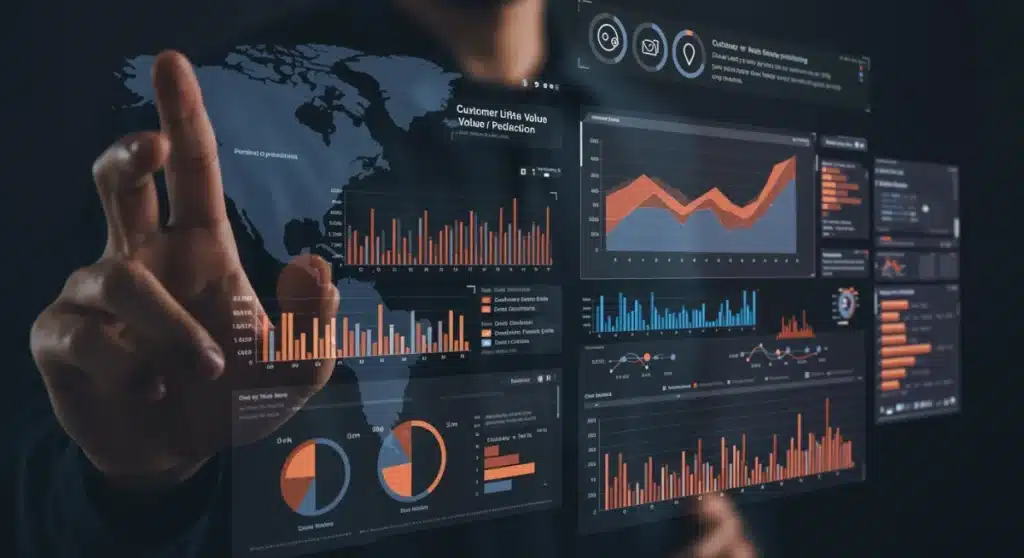
Advanced Customer Lifetime Value (CLV) prediction analytics is pivotal for US businesses aiming to achieve a 20% increase in customer retention by 2025 by identifying high-value customers and tailoring engagement strategies.
In today’s fiercely competitive US market, understanding and predicting customer behavior is no longer a luxury but a necessity. The pursuit of a 20% increase in US customer retention by 2025 hinges significantly on mastering Customer Lifetime Value (CLV) prediction analytics. This advanced approach enables businesses to proactively identify, nurture, and retain their most valuable customers, transforming reactive strategies into proactive, data-driven successes.
Understanding Customer Lifetime Value (CLV)
Customer Lifetime Value (CLV) represents the total revenue a business can reasonably expect from a single customer account throughout their relationship with the company. It’s a critical metric that shifts focus from transactional gains to long-term profitability, offering a holistic view of customer worth. For US businesses, a deep understanding of CLV is the cornerstone of sustainable growth and enhanced customer loyalty.
Calculating CLV is not merely about summing past purchases; it involves a sophisticated analysis of purchasing patterns, engagement levels, and potential future interactions. This forward-looking perspective allows companies to allocate resources more effectively, targeting segments with higher retention potential and maximizing return on investment.
Why CLV is More Than Just a Number
CLV transcends a simple financial figure; it embodies the strategic potential of each customer relationship. By understanding CLV, businesses gain insights into:
- Customer segmentation for targeted marketing.
- Personalized service offerings that resonate with individual needs.
- Optimal resource allocation for retention efforts.
Ultimately, a robust CLV strategy empowers US companies to build stronger, more enduring customer relationships, fostering loyalty that withstands market fluctuations. It’s about recognizing the true value each customer brings over time, not just in a single transaction.
The Imperative of CLV Prediction in 2025
As we approach 2025, the landscape of customer engagement in the US is evolving at an unprecedented pace. Consumers are more informed, demanding, and less loyal than ever before. In this environment, merely knowing a customer’s past CLV is insufficient; predicting their future CLV becomes a strategic imperative. This predictive capability is what will drive a significant increase in customer retention.
Predictive CLV analytics allows businesses to foresee which customers are at risk of churning, which are likely to become high-value patrons, and which require specific interventions to enhance their loyalty. This foresight is crucial for developing proactive retention strategies that are both timely and effective, ensuring that marketing and service efforts are always one step ahead.
Driving Retention with Predictive Insights
By leveraging advanced analytics, US businesses can move beyond guesswork and implement data-driven retention campaigns. Imagine identifying a customer likely to churn within the next three months and offering them a personalized incentive or an enhanced service experience before they even consider leaving. This is the power of predictive CLV.
- Proactive identification of churn risks.
- Personalized engagement based on predicted value.
- Optimization of marketing spend for maximum retention impact.
The ability to predict CLV transforms customer relations from a reactive firefighting exercise into a strategic, long-term growth engine. It’s about building loyalty by demonstrating that a business truly understands and values its customers, anticipating their needs before they even express them.
Advanced Analytics: The Engine of CLV Prediction
The shift from historical CLV to predictive CLV is fueled by advanced analytics. This encompasses a suite of sophisticated techniques, including machine learning, artificial intelligence, and statistical modeling, all working in concert to process vast amounts of customer data and uncover hidden patterns. For US companies aiming for a 20% retention increase, investing in these analytical capabilities is non-negotiable.
These advanced tools can analyze everything from purchase history and browsing behavior to demographic data and social media interactions. By synthesizing these diverse data points, predictive models can generate highly accurate forecasts of individual customer value, providing actionable intelligence that traditional methods simply cannot.
Key Analytical Techniques for CLV
Several advanced analytical methods are instrumental in building robust CLV prediction models:
- Machine Learning Algorithms: Techniques like regression, classification, and deep learning can identify complex relationships between customer attributes and future value.
- Time-Series Analysis: Useful for understanding purchasing cycles and predicting future transaction frequencies.
- Behavioral Segmentation: Grouping customers based on similar behaviors to refine predictions and tailor strategies.
The integration of these techniques allows US businesses to construct a comprehensive and dynamic view of their customer base, enabling more precise predictions and more effective retention strategies. It’s about turning raw data into strategic advantage.
Data Collection and Integration for Accurate CLV
Accurate CLV prediction hinges on comprehensive and high-quality data. For US businesses, this means meticulously collecting and integrating data from every customer touchpoint, both online and offline. Fragmented data leads to incomplete insights, undermining the accuracy and effectiveness of any predictive model.
Data sources can range from CRM systems and sales databases to website analytics, social media, and customer service interactions. The challenge lies not just in collection, but in consolidating this disparate information into a unified customer profile that provides a 360-degree view. This integrated data foundation is essential for feeding the advanced analytical models that drive CLV prediction.
Building a Unified Customer Data Platform
To achieve a truly predictive CLV model, businesses must prioritize the creation of a robust Customer Data Platform (CDP). A CDP aggregates and unifies customer data from all sources, creating a persistent, single customer view that is accessible for analysis.
- Consolidate data from all touchpoints.
- Ensure data quality and consistency.
- Enable real-time data access for dynamic predictions.
Without a strong data infrastructure, even the most sophisticated analytical tools will struggle to deliver meaningful results. US companies must invest in the technology and processes necessary to collect, clean, and integrate their customer data effectively, laying the groundwork for superior CLV prediction.
Implementing CLV Prediction Strategies
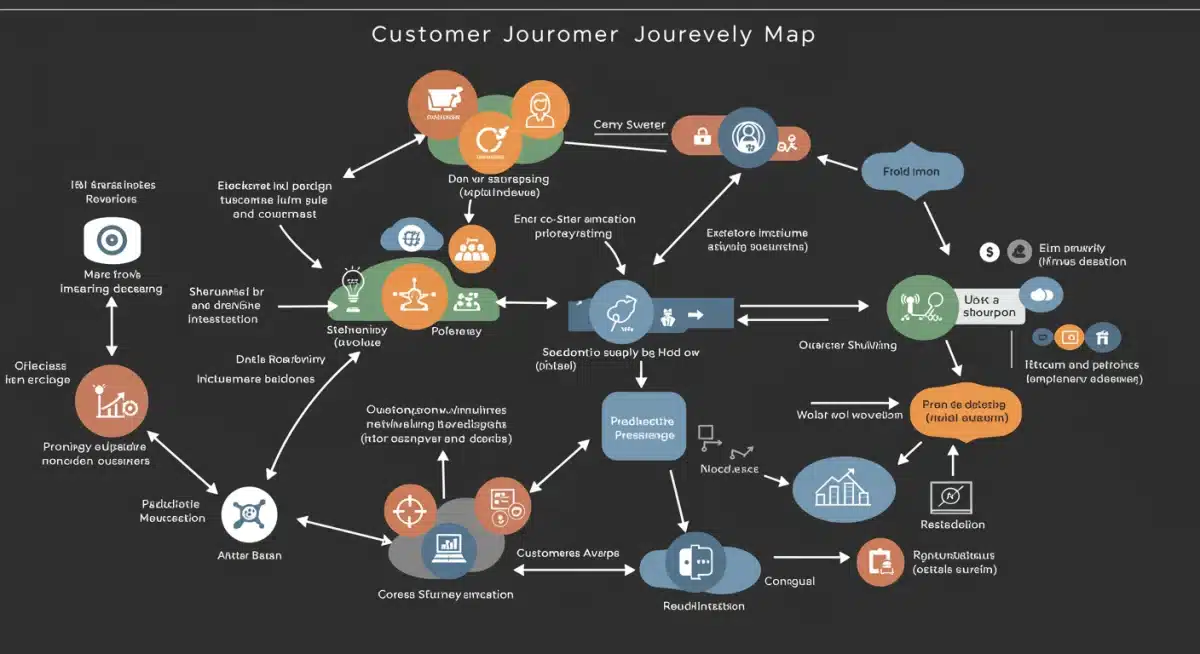
Once the analytical models are in place and the data is integrated, the next crucial step is to translate CLV predictions into actionable strategies. This involves adapting marketing, sales, and customer service efforts based on predicted customer value. The goal is to maximize the retention of high-value customers and strategically engage those with potential for growth, contributing to the targeted 20% increase in US customer retention by 2025.
Implementation requires a cross-functional approach, ensuring that insights from CLV prediction are shared across departments and integrated into daily operations. From personalized email campaigns to tailored product recommendations and proactive customer support, every interaction can be optimized using CLV insights.
Strategic Applications of CLV Insights
CLV predictions can inform a variety of strategic decisions:
- Personalized Marketing: Targeting customers with relevant offers and content based on their predicted value and preferences.
- Customer Service Prioritization: Allocating premium support to high-CLV customers to enhance satisfaction and loyalty.
- Product Development: Identifying features or products that resonate most with valuable customer segments.
Effective implementation of CLV prediction strategies requires continuous monitoring and refinement. Businesses must track the impact of their initiatives, analyze results, and adjust their approaches to ensure they are consistently driving toward their retention goals.
Measuring and Optimizing Retention with CLV
The journey of increasing US customer retention by 20% through CLV prediction is cyclical, not linear. Continuous measurement and optimization are paramount to achieving and sustaining this goal. Businesses must establish clear metrics to track the effectiveness of their CLV-driven initiatives and be prepared to iterate their strategies based on performance data.
Key performance indicators (KPIs) beyond just retention rate should include metrics directly influenced by CLV strategies, such as average order value, purchase frequency, and customer engagement scores. By meticulously tracking these, companies can gain a granular understanding of what works and what needs improvement.
Key Metrics for CLV Optimization
To effectively measure and optimize retention efforts, consider these metrics:
- Churn Rate: The percentage of customers who stop doing business with a company over a given period.
- Repeat Purchase Rate: The percentage of customers who make more than one purchase.
- Customer Engagement Score: A composite score reflecting interaction frequency and depth.
By regularly analyzing these metrics in conjunction with their CLV predictions, US businesses can fine-tune their strategies, ensuring they are always moving towards their 20% retention increase target. This iterative process of measurement, analysis, and adjustment is what ultimately drives long-term success in customer retention.
| Key Aspect | Brief Description |
|---|---|
| CLV Definition | Total revenue a business expects from a customer throughout their relationship. |
| Predictive Analytics | Using machine learning and AI to forecast future customer value and behavior. |
| Data Integration | Consolidating customer data from all touchpoints for a unified view. |
| Retention Goal | Targeting a 20% increase in US customer retention by 2025 using CLV insights. |
Frequently Asked Questions About CLV Prediction
CLV is a metric that estimates the total revenue a business can expect to generate from a single customer over the entire duration of their relationship. It helps companies understand the long-term profitability of their customer base.
CLV prediction allows US businesses to proactively identify high-value customers, anticipate churn risks, and tailor retention strategies. This leads to more efficient resource allocation and can significantly boost customer loyalty and profitability.
Accurate CLV prediction requires comprehensive data from various sources, including purchase history, browsing behavior, customer service interactions, demographics, and engagement metrics, all integrated into a unified customer profile.
Advanced analytics, such as machine learning and AI, process vast datasets to identify patterns and predict future customer behavior. This enables businesses to implement personalized marketing and proactive retention campaigns, directly impacting retention rates.
The target is a 20% increase in US customer retention by 2025. This ambitious goal is achievable through strategic implementation of CLV prediction analytics and data-driven engagement strategies across all customer touchpoints.
Conclusion
Achieving a 20% increase in US customer retention by 2025 is an ambitious yet attainable goal for businesses that embrace the power of CLV prediction analytics. By moving beyond traditional metrics and leveraging advanced data science, companies can gain unparalleled insights into customer behavior, allowing for highly targeted and effective retention strategies. The future of commerce in the US belongs to those who not only understand their customers but can also anticipate their needs and actions, fostering loyalty that drives sustainable growth and profitability in an ever-evolving market.