Ethical data collection & usage in US: compliance by 2025

By January 2025, ethical data collection and usage in the US will be paramount for businesses to ensure compliance, foster consumer trust, and navigate the complex regulatory landscape effectively.
The landscape of digital commerce is rapidly evolving, demanding that businesses prioritize responsible data practices. The imperative of ethical data collection and usage in the US: ensuring compliance and building trust by January 2025 is no longer just a legal obligation but a fundamental pillar for sustained business success and consumer loyalty.
Understanding the evolving regulatory landscape
The United States has historically adopted a sector-specific approach to data privacy, contrasting with the comprehensive legislation seen in other regions. However, this is changing rapidly. States are leading the charge, creating a complex patchwork of laws that businesses must navigate. Understanding these evolving regulations is the first crucial step towards ensuring compliance.
The fragmented nature of US data privacy laws means that businesses often face the challenge of complying with multiple, sometimes conflicting, requirements. This includes federal laws like HIPAA for healthcare data and COPPA for children’s online privacy, alongside a growing number of state-level comprehensive privacy acts.
Key state privacy laws
- California Consumer Privacy Act (CCPA) and CPRA: These laws grant consumers significant rights over their personal information, including the right to know, delete, and opt-out of the sale of their data. The California Privacy Rights Act (CPRA), effective January 2023, further expanded these rights and established the California Privacy Protection Agency (CPPA).
- Virginia Consumer Data Protection Act (VCDPA): Similar to CCPA, VCDPA provides consumers with rights regarding their personal data, though with some differences in scope and enforcement. It became effective in January 2023.
- Colorado Privacy Act (CPA): Also effective in July 2023, CPA grants consumers rights to access, delete, and opt-out of the sale of their personal data, and requires businesses to conduct data protection assessments.
- Utah Consumer Privacy Act (UCPA) and Connecticut Data Privacy Act (CTDPA): These laws, effective in 2023, add to the growing list of state-level comprehensive privacy regulations, each with its own nuances and requirements for businesses.
The proliferation of these state laws creates a significant challenge for businesses operating nationally. They must develop robust compliance frameworks that can adapt to varying legal standards across different jurisdictions. This often necessitates a more stringent baseline approach, adopting the highest common denominator of privacy protection to ensure broad compliance.
Staying informed about new legislative developments and impending effective dates is paramount. Businesses must proactively monitor legislative activity at both federal and state levels to anticipate new requirements and adjust their data practices accordingly. This continuous vigilance is essential for maintaining legal standing and avoiding costly penalties in an increasingly regulated environment.
Building a robust data governance framework
A strong data governance framework is the backbone of ethical data collection and usage. It provides the policies, procedures, and organizational structures necessary to manage data effectively and responsibly throughout its lifecycle. Without a clear framework, businesses risk inconsistent practices, compliance failures, and erosion of public trust.
Implementing a comprehensive data governance strategy involves defining roles and responsibilities, establishing clear data handling policies, and deploying technologies that support these objectives. This holistic approach ensures that data is not only collected and used ethically but also secured against unauthorized access and misuse. Proactive data governance minimizes risks and maximizes the value derived from data assets.
Essential components of data governance
- Data inventory and mapping: Businesses must know what data they collect, where it’s stored, how it’s used, and who has access to it. A detailed data inventory is the foundation for any effective governance program.
- Policy development: Clear, concise policies outlining how data should be collected, processed, stored, and shared are critical. These policies should reflect legal requirements and ethical considerations, ensuring consistency across the organization.
- Role-based access control: Limiting access to personal data based on an individual’s role and need-to-know principle is fundamental. This minimizes the risk of internal data breaches and ensures accountability.
- Data retention and disposal policies: Defining how long data is kept and ensuring its secure disposal when no longer needed is crucial for compliance and ethical practice. Indefinite data retention can increase liability.
Beyond these technical and procedural elements, a strong data governance framework also fosters a culture of data ethics within the organization. This involves training employees on data privacy best practices, promoting awareness of regulatory requirements, and encouraging a mindset where data protection is a shared responsibility. When every employee understands their role in safeguarding data, the overall security posture of the organization significantly improves.
Regular audits and assessments of the data governance framework are also vital. These reviews help identify weaknesses, ensure ongoing compliance with evolving regulations, and adapt to new technologies and business practices. A static framework quickly becomes obsolete in the dynamic world of data, making continuous improvement a necessity for ethical data management.
Prioritizing transparency and consent
Transparency and consent are cornerstones of ethical data collection. Consumers are increasingly aware of their data rights and expect businesses to be open about their data practices. Providing clear, understandable information and obtaining explicit consent builds trust and reduces the likelihood of complaints or regulatory actions.
Opaque data practices can lead to significant reputational damage and legal consequences. Businesses must move beyond vague privacy policies and adopt plain language disclosures that truly inform consumers about what data is being collected, why it’s being collected, how it will be used, and with whom it might be shared. This level of honesty is essential for fostering genuine trust.
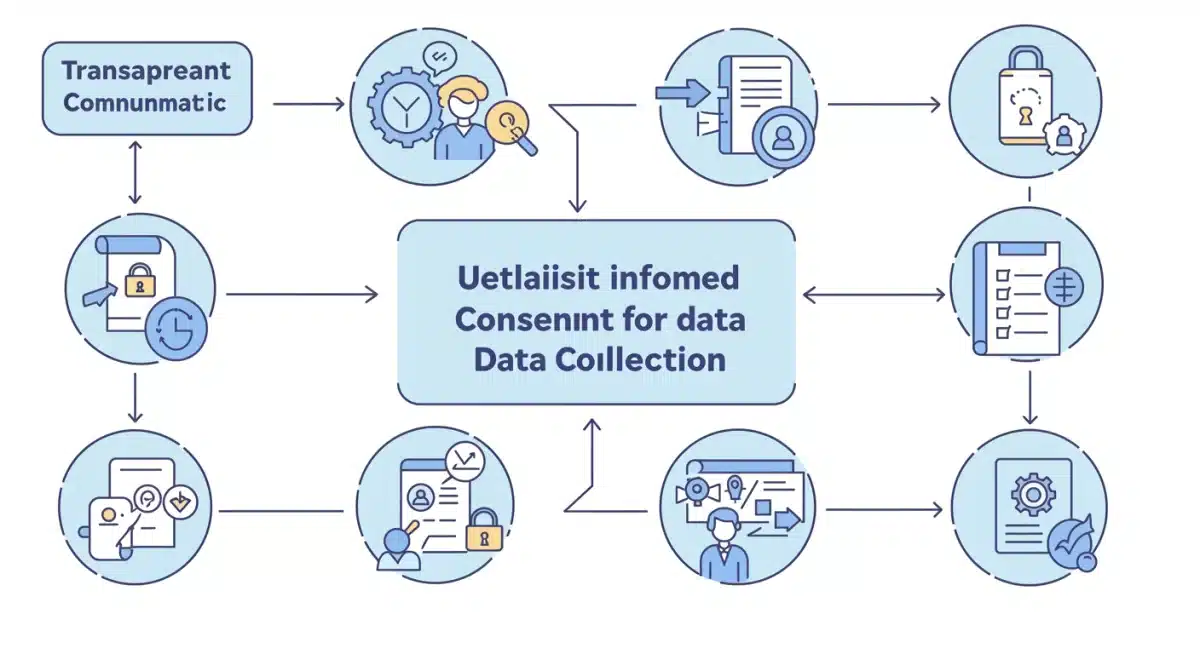

Implementing effective consent mechanisms
- Granular consent options: Instead of a broad ‘accept all cookies’ button, businesses should offer granular options, allowing users to consent to specific types of data collection and usage. This empowers users to make informed choices.
- Clear and conspicuous notices: Privacy policies and data collection notices should be easy to find, read, and understand. Avoid legal jargon and use clear, concise language.
- Easy withdrawal of consent: Users must be able to withdraw their consent as easily as they gave it. This means providing accessible mechanisms for opting out or requesting data deletion.
- Just-in-time notices: When collecting sensitive or unexpected data, provide context-specific notices at the point of collection. This helps users understand why particular data is needed at that moment.
Beyond initial consent, businesses should regularly review and update their consent mechanisms to reflect changes in data practices or regulatory requirements. This includes re-obtaining consent when there are significant changes to how personal data is processed. Continuous engagement with users about their data choices reinforces trust and demonstrates a commitment to ethical practices.
The principle of ‘privacy by design’ should also be integrated into all new product and service development. This means building privacy protections into the core of systems and processes from the outset, rather than adding them as an afterthought. By designing with privacy in mind, businesses can ensure that transparency and consent are not merely compliance checkboxes but fundamental aspects of their operations.
Implementing robust data security measures
Ethical data collection and usage are meaningless without robust data security. Data breaches not only expose sensitive information but also severely damage consumer trust and can lead to significant financial penalties. Businesses must invest in comprehensive security measures to protect the data they collect from unauthorized access, loss, or alteration.
A multi-layered approach to data security is essential, encompassing technical safeguards, administrative controls, and physical security measures. This means protecting data at rest and in transit, securing network infrastructure, and ensuring that access to data is strictly controlled. The goal is to create a resilient defense against a wide range of cyber threats.
Key data security practices
- Encryption: Encrypting sensitive data, both at rest (stored) and in transit (being transmitted), is a fundamental security measure. This renders the data unreadable to unauthorized parties if a breach occurs.
- Access controls: Implementing strong authentication mechanisms and role-based access controls ensures that only authorized personnel can access specific data sets. Regular review of access permissions is also critical.
- Regular security audits and penetration testing: Proactive identification of vulnerabilities through regular security audits and penetration testing helps strengthen defenses before attackers can exploit weaknesses.
- Employee training: Human error remains a leading cause of data breaches. Comprehensive and ongoing employee training on cybersecurity best practices, phishing awareness, and data handling protocols is indispensable.
Beyond these technical and human elements, businesses should also have a well-defined incident response plan. This plan outlines the steps to be taken in the event of a data breach, including containment, investigation, notification to affected parties and regulators, and recovery. A swift and effective response can mitigate damage and help maintain trust, even after an unfortunate incident.
The threat landscape is constantly evolving, with new vulnerabilities and attack methods emerging regularly. Therefore, data security is not a one-time effort but an ongoing process of adaptation and improvement. Businesses must continuously update their security technologies, review their policies, and train their staff to stay ahead of potential threats and ensure the long-term protection of consumer data.
Ensuring accountability and data subject rights
Accountability is a cornerstone of ethical data practices. Businesses must not only comply with data protection laws but also be able to demonstrate that compliance. This involves maintaining clear records of data processing activities, conducting impact assessments, and appointing responsible individuals or teams for data privacy oversight.
Furthermore, respecting and facilitating data subject rights is a critical aspect of building trust. Consumers in the US are increasingly empowered by state laws to exercise control over their personal information. Businesses must establish clear and efficient processes for individuals to exercise these rights without undue burden or delay.
Facilitating data subject rights
- Right to access: Individuals should have the right to request access to their personal data held by an organization. Businesses must provide this information in a clear, concise, and portable format.
- Right to deletion: Consumers often have the right to request the deletion of their personal data. Businesses must have mechanisms in place to fulfill these requests, subject to certain legal exceptions.
- Right to correction/rectification: Individuals should be able to request corrections to inaccurate or incomplete personal data. Businesses need processes to verify and update information promptly.
- Right to opt-out of sale/sharing: With the rise of data brokerage, many state laws grant consumers the right to opt-out of the sale or sharing of their personal information. Businesses must provide clear and accessible methods for exercising this right.
To ensure accountability, businesses should consider designating a Data Protection Officer (DPO) or a similar role, even if not legally mandated. This individual or team can oversee data privacy compliance, advise on data protection impact assessments, and serve as a point of contact for data subjects and regulatory authorities. Their presence signals a serious commitment to data ethics.
Regular internal audits and external certifications can further demonstrate accountability. These evaluations provide an objective assessment of a business’s adherence to privacy principles and legal requirements, offering assurance to both consumers and regulators. Proactive demonstration of responsible data stewardship can significantly enhance a company’s reputation and competitive advantage.
The path to January 2025: preparation and proactive measures
As January 2025 approaches, businesses face a critical juncture in their data practices. The evolving regulatory landscape and heightened consumer expectations demand proactive and strategic preparation. Simply reacting to new laws as they come into effect is no longer sufficient; a forward-looking approach is essential for long-term success and trust.
This period offers an opportunity for businesses to not only ensure compliance but also to differentiate themselves as leaders in ethical data stewardship. By embracing privacy as a core business value, companies can build stronger relationships with their customers, enhance their brand reputation, and mitigate future risks. The investment in robust privacy programs now will yield significant returns in the years to come.
Strategic steps for businesses
- Conduct a comprehensive data audit: Understand all data collected, its purpose, storage, and sharing practices. This forms the baseline for identifying compliance gaps and necessary improvements.
- Review and update privacy policies: Ensure all policies are clear, concise, and reflect current and impending state and federal regulations. Make them easily accessible to users.
- Invest in privacy-enhancing technologies: Explore and implement tools for data anonymization, pseudonymization, consent management platforms, and robust encryption to enhance data protection.
- Cross-functional collaboration: Data privacy is not just an IT or legal issue. Foster collaboration between legal, IT, marketing, and product development teams to embed privacy considerations across all business functions.
- Ongoing employee training: Regularly educate employees on data privacy best practices, company policies, and their role in maintaining compliance and protecting customer data.
Beyond these immediate steps, businesses should also engage with industry groups and legal experts to stay abreast of best practices and emerging trends. Participating in discussions around future federal privacy legislation can also provide insights and help shape advocacy efforts. A collective approach to navigating the complex privacy landscape can benefit all stakeholders.
Finally, view compliance not as a burden but as an opportunity. Companies that demonstrate a genuine commitment to ethical data collection and usage will gain a significant competitive advantage. Consumers are increasingly making purchasing decisions based on a company’s privacy posture, making ethical data practices a powerful differentiator in the marketplace.
| Key Aspect | Description |
|---|---|
| Regulatory Evolution | US state laws like CCPA, VCDPA, and CPA are creating a complex, fragmented privacy landscape requiring adaptable compliance. |
| Data Governance | A robust framework with data inventory, clear policies, and access controls is essential for responsible data management. |
| Transparency & Consent | Clear communication and granular consent mechanisms are vital for building consumer trust and avoiding legal issues. |
| Accountability | Businesses must demonstrate compliance and facilitate data subject rights through efficient processes and oversight. |
Frequently asked questions about ethical data practices
The main challenge is navigating the fragmented state-level privacy laws, such as CCPA, VCDPA, and CPA, which create a complex compliance environment. Businesses must adopt a flexible framework to meet varying requirements across different jurisdictions and anticipate future legislative changes.
A data governance framework establishes policies, procedures, and responsibilities for managing data throughout its lifecycle. It ensures data is collected, processed, stored, and shared ethically, minimizing risks and fostering a culture of data protection within the organization.
Transparent consent empowers consumers by clearly informing them about data collection and usage. When businesses are open and provide granular control over data, it builds confidence, reduces privacy concerns, and fosters stronger, more loyal customer relationships, mitigating potential legal and reputational risks.
Robust data security is fundamental to ethical data collection, as it protects personal information from unauthorized access, loss, or misuse. Measures like encryption, access controls, and regular audits prevent breaches, uphold privacy commitments, and are essential for maintaining consumer trust and regulatory compliance.
Businesses should conduct comprehensive data audits, update privacy policies, invest in privacy-enhancing technologies, foster cross-functional collaboration, and provide ongoing employee training. These proactive measures help identify gaps, strengthen defenses, and embed privacy into core operations, ensuring readiness for future regulations.
Conclusion
The journey towards fully compliant and trustworthy data practices in the US by January 2025 is a complex yet imperative one. It demands a holistic approach that integrates robust data governance, unwavering transparency, stringent security, and a deep respect for individual data rights. Businesses that proactively embrace these principles will not only navigate the evolving regulatory landscape successfully but also cultivate invaluable consumer trust, positioning themselves for sustainable growth in the digital economy. The future of commerce hinges on ethical data stewardship.