Generative AI in Product Development: Double Innovations by 2025
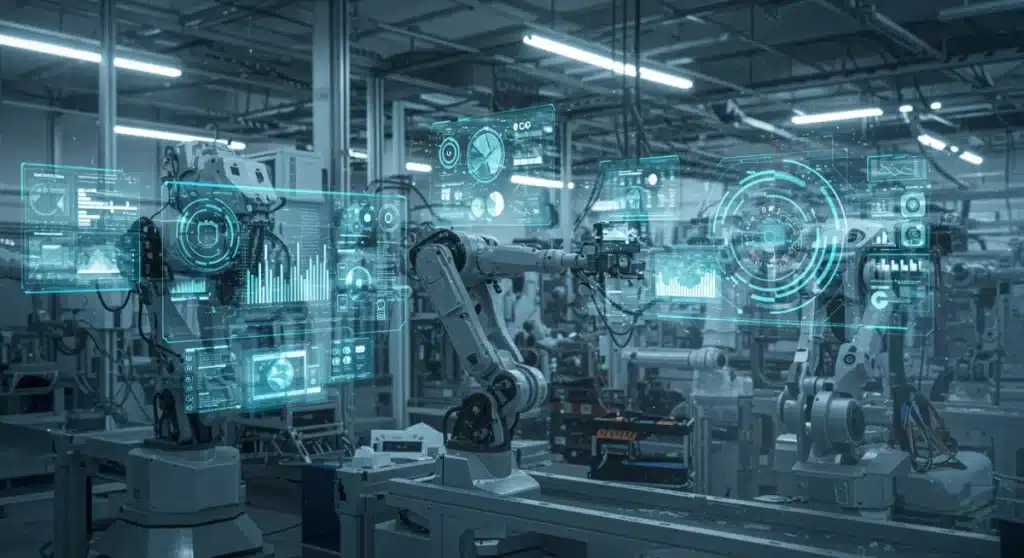
Generative AI is poised to transform product development, allowing businesses to accelerate innovation cycles and launch twice the number of new products by 2025 by automating design, prototyping, and optimization processes.
The landscape of product development is undergoing a seismic shift, driven by the unprecedented capabilities of artificial intelligence. Specifically, the emergence of Generative AI in Product Development: Launching 2x More Innovations by 2025 is not merely an incremental improvement; it represents a fundamental re-imagining of how products are conceived, designed, and brought to market. This transformative technology promises to unlock new levels of creativity, efficiency, and speed, fundamentally altering competitive dynamics.
The rise of generative AI in product design
Generative AI, a subset of artificial intelligence, focuses on creating new content, ideas, or designs rather than simply analyzing existing data. In product development, this means AI systems can autonomously generate novel product concepts, optimize existing designs, and even simulate performance, dramatically reducing the time and resources traditionally required for these tasks.
This capability moves beyond mere automation; it introduces a co-creative partner that can explore design spaces far more extensively and rapidly than human teams alone. The implications for innovation are profound, allowing companies to explore a broader spectrum of possibilities and identify optimal solutions with unprecedented speed.
Automated concept generation
One of the most immediate impacts of generative AI is its ability to automate the initial stages of concept generation. Instead of relying solely on human brainstorming sessions, which can be limited by cognitive biases and time constraints, AI can produce thousands of unique design iterations based on specified parameters.
- Rapid exploration of design parameters
- Identification of unexpected design solutions
- Reduction in early-stage ideation costs
Optimizing existing designs
Generative AI isn’t just for new ideas; it’s also incredibly powerful for refining and optimizing existing product designs. By analyzing performance data, material properties, and manufacturing constraints, AI can suggest modifications that enhance functionality, reduce material usage, or improve aesthetics.
This iterative optimization process, driven by AI, can lead to significant improvements in product quality and efficiency, ensuring that every new iteration is a step closer to perfection. The ability to quickly test and validate these optimizations in a virtual environment further accelerates the development cycle.
The integration of generative AI into product design workflows marks a pivotal moment, promising a future where innovation is not just faster, but also more intelligent and impactful. Companies that embrace these tools will gain a significant competitive edge, driving the market forward with a continuous stream of novel and optimized products.
Accelerating prototyping and testing cycles
The traditional product development pipeline often faces bottlenecks at the prototyping and testing stages, which are typically time-consuming and resource-intensive. Generative AI is fundamentally changing this by enabling virtual prototyping and predictive testing, significantly compressing these critical phases.
By simulating real-world conditions and predicting performance, AI allows designers and engineers to validate concepts much earlier in the process, reducing the need for multiple physical prototypes and accelerating the path to market. This shift from physical to digital validation is a game-changer for speed and cost efficiency.
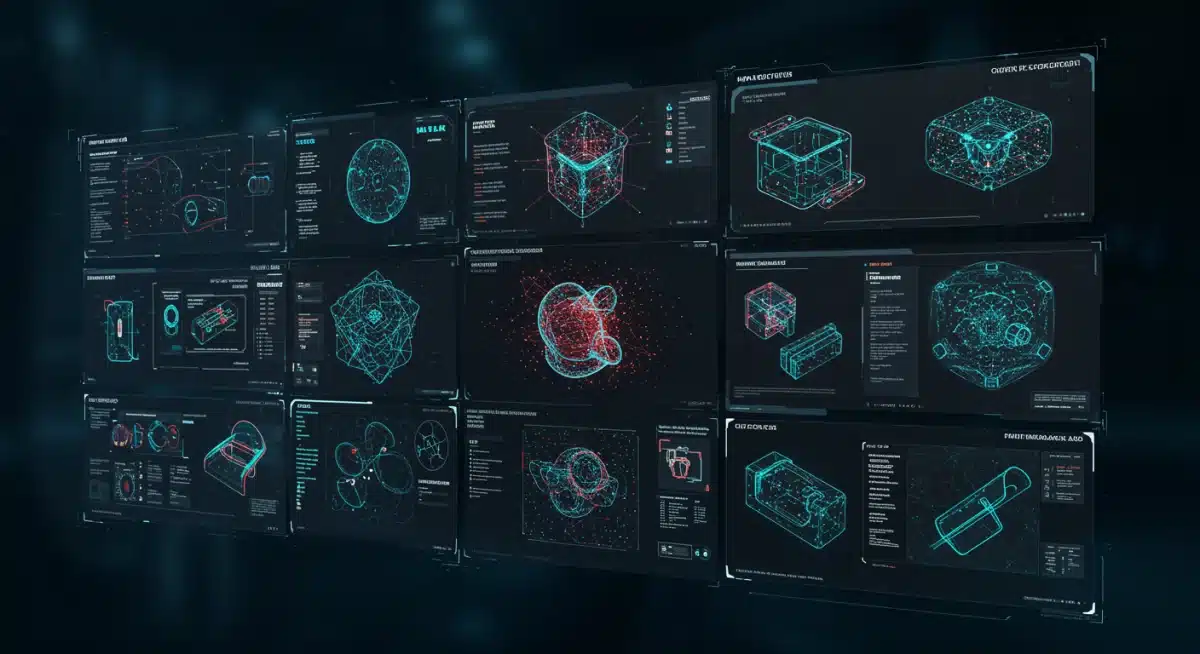
Generative AI models can create highly accurate digital twins of products, which can then be subjected to a wide range of simulated tests. This includes stress tests, thermal analyses, aerodynamic simulations, and even user interaction predictions, all without manufacturing a single physical component.
Virtual prototyping capabilities
The ability to generate and test virtual prototypes with high fidelity means that design flaws can be identified and corrected early, preventing costly rework later on. This also allows for the exploration of more radical designs that might be too expensive or risky to prototype physically.
- Reduced material waste from physical prototypes
- Faster iteration and refinement of designs
- Lower overall development costs
Predictive performance analysis
Beyond just identifying flaws, generative AI can predict how a product will perform under various conditions, even before it’s built. This predictive capability allows companies to fine-tune designs for optimal performance, durability, and user experience, leading to superior products.
This level of foresight not only saves time but also enhances product quality, ensuring that innovations meet or exceed consumer expectations from the outset. The integration of AI into these crucial stages means that products are not just developed faster, but also with greater precision and confidence.
By leveraging generative AI for accelerated prototyping and testing, companies can dramatically shorten their development cycles, bringing new innovations to market at an unprecedented pace. This efficiency translates directly into a competitive advantage and increased market responsiveness.
Enhancing creativity and human-AI collaboration
Contrary to fears that AI might diminish human creativity, generative AI is proving to be a powerful tool for augmenting it. By handling the more repetitive or computationally intensive aspects of design, AI frees up human designers to focus on higher-level strategic thinking, artistic expression, and complex problem-solving.
This collaborative model, where humans and AI work hand-in-hand, fosters an environment of enhanced innovation. AI acts as an intelligent assistant, offering diverse perspectives and solutions that might not be immediately obvious to human designers, thereby expanding the creative horizon.
AI as a creative partner
Generative AI can act as a tireless brainstorming partner, providing a constant stream of novel ideas and variations. This allows designers to move beyond conventional thinking and explore truly groundbreaking concepts, pushing the boundaries of what’s possible.
- Expands design possibilities beyond human intuition
- Provides diverse aesthetic and functional suggestions
- Reduces creative block and improves workflow
Streamlining design iterations
The iterative nature of design often involves numerous cycles of creation, feedback, and revision. Generative AI can streamline this process by rapidly generating variations based on feedback, allowing designers to quickly explore different directions and converge on optimal solutions more efficiently.
This immediate feedback loop and rapid iteration capability mean that designers can spend more time on ideation and less on manual adjustments, leading to a more fluid and productive creative process. The synergy between human insight and AI’s computational power unlocks a new era of product development.
Ultimately, generative AI redefines the role of the human designer, elevating it from mere execution to strategic oversight and visionary leadership. This human-AI collaboration is the cornerstone of future innovation, promising products that are not only functional but also uniquely creative and resonant with users.
Overcoming challenges and ethical considerations
While the promise of generative AI in product development is immense, its widespread adoption also comes with a unique set of challenges and ethical considerations. Addressing these proactively is crucial for ensuring responsible and sustainable innovation.
From data privacy and intellectual property concerns to the potential for bias in AI-generated designs, companies must navigate a complex landscape. Establishing robust frameworks and guidelines will be essential to harness the full potential of this technology while mitigating its risks.
Data privacy and security
Generative AI models often require vast amounts of data to train effectively. Ensuring the privacy and security of this data, especially when it involves proprietary designs or sensitive customer information, is paramount. Companies must implement stringent data governance policies and secure infrastructure.
- Strict adherence to data protection regulations
- Anonymization of sensitive design data
- Secure data storage and access protocols
Intellectual property rights
The question of who owns the intellectual property of AI-generated designs is complex and still evolving. Clear policies and legal precedents are needed to define ownership, authorship, and licensing agreements for products created, in whole or in part, by generative AI.
Companies should work closely with legal experts to develop strategies for protecting their innovations and navigating potential disputes related to AI-generated content. Transparency about AI’s role in the design process will also be important for consumers and stakeholders.
Addressing these challenges will require a multi-faceted approach involving technological solutions, legal frameworks, and ethical guidelines. By proactively tackling these issues, businesses can build trust and ensure that generative AI serves as a force for good in the product development ecosystem.
Measuring impact: 2x innovations by 2025
The ambitious goal of launching twice as many innovations by 2025 through generative AI is not just aspirational; it’s a measurable objective that reflects the disruptive potential of this technology. Achieving this target requires a clear understanding of how to quantify innovation and track the impact of AI.
Companies will need to establish key performance indicators (KPIs) that go beyond traditional metrics, focusing on the speed of concept-to-market, the diversity of product offerings, and the overall success rate of new launches. This data-driven approach will be critical for demonstrating ROI and refining AI strategies.
Quantifying innovation output
Measuring innovation output involves more than just counting new products. It includes assessing the novelty, market impact, and commercial success of these innovations. Generative AI’s ability to accelerate the early stages of development means a higher volume of concepts can be vetted and refined.
- Number of new product concepts generated
- Speed from concept to market launch
- Market share gained by new products
Tracking AI’s contribution to success
To truly understand the impact of generative AI, companies must be able to attribute specific successes to its use. This involves tracking metrics related to design efficiency, cost savings in prototyping, and improved product performance that can be directly linked to AI-driven insights.
Establishing baseline metrics before AI implementation and then continuously monitoring progress will provide clear evidence of its transformative power. This data will be invaluable for justifying further investment and scaling AI initiatives across the organization.
The goal of doubling innovations by 2025 is a testament to the profound shift generative AI is bringing to product development. By meticulously measuring its impact, companies can not only achieve this ambitious target but also build a sustainable framework for continuous, AI-powered innovation.
Future outlook: Generative AI and market disruption
Looking beyond 2025, generative AI is set to become an even more integral part of the product development lifecycle, driving unprecedented levels of market disruption. Its continued evolution will lead to increasingly sophisticated applications, fundamentally reshaping industries and consumer expectations.
Early adopters who successfully integrate generative AI into their core operations will not only maintain a competitive edge but also redefine what’s possible in their respective markets. This technological wave promises a future where product innovation is not just faster, but also more personalized, sustainable, and impactful.
Personalized product experiences
As generative AI advances, it will enable the creation of highly personalized products tailored to individual consumer preferences at scale. Imagine shoes designed precisely for your foot shape and gait, or furniture optimized for your living space and aesthetic tastes.
- Mass customization at an industrial scale
- Products that adapt to individual user data
- Enhanced customer loyalty through unique offerings
Sustainable product development
Generative AI can also play a crucial role in promoting sustainability. By optimizing designs for material efficiency, reducing waste in manufacturing, and extending product lifecycles through predictive maintenance, AI can help companies develop more environmentally friendly products.
This focus on sustainability, driven by AI, will not only meet growing consumer demand for eco-conscious products but also contribute to a more circular economy. The ability to simulate and optimize for environmental impact at the design stage represents a significant leap forward.
The future of product development, powered by generative AI, is one of rapid evolution and profound transformation. Companies that embrace this technology will not only survive but thrive, leading the charge in an era of unprecedented innovation and market disruptors.
| Key Aspect | Generative AI Impact |
|---|---|
| Innovation Speed | Accelerates concept generation and market entry, aiming for 2x innovations. |
| Design Optimization | Enhances product functionality, aesthetics, and material efficiency. |
| Prototyping & Testing | Enables virtual validation, reducing physical prototypes and time. |
| Human-AI Synergy | Augments human creativity, fostering collaborative and efficient design. |
Frequently asked questions about generative AI in product development
Generative AI in product development refers to the use of artificial intelligence to autonomously create new product concepts, designs, and optimizations. It leverages algorithms to generate novel solutions based on given parameters, significantly accelerating the ideation and design phases of product creation.
Generative AI can double innovation by 2025 by vastly accelerating concept generation, design optimization, and virtual prototyping. This speed allows companies to explore more ideas, refine them faster, and bring more validated products to market in a shorter timeframe than traditional methods.
The main benefits include faster design cycles, enhanced creativity through human-AI collaboration, significant cost reductions in prototyping, and the ability to explore a wider range of optimized design solutions. It leads to more efficient resource utilization and superior product outcomes.
Companies must address challenges such as data privacy and security, intellectual property rights for AI-generated content, and the potential for algorithmic bias in designs. Establishing robust ethical guidelines and legal frameworks is crucial for responsible implementation and long-term success.
No, generative AI is not replacing human designers; rather, it augments their capabilities. It acts as a powerful co-creative tool, handling repetitive tasks and generating diverse concepts, thereby freeing human designers to focus on strategic thinking, artistic vision, and complex problem-solving, fostering a collaborative synergy.
Conclusion
Generative AI stands as a pivotal force in the evolution of product development, offering an unparalleled opportunity to dramatically accelerate innovation. The ambitious goal of doubling innovation by 2025 is not just a theoretical possibility but a tangible outcome for organizations that strategically integrate this technology. By enhancing creativity, streamlining processes, and enabling rapid iteration, generative AI is reshaping how products are conceived, designed, and launched. While challenges related to data and ethics persist, proactive management of these concerns will pave the way for a future where innovation is faster, smarter, and more impactful, ultimately leading to a new era of market disruption and superior product offerings.