Subscription Models: 22% Revenue Growth for US Retailers

Subscription models are poised to deliver a remarkable 22% revenue growth for US retailers over the next three years by fostering customer loyalty and predictable income streams.
The retail landscape in the United States is undergoing a profound transformation, with businesses constantly seeking innovative ways to secure sustained growth and deeper customer relationships. One strategy emerging as a significant driver of future success is the adoption of subscription models. These models are not just a fleeting trend; they represent a fundamental shift in how consumers engage with brands and how retailers generate revenue. Projections indicate that subscription models revenue growth could unlock a remarkable 22% revenue increase for US retailers within the next three years, signaling a pivotal moment for businesses looking to thrive in a competitive market.
The Rise of the Subscription Economy in US Retail
The subscription economy has moved beyond just streaming services and software. It’s now a powerful force reshaping how US consumers purchase everything from groceries and grooming products to fashion and pet supplies. This shift reflects a growing consumer preference for convenience, personalization, and value over traditional transactional shopping.
Retailers are recognizing that recurring revenue streams offer greater stability and predictability, a stark contrast to the often volatile nature of one-off sales. This foundational change is driving many to re-evaluate their business models and integrate subscription services.
Understanding the Consumer Shift
Consumers today are looking for more than just products; they seek curated experiences and solutions that simplify their lives. Subscription models cater directly to these desires, offering a blend of convenience and discovery.
- Convenience: Products delivered automatically, eliminating the need for frequent reordering.
- Personalization: Tailored selections based on individual preferences and past purchases.
- Value: Often includes exclusive discounts, early access, or members-only content.
- Discovery: Introduction to new products or brands curated by experts.
This evolving consumer mindset is a primary catalyst for the widespread adoption of subscription strategies across various retail sectors. The promise of a consistent experience and often better value creates a sticky relationship between consumer and brand.
The growth trajectory of subscription-based businesses underscores their potential. Retailers who successfully tap into this trend are not just selling products; they are selling ongoing relationships and solutions, which builds a more resilient business model.
Forecasting a 22% Revenue Surge: What Drives the Growth?
The projection of a 22% revenue growth for US retailers through subscription models is not merely an optimistic estimate; it’s rooted in several key economic and behavioral factors. This significant increase highlights the transformative power of shifting from a transactional to a relational business approach.
Several drivers contribute to this impressive forecast. Understanding these elements is crucial for retailers looking to capitalize on this opportunity and design effective subscription strategies that resonate with their target audience.
Key Growth Catalysts
The consistent nature of subscription revenue offers a stable financial foundation, allowing for better forecasting and investment. This predictability is a major draw for businesses seeking long-term sustainability.
- Predictable Revenue Streams: Subscriptions provide a steady, recurring income, smoothing out sales fluctuations.
- Enhanced Customer Lifetime Value (CLTV): Subscribers tend to stay longer and spend more over time compared to one-time purchasers.
- Reduced Customer Acquisition Costs (CAC): Retaining existing subscribers is generally more cost-effective than acquiring new customers.
- Data-Driven Personalization: Subscription data allows for deeper insights into customer preferences, enabling highly targeted offerings.
These factors combine to create a compelling case for subscription models as a core component of future retail strategy. The ability to forecast demand more accurately also helps in inventory management and supply chain optimization, reducing waste and improving efficiency.
Furthermore, the inherent loyalty built into subscription relationships often leads to word-of-mouth referrals, further reducing marketing expenditures and fostering organic growth. This virtuous cycle of retention and advocacy fuels the revenue surge.
Types of Subscription Models Thriving in US Retail
The beauty of subscription models lies in their versatility, allowing retailers to adapt them to various product categories and consumer needs. There isn’t a one-size-fits-all approach; instead, successful retailers are choosing and refining models that best suit their offerings and customer base.
Understanding the different types of subscription models is essential for any retailer considering this strategy. Each model offers distinct advantages and caters to specific consumer desires, from convenience to discovery.
Popular Subscription Model Categories
From curated boxes that surprise and delight to essential refills that simplify daily life, the range of successful subscription models is expanding. Retailers can choose the model that aligns best with their brand and product characteristics.
- Curated Boxes: Think beauty, fashion, or snack boxes (e.g., Birchbox, Stitch Fix). These offer discovery and personalization.
- Replenishment Services: For everyday essentials like razors, coffee, or pet food (e.g., Dollar Shave Club, Chewy). Focuses on convenience and automatic reordering.
- Access/Membership: Provides exclusive benefits, discounts, or content (e.g., Amazon Prime, certain fitness apps). Emphasizes value and community.
Each model targets a different aspect of the consumer experience. Curated boxes tap into the desire for novelty and tailored experiences, while replenishment services solve the problem of running out of necessities. Access models build loyalty through exclusive perks.
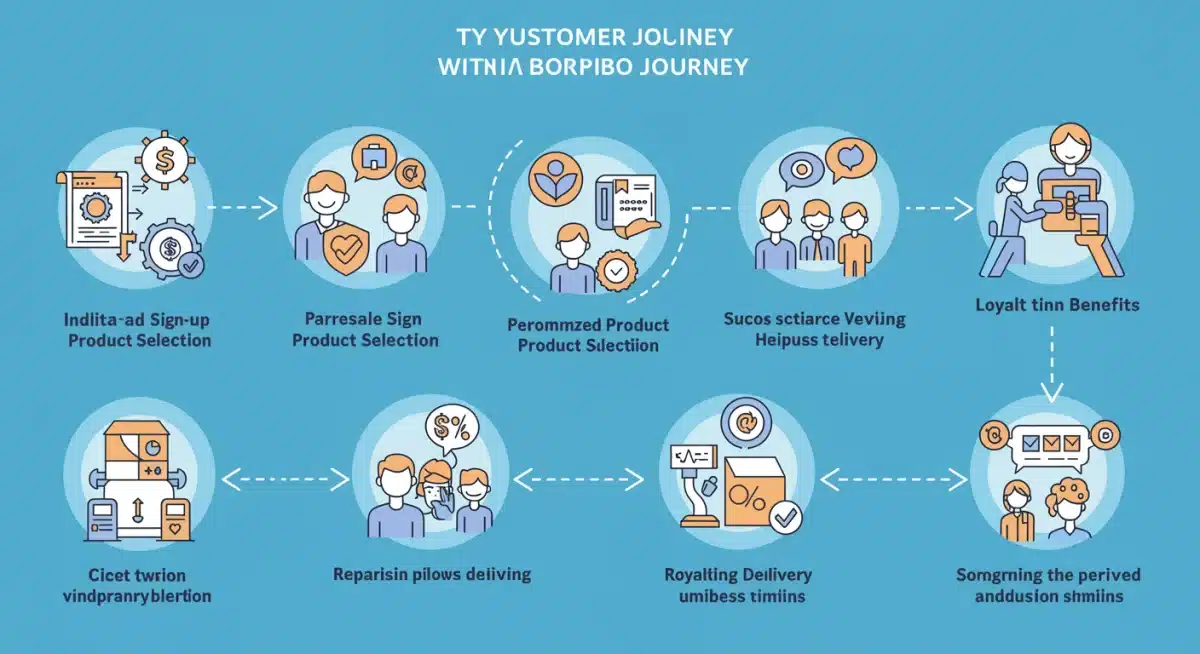
The selection of the right model depends heavily on the product, target audience, and the overall brand promise. A hybrid approach, combining elements of different models, can also be highly effective for some retailers.
Strategic Implementation: Best Practices for US Retailers
Launching a subscription model requires more than just setting up recurring payments; it demands a thoughtful strategy encompassing product, pricing, customer experience, and technology. Successful implementation is what differentiates thriving subscription businesses from those that struggle.
Retailers must consider every touchpoint, from the initial sign-up to ongoing customer support, to ensure a seamless and valuable subscriber journey. A well-executed strategy maximizes retention and minimizes churn.
Crafting a Winning Subscription Strategy
Focusing on the customer and their needs is paramount. The value proposition must be clear, compelling, and consistently delivered. This involves continuous optimization based on subscriber feedback and data.
- Clear Value Proposition: Define what makes your subscription indispensable to the customer.
- Flexible Pricing Tiers: Offer options that cater to different budgets and commitment levels.
- Seamless Onboarding: Make the sign-up process intuitive and engaging.
- Exceptional Customer Service: Proactive support resolves issues and builds trust.
- Data Analytics: Utilize subscriber data to personalize offerings and predict churn.
Investing in robust technology infrastructure to manage subscriptions, billing, and customer data is also critical. This foundational support ensures operational efficiency and scalability as the subscriber base grows.
Furthermore, communication with subscribers is key. Regular updates, personalized content, and exclusive offers help maintain engagement and reinforce the value of the subscription. Ignoring these aspects can lead to rapid churn.
Overcoming Challenges and Ensuring Long-Term Success
While the potential for revenue growth is significant, implementing subscription models is not without its challenges. Retailers need to be prepared to address issues such as churn, inventory management, and evolving customer expectations to ensure long-term success.
Proactive strategies to mitigate these challenges are essential for maintaining a healthy subscriber base and realizing the full potential of subscription-based revenue. It’s a continuous process of learning, adapting, and optimizing.
Navigating Common Obstacles
Customer churn is perhaps the most significant challenge in the subscription economy. Understanding why subscribers cancel and implementing strategies to prevent it is crucial for sustained growth.
- Minimizing Churn: Offer incentives, personalized communications, and easy pause/skip options.
- Inventory Management: Forecast demand accurately to avoid stockouts or overstocking for recurring orders.
- Personalization at Scale: Leverage AI and machine learning to deliver tailored experiences without manual oversight.
- Customer Feedback Loop: Actively solicit and respond to feedback to continuously improve the offering.
Another challenge involves adapting to changing consumer preferences. The subscription market is dynamic, and what works today might not work tomorrow. Retailers must remain agile and willing to innovate their offerings.
Ultimately, long-term success hinges on consistently delivering exceptional value and fostering a strong relationship with subscribers. This requires a customer-centric approach at every level of the business.
The Future Outlook: Sustained Growth and Innovation
The projected 22% revenue growth for US retailers from subscription models is just the beginning. The future indicates continued expansion and innovation within this sector, driven by technological advancements and evolving consumer demands. Retailers who embrace this trend early are poised to capture significant market share.
We can expect to see more sophisticated personalization, integration with smart home devices, and even more flexible subscription options. The subscription economy is maturing, moving beyond basic product delivery to comprehensive lifestyle solutions.
Emerging Trends and Opportunities
Advancements in AI and data analytics will allow for even deeper customization and predictive capabilities, anticipating customer needs before they arise. This will elevate the subscription experience to new levels.
- Hyper-Personalization: AI-driven recommendations and dynamic product curation.
- Hybrid Models: Blending subscription with traditional retail for a flexible consumer journey.
- Sustainability Focus: Eco-friendly packaging and ethical sourcing becoming key selling points.
- Community Building: Leveraging subscriptions to foster exclusive online communities and engagement.
The integration of subscription services with broader digital ecosystems, such as voice assistants and IoT devices, will also enhance convenience and accessibility. Imagine a smart pantry automatically reordering your staples as they run low.
For US retailers, the message is clear: the subscription model is not a temporary trend but a foundational shift in commerce. Embracing it with strategic planning and a customer-first mindset will be key to unlocking sustained growth and staying competitive in the years to come.
| Key Aspect | Brief Description |
|---|---|
| Revenue Growth | Projected 22% increase for US retailers in 3 years. |
| Consumer Shift | Preference for convenience, personalization, and sustained value. |
| Key Models | Curated boxes, replenishment services, and access/membership. |
| Challenges | Managing churn, inventory, and evolving customer expectations. |
Frequently Asked Questions About Subscription Models in Retail
The primary benefit is predictable, recurring revenue, leading to greater financial stability and improved forecasting. This also significantly increases customer lifetime value and fosters deeper brand loyalty, crucial for sustained growth in a competitive market.
Subscription models build loyalty by offering consistent value, convenience, and often personalized experiences. Regular engagement, exclusive benefits, and a seamless service encourage customers to remain subscribed, fostering a strong relationship with the brand over time.
Retailers commonly adopt curated boxes for discovery, replenishment services for convenience, and access/membership models for exclusive benefits. The best choice depends on the product, target audience, and the specific value proposition a retailer aims to offer their customers.
Key challenges include managing customer churn, optimizing inventory for recurring orders, delivering effective personalization at scale, and maintaining exceptional customer service. Overcoming these requires robust strategies and continuous adaptation to market dynamics and consumer feedback.
Data analytics is crucial for success as it provides insights into customer behavior, preferences, and potential churn indicators. This data enables hyper-personalization of offerings, proactive customer engagement, and informed decision-making to optimize the subscription service and maximize retention.
Conclusion
The shift towards subscription models represents a significant evolution in the US retail sector, promising a substantial 22% revenue growth within the next three years. This isn’t merely about selling products; it’s about building lasting relationships, understanding consumer needs deeply, and providing unparalleled convenience and value. For retailers, embracing this trend requires strategic foresight, a commitment to customer experience, and the agility to adapt to a dynamic market. Those who successfully integrate subscription services into their core strategy will not only unlock new revenue streams but also cultivate a loyal customer base, securing their position at the forefront of the modern retail landscape.