Unlocking Hidden Insights: Unstructured Data for US Market Advantage
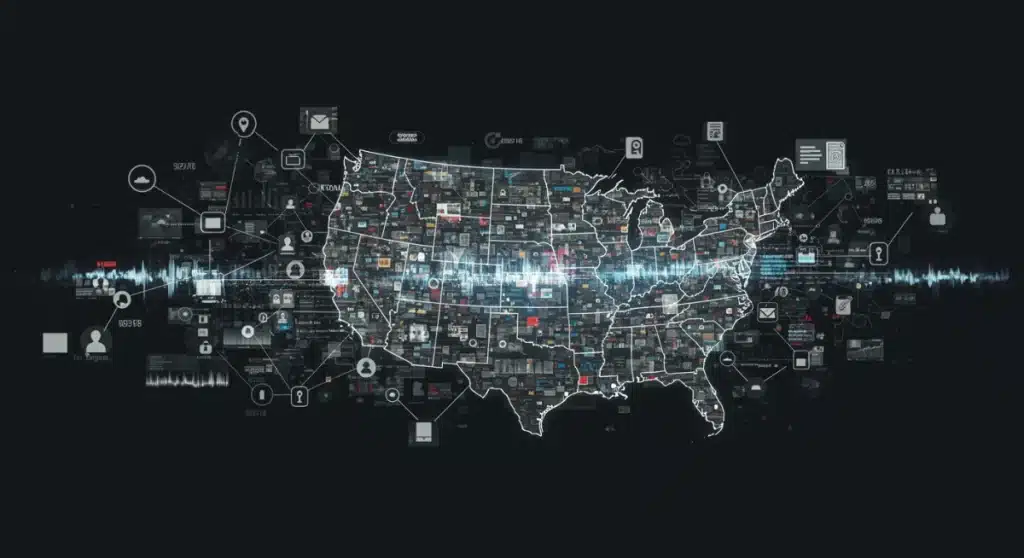
Leveraging unstructured data is paramount for businesses seeking to gain a significant competitive edge and unlock hidden insights within the dynamic US market during Q2 2025.
In today’s data-driven landscape, businesses are constantly seeking new ways to gain a competitive edge. The ability to effectively analyze and utilize all available information is no longer a luxury but a necessity. This article delves into the critical role of unstructured data US market analysis, exploring how organizations can harness this often-overlooked resource to uncover hidden insights and secure a distinct advantage in the dynamic US market during Q2 2025.
Understanding the Landscape of Unstructured Data
Unstructured data, by its very nature, lacks a predefined data model or organization. Unlike structured data, which neatly fits into rows and columns of traditional databases, unstructured data encompasses a vast and diverse array of formats. This includes text documents, emails, social media posts, audio recordings, video files, customer reviews, and much more. Its sheer volume and complexity often make it challenging to process and analyze using conventional methods, yet it holds an immense potential for uncovering deep, actionable insights.
The digital age has led to an explosion of unstructured data. Every interaction, every online comment, and every customer service call generates a piece of this valuable, yet often unorganized, information. For businesses operating in the US market, understanding how to tap into this reservoir of information is crucial for staying ahead of the curve. It’s not just about collecting data; it’s about making sense of the chaos and extracting meaningful patterns.
Defining Unstructured Data Sources
Identifying the various sources of unstructured data is the first step towards effectively leveraging it. These sources are pervasive and constantly expanding, reflecting the multitude of ways individuals and organizations communicate and interact digitally.
- Textual Data: Customer emails, support tickets, survey responses, online reviews, social media comments, articles, and reports.
- Multimedia Data: Images, videos, audio recordings (e.g., call center interactions, podcasts), and presentations.
- Sensor Data: Data from IoT devices, smart city sensors, and industrial machinery, often generated in raw, unformatted streams.
- Web Data: Website content, clickstream data, search queries, and forum discussions.
The challenge lies not in finding unstructured data, but in developing the capabilities to process, interpret, and derive value from it. This requires a shift in analytical approaches and the adoption of advanced technologies tailored for handling such diverse information types.
In essence, unstructured data represents the raw, unfiltered voice of the market, offering authentic perspectives on customer sentiment, emerging trends, and operational inefficiencies. Mastering its analysis is key to gaining a holistic understanding of the US market in the coming quarter.
The Strategic Advantage in the US Market for Q2 2025
For US businesses looking to thrive in Q2 2025, the strategic utilization of unstructured data offers a distinct competitive edge. This advantage stems from the ability to gain deeper insights into customer behavior, market trends, and competitive landscapes that traditional structured data analysis often misses. By understanding the nuances hidden within text, voice, and video, companies can make more informed decisions, optimize operations, and personalize customer experiences to an unprecedented degree.
The fast-paced nature of the US market demands agility and foresight. Unstructured data provides a real-time pulse on public sentiment and market shifts, enabling businesses to react quickly and proactively. This responsiveness can translate into significant gains in market share, customer loyalty, and overall profitability. The ability to identify subtle changes in consumer preference or emerging product demands before competitors do is invaluable.


Enhancing Customer Experience and Personalization
One of the most immediate benefits of analyzing unstructured data is the profound impact it has on understanding and serving customers. Customer reviews, social media interactions, and support call transcripts are rich sources of direct feedback, revealing pain points, preferences, and unmet needs. This information allows businesses to tailor products, services, and marketing messages with remarkable precision.
- Sentiment Analysis: Gauging public opinion about products, services, and brands from social media, news, and forums.
- Customer Journey Mapping: Identifying key touchpoints and friction points in the customer experience through textual feedback.
- Personalized Recommendations: Using past interactions and preferences extracted from unstructured data to offer highly relevant suggestions.
This level of personalization fosters stronger customer relationships and drives loyalty, which is a critical differentiator in the competitive US landscape. By truly listening to the customer’s voice, businesses can create experiences that resonate deeply and create lasting value.
Ultimately, the strategic advantage derived from unstructured data analysis in Q2 2025 will hinge on a company’s ability to not only collect this data but to transform it into actionable intelligence that drives tangible business outcomes across various functions.
Key Technologies and Methodologies for Analysis
Effectively harnessing unstructured data requires a robust technological infrastructure and specialized analytical methodologies. Traditional data warehousing and relational database systems are ill-equipped to handle the volume, velocity, and variety of unstructured information. Therefore, businesses must adopt advanced tools and techniques that can process and interpret this complex data efficiently. The right combination of technology and methodology can transform raw, chaotic data into structured, actionable insights.
The landscape of data analytics is constantly evolving, with new innovations emerging regularly. For companies operating in the US market, investing in or partnering with providers offering these advanced capabilities will be essential for maintaining a competitive edge. The goal is to move beyond mere data collection to sophisticated data interpretation.
Leveraging AI and Machine Learning
Artificial Intelligence (AI) and Machine Learning (ML) are at the forefront of unstructured data analysis. These technologies enable automated processing, pattern recognition, and predictive modeling that would be impossible with manual methods. Natural Language Processing (NLP), a subfield of AI, is particularly crucial for understanding textual data.
- Natural Language Processing (NLP): Extracts meaning, sentiment, and entities from human language, enabling analysis of emails, reviews, and social media.
- Computer Vision: Processes and interprets images and videos, identifying objects, faces, and activities for insights into visual content.
- Speech-to-Text Conversion: Transcribes audio data (e.g., customer calls) into text, making it amenable to NLP techniques.
Beyond AI/ML, big data platforms like Hadoop and Spark provide the necessary scalable infrastructure to store and process massive datasets. Cloud-based solutions also offer flexible and cost-effective ways to deploy these technologies without significant upfront investment in hardware. The synergy between these technologies creates a powerful analytical engine capable of transforming unstructured data into strategic assets.
By adopting these advanced technologies and methodologies, US businesses can unlock the full potential of their unstructured data, turning it into a powerful engine for innovation and market dominance.
Challenges and Considerations in Implementation
While the benefits of leveraging unstructured data are compelling, its implementation is not without significant challenges. Organizations must navigate a complex landscape of technical hurdles, data quality issues, and ethical considerations. Overlooking these challenges can lead to inaccurate insights, wasted resources, and even reputational damage. A thoughtful and comprehensive approach is required to successfully integrate unstructured data analytics into existing business operations.
For US businesses, particularly those with stringent regulatory compliance requirements, these considerations become even more critical. Ensuring data privacy, security, and ethical use is paramount, especially when dealing with sensitive customer information. Addressing these challenges proactively will be key to realizing the full value of unstructured data.
Data Quality, Privacy, and Security
The inherent messiness of unstructured data presents significant quality control issues. Unlike structured data, which often has defined input fields and validation rules, unstructured data can be riddled with inconsistencies, errors, and noise. Furthermore, privacy and security concerns are amplified when dealing with vast quantities of diverse data that may contain personally identifiable information (PII).
- Data Cleansing: Removing irrelevant information, standardizing formats, and correcting errors within unstructured datasets.
- Anonymization and Pseudonymization: Techniques to protect sensitive data while still allowing for analysis, crucial for GDPR and CCPA compliance.
- Robust Security Protocols: Implementing advanced encryption, access controls, and threat detection systems to safeguard unstructured data repositories.
Beyond technical safeguards, establishing clear data governance policies is essential. This includes defining data ownership, access rights, and retention periods. Companies must also invest in training their teams to handle unstructured data responsibly and ethically. The legal and ethical landscape surrounding data use is constantly evolving, requiring continuous vigilance and adaptation from businesses.
Successfully overcoming these challenges requires a commitment to robust data management practices, ongoing technological investment, and a strong ethical framework that prioritizes data privacy and security.
Real-World Applications and Success Stories
The theoretical benefits of unstructured data analysis become tangible when viewed through the lens of real-world applications and success stories. Across various industries in the US market, companies are leveraging these insights to drive innovation, enhance customer satisfaction, and gain a significant competitive edge. These examples highlight the transformative power of turning raw, unorganized information into strategic intelligence. From retail to healthcare, the impact is profound and far-reaching.
These case studies serve as powerful demonstrations of what is possible when businesses commit to exploring the depths of their data. They illustrate how a proactive approach to unstructured data can lead to breakthroughs in understanding market dynamics and consumer needs. The lessons learned from these successes can inform strategies for other organizations seeking similar advantages in Q2 2025.
Industry-Specific Impact
Different sectors are finding unique ways to apply unstructured data analytics, tailored to their specific challenges and opportunities:
- Retail: Analyzing social media conversations and online reviews to identify product trends, gauge consumer sentiment, and optimize marketing campaigns. For example, a major apparel retailer used sentiment analysis of fashion blogs to anticipate demand for certain styles, leading to more efficient inventory management and reduced waste.
- Healthcare: Extracting insights from electronic health records (EHRs), medical notes, and research papers to improve patient care, accelerate drug discovery, and identify disease patterns. A hospital system utilized NLP on patient feedback to pinpoint common issues in service delivery, resulting in targeted improvements that boosted patient satisfaction scores.
- Financial Services: Monitoring news articles, regulatory filings, and social media for risk assessment, fraud detection, and market sentiment analysis. A large investment firm employed advanced text analytics to quickly identify emerging financial risks and opportunities, informing more agile trading strategies.
- Manufacturing: Analyzing sensor data from machinery, maintenance logs, and warranty claims to predict equipment failures, optimize production processes, and improve product quality. An automotive manufacturer reduced downtime by 15% through predictive maintenance powered by unstructured sensor data analysis.
These diverse applications underscore the versatility and immense potential of unstructured data. The common thread is the ability to uncover previously hidden patterns and insights that drive better decision-making and operational excellence. Businesses that embrace these methodologies are positioning themselves for sustained growth and innovation in the competitive US market.
Future Trends and Outlook for Q2 2025
As we look towards Q2 2025, the landscape of unstructured data analytics is poised for continued evolution and innovation. Emerging technologies and refined methodologies will further enhance the ability of businesses to extract value from diverse data sources. The increasing sophistication of AI, coupled with advancements in data processing infrastructure, will unlock even deeper insights, making unstructured data an indispensable asset for strategic planning and competitive differentiation in the US market.
The pace of technological change suggests that companies must remain agile and forward-thinking to capitalize on these developments. Staying abreast of the latest trends and investing in scalable solutions will be crucial for maintaining a leading position. The future of data-driven decision-making is inextricably linked to the ability to master unstructured information.
Advancements in AI and Edge Computing
The synergy between Artificial Intelligence and other cutting-edge technologies will define the next wave of unstructured data analytics:
- Generative AI: Beyond analysis, generative AI models will be capable of synthesizing new content, summarizing vast amounts of unstructured data, and even generating synthetic data for training, further accelerating insight generation.
- Edge Computing: Processing unstructured data closer to its source (e.g., IoT devices, smart cameras) will reduce latency and bandwidth requirements, enabling real-time analysis and immediate action, especially critical for time-sensitive applications.
- Multimodal AI: The ability of AI systems to process and integrate information from multiple modalities simultaneously (text, image, audio) will lead to more comprehensive and nuanced understandings of complex scenarios.
- Ethical AI and Explainable AI (XAI): Growing emphasis on developing AI systems that are transparent, fair, and accountable, addressing concerns around bias and privacy in unstructured data analysis.
These trends suggest a future where unstructured data analysis becomes even more integrated into daily business operations, moving from a specialized function to a fundamental component of strategic decision-making. Companies that proactively adopt these advancements will be best positioned to gain a significant competitive advantage in the US market during Q2 2025 and beyond.
The continuous evolution of AI and related technologies ensures that the potential of unstructured data will only grow, offering endless possibilities for innovation and strategic insight for forward-thinking businesses.
| Key Point | Brief Description |
|---|---|
| Unstructured Data Potential | Vast, unorganized information (text, audio, video) holds hidden insights for market advantage. |
| US Market Advantage | Deeper customer understanding, trend identification, and competitive edge for Q2 2025. |
| Key Technologies | AI, Machine Learning (NLP, Computer Vision), and big data platforms are crucial. |
| Challenges & Future | Data quality, privacy, and emerging AI/Edge computing trends shape future adoption. |
Frequently Asked Questions About Unstructured Data
Unstructured data refers to information that does not have a predefined data model or organization. It includes text documents, emails, social media posts, audio, video, and customer reviews. Unlike structured data, it cannot be easily stored in traditional relational databases and requires advanced analytical tools for processing.
By analyzing unstructured data, businesses can gain deeper insights into customer behavior, market trends, and competitive strategies that structured data often misses. This leads to more informed decision-making, personalized customer experiences, and the ability to proactively respond to market shifts, securing a significant competitive edge.
Key technologies include Artificial Intelligence (AI) and Machine Learning (ML), particularly Natural Language Processing (NLP) for text, Computer Vision for images/videos, and Speech-to-Text for audio. Big data platforms like Hadoop and Spark, along with cloud computing, provide the necessary infrastructure for processing large volumes.
Significant challenges include ensuring data quality due to its inherent messiness, maintaining data privacy and security, and navigating complex regulatory compliance. Organizations must invest in data cleansing, anonymization techniques, robust security protocols, and strong data governance policies to mitigate these risks effectively.
Future trends include the increasing role of Generative AI for content synthesis and data generation, the rise of Edge Computing for real-time analysis, advancements in Multimodal AI for integrated insights, and a stronger focus on Ethical AI and Explainable AI (XAI) for transparency and accountability in data processing.
Conclusion
The ability to effectively harness and analyze unstructured data is no longer a niche capability but a strategic imperative for businesses aiming to thrive in the dynamic US market. As demonstrated, from understanding customer sentiment to predicting market trends and optimizing operations, the insights derived from this complex data type offer a profound competitive advantage. While challenges related to data quality, privacy, and security persist, ongoing advancements in AI, machine learning, and big data technologies are continuously making its processing more accessible and impactful. For Q2 2025 and beyond, organizations that strategically invest in the tools, methodologies, and expertise to unlock these hidden insights will be best positioned for sustained growth, innovation, and leadership in an increasingly data-driven economy.