Web3 Impact on Digital Ownership & Brand Loyalty: US Outlook
Web3 is poised to significantly reshape digital ownership and brand loyalty for US brands within the next six months, offering innovative avenues for customer engagement through decentralized technologies and unique digital assets.
The digital landscape is constantly evolving, and a new paradigm is emerging that promises to redefine how brands interact with consumers. We are talking about Web3, a decentralized internet built on blockchain technology, which is rapidly influencing the concepts of digital ownership and brand loyalty. For US brands, understanding the impact of Web3 on digital ownership and brand loyalty: a 6-month outlook for US brands is not just an advantage, but a necessity for future relevance.
Understanding Web3: Foundations and Core Principles
Web3 represents the next evolutionary stage of the internet, moving beyond the centralized platforms of Web2. At its core, Web3 is about decentralization, user ownership, and enhanced transparency, all powered by blockchain technology. This shift has profound implications for how digital assets are managed and how brands build relationships with their customer base.
Unlike Web2, where data and content often reside on servers controlled by large corporations, Web3 distributes data across a network of computers. This distributed ledger technology, primarily blockchain, ensures that transactions and digital assets are immutable and transparent, fostering a new level of trust and security. For brands, this means rethinking traditional engagement models and exploring new avenues for creating value.
Decentralization and User Empowerment
Decentralization is the cornerstone of Web3, empowering users by giving them more control over their data and digital identities. This contrasts sharply with the current internet, where users often surrender their data in exchange for services. In Web3, individuals can own their digital assets directly, without intermediaries.
- Data Ownership: Users control their personal data, deciding who can access it and how it’s used.
- Digital Identity: Self-sovereign identities allow users to manage their online presence across various platforms.
- Community Governance: Decentralized Autonomous Organizations (DAOs) enable communities to collectively make decisions.
Blockchain’s Role in Digital Ownership
Blockchain technology is the engine behind Web3’s promise of digital ownership. It provides a secure, transparent, and verifiable record of ownership for digital assets. This is particularly relevant for non-fungible tokens (NFTs), which represent unique digital items.
For US brands, leveraging blockchain can mean issuing NFTs that represent exclusive products, membership passes, or even fractional ownership in physical assets. This creates a direct, verifiable link between the brand and the consumer, fostering a deeper sense of connection and loyalty. The next six months will likely see an acceleration in brands experimenting with these concepts.
In essence, Web3 is not just a technological upgrade; it’s a philosophical shift towards a more equitable and user-centric internet. Brands that embrace these foundational principles will be better positioned to navigate the evolving digital landscape and cultivate robust, long-lasting relationships with their customers.
The Rise of Digital Ownership: NFTs and the Metaverse
The concepts of digital ownership have moved from niche discussions to mainstream attention, largely driven by the explosive growth of NFTs and the burgeoning metaverse. These Web3 innovations are fundamentally altering how consumers perceive and interact with digital assets, presenting both challenges and unprecedented opportunities for US brands.
NFTs, or non-fungible tokens, are unique digital identifiers recorded on a blockchain. They can represent anything from art and music to collectibles and virtual real estate. Their uniqueness and verifiable ownership are what make them revolutionary. The metaverse, on the other hand, is a collective virtual shared space, created by the convergence of virtually enhanced physical reality and physically persistent virtual space, where users can interact, play, work, and own digital assets.
NFTs as a Tool for Brand Engagement
For brands, NFTs offer a powerful new channel for engagement and loyalty. They allow companies to create exclusive digital collectibles, offer unique access to experiences, or even serve as digital proofs of ownership for physical goods. This creates a sense of exclusivity and direct participation that traditional loyalty programs often struggle to achieve.
- Exclusive Access: NFTs can grant holders access to special events, product drops, or communities.
- Digital Collectibles: Brands can issue limited-edition NFTs that become valuable assets for collectors.
- Proof of Authenticity: NFTs can verify the authenticity and provenance of physical luxury goods.
Navigating the Metaverse for Brand Presence
The metaverse is rapidly becoming a new frontier for brand presence and consumer interaction. Brands are exploring virtual storefronts, hosting events, and creating immersive experiences within these digital worlds. The ability to own virtual land, create unique avatars, and interact with branded content in a persistent digital space offers a rich environment for building brand loyalty.
Over the next six months, US brands are expected to increase their investment in metaverse initiatives, focusing on creating compelling virtual experiences that resonate with their target audience. This includes everything from virtual product launches to interactive brand environments where consumers can explore and engage with products in novel ways.
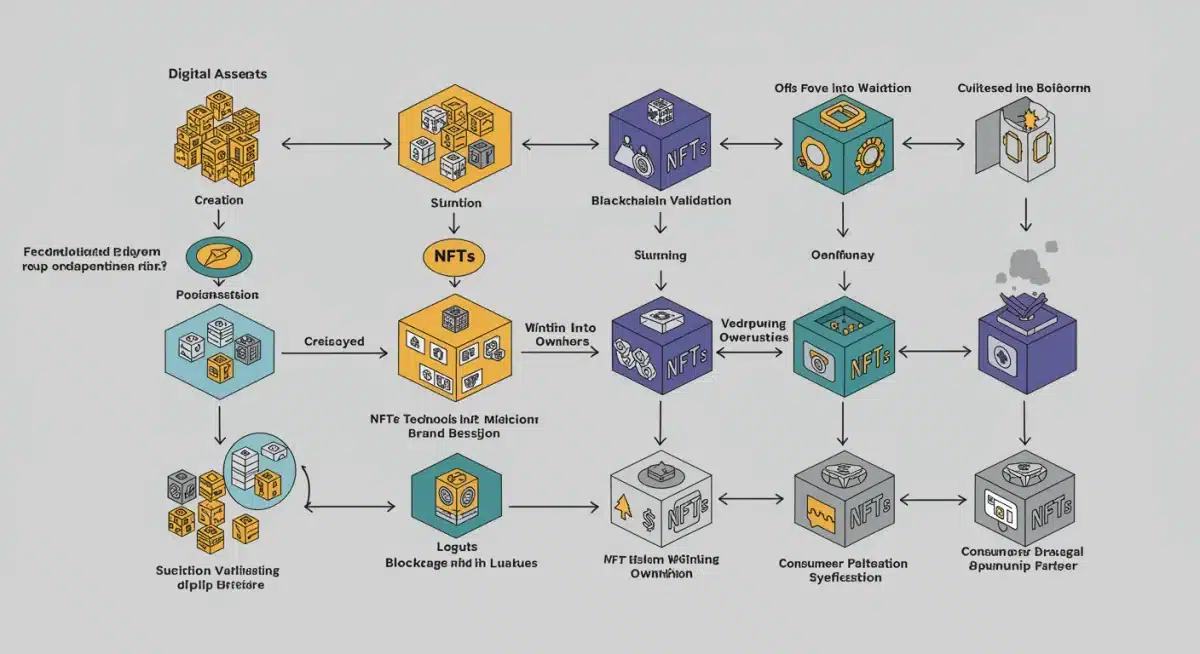
The convergence of NFTs and the metaverse is creating a new ecosystem of digital ownership where consumers are not just users but active participants and owners. Brands that strategically integrate these Web3 elements into their marketing and loyalty strategies will be at the forefront of this digital transformation, fostering deeper connections and unparalleled loyalty among their customers.
Redefining Brand Loyalty in a Decentralized World
In the Web3 era, traditional notions of brand loyalty are being challenged and redefined. The shift towards decentralization and digital ownership empowers consumers in ways previously unimaginable, necessitating a new approach from brands. Loyalty is no longer just about points or discounts; it’s about shared values, community, and verifiable ownership.
Brands must now consider how to build loyalty in a landscape where consumers expect more transparency, control, and direct engagement. This involves moving beyond transactional relationships to fostering genuine communities around their products and values. The next six months will be crucial for US brands to experiment with these new models.
Community-Driven Loyalty Programs
Web3 facilitates the creation of robust, community-driven loyalty programs. Instead of a top-down approach, brands can empower their most loyal customers to become active participants in the brand’s ecosystem. This can involve token-gated communities, where ownership of a specific NFT grants access to exclusive content, voting rights, or early access to products.
- Token-Gated Access: NFTs provide exclusive entry to brand communities and experiences.
- DAO Participation: Loyal customers can have a say in product development or brand direction through DAOs.
- Gamified Rewards: Engaging experiences and challenges that reward participation with digital assets.
Personalized Experiences Through Data Ownership
While Web2 often relied on brands collecting vast amounts of user data, Web3 offers a path to personalized experiences where the user retains control over their data. This can lead to more genuine and trusted interactions. Brands can offer incentives for users to share specific, anonymized data, allowing for highly tailored experiences without compromising privacy.
The challenge for US brands will be to build systems that respect user privacy while still delivering the personalized experiences that consumers have come to expect. This involves adopting privacy-preserving technologies and transparent data practices that align with Web3’s core principles. Brands that succeed in this will build a deeper level of trust and, consequently, stronger loyalty.
Ultimately, redefining brand loyalty in Web3 means shifting from a brand-centric model to a user-centric one. Brands that prioritize community, transparency, and genuine value creation in their digital interactions will forge more resilient and meaningful connections with their audience, ensuring enduring loyalty in the decentralized future.
Strategic Implications for US Brands in the Short Term (6 Months)
The rapid evolution of Web3 presents significant strategic implications for US brands within the next six months. The window for experimentation and early adoption is narrowing, and brands must act decisively to integrate these new technologies into their broader business strategies. This period will be characterized by learning, adaptation, and strategic partnerships.
Brands need to evaluate how Web3 technologies, particularly NFTs and metaverse platforms, can enhance their existing value propositions and create new revenue streams. This isn’t just about launching a single NFT collection; it’s about integrating Web3 into the core of their digital strategy, from marketing and customer service to product development and supply chain management.
Pilot Programs and Early Adopter Strategies
Many US brands will likely initiate pilot programs to test the waters of Web3. These early initiatives will focus on specific use cases to gauge consumer interest and identify best practices. This could involve limited NFT drops, small-scale metaverse activations, or experimental loyalty programs built on blockchain.
- NFT Collections: Launching exclusive digital collectibles to engage specific fan bases.
- Metaverse Experiences: Creating branded virtual spaces for product showcases or interactive events.
- Blockchain Loyalty: Implementing token-based reward systems for early adopters.
Partnerships and Talent Acquisition
Given the nascent nature of Web3, strategic partnerships will be crucial. Brands will seek collaborations with Web3 native companies, blockchain developers, and metaverse platforms to accelerate their entry and mitigate risks. Concurrently, there will be a growing demand for talent with expertise in blockchain, smart contracts, and decentralized application (dApp) development.
Over the next six months, US brands will be actively recruiting Web3 specialists or upskilling existing teams to build internal capabilities. The ability to understand and execute Web3 strategies will become a competitive differentiator. Brands that invest in these areas early will be better positioned to capitalize on the opportunities that Web3 presents.
The short-term outlook for US brands in Web3 is one of active exploration and strategic positioning. Success will hinge on a willingness to innovate, form key alliances, and invest in the necessary talent and infrastructure to build a robust presence in the decentralized web.
Challenges and Risks for Brands Adopting Web3
While the opportunities presented by Web3 are immense, US brands must also navigate a complex landscape of challenges and risks. Adopting new technologies always comes with a learning curve, and Web3 is no exception. Understanding these hurdles is critical for developing robust and sustainable Web3 strategies over the next six months and beyond.
The primary challenges include regulatory uncertainty, technological complexity, security concerns, and the need for significant consumer education. Brands that overlook these aspects risk not only financial losses but also damage to their reputation and customer trust.
Regulatory Uncertainty and Compliance
The regulatory environment surrounding Web3 technologies, particularly cryptocurrencies and NFTs, is still evolving. Different jurisdictions may have varying rules regarding digital assets, taxation, and consumer protection. This creates a complex compliance landscape for brands operating across the US and internationally.
- Legal Frameworks: Lack of clear legal guidelines for digital asset ownership and transactions.
- Taxation: Ambiguity regarding the tax implications of NFT sales, royalties, and digital rewards.
- Consumer Protection: Ensuring fair practices and protecting consumers in a decentralized environment.
Technological Complexity and Security Vulnerabilities
Implementing Web3 solutions requires a deep understanding of blockchain technology, smart contracts, and decentralized applications. This technical complexity can be a barrier for many brands, requiring specialized expertise and significant investment in infrastructure. Furthermore, the nascent nature of the technology also exposes brands to potential security vulnerabilities.
Smart contract bugs, phishing scams, and platform exploits are real threats that can lead to significant financial losses and erode consumer trust. Brands must prioritize robust security audits, secure coding practices, and continuous monitoring to mitigate these risks. Educating consumers on best security practices is also paramount.
Ultimately, brands must approach Web3 adoption with a clear understanding of both its potential and its pitfalls. A cautious yet innovative approach, combined with a strong focus on compliance and security, will be essential for successful integration and for building long-term trust with consumers in this new digital frontier.
Measuring Success and Future Trends for Web3 Adoption
For US brands venturing into Web3, defining and measuring success is paramount, especially within a rapidly evolving six-month timeframe. Traditional metrics may not fully capture the value generated by decentralized engagement and digital ownership. Therefore, brands must develop new frameworks to assess the effectiveness of their Web3 initiatives and identify emerging trends.
Success in Web3 often extends beyond immediate sales, encompassing community growth, brand sentiment in decentralized spaces, and the perceived value of digital assets. Brands need to look at both quantitative data and qualitative feedback to gain a comprehensive understanding of their impact.
Key Performance Indicators for Web3 Initiatives
Measuring success in Web3 requires a blend of traditional and novel KPIs. While sales figures for NFTs are important, other metrics related to community engagement and asset utility are equally crucial. Brands should track these indicators to refine their strategies over time.
- Community Growth: Number of unique NFT holders, active participants in DAO governance, and engagement metrics in Discord or other Web3 native platforms.
- Digital Asset Utility: How often NFTs are used for exclusive access, redeemed for physical goods, or traded on secondary markets.
- Brand Sentiment: Monitoring discussions and perceptions of the brand within Web3 communities.
Emerging Trends and the Path Forward
The next six months will likely see several key trends emerge in Web3 adoption by US brands. Interoperability between different blockchain networks and metaverse platforms will become increasingly important, allowing for seamless user experiences. We can also expect a greater focus on sustainability in blockchain technology, addressing environmental concerns related to energy consumption.
Furthermore, the integration of AI with Web3 will likely unlock new possibilities for personalized experiences and automated asset management. Brands that stay attuned to these evolving trends and are agile enough to adapt their strategies will be better positioned for long-term success. The future of brand loyalty and digital ownership is dynamic, and continuous learning will be key.
The Consumer Perspective: Expectations and Adoption Barriers
Understanding the consumer perspective is crucial for US brands aiming to succeed with their Web3 strategies. While early adopters are enthusiastic, the broader consumer base still faces significant expectations and adoption barriers. Brands must address these factors to ensure widespread acceptance and truly leverage the potential of digital ownership and brand loyalty in Web3.
Consumers expect value, ease of use, and security from any new technology. Web3, in its current state, often falls short on the latter two for the average user. Brands have a responsibility to bridge this gap through education, intuitive interfaces, and tangible benefits that resonate with their audience.
Consumer Expectations of Web3 Brands
Modern consumers, particularly younger demographics, are increasingly sophisticated and value authenticity, transparency, and personalization. In a Web3 context, these expectations are amplified. They seek genuine connections with brands and want to feel like active participants rather than passive consumers.
- Authenticity and Transparency: Consumers expect brands to be open about their Web3 initiatives and the underlying technology.
- Tangible Value: Digital assets and experiences must offer real, perceived value beyond mere novelty.
- Community and Belonging: A desire to be part of exclusive communities and have a voice in brand decisions.
Overcoming Adoption Barriers
Despite the excitement, several significant barriers hinder widespread consumer adoption of Web3. The complexity of setting up wallets, understanding blockchain transactions, and navigating decentralized applications can be daunting. Security concerns, such as the risk of losing digital assets due to scams or technical errors, also deter many potential users.
Brands must simplify the user experience, offering clear onboarding processes and intuitive interfaces that abstract away much of the underlying technical complexity. Providing robust customer support and educational resources can also help alleviate fears and build confidence. Focusing on utility and clear benefits, rather than just hype, will be key to encouraging broader adoption over the next six months.
Ultimately, the success of Web3 for US brands hinges on their ability to meet consumer expectations and effectively overcome adoption barriers. Brands that prioritize user experience, education, and delivering genuine value will be the ones that successfully integrate Web3 into their loyalty strategies and foster enduring relationships with their customer base.
| Key Aspect | 6-Month Outlook for US Brands |
|---|---|
| Digital Ownership | Increasing adoption of NFTs for exclusive content, digital collectibles, and verifiable asset ownership. |
| Brand Loyalty | Shift towards community-driven models, token-gated access, and personalized experiences via Web3. |
| Metaverse Integration | Pilot programs for virtual storefronts, immersive experiences, and brand presence in persistent digital worlds. |
| Challenges | Regulatory uncertainty, technological complexity, and consumer education remain key hurdles. |
Frequently Asked Questions About Web3 and Brand Loyalty
Web3 is the next generation of the internet, characterized by decentralization and user ownership, primarily powered by blockchain technology. It affects digital ownership by allowing users to directly own digital assets, like NFTs, through verifiable records on a blockchain, rather than relying on centralized platforms.
NFTs can enhance brand loyalty by offering exclusive access to products, events, or communities, serving as unique digital collectibles, or providing verifiable proof of authenticity for physical goods. This fosters a deeper sense of connection and participation among loyal customers.
In the next 6 months, the metaverse will serve as an experimental ground for US brands to establish virtual presences, host immersive experiences, and engage consumers with branded content. This includes virtual storefronts, product launches, and interactive events designed to build community and loyalty.
Key challenges for brands adopting Web3 include regulatory uncertainty, the inherent technological complexity of blockchain and smart contracts, and significant security risks. Additionally, educating consumers and simplifying user experience are crucial for broader adoption and success.
Consumer expectations will evolve towards greater demands for authenticity, transparency, and tangible value from brands. They will also seek more control over their data, personalized experiences, and opportunities to participate actively in brand communities, shifting away from passive consumption models.
Conclusion
The next six months will be a pivotal period for US brands navigating the transformative landscape of Web3. The shift towards decentralized digital ownership and community-driven loyalty models is not merely a technological upgrade but a fundamental rethinking of consumer-brand relationships. Brands that embrace the core principles of Web3—transparency, user empowerment, and verifiable ownership—through strategic integration of NFTs and metaverse experiences, while addressing regulatory and technical challenges, will be well-positioned for sustained growth and deeper customer engagement. The future of brand loyalty in the digital realm is being forged now, and proactive adaptation is the key to enduring relevance.