2025 Supply Chain Resilience Act: SMB Impact & Key Provisions

The 2025 Supply Chain Resilience Act introduces vital provisions aimed at strengthening US supply chains, significantly impacting small and medium businesses through new compliance requirements, financial incentives, and reporting standards.
The landscape of global commerce is constantly evolving, and with it, the complexities of supply chains. For small and medium businesses (SMBs) in the United States, keeping pace with regulatory changes is not just good practice, it’s essential for survival and growth. The upcoming 2025 Supply Chain Resilience Act promises to bring significant shifts, mandating new approaches to how goods and services move from origin to consumer. Understanding these key provisions now is crucial for preparing your business for the future.
Understanding the core objectives of the Act
The 2025 Supply Chain Resilience Act is not merely another piece of legislation; it’s a strategic response to recent global disruptions that exposed vulnerabilities in national and international supply networks. Its primary goal is to bolster the resilience of American supply chains, ensuring stability and continuity even in the face of unforeseen challenges like pandemics, geopolitical tensions, or natural disasters. For SMBs, this means both new obligations and potential opportunities to enhance their operational robustness.
This Act aims to create a more secure and predictable environment for businesses by encouraging diversification, transparency, and domestic production where feasible. It seeks to reduce reliance on single points of failure and promote proactive risk management across all tiers of the supply chain. The overarching objective is to safeguard economic stability and national security by making critical goods and services consistently available.
Promoting domestic sourcing and manufacturing
One of the central tenets of the Act is the emphasis on increasing domestic sourcing and manufacturing capabilities. This provision aims to reduce dependence on foreign suppliers for critical components and finished goods, thereby mitigating risks associated with international trade disruptions. SMBs involved in manufacturing or sourcing within the US may find new opportunities, while those heavily reliant on overseas production might need to re-evaluate their strategies.
- Incentives for reshoring production facilities.
- Preferential treatment for domestically sourced materials in government contracts.
- Support for technological upgrades in US manufacturing.
Enhancing supply chain transparency
Transparency is another cornerstone of the Act, requiring businesses to provide greater visibility into their supply chain operations. This means understanding not just immediate suppliers, but also upstream providers, to identify potential chokepoints and ethical concerns. For SMBs, this might necessitate investments in new tracking technologies and data management systems, but ultimately leads to a more informed and secure supply network.
Understanding the core objectives of the Act is the first step for any SMB looking to navigate the new regulatory landscape. It’s about recognizing that these changes are designed to create a more stable and predictable operating environment, even if they require initial adjustments and investments. By embracing these objectives, businesses can transform potential challenges into strategic advantages, positioning themselves for long-term resilience and growth.
Key provisions directly impacting small and medium businesses
The 2025 Supply Chain Resilience Act introduces several direct provisions that SMBs must understand and prepare for. These aren’t abstract concepts but concrete requirements and opportunities that will shape day-to-day operations and strategic planning. Ignoring these provisions could lead to compliance issues, while embracing them can unlock new avenues for growth and stability.
From new reporting mandates to eligibility for financial assistance, the Act touches various aspects of business operations. It’s designed to bring smaller entities into the fold of national supply chain security, recognizing their collective importance to the overall economic fabric. Therefore, a detailed review of these provisions is essential for proactive adaptation.
Mandatory risk assessment and reporting
A significant provision requires SMBs, particularly those in critical sectors, to conduct regular supply chain risk assessments. These assessments must identify potential vulnerabilities, such as reliance on single suppliers, geopolitical risks, or exposure to natural disasters. Following the assessment, businesses may be required to submit reports outlining their findings and mitigation strategies to relevant government agencies.
- Identification of critical supply chain vulnerabilities.
- Development of risk mitigation plans.
- Regular reporting to designated federal bodies.
Access to federal grants and loan programs
To assist SMBs in adapting to the new requirements and enhancing their resilience, the Act establishes new federal grant and low-interest loan programs. These programs are specifically designed to help businesses invest in technology, diversify their supplier base, reshore production, or implement new cybersecurity measures for their supply chains. Eligibility criteria and application processes will be key details for SMBs to monitor.
These provisions collectively aim to elevate the standard of supply chain management across all business sizes. While the initial investment in compliance and adaptation might seem daunting, the long-term benefits of a more resilient, transparent, and secure supply chain are undeniable. SMBs that proactively engage with these provisions will be better positioned to weather future disruptions and maintain competitive advantage.
Compliance requirements and deadlines for SMBs
Navigating the new regulatory environment under the 2025 Supply Chain Resilience Act requires a clear understanding of compliance requirements and associated deadlines. For SMBs, this means more than just reading the text; it involves a practical roadmap for implementation. Early preparation can prevent last-minute rushes and potential penalties, ensuring a smooth transition into the updated framework.
Compliance isn’t a one-time event but an ongoing process. Businesses will need to integrate these new standards into their operational procedures and regularly review their adherence. The Act emphasizes a proactive approach, placing the onus on businesses to demonstrate their commitment to supply chain resilience.
Establishing a compliance framework
The first step for any SMB is to establish an internal compliance framework. This involves assigning responsibility for overseeing the Act’s requirements, developing internal policies and procedures, and training staff on new protocols. A clear framework ensures that all aspects of the business are aligned with the Act’s objectives, from procurement to logistics.
- Designating a compliance officer or team.
- Developing internal guidelines for supplier vetting and risk management.
- Conducting regular employee training sessions.
Key deadlines and reporting schedules
The Act will stipulate specific deadlines for various compliance activities, including initial risk assessments, submission of mitigation plans, and periodic reporting. SMBs must meticulously track these dates to avoid non-compliance. There may also be sector-specific deadlines, requiring businesses to stay informed about their particular industry’s requirements.
Adhering to these compliance requirements and deadlines is critical for SMBs. It not only safeguards against legal repercussions but also builds trust with partners and customers who increasingly value resilient and transparent supply chains. By embedding compliance into their core operations, SMBs can turn regulatory challenges into opportunities for operational excellence and strategic growth.
Financial assistance and incentives for resilience
Recognizing the potential burden of new regulations, the 2025 Supply Chain Resilience Act includes specific provisions for financial assistance and incentives aimed at helping SMBs adapt and thrive. These programs are designed to offset the costs of implementing new technologies, diversifying supply chains, and enhancing overall resilience. Understanding these avenues of support can be a game-changer for many businesses.
These financial mechanisms are not just about compliance; they are about fostering innovation and investment in areas that strengthen the national supply chain. SMBs should actively explore these opportunities to leverage external funding for internal improvements, turning a regulatory necessity into a strategic advantage.
Grant programs for technology adoption
The Act is expected to allocate significant funding towards grant programs that support SMBs in adopting advanced technologies for supply chain management. This could include software for inventory tracking, predictive analytics, or blockchain solutions for enhanced transparency. Such grants aim to modernize supply chains, making them more efficient and less prone to disruption.
- Funding for supply chain software and digital tools.
- Grants for automation and robotics in manufacturing.
- Support for cybersecurity upgrades for supply chain data.
Low-interest loans for infrastructure and diversification
Beyond grants, the Act will likely establish low-interest loan programs to help SMBs invest in critical infrastructure improvements or efforts to diversify their supplier base. This might involve funding for new warehousing facilities, upgrading transportation fleets, or establishing relationships with new domestic or international suppliers to reduce single-source dependency.
These financial incentives are a clear signal from the government that it recognizes the importance of SMBs in building a resilient national supply chain. By taking advantage of these grants and loans, businesses can make necessary investments without unduly straining their budgets, ultimately strengthening their operations and contributing to broader economic stability. Proactive engagement with these programs is key to maximizing their benefits.
The role of technology in achieving compliance and resilience
Technology is not just a tool; it’s a fundamental enabler for SMBs to meet the demands of the 2025 Supply Chain Resilience Act. From enhancing visibility to automating compliance tasks, digital solutions offer scalable and efficient ways to navigate the new landscape. Investing in the right technologies can transform compliance from a burden into a competitive advantage.
The Act implicitly encourages technological adoption by setting higher standards for transparency, risk assessment, and data management. SMBs that embrace digital transformation in their supply chain operations will find it easier to meet these requirements, while also gaining valuable insights into their own processes.
Leveraging data analytics for risk management
Data analytics plays a crucial role in identifying and mitigating supply chain risks. SMBs can use sophisticated tools to analyze historical data, predict potential disruptions, and optimize inventory levels. This proactive approach allows businesses to anticipate issues before they escalate, ensuring greater continuity of operations.
- Predictive modeling for demand forecasting and inventory optimization.
- Real-time tracking of shipments and supplier performance.
- Scenario planning tools to assess impact of potential disruptions.
Implementing blockchain for enhanced transparency
Blockchain technology offers an immutable and transparent ledger for tracking goods and transactions across the supply chain. For SMBs, this can mean unparalleled visibility into the origin, movement, and authenticity of products, fulfilling the Act’s transparency requirements. It also helps build trust among supply chain partners and with consumers.
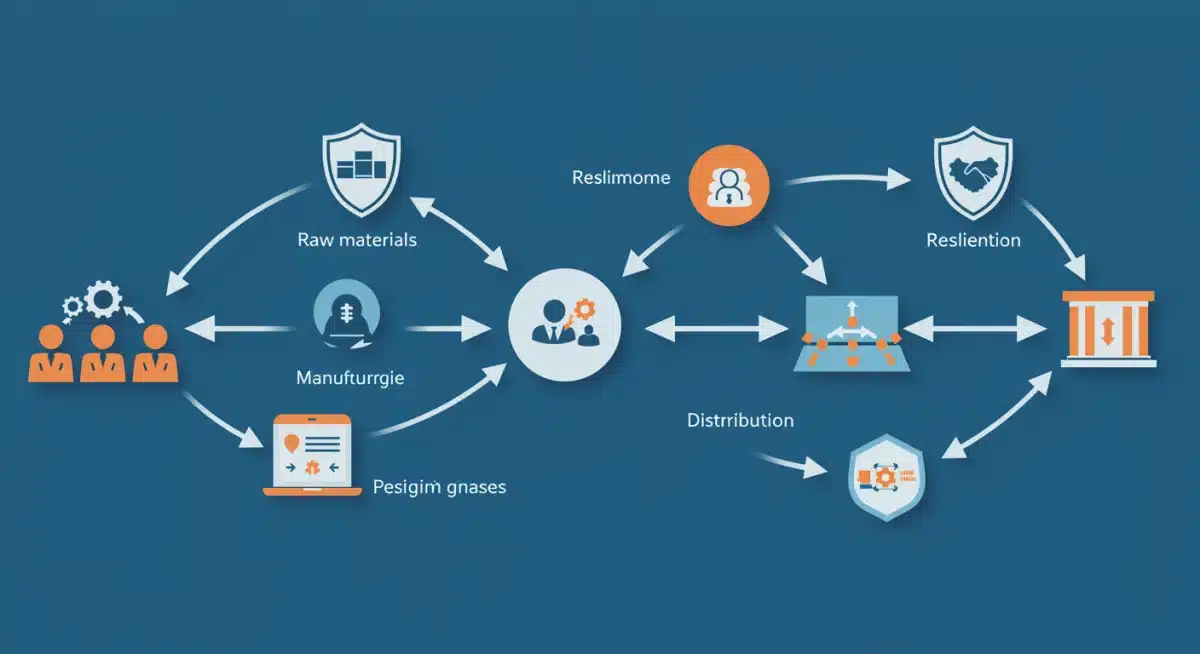
Embracing technology is no longer optional for SMBs aiming for resilience and compliance under the new Act. The right digital tools can streamline operations, reduce risks, and provide the transparency required by regulators. By strategically investing in technology, SMBs can not only meet the new standards but also position themselves at the forefront of modern supply chain management.
Strategic adjustments for small and medium businesses
Beyond immediate compliance, the 2025 Supply Chain Resilience Act necessitates strategic adjustments for SMBs to thrive in the long term. These adjustments involve a fundamental rethinking of business models, supplier relationships, and operational strategies. The goal is to build inherent resilience that goes beyond mere adherence to regulations, fostering sustainable growth and adaptability.
This is an opportunity for SMBs to not just react to external pressures but to proactively shape their future. By making informed strategic decisions now, businesses can transform potential challenges into opportunities for market differentiation and stronger competitive positioning.
Diversifying supplier networks
Reliance on a single supplier or a concentrated geographic region has proven to be a significant vulnerability. SMBs should strategically diversify their supplier networks, seeking out multiple sources for critical components and materials. This might involve exploring domestic alternatives, nearshoring options, or establishing relationships with suppliers in different international regions.
- Identifying alternative suppliers for critical inputs.
- Establishing backup agreements with secondary vendors.
- Geographic diversification of sourcing to mitigate regional risks.
Rethinking inventory management and warehousing
The traditional ‘just-in-time’ inventory model, while efficient, can be brittle in times of disruption. SMBs may need to reconsider their inventory management strategies, potentially holding slightly larger buffer stocks of critical items or exploring decentralized warehousing solutions. This balance between efficiency and resilience is a key strategic decision.
Making these strategic adjustments requires foresight and a willingness to adapt. For SMBs, it’s about embedding resilience into the very fabric of their business operations, ensuring that they are prepared for a future where supply chain disruptions are an increasingly common occurrence. Those who proactively embrace these strategic shifts will emerge stronger and more competitive.
Preparing for the future: long-term outlook for SMBs
The 2025 Supply Chain Resilience Act marks a pivotal moment for SMBs, not just as a regulatory hurdle, but as a catalyst for long-term strategic evolution. The changes introduced are foundational, aiming to reshape how businesses perceive and manage their supply chains for decades to come. Preparing for this future means adopting a mindset of continuous improvement and adaptation.
The long-term outlook suggests that supply chain resilience will become a core competitive differentiator. Consumers and partners alike will increasingly favor businesses that can demonstrate stable and ethical supply practices. SMBs that embed these principles early will be well-positioned for sustained success.
Embracing continuous improvement and adaptability
Resilience is not a static state but an ongoing process. SMBs must foster a culture of continuous improvement, regularly reviewing their supply chain strategies, assessing new risks, and adapting to emerging technologies and geopolitical shifts. This agile approach ensures that businesses remain robust in an ever-changing global environment.
- Regularly updating risk assessment protocols.
- Investing in ongoing training for supply chain personnel.
- Monitoring global events for potential impacts on supply chains.
Building strong partnerships and collaborations
No business operates in isolation. The Act indirectly encourages stronger partnerships and collaborations throughout the supply chain ecosystem. SMBs should actively seek to build robust relationships with their suppliers, customers, and even competitors, sharing insights and resources to collectively enhance resilience. Collaborative efforts can lead to shared best practices and collective risk mitigation strategies.
The future for SMBs under the 2025 Supply Chain Resilience Act is one of increased accountability, but also immense opportunity. By proactively engaging with its provisions, leveraging available support, and strategically adapting their operations, SMBs can build supply chains that are not only compliant but also robust, efficient, and ready for whatever the future holds. This foresight will be critical for long-term survival and prosperity in a dynamic global market.
| Key Provision | Brief Description |
|---|---|
| Risk Assessments | Mandatory identification and reporting of supply chain vulnerabilities. |
| Financial Aid | Access to federal grants and low-interest loans for resilience investments. |
| Domestic Sourcing | Emphasis and incentives for increasing US-based production and sourcing. |
| Transparency | Requirements for greater visibility into multi-tier supply chain operations. |
Frequently asked questions about the 2025 Supply Chain Resilience Act
The Act’s primary goal is to enhance the resilience and security of US supply chains against disruptions like pandemics, geopolitical issues, and natural disasters, ensuring the continuous availability of critical goods and services for SMBs and consumers alike.
SMBs, especially those in critical sectors, will be required to conduct regular risk assessments to identify vulnerabilities and develop mitigation plans. This necessitates internal frameworks and potentially new reporting to federal agencies.
The Act establishes federal grant programs for technology adoption and low-interest loan programs for infrastructure improvements and diversification efforts. These aim to help SMBs finance necessary investments without undue financial strain.
Transparency is crucial for identifying hidden risks and ethical concerns across the entire supply chain, not just immediate suppliers. It helps SMBs make informed decisions and builds trust with partners and consumers.
SMBs should focus on diversifying supplier networks, rethinking inventory management, and embracing continuous improvement. These adjustments foster inherent resilience, making businesses more adaptive and competitive in the long run.
Conclusion
The 2025 Supply Chain Resilience Act represents a significant turning point for small and medium businesses across the United States. Far from being just another layer of bureaucracy, it is a comprehensive effort to fortify the nation’s economic backbone against an increasingly unpredictable global environment. For SMBs, understanding and proactively adapting to its key provisions—from mandatory risk assessments and enhanced transparency to leveraging financial assistance and embracing technological advancements—is not merely about compliance; it’s about ensuring their long-term viability and fostering sustainable growth. By viewing these changes as strategic opportunities rather than insurmountable challenges, SMBs can transform their operations, build more resilient supply chains, and secure their place in the future of commerce.