Blockchain in Retail: US Companies Boost Supply Chain Transparency by 25% by 2025
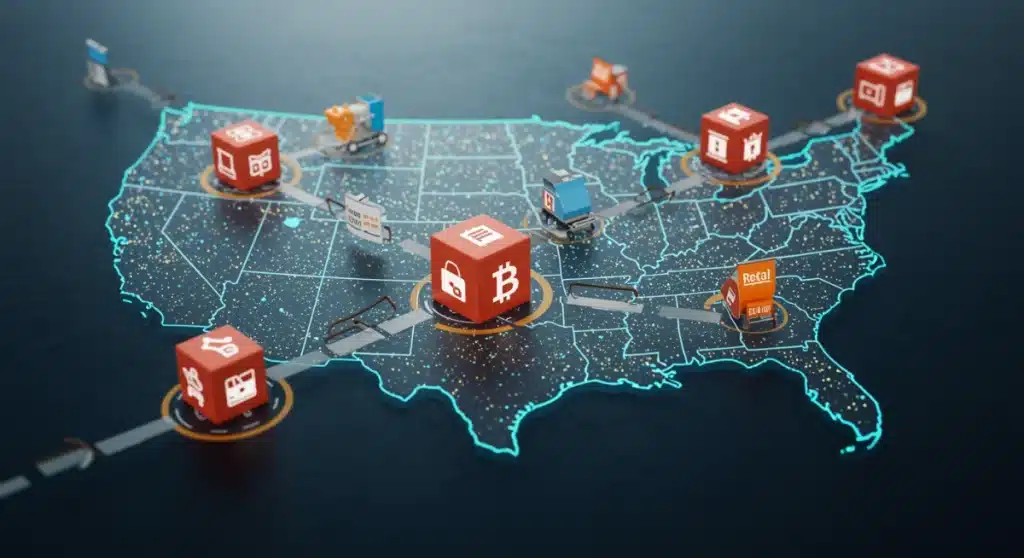
US retail companies are rapidly adopting blockchain technology to revolutionize their supply chains, aiming for a 25% increase in transparency by 2025. This strategic shift promises enhanced traceability, reduced fraud, and greater consumer trust, fundamentally reshaping the industry landscape.
The retail landscape in the United States is undergoing a significant transformation, driven by consumer demand for accountability and corporate mandates for efficiency. This shift is particularly evident in the adoption of blockchain technology, which is poised to help US companies achieve a remarkable 25% increase in supply chain transparency by 2025. The integration of blockchain in retail transparency is not merely a technological upgrade but a fundamental rethinking of how products move from origin to consumer.
The urgent need for supply chain transparency
In today’s globalized economy, supply chains are more complex than ever, stretching across continents and involving numerous intermediaries. This complexity often leads to opacity, making it difficult for consumers and businesses alike to ascertain the true origin, journey, and ethical footprint of products. The demand for clear, verifiable information is no longer a niche concern but a mainstream expectation.
Consumers are increasingly scrutinizing where their products come from, how they are made, and their environmental impact. This growing awareness, coupled with a series of high-profile incidents involving counterfeiting, unethical labor practices, and product recalls, has propelled supply chain transparency to the forefront of corporate priorities. Retailers that fail to provide this clarity risk losing customer trust and market share.
Addressing consumer demands
- Ethical sourcing: Consumers want assurance that products are made without exploitative labor or environmentally harmful practices.
- Product authenticity: The rise of counterfeit goods highlights the need for verifiable product origins.
- Food safety: Quick and accurate traceability is crucial in outbreaks or recalls, protecting public health.
- Sustainability: Tracking carbon footprints and waste generation throughout the supply chain is becoming essential.
The imperative for transparency extends beyond consumer sentiment. Regulatory bodies are also tightening requirements, particularly in sectors like food and pharmaceuticals, necessitating robust systems for tracking and reporting. Companies are realizing that investing in transparency is not just about compliance, but about building a resilient and trustworthy brand.
Ultimately, enhancing supply chain transparency is a strategic move that can differentiate brands, build stronger customer loyalty, and mitigate significant business risks. Blockchain offers a powerful solution to this multifaceted challenge, providing an immutable record of every transaction and movement within the supply chain.
How blockchain revolutionizes retail supply chains
Blockchain technology, at its core, is a decentralized, distributed ledger that records transactions across a network of computers. Each ‘block’ contains a timestamped batch of transactions, and once recorded, it cannot be altered. This inherent immutability and transparency make it an ideal tool for supply chain management, offering a single source of truth for all participants.
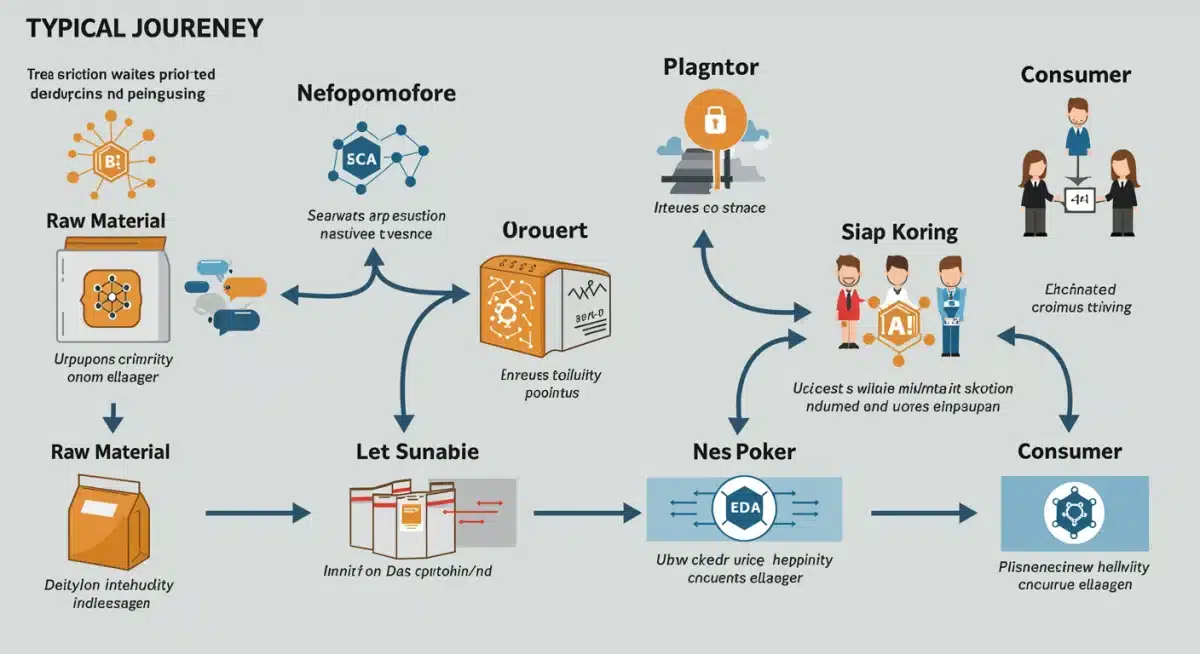
In a retail context, blockchain can track every step of a product’s journey. From the sourcing of raw materials to manufacturing, packaging, shipping, and finally, delivery to the customer, each event can be recorded on the blockchain. This creates an unchangeable, verifiable history that is accessible to all authorized parties, dismantling the traditional silos of information.
Key mechanisms of blockchain in supply chains
- Immutable ledger: All transactions are permanently recorded and cannot be tampered with, ensuring data integrity.
- Decentralization: No single entity controls the data, reducing points of failure and increasing trust among participants.
- Smart contracts: Automated agreements executed when predefined conditions are met, streamlining processes and reducing manual intervention.
- Enhanced traceability: Pinpointing the exact location and status of a product at any given time, from origin to shelf.
The ability to create a transparent and verifiable trail for every product is a game-changer. It allows retailers to quickly identify the source of contamination in a food recall, verify the authenticity of luxury goods, or confirm the ethical sourcing of materials. This level of detail was previously unattainable or prohibitively expensive, but blockchain makes it both feasible and efficient.
By leveraging these mechanisms, blockchain transforms opaque, fragmented supply chains into interconnected, trustworthy networks. This shift not only benefits consumers but also empowers businesses with unprecedented levels of data accuracy and operational efficiency.
US companies leading the charge: early adopters and success stories
The United States has emerged as a fertile ground for blockchain innovation in retail, with numerous companies recognizing its potential to address critical supply chain challenges. From food giants to luxury brands, early adopters are demonstrating tangible benefits, setting a precedent for wider industry adoption.
One prominent example comes from the food industry, where traceability is paramount. Companies are using blockchain to track produce from farm to fork, allowing for rapid identification of contaminated batches and minimizing the impact of recalls. This not only protects consumers but also safeguards brand reputation and reduces financial losses.
Notable US initiatives
- Walmart’s food traceability: Pioneering blockchain for fresh produce, significantly reducing the time to trace food origins from days to seconds.
- IBM Food Trust: A collaborative network built on blockchain, enabling food ecosystem participants to share data securely and transparently.
- Starbucks’ coffee bean tracking: Empowering customers to trace their coffee’s journey from farm to cup, enhancing brand story and ethical sourcing claims.
- De Beers’ diamond traceability: Using blockchain to ensure the authenticity and ethical origin of diamonds, combating conflict diamonds.
These case studies underscore blockchain’s versatility and its capacity to deliver real-world value across diverse retail sectors. The success of these early initiatives is inspiring other companies to explore and invest in similar solutions, further accelerating the technology’s integration into mainstream retail operations.
The competitive advantage gained through increased transparency and efficiency is proving to be a powerful motivator. As more US companies witness these successes, the momentum for blockchain adoption in retail supply chains is only expected to grow, driving towards the 25% transparency goal by 2025.
Overcoming implementation challenges
While the benefits of blockchain in retail supply chains are compelling, its implementation is not without hurdles. Companies face a range of technical, organizational, and cultural challenges that require careful planning and strategic execution. Understanding these obstacles is crucial for successful integration.
One significant challenge is the interoperability between different blockchain platforms and existing legacy systems. Many retailers operate with disparate systems that were not designed to communicate seamlessly with a decentralized ledger. Integrating these systems requires significant technical expertise and investment.
Common implementation obstacles
- Data standardization: Ensuring all participants use consistent data formats and protocols for seamless integration.
- Scalability concerns: Addressing the capacity of blockchain networks to handle the vast volume of transactions in large retail supply chains.
- Cost of implementation: Initial investment in technology, infrastructure, and training can be substantial.
- Ecosystem buy-in: Gaining agreement and participation from all supply chain partners, from suppliers to logistics providers.
Beyond the technical aspects, there’s also the challenge of organizational change management. Adopting blockchain often requires a shift in mindset, fostering collaboration and data sharing among parties who may have traditionally operated independently. This cultural transformation is as critical as the technological one.
However, companies are actively addressing these challenges through pilot programs, industry collaborations, and the development of more user-friendly blockchain solutions. The long-term benefits of enhanced transparency and efficiency are proving strong enough to warrant the upfront effort and investment in overcoming these hurdles.
The economic impact: efficiency, cost savings, and trust
The adoption of blockchain in retail supply chains extends far beyond mere transparency; it carries significant economic implications that can reshape business models and enhance profitability. The gains in efficiency, potential for cost savings, and the invaluable building of consumer trust are powerful drivers for this technological shift.
By providing an immutable and auditable record of every transaction, blockchain dramatically improves operational efficiency. Manual processes are replaced by automated smart contracts, reducing paperwork, human error, and delays. This streamlining of operations leads to faster product movement and reduced administrative overhead.
Economic advantages of blockchain in retail
- Reduced fraud and counterfeiting: Verifiable product origins protect revenue and brand reputation.
- Optimized inventory management: Real-time data on product location and status minimizes stockouts and overstocking.
- Faster dispute resolution: Clear transaction records simplify audits and resolve conflicts quickly.
- Lower compliance costs: Automated reporting and verifiable data ease the burden of regulatory requirements.
The ability to trace products instantly, for example, can drastically cut down the costs associated with product recalls. Instead of recalling an entire batch, businesses can pinpoint and isolate only the affected items, saving millions in logistics and disposal. Furthermore, reducing the incidence of counterfeit goods directly protects brand revenue and intellectual property.
Perhaps the most significant economic impact, though harder to quantify immediately, is the building of consumer trust. A transparent supply chain fosters loyalty, which translates into repeat business and a stronger brand image. In an increasingly competitive market, this trust becomes a key differentiator and a powerful economic asset.
Looking ahead: the future of blockchain in retail by 2025
As US companies strive to achieve 25% greater supply chain transparency by 2025, the trajectory for blockchain adoption in retail is clear: rapid expansion and deeper integration. This vision involves not just more companies using the technology, but also a more sophisticated and interconnected ecosystem.
The future will likely see a proliferation of industry-specific blockchain consortia, where competitors collaborate on shared infrastructure to solve common transparency challenges. This collaborative approach can accelerate adoption, reduce individual costs, and establish universal standards for data exchange.
Future trends and developments
- Increased interoperability: Blockchain networks will become more interconnected, allowing seamless data flow across different platforms.
- AI and IoT integration: Combining blockchain with Artificial Intelligence and the Internet of Things for predictive analytics and automated real-time tracking.
- Consumer-facing applications: More direct access for consumers to product traceability information via QR codes or mobile apps.
- Regulatory frameworks: Development of clearer legal and regulatory guidelines specifically for blockchain in supply chain management.
Furthermore, the technology itself will evolve, becoming more scalable, energy-efficient, and user-friendly. This maturation will lower the barriers to entry for smaller retailers, democratizing access to enhanced transparency and efficiency.
By 2025, blockchain will likely be an indispensable tool for US retail, transforming the industry from a collection of opaque, fragmented operations into a network of transparent, trust-based relationships. This fundamental shift will not only meet consumer demands but also drive new levels of operational excellence and competitive advantage.
| Key Aspect | Description |
|---|---|
| Transparency Goal | US companies aim for 25% increased supply chain transparency by 2025 using blockchain. |
| Core Benefit | Blockchain provides immutable, verifiable product traceability from origin to consumer. |
| Key Challenge | Overcoming interoperability, scalability, and ecosystem buy-in for effective implementation. |
| Economic Impact | Drives efficiency, reduces costs, and builds crucial consumer trust and brand loyalty. |
Frequently asked questions about blockchain in retail
Blockchain’s primary role is to create an immutable and transparent record of every product’s journey. This allows for verifiable traceability from raw materials to the consumer, enhancing trust, reducing fraud, and improving overall supply chain accountability and efficiency for retailers.
The 25% transparency increase by 2025 is an industry projection driven by widespread adoption of blockchain. By digitizing and decentralizing records, companies can share verifiable data across their supply networks, reducing information silos and providing unprecedented visibility into product origins and movements.
US retail companies benefit from enhanced brand reputation, reduced operational costs due to efficiency gains, stronger consumer trust through verifiable product information, and better compliance with regulations. It also helps in combating counterfeiting and streamlining product recalls.
Yes, significant challenges include ensuring interoperability with existing legacy systems, managing the high initial implementation costs, addressing scalability for large transaction volumes, and securing buy-in from all supply chain partners. Data standardization across the ecosystem is also crucial.
By 2025, consumers can expect greater assurance about product authenticity, ethical sourcing, and safety. They will have easier access to detailed product histories, potentially through QR codes, empowering them to make more informed purchasing decisions and fostering stronger trust in brands.
Conclusion
The journey towards a more transparent retail supply chain in the US, spearheaded by blockchain technology, is well underway. The ambitious goal of achieving a 25% increase in transparency by 2025 reflects a clear industry commitment to addressing consumer demands, enhancing operational efficiency, and building a more resilient economic framework. While challenges persist, the proven benefits in trust, cost savings, and fraud reduction are powerful motivators for continued innovation and adoption. As blockchain matures and integrates with other advanced technologies, its role in redefining retail will only grow, creating a future where every product’s story is clear, verifiable, and readily available.