Subscription Economy 2.0: 5 New Models for US Businesses in 2025

The Subscription Economy 2.0 is revolutionizing business operations across the US, introducing five advanced models that promise to redefine customer relationships and revenue generation by 2025.
The landscape of commerce is in constant flux, and the rise of the Subscription Economy 2.0 marks a pivotal shift for US businesses. This evolution goes beyond mere recurring payments, delving into sophisticated models that promise deeper customer engagement and more predictable revenue streams. Understanding these five new models is crucial for any enterprise aiming to thrive in 2025 and beyond.
The Evolution of Subscription Models: From Basic to Bespoke
The traditional subscription model, often associated with magazines or software licenses, has undergone a profound transformation. What began as a simple recurring payment for access has matured into a complex ecosystem where personalization, flexibility, and value delivery are paramount. This evolution is driven by consumer demand for convenience and tailored experiences, pushing businesses to innovate beyond standard offerings.
As we approach 2025, the Subscription Economy 2.0 is not just about selling access; it’s about curating a continuous relationship with the customer. This shift requires a fundamental rethinking of product development, marketing, and customer service. Businesses must move from transactional thinking to a partnership mindset, where customer success directly correlates with their own.
Personalization at Scale
One of the defining characteristics of this new era is the ability to personalize services at an unprecedented scale. Advanced analytics and AI are enabling companies to understand individual customer preferences and anticipate their needs, leading to highly customized subscription options.
- Tailored product recommendations based on usage data.
- Dynamic pricing models that adjust to customer activity.
- Proactive customer support anticipating potential issues.
This level of personalization fosters a stronger emotional connection with the brand, reducing churn and increasing lifetime value. It moves beyond generic offerings to solutions that feel uniquely designed for each subscriber.
The move towards bespoke subscriptions signifies a departure from one-size-fits-all strategies. Companies are now leveraging data to create intricate customer profiles, which in turn inform the development of highly specific subscription tiers and add-ons. This ensures that customers are always receiving value relevant to their evolving needs, thereby cementing their loyalty and willingness to continue their subscriptions.
Model 1: Experience-Based Subscriptions
The first new model focuses on delivering unique and curated experiences rather than just products or services. In an increasingly digital world, consumers crave tangible, memorable moments. This model caters to that desire by offering exclusive access to events, personalized content, or members-only communities that foster a sense of belonging and luxury.
For US businesses, this means moving beyond the utility of a product to the emotional resonance it can create. Think of subscriptions that offer access to virtual reality adventures, masterclasses with industry experts, or exclusive networking events. The value here lies in the intangible benefits and the feeling of being part of an elite group.
Curated Content and Events
Businesses are finding success by curating content that aligns with specific interests, offering subscribers access to premium articles, videos, or podcasts. Beyond digital content, exclusive invitations to webinars, workshops, or even physical events are becoming powerful draws.
- Access to premium, ad-free content libraries.
- Invitations to live virtual or in-person events.
- Early access to new product launches or beta programs.
These offerings transform a simple transaction into an ongoing relationship, where the subscriber feels continually enriched and valued. The emphasis is on continuous discovery and engagement, keeping the experience fresh and exciting.
This model thrives on the anticipation and delight derived from receiving something special and unexpected. By consistently delivering high-quality, exclusive experiences, businesses can build a loyal subscriber base that views their subscription not as an expense, but as an investment in personal growth, entertainment, or community.
Model 2: Outcome-Based Subscriptions
Outcome-based subscriptions represent a significant evolution, shifting the focus from the product or service itself to the results it delivers. Instead of paying for software, customers pay for improved efficiency, increased sales, or better health outcomes. This model aligns the vendor’s success directly with the customer’s success, creating a powerful incentive for both parties.
In the US market, this is particularly appealing to B2B clients who are increasingly scrutinizing ROI. For example, a marketing software company might charge based on the number of qualified leads generated, rather than a fixed monthly fee. This requires robust tracking and a deep understanding of customer goals, but the payoff is immense in terms of trust and long-term partnerships.
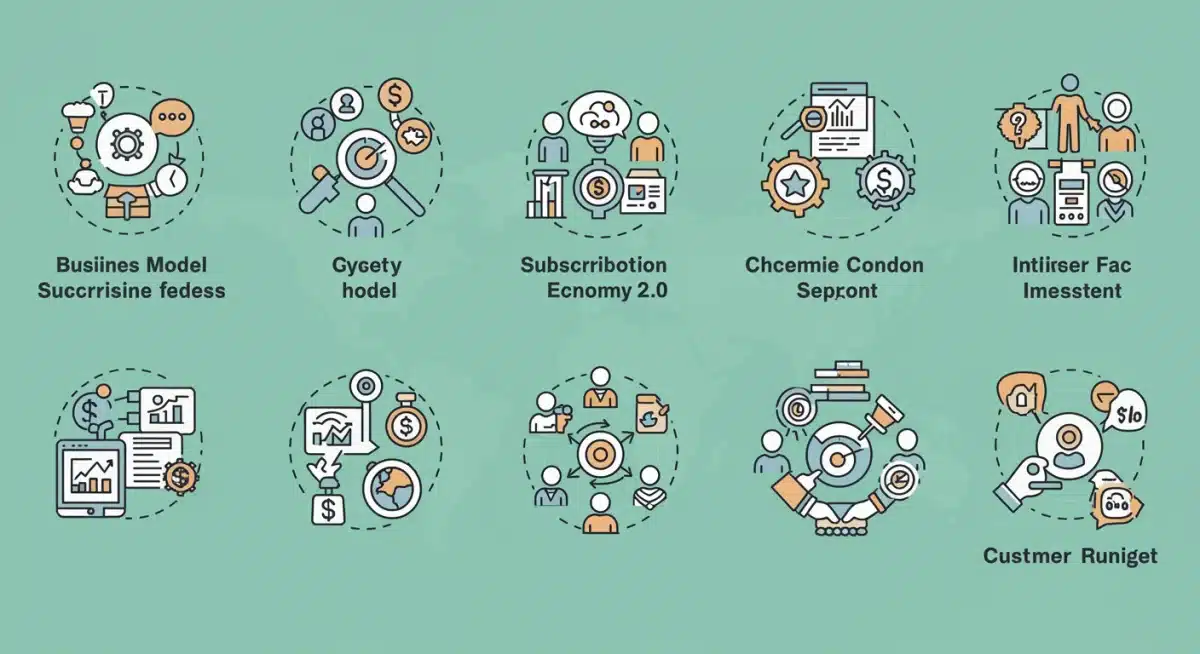
The core of this model is a shared risk and reward system. Businesses offering outcome-based subscriptions must be confident in their ability to deliver measurable results, as their revenue is directly tied to those achievements. This pushes companies to continually optimize their offerings and provide superior support.
Performance-Driven Pricing
Pricing structures in outcome-based models are often dynamic, fluctuating based on the achievement of predefined metrics. This incentivizes both the provider to perform and the customer to utilize the service effectively to maximize their returns.
- Software billed per successful transaction or conversion.
- Health programs charging based on achieved wellness goals.
- Consulting services with fees tied to project milestones.
This approach builds a strong foundation of trust and partnership, as both parties are working towards a common, measurable objective. It shifts the perception from a cost center to a profit driver.
By guaranteeing a specific outcome, businesses differentiate themselves significantly in competitive markets. This model demands a high degree of transparency and accountability, often requiring sophisticated data analytics to track and report on progress. However, the resulting customer satisfaction and loyalty can lead to highly sustainable and scalable growth.
Model 3: Community-Driven Subscriptions
The third model capitalizes on the human need for connection and belonging. Community-driven subscriptions offer access to exclusive networks, forums, or groups where members can interact, share knowledge, and collaborate. The value here is derived from the collective wisdom and shared experiences of the community itself.
For US businesses, this model is particularly potent in niches where shared interests or professional development are key. Think of platforms for freelancers to connect, special interest groups for hobbyists, or professional associations offering mentorship. The subscription fee grants entry to a valuable ecosystem where members gain support, insights, and opportunities they wouldn’t find elsewhere.
Building a successful community requires active moderation, curated content, and tools that facilitate genuine interaction. It’s not enough to simply create a forum; businesses must nurture the environment to ensure it remains vibrant and valuable to its members.
Exclusive Network Access
The primary draw of these subscriptions is often the access to an exclusive network of like-minded individuals or professionals. This exclusivity fosters a sense of prestige and provides a platform for meaningful connections.
- Private forums and discussion boards.
- Access to expert Q&A sessions.
- Opportunities for peer-to-peer learning and networking.
These communities become self-sustaining ecosystems, where members contribute to the overall value, making the subscription increasingly attractive over time. The collective intelligence and support are often more valuable than any single feature.
The power of community-driven subscriptions lies in their ability to create a strong sense of identity and shared purpose among members. Businesses that master this model can cultivate extremely loyal customer bases who not only subscribe for the content but for the invaluable connections and sense of belonging they receive.
Model 4: Hybrid Product-Service Subscriptions
This model merges physical products with ongoing services, creating a holistic offering that provides continuous value. It moves beyond a one-time product purchase by integrating maintenance, upgrades, consumables, or complementary services into a recurring package. This provides convenience for the customer and predictable revenue for the business.
Consider industries like home appliances, smart devices, or even automotive. Instead of just buying a smart home device, a customer might subscribe to a package that includes the device, regular software updates, premium support, and perhaps even scheduled maintenance or accessory replacements. This ensures optimal functionality and peace of mind.
The challenge for businesses is to seamlessly integrate the physical and digital components, ensuring that the service aspect truly enhances the product experience. This often involves IoT technology, AI-driven diagnostics, and a robust customer service infrastructure.
Integrated Value Proposition
The strength of hybrid subscriptions lies in their integrated value proposition, where the product’s utility is continuously enhanced by the accompanying services. This reduces friction for the customer and increases the overall perceived value.
- IoT devices with associated data analytics subscriptions.
- Printer subscriptions including ink delivery and maintenance.
- Luxury car subscriptions with all-inclusive servicing and insurance.
This model creates a ‘sticky’ relationship, as customers become reliant on the continuous flow of value and the convenience it provides. It transforms a discrete purchase into an ongoing partnership.
By bundling products with services, businesses can capture a larger share of the customer’s wallet and create a more sustainable revenue model. This approach often leads to higher customer retention rates, as the continuous value stream makes it harder for customers to switch to competitors offering only standalone products.
Model 5: Usage-Based Dynamic Subscriptions
The final new model, usage-based dynamic subscriptions, offers unparalleled flexibility by charging customers based on their actual consumption. Unlike fixed-tier subscriptions, this model allows pricing to scale up or down based on how much of a service or product is used. This is particularly attractive to customers who have fluctuating needs and want to avoid paying for unused capacity.
This model is already prevalent in cloud computing and utilities but is expanding rapidly into other sectors. For US businesses, implementing this requires sophisticated metering and billing systems, but it offers significant benefits in terms of fairness and customer satisfaction. It eliminates the problem of customers feeling overcharged for services they don’t fully utilize, or undercharged when their demand spikes.
The key to success here is transparency and real-time data access for the customer. They need to understand exactly how their usage translates into cost, allowing them to manage their expenses effectively. This builds trust and empowers customers to control their own spending.
Flexible Pricing for Variable Needs
Dynamic pricing ensures that customers only pay for what they use, making the service highly adaptable to changing demands. This flexibility is a major draw, especially for businesses with unpredictable workloads or individuals with varying consumption patterns.
- Cloud storage billed per gigabyte consumed.
- Streaming services with variable tiers based on viewing hours.
- Software licenses adjusting based on active user count.
This model fosters a sense of fairness and value, as customers perceive that they are getting exactly what they pay for, no more, no less. It also encourages efficient use of resources.
Implementing usage-based dynamic subscriptions requires robust technological infrastructure for accurate tracking and billing. However, the benefits of increased customer satisfaction, reduced churn due to perceived fairness, and optimized resource allocation make it a highly attractive model for forward-thinking businesses.
Challenges and Opportunities for US Businesses in 2025
Embracing these new subscription models is not without its challenges. Businesses must invest in advanced data analytics, robust billing systems, and a customer-centric culture. The shift from a transactional mindset to a relationship-centric approach requires significant organizational change and a commitment to continuous innovation.
However, the opportunities are immense. These models offer more predictable revenue streams, deeper customer insights, and stronger customer loyalty. By moving beyond traditional product sales, US businesses can unlock new growth avenues and build more resilient, future-proof enterprises.
Navigating the Transition
Transitioning to these advanced subscription models demands careful planning and execution. It often involves re-evaluating existing infrastructure, training employees, and clearly communicating the value proposition to customers.
- Investing in CRM and subscription management platforms.
- Developing clear pricing strategies for dynamic models.
- Fostering a customer success team dedicated to retention.
Success in the Subscription Economy 2.0 hinges on agility and a willingness to experiment. Businesses that can quickly adapt and refine their offerings based on customer feedback will be best positioned to capitalize on these new trends.
The competitive landscape of 2025 will reward businesses that prioritize customer relationships and continuous value delivery. Those that successfully implement these new subscription models will not only see increased revenue but also build a formidable competitive advantage based on deep customer loyalty and sustained engagement.
| Key Model | Brief Description |
|---|---|
| Experience-Based | Offers curated, exclusive access to events, content, or communities for memorable moments. |
| Outcome-Based | Customers pay for achieved results (e.g., efficiency, leads) rather than just the service. |
| Community-Driven | Provides access to exclusive networks, fostering interaction, knowledge sharing, and belonging. |
| Hybrid Product-Service | Combines physical products with ongoing services, like maintenance or upgrades, for continuous value. |
Frequently Asked Questions About Subscription Economy 2.0
Subscription Economy 1.0 focused on recurring access to products or services. Version 2.0 emphasizes deeper customer relationships, personalized experiences, and value delivery, often shifting from mere access to measurable outcomes or community building.
Outcome-based subscriptions are appealing because they align vendor success directly with customer success. US businesses, especially B2B, seek clear ROI, and paying for results rather than just a service offers greater transparency and accountability, fostering trust.
Small businesses can start by identifying a niche interest among their customers. They can then create exclusive online forums, host virtual workshops, or offer mentorship programs, building a sense of belonging and shared value around their brand or expertise.
Key investments include advanced CRM systems, robust subscription management platforms, sophisticated data analytics tools for personalization and outcome tracking, and flexible billing systems capable of handling dynamic or usage-based pricing models effectively.
The primary benefit is building more resilient and predictable revenue streams through enhanced customer loyalty. These models foster deeper relationships, provide invaluable customer data, and allow for greater adaptability to market changes, securing long-term growth.
Conclusion
The Subscription Economy 2.0 is more than just a trend; it’s a fundamental reshaping of how value is created and consumed. For US businesses looking to thrive in 2025, understanding and strategically implementing these five new models—experience-based, outcome-based, community-driven, hybrid product-service, and usage-based dynamic subscriptions—will be paramount. By prioritizing customer relationships, embracing personalization, and focusing on continuous value delivery, companies can unlock unprecedented growth and build enduring loyalty in an increasingly competitive market.