Personalization at Scale: Big Data for 10% US Customer Engagement
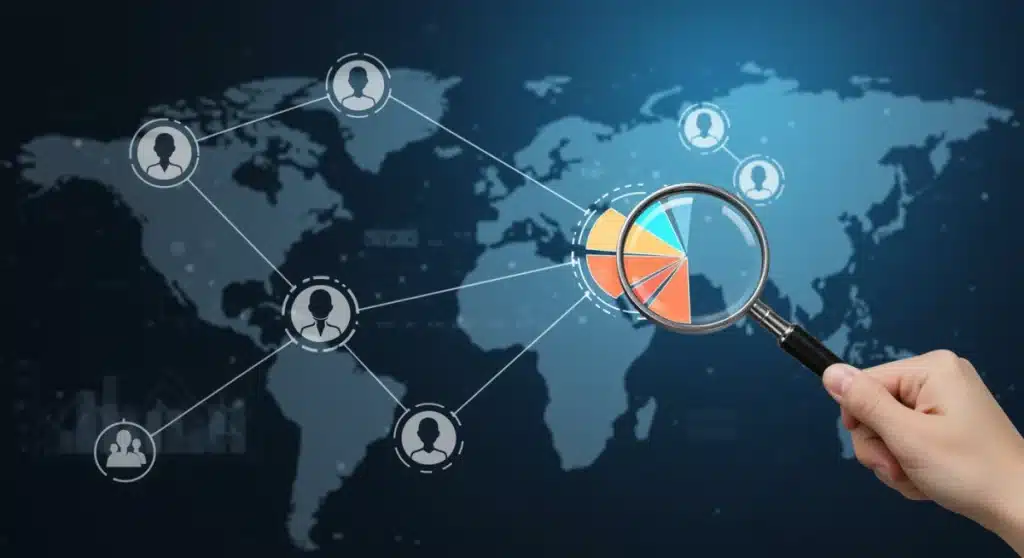
Achieving a 10% increase in US customer engagement by 2025 hinges on effective personalization at scale, driven by sophisticated big data analytics and strategic implementation across all touchpoints.
In today’s hyper-competitive digital landscape, the ability to deliver truly individualized experiences is no longer a luxury but a necessity. The ambition to achieve a 10% increase in US customer engagement by 2025 through Personalization at Scale is a strategic imperative for businesses aiming to thrive. This comprehensive guide will delve into how leveraging big data can unlock unprecedented levels of customer connection and loyalty.
Understanding personalization at scale
Personalization at scale involves delivering unique, relevant, and timely experiences to individual customers across all touchpoints, powered by data and automation. It moves beyond basic segmentation to understand each customer’s specific needs, preferences, and behaviors in real-time. This approach allows businesses to create millions of tailored interactions without manual intervention, making each customer feel uniquely valued.
The core idea is to replicate the one-on-one interaction of a skilled salesperson in a digital environment. By using advanced algorithms and vast datasets, companies can predict customer needs and offer solutions before the customer even articulates them. This level of foresight builds trust and strengthens relationships, transforming transactional interactions into meaningful engagements.
The evolution from segmentation to individualization
Historically, marketing efforts relied on broad demographic or psychographic segments. While effective to a degree, this approach often missed the nuances of individual customer journeys. Modern personalization leverages granular data to move past these limitations, focusing on the individual.
- Demographic Segmentation: Grouping customers by age, gender, income.
- Behavioral Segmentation: Analyzing purchase history, website interactions, and app usage.
- Psychographic Segmentation: Understanding lifestyles, values, and personality traits.
- Hyper-personalization: Real-time, dynamic content delivery based on immediate context and predicted intent.
This evolution means that a customer logging onto an e-commerce site might see a homepage layout, product recommendations, and promotional offers entirely different from another customer, all based on their unique digital footprint. This dynamic adaptation is key to driving higher engagement.
Why it matters for US customer engagement
US consumers are increasingly demanding personalized experiences. Studies consistently show that customers are more likely to purchase from brands that offer tailored content and recommendations. In a market saturated with choices, personalization becomes a critical differentiator.
Moreover, personalized experiences lead to increased customer satisfaction, reduced churn, and higher lifetime value. When customers feel understood and catered to, they are more likely to remain loyal and advocate for the brand. This positive feedback loop is essential for sustainable growth in the competitive US market.
In conclusion, personalization at scale is not merely a technological trend; it is a fundamental shift in how businesses interact with their customers. By moving beyond generic approaches to truly individualized experiences, companies can significantly enhance engagement and build lasting relationships.
The foundational role of big data
Big data is the bedrock upon which successful personalization at scale is built. Without vast quantities of diverse, high-quality data, businesses cannot gain the deep insights required to understand individual customer behaviors and preferences. It encompasses everything from transactional records and web analytics to social media interactions and IoT device data.
The sheer volume, velocity, and variety of big data present both challenges and immense opportunities. Companies must not only collect this data but also process, analyze, and interpret it effectively to extract actionable intelligence. This requires robust data infrastructure and advanced analytical capabilities.
Sources of invaluable customer data
A comprehensive approach to data collection is vital. Businesses should aim to gather data from every possible customer touchpoint, both online and offline. This holistic view provides a 360-degree understanding of the customer journey.
- First-Party Data: Direct interactions such as website visits, purchase history, app usage, and CRM records. This is the most valuable data as it comes directly from your customers.
- Second-Party Data: Data shared directly from a trusted partner, offering insights into their customer base that may overlap with yours.
- Third-Party Data: Data purchased from external providers, often used to enrich existing customer profiles with broader demographic or psychographic information.
- Behavioral Data: Clicks, page views, search queries, time spent on pages, and navigation paths.
- Contextual Data: Location, device type, time of day, weather, and current events that might influence customer behavior.
Integrating these diverse data sources into a unified customer profile is a complex but crucial step. Data silos can hinder effective personalization, making it imperative to establish a single source of truth for customer information.
From raw data to actionable insights
Collecting data is only the first step. The real power of big data lies in its analysis. Advanced analytics, including machine learning and artificial intelligence, are essential for identifying patterns, predicting future behavior, and segmenting customers dynamically.
These analytical tools can uncover hidden correlations and predict propensity to purchase, churn risk, or preferred communication channels. For example, by analyzing past purchases and browsing behavior, an AI system can recommend products with a high likelihood of conversion. This predictive capability allows for proactive personalization.
In essence, big data transforms raw information into a strategic asset. By understanding the intricacies of customer behavior, businesses can craft highly effective personalization strategies that resonate deeply with their target audience, ultimately boosting engagement.
Strategies for enhancing customer engagement
With a solid foundation of big data, businesses can implement a variety of strategies to enhance customer engagement through personalization. These strategies must be integrated across all customer touchpoints, creating a seamless and consistent experience.
Effective engagement strategies go beyond simply recommending products; they encompass tailoring communication, optimizing user experience, and providing proactive support. The goal is to make every interaction feel bespoke and valuable to the individual customer.
Personalized content and recommendations
One of the most direct applications of personalization is in content delivery and product recommendations. This can significantly increase conversion rates and average order values.
- Dynamic Website Content: Displaying different headlines, images, or calls to action based on a visitor’s profile and past interactions.
- Tailored Email Marketing: Sending emails with product suggestions, promotional offers, or content relevant to the recipient’s interests and purchase history.
- Personalized Product Recommendations: Using collaborative filtering and content-based filtering to suggest items a customer is likely to purchase, often seen on e-commerce platforms.
- Customized App Experiences: Modifying app interfaces, notifications, and features based on individual user behavior and preferences.
These methods ensure that customers are always presented with information and products that are most relevant to them, reducing cognitive load and increasing the likelihood of engagement.
Optimizing customer journeys with data
Mapping and optimizing the customer journey with data insights is another powerful strategy. This involves understanding how customers move through various stages, from awareness to post-purchase, and personalizing each step.
For example, if a customer abandons a shopping cart, personalized follow-up emails can be triggered with relevant offers or reminders. Similarly, post-purchase communications can be tailored to offer support, suggest complementary products, or solicit feedback.
Proactive customer service and support
Personalization also extends to customer service. By leveraging data, support agents can have a complete view of a customer’s history, preferences, and previous interactions, allowing them to provide more efficient and empathetic support.
Chatbots powered by AI can offer personalized responses and solutions based on customer data, resolving common queries quickly. For more complex issues, agents can use this data to offer tailored solutions, greatly improving customer satisfaction and engagement.
In summary, by strategically applying personalized content, optimizing customer journeys, and enhancing service with data, businesses can create a highly engaging environment that fosters loyalty and drives significant increases in customer interaction.
Technological enablers for personalization
Implementing personalization at scale is not possible without the right technological infrastructure. Advanced platforms and tools are essential for collecting, processing, analyzing, and activating big data effectively. These technologies form the backbone of any successful personalization strategy.
The landscape of marketing technology is constantly evolving, with new solutions emerging to address the complexities of data-driven personalization. Choosing the right stack involves understanding the specific needs of the business and its customer base.
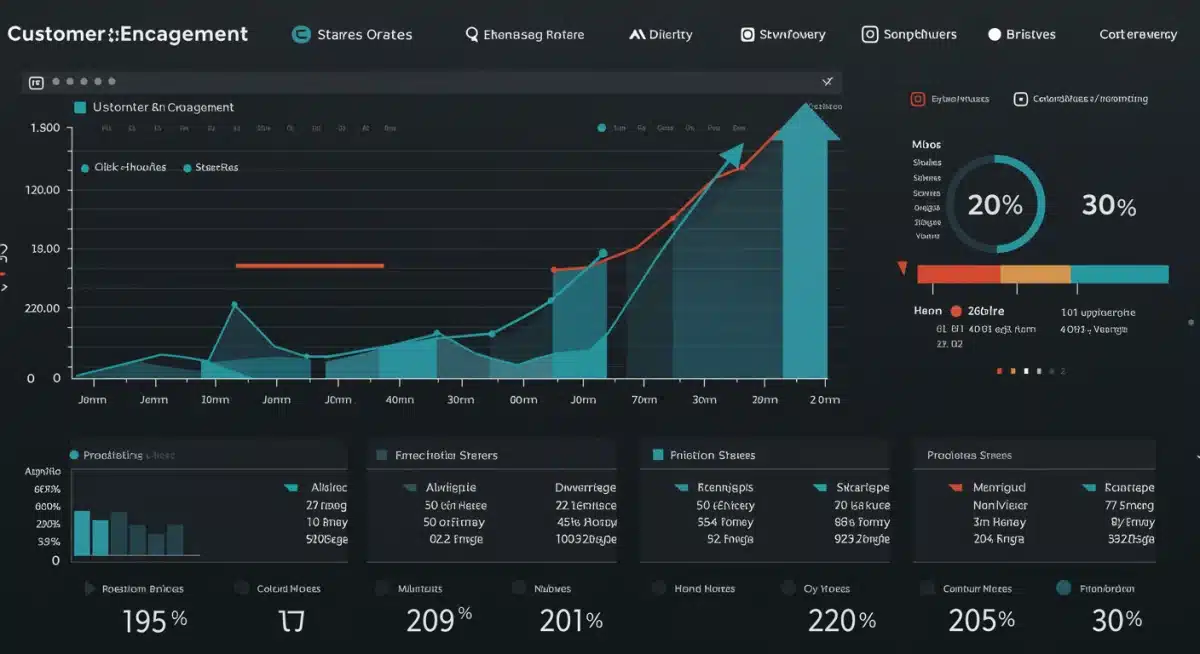
Customer data platforms (CDPs)
CDPs are central to personalization efforts. They aggregate customer data from various sources into a single, unified customer profile, making it accessible to other marketing and sales systems. This unified view is critical for delivering consistent personalized experiences across all channels.
- Data Unification: Consolidating data from CRM, ERP, web analytics, mobile apps, and other sources.
- Profile Management: Creating persistent, unique customer profiles.
- Segmentation: Enabling dynamic segmentation based on real-time behavior.
- Activation: Integrating with other tools for personalized campaign execution.
Without a robust CDP, businesses often struggle with fragmented customer data, leading to inconsistent personalization efforts and missed opportunities.
Artificial intelligence and machine learning
AI and machine learning (ML) are indispensable for processing big data and generating actionable insights. These technologies power recommendation engines, predictive analytics, and automated content optimization.
ML algorithms can identify subtle patterns in customer behavior that human analysts might miss, allowing for hyper-targeted personalization. For example, an ML model can predict the optimal time to send an email to a specific customer or the most effective product bundle to offer.
Marketing automation platforms
Marketing automation platforms (MAPs) are crucial for executing personalized campaigns at scale. They allow businesses to automate repetitive tasks, such as sending personalized emails, triggering follow-up messages, and updating customer segments based on real-time interactions.
When integrated with CDPs and AI tools, MAPs can deliver highly individualized communications across multiple channels, ensuring that the right message reaches the right customer at the right time. This automation is key to managing the complexity of personalization at scale.
In conclusion, the strategic deployment of CDPs, AI/ML, and marketing automation platforms provides the technological backbone necessary to transform raw data into powerful, personalized customer experiences, driving engagement and business growth.
Measuring impact and continuous optimization
Implementing personalization at scale is not a one-time project; it is an ongoing process of measurement, analysis, and optimization. To achieve and sustain a 10% increase in US customer engagement, businesses must continuously monitor the impact of their personalization efforts and adapt their strategies based on performance data.
Establishing clear KPIs (Key Performance Indicators) and leveraging A/B testing are crucial steps in this iterative process. Without robust measurement, it is impossible to understand what is working, what isn’t, and where improvements can be made.
Key performance indicators for engagement
To effectively measure the impact of personalization, businesses need to track a range of engagement metrics. These KPIs provide insights into how customers are interacting with personalized content and experiences.
- Click-Through Rate (CTR): Measures the percentage of people who click on a personalized link or call to action.
- Conversion Rate: The percentage of users who complete a desired action, such as a purchase or form submission, after a personalized interaction.
- Time Spent on Site/App: Indicates how engaged users are with personalized content and experiences.
- Repeat Purchase Rate: A higher rate suggests increased loyalty due to effective personalization.
- Customer Lifetime Value (CLTV): Measures the total revenue a business can expect from a customer over their relationship.
- Customer Satisfaction (CSAT) / Net Promoter Score (NPS): Surveys that gauge customer sentiment and loyalty.
Tracking these metrics over time allows businesses to quantify the return on investment (ROI) of their personalization strategies and identify areas for improvement.
A/B testing and experimentation
A/B testing is fundamental for optimizing personalization efforts. By comparing different versions of personalized content, recommendations, or user flows, businesses can identify what resonates most effectively with their audience.
For example, testing two different personalized email subject lines or two variations of a product recommendation algorithm can reveal which approach yields higher engagement. This data-driven experimentation ensures that personalization strategies are continually refined and improved.
Iterative refinement and adaptation
The market and customer preferences are constantly changing. Therefore, personalization strategies must be flexible and adaptable. Regular review of performance data, combined with insights from customer feedback, should inform continuous adjustments.
This iterative process involves analyzing results, making informed changes, and then testing those changes again. By embracing a culture of continuous optimization, businesses can ensure that their personalization efforts remain relevant and effective in driving sustained customer engagement.
In summary, robust measurement, systematic A/B testing, and a commitment to iterative refinement are essential for realizing and maintaining the targeted increase in US customer engagement through personalization at scale.
Challenges and ethical considerations
While the benefits of personalization at scale are clear, businesses must also navigate significant challenges and ethical considerations. These include data privacy concerns, the potential for algorithmic bias, and the need to maintain transparency with customers.
Addressing these issues proactively is crucial for building trust and ensuring that personalization efforts are both effective and responsible. A misstep in these areas can quickly erode customer confidence and negate the positive impact of personalization.
Data privacy and security
The collection and use of vast amounts of personal data raise legitimate privacy concerns. Customers are increasingly aware of their data rights and expect businesses to handle their information responsibly. Compliance with regulations such as GDPR and CCPA is paramount, especially for US businesses operating globally or within states with stringent privacy laws.
- Transparency: Clearly communicate what data is collected and how it will be used.
- Consent: Obtain explicit consent for data collection and processing, particularly for sensitive information.
- Security: Implement robust cybersecurity measures to protect customer data from breaches.
- Anonymization/Pseudonymization: Where possible, use anonymized or pseudonymized data to reduce privacy risks.
Failing to protect customer data or being opaque about its use can lead to severe reputational damage and legal penalties.
Algorithmic bias and fairness
AI and machine learning algorithms, while powerful, can inadvertently perpetuate or even amplify existing biases present in the training data. This can lead to unfair or discriminatory personalized experiences, alienating certain customer segments.
For example, if historical purchasing data disproportionately reflects certain demographics, recommendation engines might inadvertently exclude products relevant to underrepresented groups. Businesses must actively work to identify and mitigate algorithmic bias through diverse data sets and regular auditing of their models.
Maintaining transparency and trust
Customers are more likely to embrace personalization if they understand its benefits and trust the brand. Transparency about how personalization works and how it benefits the customer can build this trust.
Avoid overly intrusive or “creepy” personalization tactics that make customers feel their privacy is being invaded. The goal is to provide helpful, relevant experiences, not to appear omniscient or manipulative. Striking the right balance is key to fostering a positive relationship.
In conclusion, while the pursuit of personalization at scale offers immense advantages, businesses must approach it with diligence, prioritizing data privacy, ensuring algorithmic fairness, and fostering transparency to build and maintain customer trust.
The future of personalized engagement in the US market
The trajectory for personalization in the US market is one of continuous advancement, driven by emerging technologies and evolving customer expectations. The quest for a 10% increase in US customer engagement by 2025 is just the beginning, as businesses will increasingly lean into more sophisticated and immersive personalized experiences.
Future trends suggest an even deeper integration of personalization into every facet of the customer journey, moving towards truly adaptive and anticipatory interactions. The focus will shift from merely reacting to customer behavior to proactively shaping their experiences.
Emerging technologies and trends
Several emerging technologies are poised to redefine personalization in the coming years:
- Generative AI: Beyond recommending existing content, generative AI can create entirely new, personalized content such as product descriptions, ad copy, or even virtual assistants tailored to individual preferences.
- Voice and Conversational AI: Personalization through voice interfaces will become more sophisticated, allowing for natural, intuitive interactions that adapt to user tone and context.
- Augmented and Virtual Reality (AR/VR): AR/VR can offer immersive personalized shopping experiences, allowing customers to virtually try on clothes or visualize products in their homes.
- Edge Computing: Processing data closer to the source (e.g., on a customer’s device) can enable real-time personalization with even greater speed and privacy.
These technologies promise to unlock new dimensions of personalization, making experiences more engaging, convenient, and tailored than ever before.
Anticipatory personalization
The next frontier is anticipatory personalization, where systems predict customer needs and preferences before they are explicitly stated. This moves beyond reactive recommendations to proactive suggestions and solutions.
For example, a smart home system might anticipate a user’s need for a specific grocery item based on past consumption patterns and environmental factors, then suggest adding it to a shopping list. This level of foresight provides immense value and convenience to the customer.
Hyper-contextual experiences
Future personalization will also be hyper-contextual, leveraging real-time environmental data (location, weather, time of day, current events) alongside individual preferences. This allows for truly dynamic experiences that adapt to the immediate situation.
Imagine walking past a coffee shop and receiving a personalized offer for your favorite drink, based on your current location, past purchases, and the fact that it’s a cold morning. This fusion of individual and contextual data creates highly relevant and timely engagements.
Ultimately, the future of personalized engagement in the US market will be characterized by a seamless, intelligent, and highly intuitive interaction between brands and consumers. Businesses that embrace these advancements will be best positioned to capture and sustain customer loyalty, far exceeding the 10% engagement increase target.
| Key Point | Brief Description |
|---|---|
| Personalization at Scale | Delivering unique, data-driven experiences to individual customers across all touchpoints, automating tailored interactions. |
| Big Data Foundation | Utilizing vast, diverse data (first, second, third-party) and advanced analytics to extract actionable customer insights. |
| Engagement Strategies | Implementing personalized content, optimizing customer journeys, and enhancing service to foster loyalty. |
| Ethical Considerations | Addressing data privacy, algorithmic bias, and maintaining transparency to build and sustain customer trust. |
Frequently asked questions about personalization at scale
Personalization at scale involves using technology and data to deliver individualized experiences to millions of US customers simultaneously. It’s about tailoring content, offers, and interactions based on each customer’s unique preferences and behaviors, all while maintaining efficiency and consistency across platforms.
Big data provides the raw material—insights into customer behaviors, preferences, and demographics—that fuels effective personalization. By analyzing vast datasets, businesses can understand individual needs, predict future actions, and offer highly relevant experiences that resonate deeply with customers, thus boosting engagement.
Key technologies include Customer Data Platforms (CDPs) for unifying customer data, Artificial Intelligence (AI) and Machine Learning (ML) for advanced analytics and predictions, and Marketing Automation Platforms (MAPs) for executing personalized campaigns across various channels efficiently.
Significant challenges include ensuring data privacy and security, addressing potential algorithmic biases to maintain fairness, and managing the complexity of integrating diverse data sources and technological platforms. Building and maintaining customer trust through transparency is also crucial.
Success can be measured through various KPIs such as click-through rates, conversion rates, time spent on site/app, repeat purchase rates, and customer lifetime value. A/B testing and continuous monitoring of these metrics are vital for ongoing optimization and proving ROI.
Conclusion
The pursuit of a 10% increase in US customer engagement by 2025 through personalization at scale represents a transformative opportunity for businesses. By meticulously leveraging big data, deploying advanced technologies like AI and CDPs, and implementing customer-centric strategies, companies can forge deeper, more meaningful connections with their audience. While challenges related to privacy and ethics must be carefully navigated, the future of commerce undeniably lies in delivering hyper-relevant, individualized experiences. Businesses that commit to this data-driven journey will not only meet but exceed evolving customer expectations, securing a competitive edge in the dynamic US market.