Predictive Analytics for Inventory Management: 18% Stockout Reduction by 2025

Predictive analytics for inventory management is transforming supply chains, enabling businesses to significantly reduce stockouts by an impressive 18% by 2025 through data-driven forecasting and optimized decision-making.
In today’s fast-paced commercial landscape, the ability to anticipate demand and manage stock efficiently is not just an advantage; it’s a necessity. Predictive analytics for inventory management: reducing stockouts by 18% in 2025 is emerging as a critical strategy for businesses aiming to stay competitive and responsive. This approach moves beyond traditional forecasting, leveraging sophisticated algorithms and vast datasets to predict future demand with unprecedented accuracy, thereby preventing costly stockouts and overstock situations.
The imperative for predictive analytics in inventory
The modern retail and supply chain environment is characterized by volatility and increasing customer expectations. Traditional inventory management methods, often reliant on historical data and manual adjustments, struggle to keep pace with these dynamics. This section explores why predictive analytics has become an indispensable tool for businesses striving for operational excellence and customer satisfaction.
Challenges of traditional inventory management
Many companies still grapple with outdated systems that lead to inefficiencies. These systems often fail to account for external variables like economic shifts, seasonal trends, and unexpected disruptions, resulting in either excess inventory — tying up capital and incurring storage costs — or critical stockouts that harm sales and customer loyalty.
- Inaccurate demand forecasting: Relying solely on past sales rarely predicts future demand accurately.
- Manual processes: Time-consuming and prone to human error, slowing down decision-making.
- Limited visibility: Lack of real-time insights into inventory levels across the entire supply chain.
- Inefficient resource allocation: Misjudging inventory needs leads to wasted resources.
The strategic advantage of data-driven insights
Predictive analytics offers a powerful solution by transforming raw data into actionable insights. It enables companies to proactively address potential issues before they escalate, fostering a more agile and resilient supply chain. By understanding future demand patterns, businesses can optimize ordering, production, and distribution, ensuring products are available when and where customers want them.
This proactive stance not only mitigates risks but also unlocks new opportunities for growth and efficiency. Companies can better manage promotions, introduce new products with greater confidence, and even personalize inventory strategies based on specific customer segments. The shift from reactive to proactive management is a game-changer for profitability and market positioning.
Ultimately, the move towards predictive analytics in inventory management is driven by the need for greater precision and responsiveness. Businesses that embrace these technologies are better positioned to navigate market complexities, minimize operational costs, and deliver superior customer experiences, paving the way for significant improvements like an 18% reduction in stockouts by 2025.
How predictive analytics works for inventory
Predictive analytics leverages advanced statistical algorithms and machine learning techniques to identify patterns and forecast future events based on historical and real-time data. In the context of inventory management, this means moving beyond simple averages to anticipate demand fluctuations with remarkable accuracy.
Key components of predictive inventory models
Effective predictive models integrate various data sources and analytical techniques. This holistic approach provides a comprehensive view of factors influencing inventory, from granular sales data to broader market trends. Understanding these components is crucial for successful implementation.
- Historical sales data: The foundation for identifying past trends and seasonality.
- External factors: Economic indicators, weather patterns, social media trends, and competitor activities.
- Machine learning algorithms: Techniques like regression, time series analysis, and neural networks to build predictive models.
- Real-time data feeds: Integrating POS data, supply chain updates, and logistics information for dynamic adjustments.
These models are not static; they continuously learn and adapt as new data becomes available, refining their predictions over time. This iterative process ensures that the forecasts remain relevant and accurate even in rapidly changing market conditions.
From data to actionable insights
The power of predictive analytics lies in its ability to translate complex data into clear, actionable recommendations. Instead of simply predicting numbers, the system can suggest optimal reorder points, safety stock levels, and even distribution strategies. This empowers inventory managers to make informed decisions quickly and confidently.
For instance, if a model predicts a surge in demand for a particular product due to an upcoming social event or a viral trend, it can automatically trigger alerts for increased ordering or production. Conversely, if demand is expected to dip, it can advise on reducing stock to avoid obsolescence. This level of foresight is invaluable for maintaining optimal inventory levels.
By effectively processing vast amounts of data and identifying subtle correlations, predictive analytics provides a robust framework for optimizing inventory. It allows businesses to move from reactive problem-solving to proactive strategic planning, directly contributing to goals like reducing stockouts and improving overall operational efficiency.
Benefits of reducing stockouts with predictive analytics
Reducing stockouts is a primary objective for any business, and predictive analytics offers a powerful means to achieve this. The benefits extend far beyond simply having products on shelves, impacting customer satisfaction, revenue, and operational costs.
Enhanced customer satisfaction and loyalty
When customers consistently find the products they need, their trust in a brand grows. Frequent stockouts lead to frustration and a tendency to seek alternatives, potentially losing customers permanently. Predictive analytics ensures product availability, fostering positive customer experiences.
- Improved product availability: Meeting customer demand consistently.
- Reduced customer churn: Keeping customers satisfied and coming back.
- Positive brand perception: Being known as a reliable and well-stocked retailer.
- Increased sales opportunities: Never missing a sale due to lack of inventory.
This enhanced satisfaction translates directly into stronger customer loyalty and positive word-of-mouth, which are invaluable assets in a competitive market. A reliable supply chain, supported by accurate predictions, becomes a significant differentiator.
Optimized operational efficiency and cost savings
Beyond customer-facing benefits, a reduction in stockouts, driven by predictive analytics, also yields substantial internal efficiencies and cost savings. This includes everything from reduced emergency orders to better utilization of warehouse space.
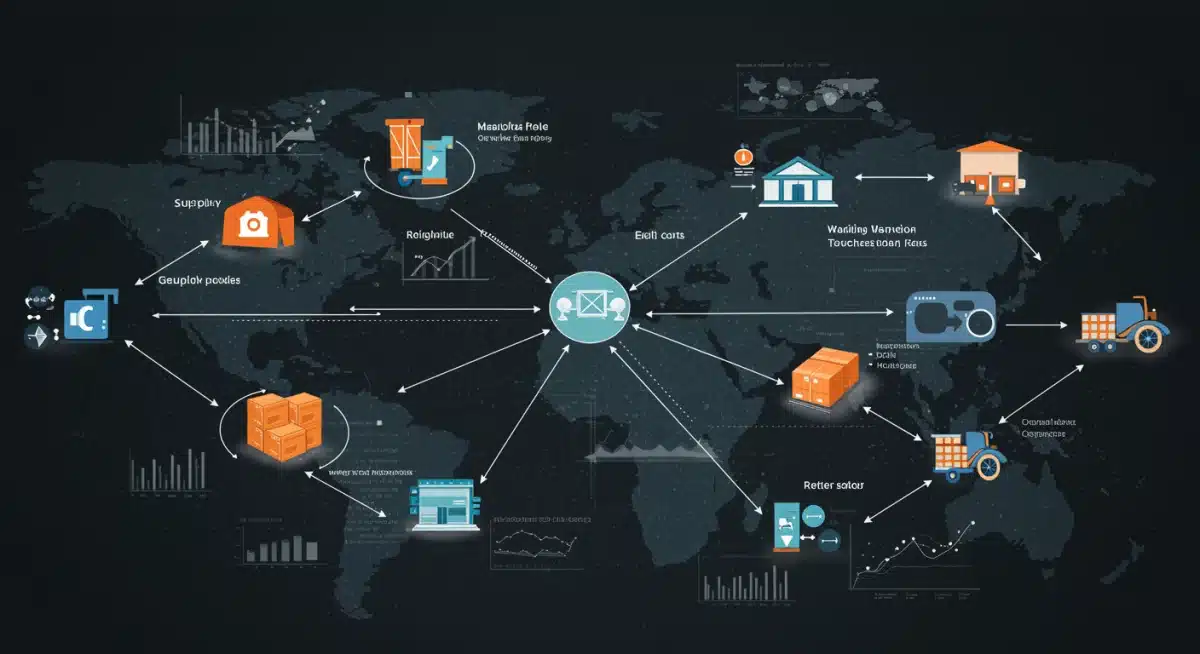
Emergency orders, often required to compensate for unexpected stockouts, typically come with higher shipping costs and expedited fees. By anticipating demand, businesses can plan orders more effectively, leveraging bulk discounts and standard shipping rates. Furthermore, optimal inventory levels mean less capital tied up in excess stock and reduced storage costs.
Predictive analytics also minimizes the need for costly markdowns to clear slow-moving inventory that might have accumulated due to inaccurate forecasts. This holistic improvement in operational efficiency directly contributes to a healthier bottom line and increased profitability. The overall impact of stockout reduction on financial performance is significant and measurable.
Implementing predictive analytics: challenges and solutions
While the benefits of predictive analytics are clear, successful implementation requires careful planning and addressing potential hurdles. Businesses must navigate data integration, talent acquisition, and the cultural shift towards data-driven decision-making.
Data integration and quality
One of the primary challenges is consolidating data from disparate systems. Inventory data often resides in different silos, from ERPs to WMS and POS systems. Ensuring data quality and consistency across these sources is paramount for accurate predictions.
- Siloed data: Information scattered across various organizational departments and systems.
- Data cleansing: The need to identify and correct errors, inconsistencies, and duplicates.
- Integration platforms: Investing in robust solutions to bring data together seamlessly.
- Real-time data streams: Establishing infrastructure for continuous data flow.
Addressing these data challenges often involves investing in data warehousing solutions, ETL (Extract, Transform, Load) processes, and API integrations to create a unified data landscape. Without high-quality, integrated data, even the most sophisticated algorithms will produce unreliable forecasts.
Talent and technology adoption
Another significant hurdle is the availability of skilled personnel who can develop, implement, and manage predictive analytics solutions. Data scientists, machine learning engineers, and business analysts with domain expertise are crucial for extracting maximum value from these technologies.
Beyond talent, there’s the challenge of technology adoption within the organization. Employees accustomed to traditional methods may resist new systems, requiring robust change management strategies, comprehensive training, and clear communication of the benefits. Fostering a data-driven culture is essential for long-term success.
Solutions include upskilling existing staff, hiring specialized talent, and partnering with external experts. Companies should also prioritize user-friendly interfaces for predictive analytics tools to ensure broad adoption and empower decision-makers at all levels. Overcoming these challenges is vital for realizing the full potential of predictive analytics in inventory management.
Strategies for achieving an 18% stockout reduction by 2025
Reaching an ambitious goal like an 18% stockout reduction requires a multi-faceted approach, combining technology with strategic operational changes. This section outlines key strategies for businesses to implement as they work towards this target.
Leveraging advanced forecasting techniques
Moving beyond basic statistical models, businesses should explore more sophisticated machine learning algorithms that can detect subtle patterns and adapt to dynamic market conditions. This includes algorithms capable of handling irregular demand and incorporating a wider array of influencing factors.
- Multi-variate analysis: Incorporating numerous variables beyond historical sales.
- AI-driven demand sensing: Real-time adjustments based on immediate market signals.
- Scenario planning: Modeling different future outcomes to prepare for various possibilities.
- Prescriptive analytics: Not just predicting, but recommending optimal actions.
These advanced techniques enable a much finer-grained understanding of demand, allowing for highly precise inventory adjustments. The goal is to minimize both overstocking and understocking by predicting demand with greater confidence and granularity.
Supply chain collaboration and visibility
Effective inventory management is not an isolated function; it’s deeply intertwined with the entire supply chain. Enhancing collaboration with suppliers and gaining end-to-end visibility are crucial for proactively preventing stockouts.
Sharing predictive forecasts with suppliers allows them to better plan their production and delivery schedules, reducing lead times and improving reliability. Real-time tracking of goods in transit and warehouse levels provides an immediate picture of inventory status, enabling quick responses to any deviations. This integrated approach ensures that all parties are aligned and working towards the common goal of optimal inventory flow.
By fostering strong partnerships and implementing technologies that provide comprehensive visibility, businesses can create a more resilient and responsive supply chain. This collaborative ecosystem is fundamental to achieving and sustaining significant reductions in stockouts, solidifying the path to the 18% target by 2025.
Future trends in predictive inventory management
The field of predictive analytics is continuously evolving, with exciting new technologies and methodologies on the horizon. Staying abreast of these trends is crucial for businesses looking to maintain a competitive edge and further optimize their inventory operations.
Integration with AI and IoT
The convergence of Artificial Intelligence (AI) and the Internet of Things (IoT) promises to revolutionize inventory management. IoT devices can provide real-time data on inventory levels, environmental conditions, and even product movement within warehouses, feeding this information directly into AI-powered predictive models.
- Automated inventory tracking: Smart shelves and RFID tags providing continuous updates.
- Predictive maintenance for equipment: Preventing disruptions in warehouse operations.
- Dynamic routing: Optimizing delivery paths based on real-time traffic and demand.
- Voice and image recognition: Enhancing accuracy in warehouse operations and quality control.
This integration creates a highly intelligent and autonomous inventory system, capable of self-optimizing and responding to changes with minimal human intervention. The ability to collect and process vast amounts of granular, real-time data will unlock new levels of precision in demand forecasting and inventory control.
Ethical considerations and data privacy
As predictive analytics becomes more sophisticated and relies on increasingly diverse data sets, ethical considerations and data privacy become paramount. Businesses must ensure that data collection and usage comply with regulations and maintain customer trust.
Transparency in data practices, robust cybersecurity measures, and adherence to privacy laws like GDPR and CCPA are essential. Companies must also consider the ethical implications of using advanced analytics, ensuring fairness and avoiding biases in their algorithms. Building trust with customers and stakeholders regarding data handling is crucial for sustained success and reputation.
The future of predictive inventory management is bright, offering unprecedented opportunities for efficiency and optimization. However, responsible implementation, guided by ethical principles and a commitment to data privacy, will be key to harnessing its full potential while maintaining consumer confidence in a rapidly evolving digital landscape.
Measuring success and continuous improvement
Achieving an 18% reduction in stockouts by 2025 is not a one-time event; it’s an ongoing journey of measurement, analysis, and continuous improvement. Establishing clear metrics and a feedback loop is essential for sustained success.
Key performance indicators (KPIs) for stockout reduction
To effectively track progress, businesses need to define and monitor specific KPIs related to inventory performance. These metrics provide a clear picture of how well predictive analytics solutions are performing and where further adjustments might be needed.
- Stockout rate: The percentage of customer orders that cannot be fulfilled immediately.
- Fill rate: The percentage of orders fulfilled completely from available stock.
- Inventory turnover: How quickly inventory is sold and replaced.
- Forecast accuracy: The deviation between predicted and actual demand.
Regularly reviewing these KPIs allows businesses to assess the impact of their predictive analytics initiatives. Significant improvements in these metrics indicate successful implementation and optimized inventory processes, while stagnation or decline signals areas requiring attention.
Iterative optimization and feedback loops
Predictive analytics models are not static; they need continuous refinement. Establishing a robust feedback loop allows for ongoing learning and adaptation, ensuring the models remain accurate and relevant as market conditions change.
This involves regularly comparing predictions with actual outcomes, identifying discrepancies, and using this information to retrain and improve the algorithms. Feedback from inventory managers and sales teams, who have direct market insights, is also invaluable. Their qualitative observations can complement quantitative data, leading to more nuanced and effective models.
By embracing an iterative approach, where models are constantly tested, refined, and improved, businesses can ensure their predictive analytics solutions continue to deliver optimal results. This commitment to continuous improvement is what ultimately drives and sustains significant reductions in stockouts, maintaining an agile and highly efficient inventory management system.
| Key Aspect | Brief Description |
|---|---|
| Demand Forecasting | Utilizes machine learning and diverse data to predict future product demand accurately. |
| Stockout Reduction | Aims for an 18% reduction by 2025 by optimizing inventory levels and preventing shortages. |
| Operational Efficiency | Streamlines ordering, reduces carrying costs, and minimizes emergency shipments. |
| Customer Satisfaction | Ensures product availability, enhancing customer loyalty and brand reputation. |
Frequently asked questions about predictive inventory
Predictive analytics in inventory management uses historical data, machine learning, and statistical algorithms to forecast future demand and optimize stock levels. It helps businesses anticipate customer needs, mitigate risks, and prevent stockouts or overstock situations, leading to more efficient operations and higher profitability.
By providing highly accurate demand forecasts, predictive analytics enables businesses to align inventory levels precisely with anticipated needs. This precision minimizes the chances of running out of popular items while avoiding excess stock. The 18% reduction is an ambitious yet achievable target through strategic adoption and continuous refinement of these advanced tools.
Effective models rely on diverse data, including historical sales, promotional data, seasonal trends, economic indicators, competitor activities, and real-time point-of-sale information. Integrating external factors like weather forecasts or social media sentiment can further enhance accuracy, providing a comprehensive view for better predictions and inventory decisions.
Key challenges include integrating fragmented data from various systems, ensuring data quality, and acquiring or training skilled personnel like data scientists. Additionally, overcoming organizational resistance to new technologies and fostering a data-driven culture are crucial for successful adoption and maximizing the benefits of predictive analytics solutions.
Long-term benefits include significantly improved customer satisfaction due to consistent product availability, reduced operational costs from optimized inventory and fewer emergency orders, and enhanced profitability. It also fosters a more agile and resilient supply chain, better equipped to handle market fluctuations and unexpected disruptions, ensuring sustainable growth.
Conclusion
The journey towards achieving an 18% reduction in stockouts by 2025 through predictive analytics is a testament to the transformative power of data-driven decision-making. As businesses navigate an increasingly complex global market, the precision and foresight offered by advanced analytical tools are no longer optional but essential. By embracing robust data integration, fostering a culture of continuous improvement, and strategically leveraging AI and IoT, companies can not only meet this ambitious goal but also redefine operational excellence, enhance customer loyalty, and secure a significant competitive edge in the retail and commerce landscape. The future of inventory management is intelligent, proactive, and deeply rooted in predictive insights.