AI-Powered Logistics: Disrupting US Supply Chains for Retailers by 2025
AI-powered logistics are poised to dramatically disrupt US supply chains by 2025, promising retailers an impressive 15% efficiency boost through optimized operations, predictive analytics, and enhanced decision-making capabilities.
The landscape of commerce is constantly evolving, and by 2025, AI-powered logistics are disrupting US supply chains in ways that promise unprecedented efficiency for retailers. This technological leap isn’t just an upgrade; it’s a fundamental shift, offering a potential 15% efficiency boost that will redefine competitive advantage across the United States.
the rise of AI in supply chain management
Artificial intelligence is no longer a futuristic concept; it’s a present-day reality rapidly transforming industries, with logistics at the forefront. The sheer volume of data generated in supply chains, from inventory levels to shipping routes and customer demands, makes it an ideal domain for AI’s analytical capabilities. This isn’t just about automation; it’s about intelligent automation that learns and adapts.
The integration of AI in supply chain management allows for a level of precision and foresight previously unattainable. Retailers are increasingly looking to these advanced systems to navigate the complexities of modern commerce, driven by consumer expectations for faster, more reliable deliveries. The competitive pressure to deliver quickly and cost-effectively is immense, making AI an indispensable tool.
predictive analytics and demand forecasting
One of the most impactful applications of AI in logistics is its ability to perform highly accurate predictive analytics. This goes beyond traditional forecasting methods by incorporating a vast array of variables, including historical sales data, seasonal trends, social media sentiment, and even real-time weather patterns. The result is a much clearer picture of future demand.
- Enhanced Accuracy: AI algorithms can identify subtle patterns and correlations that human analysts might miss, leading to more precise demand predictions.
- Reduced Inventory Costs: Better forecasting minimizes overstocking and understocking, reducing holding costs and preventing lost sales.
- Optimized Resource Allocation: Retailers can allocate warehouse space, labor, and transportation more effectively based on anticipated needs.
By leveraging AI for demand forecasting, retailers can proactively adjust their inventory, production schedules, and logistics operations. This strategic advantage translates directly into cost savings and improved customer satisfaction, setting a new standard for operational excellence in the US market.
The ability to anticipate market shifts and consumer behavior is a game-changer. AI’s capacity to process and learn from massive datasets allows for continuous improvement in forecasting models, making them more robust and reliable over time. This iterative learning process is key to maintaining a competitive edge in a dynamic retail environment.
optimizing transportation and route planning
Beyond warehousing, AI is revolutionizing the transportation segment of supply chains. Traditional route planning often relies on static algorithms or human experience, which can be inefficient in the face of real-time variables like traffic, road closures, and fluctuating fuel prices. AI-powered systems inject dynamic intelligence into these processes.
These sophisticated systems consider multiple constraints simultaneously, from vehicle capacity and delivery windows to driver availability and regulatory compliance. The goal is not just to find the shortest route, but the most efficient and cost-effective one, minimizing delays and environmental impact.
dynamic routing and real-time adjustments
Dynamic routing capabilities allow AI to continuously monitor external conditions and adjust routes as needed, even mid-journey. This adaptability is crucial for maintaining delivery schedules and responding to unforeseen events. For retailers, this means more reliable delivery times and reduced operational headaches.
- Fuel Efficiency: Optimized routes lead to less mileage and lower fuel consumption, translating into significant cost savings.
- Faster Delivery: AI can identify the quickest paths, helping retailers meet increasingly tight delivery windows and customer expectations.
- Reduced Emissions: Fewer miles driven and more efficient operations contribute to a smaller carbon footprint, aligning with sustainability goals.
The impact extends beyond cost and speed; it also improves driver satisfaction by providing optimized schedules and reducing stress. Real-time data feeds, combined with powerful AI algorithms, create a highly responsive and resilient transportation network that can handle the complexities of US logistics.
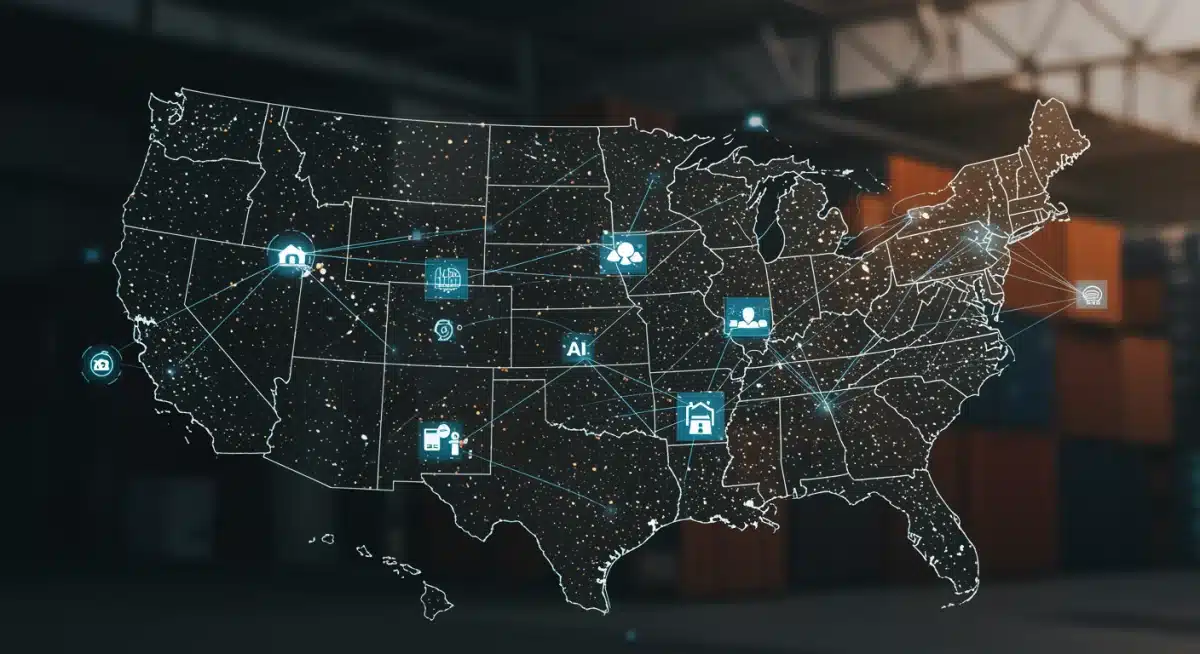
This level of optimization is particularly vital in a country as vast and diverse as the US, where logistics challenges can vary significantly from urban centers to rural areas. AI provides the flexibility and intelligence needed to navigate these diverse environments effectively, ensuring goods move smoothly from origin to destination.
warehouse automation and inventory management
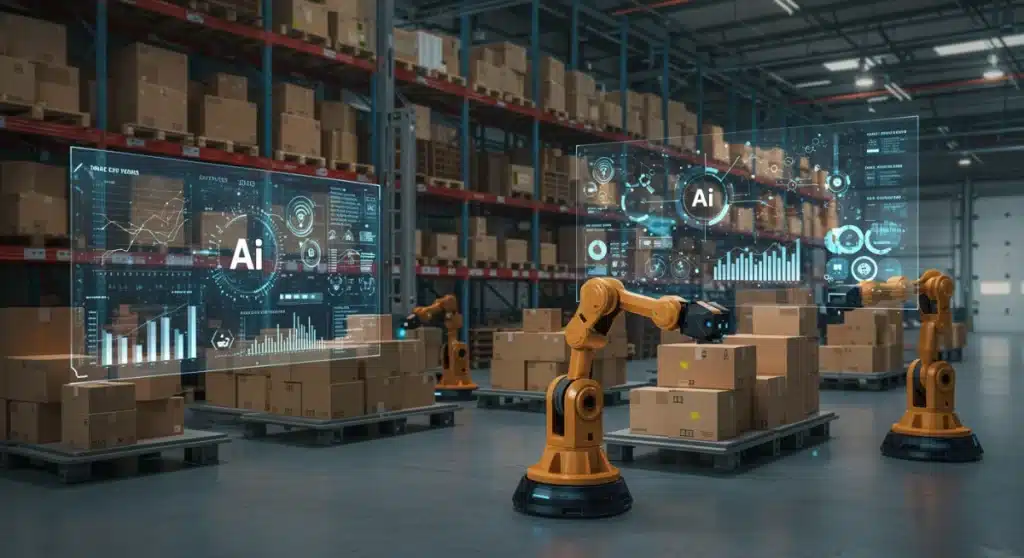
Warehouses are the nerve centers of the supply chain, and AI is transforming them into highly automated, intelligent hubs. From robotic picking systems to AI-driven inventory placement, these technologies are dramatically increasing throughput and accuracy while reducing labor costs and human error. The goal is to create a seamless flow of goods within the warehouse.
Inventory management, a perennial challenge for retailers, is also being revolutionized by AI. Beyond simple stock counts, AI systems can track every item with unprecedented detail, understand its movement patterns, and even predict its shelf life or potential for damage. This granular control is essential for maximizing efficiency and minimizing waste.
robotic process automation (RPA) and intelligent sorting
RPA, powered by AI, handles repetitive tasks with speed and precision, freeing human workers for more complex roles. Intelligent sorting systems use computer vision and machine learning to rapidly identify and categorize products, ensuring they are directed to the correct storage locations or outbound shipments.
- Increased Throughput: Automated systems can process significantly more items per hour than manual methods.
- Reduced Errors: AI-driven robots and systems minimize picking and packing mistakes, improving order accuracy.
- Space Optimization: AI can determine the most efficient placement of inventory within a warehouse, maximizing storage capacity.
The combination of physical automation and intelligent software creates a highly efficient warehouse ecosystem. This not only speeds up operations but also enhances safety by reducing the need for human intervention in hazardous or repetitive tasks. Retailers can achieve higher service levels and quicker order fulfillment, directly impacting customer satisfaction.
enhancing customer experience through AI logistics
While often seen as a back-end operation, AI-powered logistics has a profound impact on the customer experience. Faster, more reliable, and transparent delivery processes directly translate into happier customers. In today’s competitive retail landscape, delivery speed and accuracy are often as important as the product itself.
AI enables retailers to offer more personalized delivery options, provide accurate estimated delivery times, and proactively communicate any potential delays. This level of transparency builds trust and reduces customer service inquiries, creating a more seamless shopping journey from click to delivery.
last-mile delivery innovation
The ‘last mile’ of delivery, the final leg to the customer’s doorstep, is often the most expensive and complex. AI is bringing significant innovations to this area, from optimizing driver routes to managing fleets of autonomous delivery vehicles and drones. These advancements are critical for meeting the growing demand for same-day and next-day delivery.
- Accurate ETAs: AI algorithms can provide highly precise estimated times of arrival, managing customer expectations effectively.
- Personalized Options: Offer flexible delivery windows and locations based on customer preferences and AI-driven route optimization.
- Proactive Communication: Automated updates on shipment status and potential delays keep customers informed and satisfied.
By making the last mile more efficient and customer-centric, AI helps retailers differentiate themselves in a crowded market. The ability to consistently deliver on promises is a powerful tool for customer retention and brand loyalty. This focus on the end-user experience is a key driver for AI adoption in logistics.
Moreover, AI can analyze customer feedback and delivery data to continuously refine processes, identifying pain points and implementing improvements. This iterative approach ensures that the customer experience is not just good, but constantly getting better, adapting to evolving consumer demands.
challenges and considerations for implementation
While the benefits of AI in logistics are clear, implementing these technologies is not without its challenges. Retailers must navigate complex integration processes, address data privacy concerns, and invest in significant infrastructure upgrades. The journey to a fully AI-powered supply chain requires careful planning and strategic execution.
One primary concern is the initial investment required for AI systems, and the need for specialized talent to manage and maintain them. Data quality is also paramount; AI systems are only as good as the data they process. Ensuring clean, accurate, and comprehensive data sets is a foundational step for successful implementation.
data integration and cybersecurity
Integrating disparate data sources across an entire supply chain can be a daunting task. AI systems thrive on unified data, requiring robust integration platforms. Furthermore, the increased reliance on digital systems makes cybersecurity a critical consideration. Protecting sensitive data from breaches is non-negotiable.
- Complex Integration: Merging legacy systems with new AI platforms often presents significant technical hurdles.
- Data Governance: Establishing clear policies for data collection, storage, and usage is essential for compliance and trust.
- Cybersecurity Risks: Increased connectivity demands robust protection against cyber threats and data breaches.
Addressing these challenges requires a holistic approach, involving not just technological solutions but also organizational change management and employee training. Investing in robust cybersecurity measures and data governance frameworks is crucial to mitigate risks and ensure the long-term success of AI initiatives.
Despite these hurdles, the long-term benefits of AI-powered logistics, including enhanced efficiency and competitive advantage, far outweigh the initial complexities. Retailers who proactively address these challenges will be best positioned to thrive in the evolving market of 2025 and beyond.
the future outlook: a 15% efficiency boost and beyond
The projection of a 15% efficiency boost for retailers by 2025 is not an arbitrary number; it’s a conservative estimate based on the compounding effects of AI across various logistical operations. This efficiency gain will manifest in reduced operational costs, faster inventory turns, minimized waste, and improved customer loyalty. The competitive landscape will favor those who embrace these innovations.
Beyond 2025, the capabilities of AI in logistics are expected to grow exponentially. As algorithms become more sophisticated and data availability expands, we can anticipate even greater levels of automation, predictive accuracy, and adaptive intelligence. The supply chain will evolve into a self-optimizing, highly resilient network.
sustainable logistics and ethical AI
The future of AI-powered logistics also holds immense potential for sustainability. Optimized routes and reduced waste contribute to a smaller environmental footprint. Furthermore, the ethical implications of AI, including job displacement and algorithmic bias, will become increasingly important considerations for retailers and technology providers alike.
- Environmental Impact: AI can significantly reduce carbon emissions through optimized transport and resource management.
- Workforce Evolution: AI will shift job roles, requiring new skills and training programs for human workers.
- Ethical Frameworks: Developing responsible AI practices will be crucial to ensure fairness and societal benefit.
The continuous development of AI will necessitate ongoing adaptation and learning for businesses and their workforces. Retailers who invest in both technological infrastructure and human capital development will be best prepared to leverage AI’s full potential. The journey towards an AI-driven supply chain is a continuous one, promising transformative results.
The strategic deployment of AI in logistics is not merely about technological adoption; it’s about reimagining the entire operational framework of retail. The 15% efficiency boost by 2025 is just the beginning of a profound transformation that will reshape how goods move, are stored, and ultimately reach the consumer in the US market.
| Key Aspect | Brief Description |
|---|---|
| Predictive Analytics | AI forecasts demand, optimizes inventory, and reduces costs with high accuracy. |
| Dynamic Routing | AI-driven systems optimize delivery routes in real-time, improving speed and fuel efficiency. |
| Warehouse Automation | Robots and AI streamline tasks, boosting throughput and accuracy in storage and retrieval. |
| Customer Experience | Enhanced delivery transparency and personalized options improve satisfaction and loyalty. |
frequently asked questions about AI in logistics
AI-powered logistics involves using artificial intelligence to optimize various aspects of the supply chain, including demand forecasting, inventory management, warehousing, and transportation. It leverages machine learning algorithms to process vast amounts of data, identify patterns, and make intelligent decisions to improve efficiency and reduce costs.
By 2025, AI is expected to provide US retailers with a significant 15% efficiency boost. This will result from more accurate demand predictions, optimized delivery routes, automated warehouse operations, and improved customer satisfaction through faster and more reliable deliveries. It offers a substantial competitive advantage.
Key challenges include the high initial investment in AI systems, the need for skilled talent, ensuring high-quality data for AI algorithms, and integrating new AI platforms with existing legacy systems. Cybersecurity and data privacy concerns also represent significant hurdles that must be carefully addressed during implementation.
AI enhances last-mile delivery by optimizing driver routes in real-time, considering factors like traffic and delivery windows. It also facilitates the use of autonomous vehicles and drones, and provides customers with accurate estimated delivery times and proactive communication, leading to higher satisfaction and efficiency.
While AI will automate many repetitive tasks, it is more likely to transform human jobs rather than eliminate them entirely. AI creates new roles focused on managing, maintaining, and developing AI systems, as well as higher-level strategic planning and customer interaction. The workforce will need to adapt and acquire new skills.
conclusion
The integration of AI into US supply chains represents a pivotal moment for retailers, promising a transformative 15% efficiency boost by 2025. From predictive analytics and dynamic routing to automated warehouses and enhanced customer experiences, AI is fundamentally reshaping how goods move from manufacturer to consumer. While challenges like data integration and cybersecurity persist, the strategic adoption of AI offers an unparalleled opportunity for retailers to gain a significant competitive edge, optimize operations, and meet the ever-increasing demands of the modern market. The future of retail logistics is intelligent, agile, and undeniably AI-driven.