New FTC Guidelines: Avoid $50,000 Fines on Online Reviews 2025
The new FTC guidelines for online reviews, effective January 2025, aim to combat deceptive practices, imposing fines up to $50,000 for non-compliance; businesses must ensure review authenticity and transparent disclosure to avoid penalties.
Starting January 2025, businesses in the United States face a significant shift in how they manage customer feedback. The New FTC Guidelines for Online Reviews: Preventing Fines Up to $50,000 Starting January 2025 are not merely an update; they represent a fundamental re-evaluation of online review integrity. Understanding and implementing these regulations is crucial for every business that leverages customer testimonials, as non-compliance could lead to substantial financial penalties and reputational damage. Are you ready to navigate this new regulatory landscape?
Understanding the Core of the New FTC Guidelines
The Federal Trade Commission (FTC) has long been a guardian of consumer protection, and its latest guidelines specifically target the burgeoning world of online reviews. These new rules, set to take effect in January 2025, are designed to curb deceptive practices, ensuring that consumers can trust the authenticity and impartiality of the reviews they encounter. This isn’t just about avoiding fake reviews; it’s about a comprehensive approach to transparency.
At its heart, the FTC’s updated stance emphasizes that businesses are responsible for the reviews they display. This includes not only reviews posted directly on their sites but also those on third-party platforms. The goal is to eliminate practices that mislead consumers, whether through outright fabrication, selective display, or undisclosed incentives. Businesses must now be proactive in their review management strategies, moving beyond passive collection to active verification and clear disclosure.
The Mandate for Authenticity
One of the most critical aspects of the new guidelines is the strong emphasis on review authenticity. Businesses must take reasonable steps to ensure that the reviews they publish come from actual customers who have genuinely used their products or services. This moves beyond simply having a review system; it demands a verifiable process.
- Verification Methods: Businesses might need to implement systems that link reviews to verified purchases or service usage, such as requiring order numbers or login credentials.
- Proactive Monitoring: Continuous monitoring for suspicious review patterns, such as multiple reviews from the same IP address or unusually high volumes of positive reviews in a short period, becomes essential.
- Combating Bots and Fraud: Employing technological solutions to detect and filter out bot-generated or fraudulent reviews is no longer optional but a necessary part of compliance.
Ensuring authenticity builds consumer trust, which is invaluable. The new guidelines aim to create a fairer marketplace where genuine feedback helps consumers make informed decisions, free from the influence of misleading or fabricated endorsements.
Transparency in Incentivized Reviews
The guidelines also bring stricter rules regarding incentivized reviews. While offering incentives for reviews isn’t inherently prohibited, the nature of the incentive and its disclosure are paramount. Any review submitted in exchange for a free product, discount, or other compensation must clearly and conspicuously disclose this relationship.
- Clear Disclosure: The disclosure must be easy for consumers to see and understand, not buried in fine print or hidden behind links. It should be prominent and unambiguous.
- No Contingent Incentives: Businesses cannot offer incentives solely for positive reviews or condition the incentive on the review’s sentiment. All feedback, positive or negative, must be eligible for the incentive.
- Training for Influencers: If working with influencers, businesses are responsible for ensuring these individuals understand and comply with disclosure requirements when posting reviews or endorsements.
This level of transparency ensures that consumers are aware of any potential bias, allowing them to weigh the review’s credibility appropriately. The FTC’s focus is on empowering consumers with complete information, thereby preventing deceptive marketing practices.
In essence, the initial wave of new FTC guidelines establishes a clear framework for ethical online review management. Businesses must prioritize authenticity, implement robust verification processes, and maintain absolute transparency regarding any incentivized feedback. Adhering to these foundational principles is the first step in avoiding significant penalties and fostering a trustworthy brand image in the digital age.
The $50,000 Fine Threshold: What It Means for Businesses
The most attention-grabbing aspect of the new FTC guidelines is undoubtedly the potential for fines up to $50,000 per violation. This substantial penalty underscores the FTC’s seriousness in enforcing these regulations and serves as a powerful deterrent against non-compliance. Understanding the implications of this fine threshold is critical for businesses of all sizes.
This isn’t merely a symbolic figure; it represents a significant financial risk that could severely impact a company’s bottom line. The FTC’s enforcement history shows a willingness to levy substantial penalties, especially when consumer deception is widespread or intentional. Businesses must recognize that the cost of non-compliance far outweighs the effort required for adherence.
Defining a ‘Violation’
It’s important to clarify what constitutes a ‘violation’ under these new guidelines. A single misleading review might not immediately trigger a $50,000 fine, but a pattern of deceptive practices or a systemic failure to comply could. The FTC typically looks at the overall impact on consumers and the intent behind the actions.
- Each Deceptive Review: In some cases, each instance of a fake, manipulated, or improperly disclosed review could be considered a separate violation. This means the fines can quickly accumulate.
- Systemic Failures: A business’s failure to implement proper review management policies, leading to a large number of non-compliant reviews, could be seen as a systemic violation.
- Lack of Reasonable Steps: If a business doesn’t take reasonable steps to verify reviews or disclose incentives, even if no actual deception is proven, it could still face penalties for failing to meet the compliance standards.
The FTC’s enforcement aims to deter not just direct deception but also negligence in managing online feedback. This places a higher burden on businesses to be diligent and proactive.
Impact on Small Businesses
While large corporations can absorb significant fines, a $50,000 penalty could be catastrophic for small and medium-sized businesses (SMBs). This makes understanding and complying with the new guidelines even more crucial for them. Many SMBs rely heavily on online reviews to attract customers, making them particularly vulnerable to these new regulations.
- Resource Constraints: SMBs often have fewer resources for legal counsel or advanced technological solutions, making compliance more challenging.
- Reputational Risk: Beyond financial penalties, the reputational damage from an FTC violation can be debilitating for a small business that thrives on community trust.
- Need for Education: It’s imperative for SMB owners to educate themselves and their teams on these new rules to avoid unintentional violations.
The new fine structure emphasizes that all businesses, regardless of size, must treat online review integrity with the utmost seriousness. The FTC is signaling that consumer trust in online reviews is a priority, and businesses are expected to uphold that trust or face significant consequences.
The $50,000 fine threshold serves as a stark reminder of the financial and reputational stakes involved. Businesses must not only understand what constitutes a violation but also recognize the potential cumulative impact of non-compliance. Proactive measures and a commitment to ethical review management are now essential for safeguarding against these severe penalties.
Proactive Strategies for Compliance Before January 2025
With the January 2025 deadline fast approaching, businesses must move beyond understanding the guidelines to actively implementing compliance strategies. Proactivity is key to mitigating risks and ensuring a smooth transition. This involves a multi-faceted approach, encompassing policy updates, technological solutions, and staff training.
Simply waiting until the last minute is not an option. Businesses need to conduct internal audits, revise their review collection processes, and educate all relevant stakeholders. The goal is to embed compliance into the very fabric of their operations, making ethical review management a standard practice rather than an afterthought.
Reviewing Current Practices and Policies
The first step towards compliance is to critically assess existing review collection and management practices. This self-audit will identify areas that need immediate attention and highlight potential non-compliance risks.
- Audit Existing Reviews: Scrutinize currently displayed reviews for any that might be fake, manipulated, or lacking proper disclosure for incentives. Develop a plan to address or remove non-compliant reviews.
- Examine Collection Methods: Evaluate how reviews are solicited. Are there any practices that could be perceived as encouraging only positive feedback or discouraging negative comments?
- Update Internal Policies: Develop or revise internal policies and guidelines for review management, ensuring they align perfectly with the new FTC rules. These policies should cover everything from review solicitation to moderation.
A thorough review provides a baseline, allowing businesses to pinpoint weaknesses and prioritize corrective actions. This foundational work is indispensable for building a robust compliance framework.
Implementing Verification and Disclosure Mechanisms
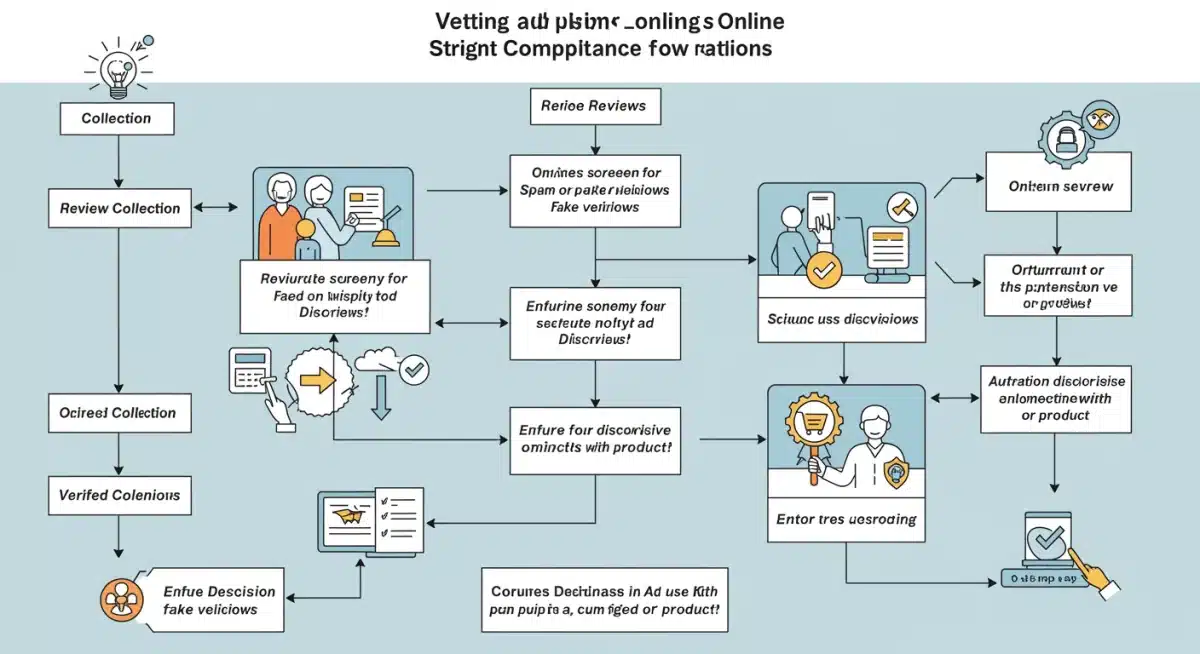
Once current practices are assessed, the next crucial step is to embed concrete mechanisms for verification and disclosure into daily operations. This often involves a combination of technological solutions and clear communication protocols.

Technological Solutions for Authenticity
Leveraging technology can significantly streamline the verification process. Many platforms offer features designed to combat review fraud and ensure legitimacy.
- Integrated Review Platforms: Utilize review platforms that integrate directly with your e-commerce or service delivery systems to verify purchases or service completions.
- AI-Powered Fraud Detection: Employ AI tools that can identify suspicious review patterns, unusual language, or bot activity.
- CAPTCHA and IP Tracking: Implement basic security measures like CAPTCHAs and IP address tracking to deter automated fake review submissions.
These tools, while not foolproof, add significant layers of protection against fraudulent reviews, making it easier for businesses to demonstrate they are taking “reasonable steps” for authenticity.
Clear and Conspicuous Disclosure
For incentivized reviews, the manner of disclosure is as important as the disclosure itself. It must be impossible for a consumer to miss the information.
- Prominent Placement: Disclosures should be placed immediately next to the review, not at the bottom of the page or in a separate pop-up.
- Unambiguous Language: Use clear, simple language such as “I received this product for free in exchange for my honest review” rather than vague terms.
- Consistent Application: Ensure disclosure requirements are applied consistently across all platforms where incentivized reviews are published, including social media.
By making disclosures prominent and easy to understand, businesses uphold their transparency obligations, allowing consumers to make informed choices.
Proactive compliance is not an overnight task; it requires dedicated effort and a strategic approach. By reviewing current practices, updating policies, and implementing robust verification and disclosure mechanisms, businesses can confidently approach the January 2025 deadline, safeguarding themselves from fines and reinforcing consumer trust.
The Role of Employee Training and Internal Communication
Effective compliance with the new FTC guidelines extends beyond just policies and technology; it deeply involves the people within your organization. Employee training and robust internal communication are paramount to ensuring that every team member understands their role in upholding review integrity. A single misstep by an untrained employee could lead to costly violations.
The human element is often the weakest link in any compliance framework. Without proper education, even well-intentioned employees might unknowingly engage in practices that violate FTC regulations. Therefore, investing in comprehensive training programs and fostering a culture of compliance is as important as any technological solution.
Developing Comprehensive Training Programs
A well-structured training program should cover all aspects of the new FTC guidelines relevant to employees who interact with customers or manage online presence. This includes marketing teams, customer service representatives, and even sales personnel.
- Key Principles of Review Authenticity: Educate staff on what constitutes a genuine review and the importance of not soliciting or creating fake feedback.
- Disclosure Requirements: Provide clear instructions on when and how to disclose incentives for reviews, especially for teams managing influencer partnerships or product testing programs.
- Handling Negative Reviews: Train employees on appropriate responses to negative reviews, emphasizing professionalism and avoiding any actions that could be seen as suppressing honest feedback.
Regular refreshers and updated training modules are also essential to ensure that knowledge remains current and that new hires are brought up to speed quickly. Practical examples and scenario-based training can be particularly effective.
Establishing Clear Internal Communication Channels
Beyond formal training, establishing clear and open internal communication channels is vital. Employees need to know where to go with questions or concerns regarding review practices and feel empowered to report potential issues without fear of reprisal.
- Designated Compliance Officer: Appoint a specific individual or team responsible for overseeing FTC compliance and serving as a point of contact for questions.
- Guidance Documents: Create easily accessible internal guidance documents, FAQs, and best practice guides that employees can refer to.
- Regular Updates: Disseminate regular updates on any changes to the guidelines or internal policies through company-wide emails, newsletters, or intranet portals.
A culture where compliance is openly discussed and supported from the top down significantly reduces the risk of non-compliance. When employees feel informed and supported, they are more likely to adhere to the required standards.
Ultimately, employee training and internal communication are not just administrative tasks; they are strategic investments in your company’s compliance and reputation. By empowering your team with knowledge and clear guidelines, you create a robust defense against FTC violations and foster an environment of ethical business practices.
Monitoring and Adapting to Evolving Regulatory Landscapes
The digital marketplace is dynamic, and regulatory frameworks often evolve to keep pace with new technologies and deceptive practices. Compliance with the new FTC guidelines is not a one-time effort but an ongoing commitment to monitoring and adaptation. Businesses must establish systems to stay informed about future changes and adjust their strategies accordingly.
Relying solely on current knowledge is a recipe for future non-compliance. The FTC and other regulatory bodies frequently update their guidance based on market trends and emerging consumer protection issues. Therefore, adopting a proactive stance on regulatory intelligence is crucial for long-term business sustainability.
Staying Informed on Regulatory Updates
Businesses should actively seek out information regarding new or amended regulations. This involves more than just a casual glance at headlines; it requires a dedicated approach to regulatory intelligence.
- Subscribe to FTC Communications: Sign up for official FTC newsletters, press releases, and blog updates to receive direct notifications of regulatory changes.
- Engage with Legal Counsel: Regularly consult with legal experts specializing in consumer protection and advertising law to get professional interpretations of complex guidelines.
- Industry Associations: Participate in relevant industry associations that often provide summaries and analyses of new regulations pertinent to their sector.
Being well-informed allows businesses to anticipate changes rather than reacting to them after they’ve taken effect, providing a crucial advantage in maintaining compliance.
Continuous Review of Compliance Programs
A compliance program is only effective if it remains relevant and robust. This necessitates a cycle of continuous review and adaptation, ensuring that internal policies and practices align with the latest regulatory demands.
- Regular Audits: Conduct periodic internal audits of review management processes, even after the initial compliance push, to identify any new vulnerabilities or areas for improvement.
- Performance Metrics: Track key performance indicators related to review authenticity and disclosure, such as the rate of identified fraudulent reviews or instances of non-compliance discovered during internal checks.
- Feedback Mechanisms: Establish internal feedback loops where employees can report issues or suggest improvements to compliance processes, fostering a culture of collective responsibility.
By regularly evaluating and refining their compliance programs, businesses can ensure they are not only meeting current requirements but are also prepared for future regulatory shifts. This agile approach minimizes risk and reinforces long-term adherence to ethical standards.
The regulatory landscape is ever-changing, and businesses that thrive are those that embrace continuous learning and adaptation. By staying informed and regularly reviewing their compliance programs, companies can protect themselves from future penalties and solidify their reputation as trustworthy entities in the digital marketplace.
Building Consumer Trust Through Ethical Review Practices
While avoiding fines is a significant motivator, the ultimate benefit of complying with the new FTC guidelines extends far beyond mere legal adherence: it’s about building and maintaining profound consumer trust. In today’s digital economy, trust is the most valuable currency, and ethical review practices are its cornerstone. Consumers are increasingly savvy and can often discern between genuine and manipulated feedback, making authenticity a critical differentiator.
A business built on transparent and honest engagement with its customers fosters loyalty, encourages repeat business, and generates positive word-of-mouth. Conversely, even a hint of deception can severely damage a brand’s reputation, leading to lost sales and a struggle to regain credibility. The new guidelines offer an opportunity to proactively strengthen this vital bond with consumers.
The Value of Authentic Feedback
Genuine, unbiased customer reviews are incredibly powerful. They provide social proof, help potential customers make informed decisions, and offer invaluable insights for businesses to improve their products and services. Embracing authenticity means recognizing the inherent value in all feedback, positive or negative.
- Enhanced Credibility: When consumers perceive reviews as authentic, their trust in the brand and its offerings significantly increases.
- Improved Products/Services: Honest feedback, including constructive criticism, provides businesses with real-world data to drive innovation and address customer pain points.
- Stronger Brand Image: A brand known for its integrity in review management stands out in a crowded market, attracting discerning customers who value transparency.
Authentic feedback isn’t just about what customers say; it’s about demonstrating that a business values their honest opinion, thereby fostering a stronger relationship.
Transparency as a Competitive Advantage
Beyond mere compliance, actively promoting transparency in review practices can become a significant competitive advantage. Businesses that openly disclose any incentivized reviews and clearly outline their verification processes can differentiate themselves as leaders in ethical consumer engagement.
- Clear Disclosure Statements: Go beyond the minimum requirement by making disclosure statements even more prominent and user-friendly, potentially even explaining why an incentive was offered.
- Publicly Share Verification Processes: Consider publishing a brief overview of your company’s steps to ensure review authenticity. This can proactively reassure consumers.
- Engage with All Feedback: Consistently respond to both positive and negative reviews in a professional and constructive manner, demonstrating a commitment to customer satisfaction and open dialogue.
By embracing transparency as a core business value, companies not only meet regulatory demands but also cultivate a reputation for honesty and reliability, which is increasingly sought after by consumers.
Ultimately, the new FTC guidelines are not just about avoiding penalties; they provide a clear roadmap for building enduring consumer trust. By prioritizing authenticity and transparency in all review-related practices, businesses can transform regulatory compliance into a powerful tool for brand building and sustained success in the competitive digital landscape.
Case Studies and Real-World Implications
While the new FTC guidelines officially take effect in January 2025, the principles behind them are rooted in existing consumer protection laws. Examining past FTC enforcement actions provides valuable insights into the real-world implications of deceptive review practices and underscores the importance of proactive compliance. These cases serve as cautionary tales and illustrate the financial and reputational damage that can result from non-adherence.
Understanding how the FTC has historically interpreted and enforced rules related to endorsements and testimonials helps businesses prepare for the stricter environment of 2025. These examples demonstrate that the FTC is serious about protecting consumers from misleading information, regardless of the specific medium.
Past FTC Enforcement Actions
The FTC has a long history of taking action against companies engaged in deceptive advertising, including those manipulating testimonials and endorsements. While not all past cases directly address “online reviews” as defined today, their underlying principles are highly relevant.
- Fake Endorsements: Companies have been fined for paying individuals to post positive reviews or for creating fake personas to promote products. The new guidelines simply broaden the scope and increase the penalties for such actions.
- Undisclosed Relationships: Businesses failing to disclose material connections between reviewers and the company (e.g., employees posing as customers, or paid endorsers not disclosing their compensation) have faced significant penalties.
- Review Gating: The practice of only soliciting reviews from satisfied customers, or routing negative feedback to a private channel while encouraging positive feedback publicly, has also drawn FTC scrutiny as a deceptive practice.
These past cases highlight the FTC’s consistent focus on ensuring that consumers receive unbiased and truthful information. The 2025 guidelines simply formalize and strengthen this commitment in the context of modern online review platforms.
The Cost of Non-Compliance: Beyond Fines
While the $50,000 fine per violation is a significant deterrent, the cost of non-compliance extends far beyond monetary penalties. The damage to a business’s reputation and consumer trust can be far more enduring and detrimental to long-term success.
- Reputational Damage: News of FTC action can quickly spread, eroding consumer trust and making it difficult to attract new customers. Rebuilding a tarnished reputation is a long and arduous process.
- Lost Sales and Revenue: A decline in trust directly translates to decreased sales, as consumers opt for competitors with more credible online presences.
- Legal Fees and Litigation: Defending against FTC investigations and potential private lawsuits from aggrieved consumers can incur substantial legal fees, even if a business ultimately avoids a large fine.
- Negative SEO Impact: A reputation for deceptive practices can negatively impact search engine rankings, as search algorithms increasingly prioritize trustworthy and authoritative content.
These broader implications underscore that compliance is not just a legal obligation but a fundamental business imperative. Ethical review practices contribute directly to brand equity and market standing.
By learning from past enforcement actions and understanding the multifaceted costs of non-compliance, businesses can better appreciate the urgency and importance of adhering to the new FTC guidelines. The real-world implications demonstrate that investing in ethical review management is an investment in the long-term health and success of the business.
| Key Aspect | Description |
|---|---|
| Effective Date | New FTC guidelines for online reviews go into effect January 2025. |
| Potential Fines | Businesses face fines up to $50,000 per violation for non-compliance. |
| Review Authenticity | Mandates reasonable steps to verify reviews are from genuine customers. |
| Disclosure Rule | Requires clear, conspicuous disclosure for all incentivized reviews. |
Frequently Asked Questions About FTC Review Guidelines
The new FTC guidelines, effective January 2025, primarily focus on ensuring the authenticity of online reviews and transparently disclosing any material connections or incentives between businesses and reviewers. This aims to prevent deceptive practices and protect consumer trust in online feedback.
Businesses found in violation of the new FTC guidelines could face significant financial penalties. Fines can reach up to $50,000 per violation, underscoring the serious implications of failing to adhere to the updated regulations regarding online reviews.
Yes, if you offer any incentive, like a discount, in exchange for a review, the guidelines require clear and conspicuous disclosure of this incentive. The disclosure must be easy for consumers to see and understand, regardless of the review’s sentiment.
Businesses should implement reasonable steps to verify reviews come from actual customers, such as linking reviews to verified purchases or service usage. Proactive monitoring for suspicious patterns and using technological solutions to detect fraud are also recommended practices.
The new FTC guidelines for online reviews are scheduled to become effective in January 2025. Businesses should use the intervening time to review their current practices, update policies, and implement necessary changes to ensure full compliance before the deadline.
Conclusion
The impending January 2025 deadline for the New FTC Guidelines for Online Reviews: Preventing Fines Up to $50,000 Starting January 2025 marks a pivotal moment for businesses operating in the digital sphere. These regulations are not just about avoiding substantial penalties; they are about fostering a marketplace built on trust and transparency. By prioritizing review authenticity, ensuring clear disclosures for incentivized feedback, and empowering employees through comprehensive training, businesses can not only mitigate legal risks but also significantly enhance their brand reputation and consumer loyalty. Proactive compliance is an investment in long-term success, safeguarding against both financial repercussions and the invaluable erosion of consumer confidence. Embrace these changes as an opportunity to reinforce ethical practices and thrive in an increasingly discerning online environment.