New Federal Advertising Disclosure Requirements: 2025 Compliance Plan

Businesses must implement a comprehensive 90-day strategy to meet the upcoming federal advertising disclosure requirements in 2025, ensuring transparent and compliant marketing practices.
The landscape of digital commerce is constantly evolving, and with it, the regulatory framework governing how businesses communicate with their customers. The upcoming new federal advertising disclosure requirements: a 90-day plan for compliance in 2025 represents a significant shift, demanding immediate attention and strategic planning from all entities engaged in advertising within the United States. Ignoring these changes is not an option; proactive preparation is the key to seamless transition and continued success in the marketplace.
Understanding the New Regulatory Landscape
The year 2025 brings with it a series of updated federal advertising disclosure requirements designed to enhance consumer protection and foster greater transparency in marketing practices. These regulations build upon existing frameworks, such as those enforced by the Federal Trade Commission (FTC), but introduce new nuances and stricter interpretations, particularly concerning digital advertising, influencer marketing, and data privacy disclosures. Businesses need to grasp the full scope of these changes to avoid potential legal repercussions and maintain consumer trust.
Understanding the impetus behind these new rules is crucial. Regulators are responding to the increasing sophistication of advertising techniques and the proliferation of digital platforms, where disclosures can often be overlooked or presented ambiguously. The goal is to ensure that consumers receive clear, conspicuous, and unambiguous information about material connections, endorsements, and any other factors that might influence their purchasing decisions.
Key Areas of Focus for 2025
Several critical areas are being targeted by the new regulations, requiring businesses to re-evaluate their current advertising strategies. These include, but are not limited to, the clarity of disclosures in social media posts, the proper attribution of sponsored content, and the transparent handling of consumer data in targeted advertising campaigns.
- Influencer Marketing: Clearer guidelines on how influencers must disclose their material connections to brands, including payment or free products.
- Automated Disclosures: Requirements for automated systems to ensure disclosures are presented prominently and understandably across various digital interfaces.
- Data Privacy: Stricter rules on how companies must disclose their data collection and usage practices in advertising, particularly when personal data informs ad targeting.
- Native Advertising: Enhanced demands for distinguishing native ads from editorial content, ensuring consumers are not misled about the nature of the content they are consuming.
The new regulations aim to close loopholes that have emerged with technological advancements, ensuring that the spirit of consumer protection is upheld in all advertising formats. Businesses must move beyond a check-the-box mentality and truly integrate transparency into their core marketing ethos, making disclosures an integral part of their creative process rather than an afterthought.
Establishing Your 90-Day Compliance Timeline
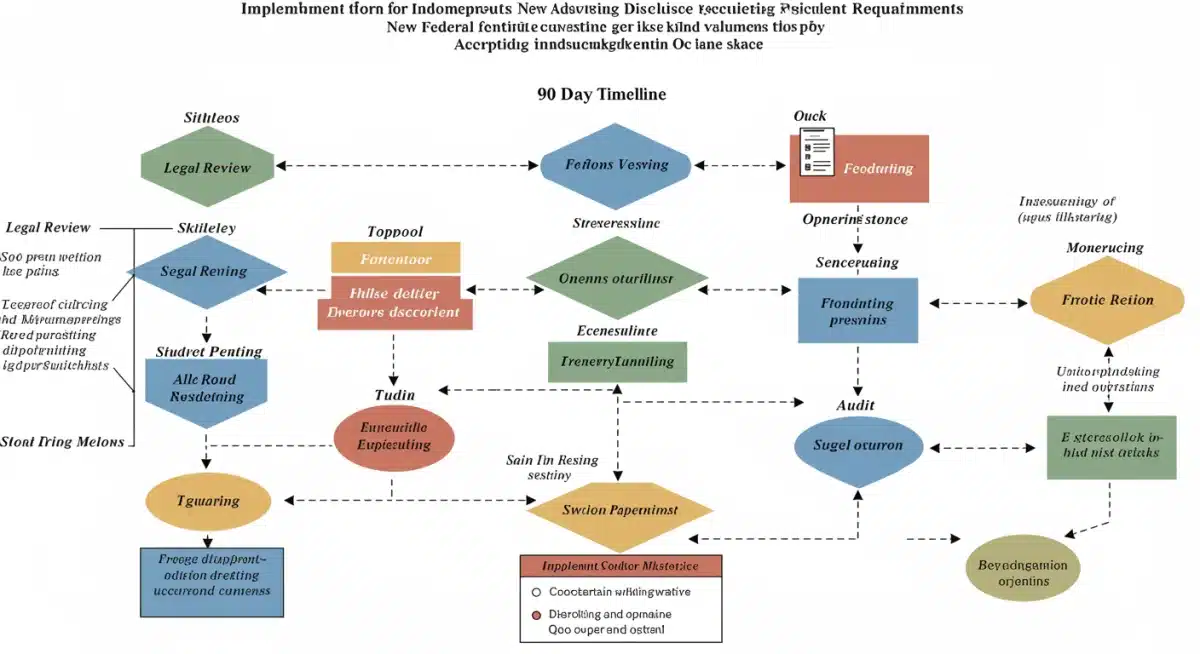
A structured 90-day plan is essential to navigate the complexities of the new federal advertising disclosure requirements effectively. This timeline should be broken down into manageable phases, each with specific objectives and deliverables. Starting immediately allows ample time for assessment, policy development, implementation, and internal training, minimizing disruption and ensuring full compliance by the 2025 deadline.
Procrastination can be costly, leading to rushed decisions, potential errors, and non-compliance. A well-executed 90-day plan provides a roadmap, guiding your organization through the necessary steps with precision and foresight. It also allows for iterative adjustments and stakeholder feedback, ensuring that the compliance strategy is robust and sustainable.
Phase 1: Assessment and Legal Review (Days 1-30)
The initial phase involves a thorough assessment of all current advertising practices and a comprehensive legal review of the new regulations. This foundational work will identify gaps between existing practices and upcoming requirements, forming the basis for your compliance strategy.
- Conduct an Advertising Audit: Inventory all advertising materials across all channels, including websites, social media, email campaigns, print ads, and influencer collaborations.
- Legal Interpretation: Engage legal counsel to interpret the specific implications of the new federal advertising disclosure requirements for your business model and industry.
- Identify Gaps: Document all areas where current practices fall short of the new standards. This includes evaluating the prominence, clarity, and timing of existing disclosures.
- Stakeholder Alignment: Involve key departments like marketing, legal, sales, and product development to ensure a unified understanding of the changes.
This phase is critical for laying the groundwork. A detailed understanding of what needs to change, supported by legal expertise, will prevent missteps in subsequent phases. It’s about getting a clear picture of the current state versus the desired compliant state.
Developing New Policies and Guidelines
Once the assessment is complete, the next critical step is to develop and refine internal policies and guidelines that reflect the new federal advertising disclosure requirements. These documents will serve as the operational blueprint for all future advertising activities, ensuring consistency and adherence across the organization. This phase demands careful consideration of how the new rules translate into actionable steps for your teams.
Effective policy development isn’t just about writing rules; it’s about crafting clear, concise, and easily understandable directives that empower employees to make compliant decisions. Policies should be practical and integrated into existing workflows to minimize friction and maximize adoption. They should also be dynamic, allowing for future updates as regulations or business practices evolve.
Crafting Internal Compliance Documents
Developing robust internal documents is paramount. These include updated advertising policies, disclosure checklists, and brand guidelines that incorporate the new regulatory mandates. These materials should be accessible to all relevant employees and regularly reviewed for effectiveness.
- Update Advertising Policy: Revise the company’s overarching advertising policy to explicitly address the new disclosure requirements, including specific examples pertinent to your industry.
- Create Disclosure Checklists: Develop easy-to-follow checklists for various ad types (e.g., social media posts, video ads, email marketing) to ensure all necessary disclosures are included and correctly formatted.
- Brand Guidelines Integration: Embed disclosure requirements directly into brand guidelines, dictating how disclosures should appear visually and audibly across all brand communications.
- Influencer Contracts: Amend influencer agreements to include explicit clauses detailing disclosure responsibilities, monitoring, and compliance penalties.
These documents are not merely bureaucratic exercises; they are essential tools for operationalizing compliance. They transform abstract legal requirements into concrete, repeatable processes that guide daily advertising efforts and protect the company from regulatory scrutiny.
Implementing Changes and Training Staff
With new policies and guidelines in place, the focus shifts to implementing the necessary changes across all advertising channels and, crucially, training all staff members who engage in marketing activities. This phase is about putting theory into practice, ensuring that everyone understands their role in upholding the new federal advertising disclosure requirements.
Implementation requires a coordinated effort, often involving updates to content management systems, ad platforms, and creative workflows. Training, on the other hand, is about education and empowerment. It ensures that employees are not only aware of the rules but also possess the knowledge and tools to apply them correctly in their day-to-day tasks.
Executing Policy Updates and Training Programs
Effective implementation combines technological adjustments with comprehensive educational initiatives. This ensures that both the systems and the people within your organization are aligned with the new compliance standards.
- System Updates: Configure digital advertising platforms, website content management systems, and email marketing tools to automatically incorporate required disclosures where feasible.
- Creative Workflow Adjustments: Integrate compliance checks into the creative review and approval process for all advertising materials, making it a mandatory step before publication.
- Comprehensive Training Sessions: Conduct mandatory training sessions for all marketing, sales, legal, and public relations staff, focusing on practical application of the new disclosure guidelines.
- Resource Hub: Create an easily accessible internal resource hub with FAQs, policy documents, and examples of compliant and non-compliant disclosures.
Successful implementation and training are vital. They transform written policies into active, everyday practices, embedding compliance deeply within the organizational culture. This proactive approach helps to mitigate risks and builds a stronger foundation of trust with consumers.
Monitoring, Auditing, and Continuous Improvement
Compliance with the new federal advertising disclosure requirements is not a one-time event; it’s an ongoing commitment. The final phase of your 90-day plan, which extends indefinitely, involves continuous monitoring, regular auditing of advertising materials, and a commitment to continuous improvement. This ensures that your business remains compliant as regulations evolve and new advertising technologies emerge.
Establishing robust monitoring and auditing processes provides an early warning system for potential non-compliance issues. It also demonstrates to regulators a genuine commitment to ethical advertising practices. Continuous improvement means regularly reviewing and refining your processes based on internal audits, feedback, and any new guidance from regulatory bodies.
Ensuring Ongoing Compliance and Adaptation
Maintaining compliance requires vigilance and a structured approach to oversight. Regular checks and a feedback loop are essential for long-term adherence to disclosure requirements.
- Regular Internal Audits: Schedule periodic internal audits of advertising campaigns and materials to verify adherence to disclosure requirements.
- Feedback Mechanisms: Establish channels for employees to report potential compliance concerns or suggest improvements to existing processes.
- Stay Informed: Designate a team or individual responsible for monitoring regulatory updates and industry best practices related to advertising disclosures.
- Annual Review: Conduct an annual comprehensive review of all advertising policies and practices to ensure they remain current and effective.
By embedding monitoring and continuous improvement into your operational framework, your business can adapt proactively to future changes and maintain a consistently high standard of advertising ethics, fostering consumer confidence and protecting your brand reputation.
Leveraging Technology for Disclosure Compliance
In the digital age, technology plays a pivotal role in ensuring compliance with complex regulations like the new federal advertising disclosure requirements. Leveraging appropriate tools and platforms can automate disclosure processes, streamline content review, and provide robust tracking capabilities, significantly reducing the burden on human resources and minimizing the risk of errors. From AI-powered content scanners to integrated workflow management systems, technological solutions offer scalable and efficient ways to meet compliance demands.
The sheer volume and velocity of digital advertising make manual oversight increasingly challenging. Automation ensures consistency and reduces the likelihood of human oversight, especially when dealing with multiple campaigns across numerous platforms. Investing in the right technology can transform compliance from a reactive chore into a proactive, integrated component of your marketing strategy.
Essential Tools and Platforms
Several types of technological solutions can assist businesses in adhering to the new disclosure mandates. These tools span content creation, distribution, and monitoring, providing a comprehensive approach to compliance management.
- Content Review Software: Utilize AI-driven tools that can scan ad copy, images, and videos for compliance with disclosure rules, flagging potential issues before publication.
- Disclosure Management Platforms: Implement specialized software that automates the insertion of required disclosures based on campaign type, platform, and audience.
- Workflow Automation Systems: Integrate compliance checks directly into your marketing and content creation workflows, ensuring that disclosures are reviewed and approved at each stage.
- Data Governance Tools: Employ platforms that help manage and disclose data collection practices in advertising, aligning with privacy regulations and disclosure requirements.
By strategically deploying these technologies, businesses can create a more resilient and efficient compliance infrastructure. This not only helps meet the new federal advertising disclosure requirements but also frees up valuable resources to focus on creative and strategic marketing initiatives.
The Broader Impact of Non-Compliance
Understanding the full implications of failing to adhere to the new federal advertising disclosure requirements is crucial for motivating proactive compliance. Non-compliance extends beyond mere financial penalties; it can inflict severe damage on a company’s reputation, erode consumer trust, and lead to protracted legal battles. The costs associated with regulatory violations can quickly escalate, impacting profitability and long-term viability. Regulators, particularly the FTC, possess broad powers to enforce these rules, including issuing fines, requiring corrective advertising, and imposing consent decrees that mandate significant operational changes. For businesses, the reputational fallout can be even more devastating, as consumers increasingly value transparency and ethical conduct.
In today’s interconnected world, negative publicity travels fast. A single instance of non-compliance can be amplified across social media and news outlets, leading to a public relations crisis that is difficult and expensive to mitigate. Consumers are more informed and empowered than ever before, and a perceived lack of transparency can quickly lead to boycotts and a significant loss of market share. The long-term erosion of trust can be irreversible, making it challenging to regain customer loyalty and attract new business.
Legal and Reputational Consequences
The penalties for non-compliance are multifaceted, encompassing financial, legal, and brand-related repercussions that can profoundly affect a business’s standing and future.
- Significant Financial Penalties: Fines for disclosure violations can be substantial, often calculated per violation, which can quickly accumulate into millions of dollars for large-scale campaigns.
- Corrective Advertising Mandates: Regulators may require companies to issue corrective advertising, forcing them to spend additional resources to rectify past misleading claims.
- Legal Actions and Litigation: Non-compliant businesses may face lawsuits from consumers, competitors, and state attorneys general, leading to costly legal fees and potential damages.
- Brand Damage and Loss of Trust: Public exposure of non-compliance can severely damage brand reputation, leading to decreased customer loyalty, negative sentiment, and a struggle to attract new customers.
The cumulative effect of these consequences underscores the critical importance of prioritizing compliance. Investing in a robust 90-day plan for the new federal advertising disclosure requirements is not just a regulatory obligation; it’s a strategic imperative for safeguarding your business’s future and maintaining a positive public image.
| Key Compliance Area | Brief Description |
|---|---|
| Regulatory Assessment | Review current advertising practices against new 2025 federal disclosure rules. |
| Policy Development | Update internal guidelines, contracts, and disclosure checklists. |
| Implementation & Training | Integrate changes into systems and train all relevant staff members. |
| Monitoring & Audit | Establish ongoing review processes to ensure continuous adherence. |
Frequently Asked Questions About 2025 Ad Disclosures
The 2025 requirements emphasize clearer, more conspicuous disclosures, especially for digital ads, influencer marketing, and native advertising. They aim to prevent consumer deception by ensuring material connections and sponsored content are unambiguously communicated across all platforms.
A 90-day plan provides a structured approach to assess current practices, develop new policies, implement system changes, and conduct comprehensive staff training. This timeframe allows for thorough preparation, minimizing risks of non-compliance and ensuring a smooth transition to the new standards.
Influencer marketing will face stricter guidelines for disclosing material connections, such as payments or free products. Influencers and brands must ensure these disclosures are prominent, clear, and easily understood by the audience, regardless of the platform used.
Non-compliance can lead to significant financial penalties, mandated corrective advertising, legal actions, and severe damage to brand reputation. These consequences can be costly and undermine consumer trust, impacting a business’s long-term viability and public image.
Yes, technology can be a powerful ally. Tools like AI-powered content review software, disclosure management platforms, and workflow automation systems can help automate disclosure processes, streamline content review, and ensure consistent application of new guidelines across all campaigns.
Conclusion
The impending new federal advertising disclosure requirements for 2025 underscore a critical evolution in regulatory oversight, demanding a proactive and comprehensive response from businesses across all sectors. A meticulously planned 90-day compliance strategy is not merely a recommendation but a strategic imperative. By dedicating resources to thorough assessment, robust policy development, extensive staff training, and continuous monitoring, companies can navigate this regulatory shift effectively. Embracing transparency and leveraging technological solutions will not only ensure legal adherence but also fortify consumer trust and enhance brand reputation in an increasingly discerning marketplace. The time to act is now, transforming potential challenges into opportunities for ethical and sustainable growth.