Data Visualization Best Practices for US Retailers
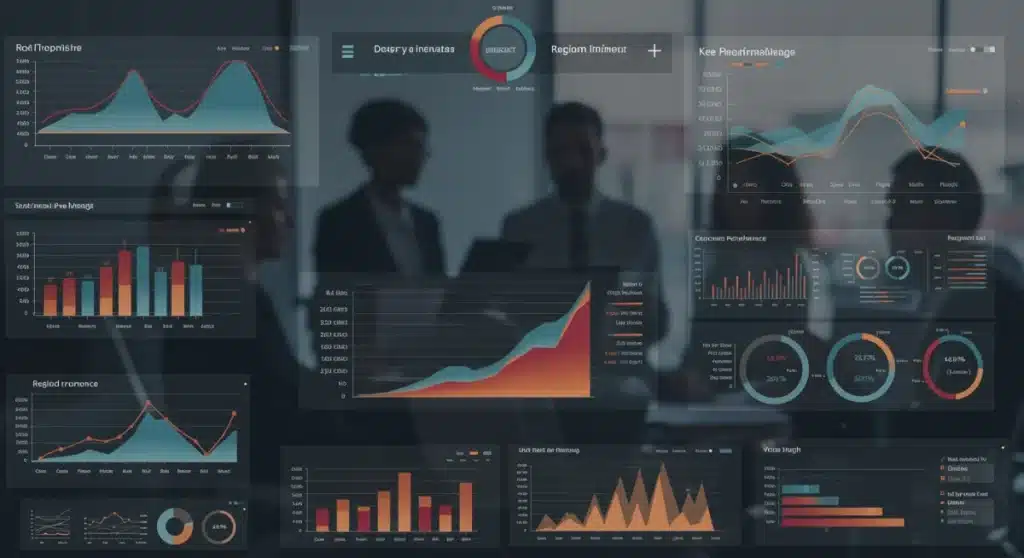
To achieve 5% faster decision-making, US retailers must adopt robust retail data visualization best practices, translating complex key metrics into clear, actionable insights for all stakeholders.
In today’s fast-paced market, the ability of US retailers to make swift, informed decisions is paramount. This objective requires more than just collecting vast amounts of data; it demands effective communication of that data. Data Visualization Best Practices for US Retailers: Communicating Key Metrics for 5% Faster Decision-Making is not merely a buzzphrase; it’s a strategic imperative that can differentiate market leaders from the rest, offering a crucial edge in a competitive landscape.
The imperative of data visualization in modern retail
The retail industry generates an overwhelming volume of data daily, from point-of-sale transactions and inventory movements to customer interactions and supply chain logistics. Without a clear and concise way to interpret this information, its value remains largely untapped. Data visualization transforms raw, complex datasets into understandable visual formats, making trends, patterns, and outliers immediately apparent.
For US retailers, this means moving beyond static spreadsheets and into dynamic dashboards that tell a story. The goal is to empower every decision-maker, from store managers to C-suite executives, with insights that are not only accurate but also digestible and actionable. This shift can directly contribute to a 5% acceleration in decision-making, impacting everything from inventory optimization to marketing campaign effectiveness.
Understanding the need for visual clarity
The human brain processes visual information significantly faster than text. In a retail environment where every second counts, this cognitive advantage is invaluable. Visual clarity reduces the time spent deciphering reports, allowing more time for strategic planning and execution.
- Reduces cognitive load: Complex data simplified into charts and graphs is easier to understand.
- Highlights anomalies: Outliers and unexpected patterns become instantly visible.
- Facilitates trend identification: Long-term trends and seasonal shifts are clear at a glance.
Without effective data visualization, retailers risk misinterpreting critical market signals, leading to missed opportunities or costly mistakes. It’s about translating the language of numbers into a universal visual language that resonates with diverse stakeholders, ensuring everyone is on the same page and moving towards common goals.
Ultimately, the imperative for data visualization in modern retail is rooted in efficiency and competitive advantage. By making data accessible and understandable, retailers can foster a data-driven culture, where decisions are based on evidence rather than intuition, leading to more robust and responsive business strategies.
Identifying key retail metrics for visualization
Before diving into visualization techniques, US retailers must first identify the key metrics that truly matter. Not all data points are equally critical; focusing on vanity metrics can dilute insights and slow down decision-making. The selection process should align directly with strategic business objectives, ensuring that visualized data directly supports specific goals like increasing sales, improving customer retention, or optimizing inventory.
Common key performance indicators (KPIs) in retail include sales growth, average transaction value, customer lifetime value, inventory turnover, and conversion rates. However, the specific metrics to prioritize will vary based on the retailer’s business model, product category, and current strategic focus. A boutique fashion retailer might prioritize inventory freshness and customer engagement, while a large grocery chain might focus on supply chain efficiency and shrink reduction.
Sales and revenue metrics
These are often the most straightforward and universally understood metrics, yet their visualization can be highly nuanced. Beyond simple sales figures, visualizing year-over-year growth, sales by product category, regional performance, and hourly transaction volumes can reveal powerful insights.
- Sales trends: Daily, weekly, monthly, and yearly sales comparisons.
- Revenue per square foot: Maximizing physical retail space efficiency.
- Average transaction value (ATV): Insights into customer purchasing habits.
Effective visualization of sales data can highlight peak selling periods, identify underperforming product lines, and even pinpoint geographical areas requiring more marketing attention. This granular understanding allows for targeted interventions that can significantly boost revenue.
Beyond sales, understanding profitability metrics like gross margin return on investment (GMROI) and sell-through rates is crucial. Visualizing these alongside sales data provides a holistic view of financial health, enabling retailers to make data-backed decisions on pricing, promotions, and product assortment. The clarity offered by well-designed visualizations ensures that financial performance is not just tracked but actively managed for optimal results.
Choosing the right visualization types for retail data
The effectiveness of data visualization hinges not just on having the right data, but on presenting it in the most appropriate visual format. Different types of data and different questions require distinct visualization approaches. Selecting the right chart or graph type ensures that the message is conveyed clearly and without ambiguity, accelerating understanding and decision-making.
For US retailers, this often means moving beyond the default options in spreadsheet software and exploring a wider array of visualization tools designed for specific analytical purposes. A line chart is excellent for showing trends over time, while a bar chart is ideal for comparing discrete categories. Pie charts, often overused, are best reserved for showing parts of a whole where the segments are few and distinct.
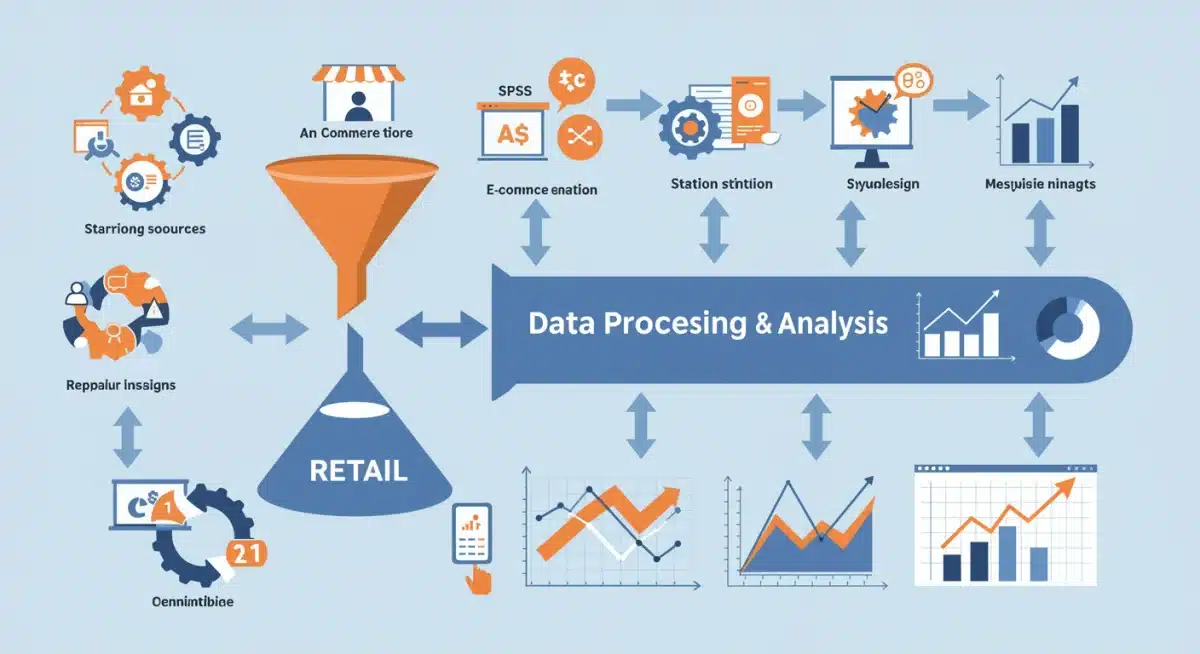

Common visualization types and their applications
Each visualization type serves a specific purpose. Understanding these applications helps retailers choose the most impactful way to display their data, enhancing comprehension and driving quicker insights.
- Line charts: Ideal for showing trends over time (e.g., daily sales, website traffic).
- Bar charts: Excellent for comparing categorical data (e.g., sales by product category, regional performance).
- Scatter plots: Useful for identifying relationships or correlations between two variables (e.g., advertising spend vs. sales).
- Heat maps: Effective for displaying data density or performance across multiple dimensions (e.g., store performance across different locations and product types).
- Geospatial maps: Visualize location-based data, such as customer demographics by region or store sales performance across states.
The key is to match the visualization to the data’s nature and the question being asked. An inappropriate chart can obscure insights rather than reveal them, leading to misinterpretations and delayed decision-making. Experimenting with different visualization types and gathering feedback from users can help refine the approach and ensure maximum impact.
Ultimately, the goal is to create a suite of visualizations that are both informative and intuitive. By carefully selecting the right chart types, US retailers can ensure their data tells a compelling story, facilitating a deeper understanding of their business performance and enabling faster, more effective strategic responses.
Designing effective retail dashboards and reports
Once key metrics are identified and appropriate visualization types are chosen, the next crucial step for US retailers is to design effective dashboards and reports. A well-designed dashboard is more than just a collection of charts; it’s a cohesive narrative that guides the user through critical insights, enabling rapid understanding and action. Poorly designed dashboards, conversely, can overwhelm users with too much information, hindering rather than helping decision-making.
The principles of good design—simplicity, clarity, and relevance—are paramount. Dashboards should be tailored to their audience, whether it’s a store manager needing real-time sales data or an executive analyzing long-term growth strategies. Each element on the dashboard should serve a clear purpose, contributing to a focused understanding of the key metrics.
Principles of dashboard design
Effective dashboard design follows several core principles to ensure maximum utility and impact. Adhering to these guidelines helps create tools that genuinely accelerate decision-making.
- Keep it simple: Avoid clutter; focus on essential metrics.
- Prioritize information: Place the most critical data prominently.
- Use consistent design: Maintain uniform colors, fonts, and chart styles.
- Ensure interactivity: Allow users to filter, drill down, and explore data.
- Provide context: Include benchmarks, targets, or historical data for comparison.
Color choice is also critical. While vibrant colors can draw attention, overuse or inconsistent application can lead to confusion. A thoughtful color palette should be used to highlight important data points or differentiate between categories, ensuring accessibility and ease of interpretation.
Beyond aesthetics, the functionality of dashboards is key. Interactive elements that allow users to filter data by time period, product, or region can transform a static report into a powerful analytical tool. This interactivity empowers users to explore data at their own pace and answer specific questions, leading to more nuanced insights and ultimately, faster, more informed decisions across the retail organization.
Ensuring data accuracy and integrity
The most sophisticated data visualizations and beautifully designed dashboards are meaningless if the underlying data is inaccurate or inconsistent. For US retailers, ensuring data accuracy and integrity is the bedrock upon which effective data visualization is built. Flawed data leads to flawed insights, which in turn leads to poor decisions, undermining the entire purpose of data-driven strategies.
Data quality issues can stem from various sources: manual entry errors, inconsistent data collection methods across different systems, incomplete records, or outdated information. Addressing these issues requires a systematic approach to data governance, involving clear protocols for data collection, storage, processing, and validation.
Strategies for maintaining data quality
Proactive measures are essential to safeguard data accuracy and integrity. Implementing robust strategies ensures that the data visualized is reliable and trustworthy, instilling confidence in decision-makers.
- Automated data validation: Implement checks at the point of data entry.
- Regular data audits: Periodically review datasets for inconsistencies and errors.
- Standardized data entry: Enforce consistent formats and definitions across all systems.
- Data governance policies: Establish clear roles and responsibilities for data management.
- Data cleansing processes: Regularly remove duplicate, incomplete, or incorrect data.
Investing in data integration platforms can also help consolidate data from disparate sources, such as POS systems, e-commerce platforms, CRM software, and supply chain management tools. By creating a single source of truth, retailers can minimize data discrepancies and ensure that all visualizations are based on a unified, accurate dataset.
Ultimately, data accuracy and integrity are not one-time tasks but ongoing commitments. By prioritizing data quality, US retailers can ensure that their data visualization efforts yield genuine insights, fostering a culture of trust in data-driven decision-making and contributing directly to a more agile and responsive business operation.
Leveraging advanced analytics and AI in visualization
While foundational data visualization practices are crucial, US retailers serious about achieving a competitive edge are increasingly leveraging advanced analytics and artificial intelligence (AI) to enhance their visualization capabilities. These technologies move beyond simply displaying historical data, offering predictive insights, anomaly detection, and automated reporting that can further accelerate decision-making and uncover deeper, more complex patterns.
AI-driven visualization tools can automatically identify significant trends or outliers that might be missed by human analysts, flagging them for immediate attention. This capability is particularly valuable in dynamic retail environments where subtle shifts in consumer behavior or market conditions can have significant impacts. For example, AI can predict future sales based on historical data, seasonality, and external factors like weather or economic indicators, allowing retailers to adjust inventory and staffing proactively.
Enhancing visualization with AI and machine learning
Integrating AI and machine learning into data visualization offers powerful capabilities to extract more profound insights and automate complex analyses, pushing the boundaries of what’s possible in retail analytics.
- Predictive analytics: Forecast future sales, demand, and inventory needs.
- Anomaly detection: Automatically identify unusual patterns or fraudulent activities.
- Natural language processing (NLP): Allow users to query data using plain language.
- Automated insight generation: Tools that explain complex data relationships in plain language.
- Personalized dashboards: Tailor visualizations to individual user roles and needs.
Furthermore, machine learning algorithms can be used to segment customers more effectively, identifying high-value groups or those at risk of churn. Visualizing these segments and their behaviors allows retailers to create highly targeted marketing campaigns and personalized shopping experiences, driving engagement and loyalty.
The combination of advanced analytics and AI with robust data visualization provides US retailers with a powerful toolkit. It transforms data from a rearview mirror into a crystal ball, offering not just an understanding of what happened, but also informed predictions about what will happen, and actionable recommendations on how to respond. This capability is instrumental in achieving that 5% faster decision-making goal, enabling retailers to stay several steps ahead in a highly competitive market.
Measuring the impact of improved data visualization
Implementing data visualization best practices is an investment, and like any investment, its impact must be measured. For US retailers, quantifying the benefits of improved data visualization goes beyond anecdotal evidence; it involves tracking tangible improvements in operational efficiency, strategic responsiveness, and ultimately, financial performance. Measuring this impact helps justify further investment and refines the visualization strategy over time.
One direct measure is the speed of decision-making. By establishing baseline metrics for how long it typically takes to analyze data and make decisions on specific issues (e.g., inventory reordering, promotional adjustments), retailers can then track improvements after implementing new visualization tools and processes. A 5% reduction in decision-making time, for instance, could translate into significant gains in agility and market responsiveness.
Key metrics for evaluating visualization effectiveness
To truly understand the value derived from enhanced data visualization, retailers should focus on a set of measurable outcomes that directly reflect business improvements.
- Time to insight: How quickly users can extract actionable insights from dashboards.
- Decision accuracy: Improvement in the success rate of decisions made using visualized data.
- Operational efficiency: Reductions in inventory holding costs, stockouts, or overstocking.
- Revenue growth: Direct correlation between improved insights and sales increases.
- User engagement: Frequency and depth of interaction with visualization tools.
Beyond these, qualitative feedback from users is also invaluable. Surveys or interviews with store managers, marketing teams, and executives can reveal how much easier and faster they find it to access and interpret critical information. This feedback can highlight areas for improvement and validate the perceived value of the visualization efforts.
Ultimately, measuring the impact of improved data visualization is about demonstrating a clear return on investment. By meticulously tracking relevant metrics and gathering user feedback, US retailers can continually optimize their visualization strategies, ensuring they remain a powerful driver for faster, more effective decision-making and sustained business growth.
| Key Aspect | Brief Description |
|---|---|
| Strategic Metric Selection | Focus on KPIs directly linked to business goals for impactful insights. |
| Effective Visualization Types | Choose appropriate charts and graphs for clear, unambiguous data communication. |
| Dashboard Design Principles | Create intuitive, audience-specific dashboards for rapid insight extraction. |
| Data Integrity & AI Integration | Ensure accurate data and leverage AI for predictive analytics and anomaly detection. |
Frequently asked questions about retail data visualization
Data visualization transforms complex retail data into easily understandable visual formats, enabling US retailers to quickly identify trends, patterns, and anomalies. This accelerates decision-making by making insights accessible to all stakeholders, directly impacting operational efficiency and strategic responsiveness.
Key metrics include sales growth, average transaction value, customer lifetime value, inventory turnover, and conversion rates. The specific metrics depend on the retailer’s business model and strategic goals, but always focus on those that directly drive actionable insights for improved performance.
Ensuring data accuracy requires robust data governance, automated validation, regular audits, and standardized data entry. Implementing data cleansing processes and integrating data from disparate sources into a single, reliable platform are also critical steps to maintain integrity.
Absolutely. AI can significantly enhance retail data visualization by providing predictive analytics, automatically detecting anomalies, and generating automated insights. This allows retailers to move beyond historical data analysis to proactive strategic planning, further accelerating their decision-making capabilities.
Measure ROI by tracking improvements in decision-making speed, accuracy, and operational efficiency. Quantify reductions in costs (e.g., inventory), increases in revenue, and user engagement with visualization tools. Qualitative feedback from stakeholders also provides valuable insights into perceived benefits.
Conclusion
The journey towards achieving 5% faster decision-making for US retailers through enhanced data visualization is not a destination but a continuous process of refinement and adaptation. By strategically selecting key metrics, employing appropriate visualization types, designing intuitive dashboards, meticulously ensuring data integrity, and leveraging advanced analytics and AI, retailers can transform their raw data into a powerful strategic asset. The ability to communicate complex information clearly and concisely empowers every level of an organization, fostering a culture of informed, agile decision-making. As the retail landscape continues to evolve, those who master the art and science of data visualization will undoubtedly be better positioned to navigate challenges, seize opportunities, and drive sustainable growth.