DTC Brands: 30% Market Share Increase in US Niches by 2025

Direct-to-Consumer (DTC) brands are poised to achieve a remarkable 30% market share increase in specific US niches by 2025, fundamentally reshaping the retail landscape through innovative strategies and direct customer engagement.
The retail landscape is undergoing a monumental shift, with Direct-to-Consumer (DTC) brands: achieving a 30% market share increase in specific US niches by 2025. This isn’t just a trend; it’s a fundamental reorientation of how products reach consumers, bypassing traditional intermediaries and forging direct, often more personal, connections. This article delves into the strategies, challenges, and opportunities driving this significant market disruption, offering insights into what makes DTC brands so compelling and how they are redefining consumer expectations across various sectors.
Understanding the DTC Phenomenon and Its Trajectory
The rise of the Direct-to-Consumer (DTC) model represents a profound evolution in commerce. By eliminating middlemen, brands gain unparalleled control over their product, pricing, and most importantly, the customer experience. This direct connection fosters a deeper understanding of consumer needs and preferences, enabling rapid innovation and personalized offerings that traditional retail often struggles to match. The projected 30% market share increase in specific US niches by 2025 signifies a mature and accelerating phase of this disruption, moving beyond early adopters to widespread consumer acceptance.
Initially, DTC brands emerged as digital-first entities, leveraging e-commerce platforms and social media to reach their audience. This agility allowed them to scale quickly and efficiently, often with lower overheads than their legacy counterparts. However, the DTC landscape is now diversifying, with many successful brands integrating physical retail experiences and exploring omnichannel strategies to further solidify their presence and appeal to a broader demographic. This adaptability is critical for sustaining growth and capturing a larger slice of the market.
The trajectory of DTC growth is not uniform across all sectors. Specific niches, characterized by high consumer engagement, product innovation potential, and a desire for authenticity, are seeing the most significant gains. These often include categories like beauty and wellness, sustainable fashion, specialized home goods, and innovative food and beverage products. Understanding these niche dynamics is key to appreciating the full impact of the DTC revolution.
Key Drivers Fueling DTC Market Share Expansion
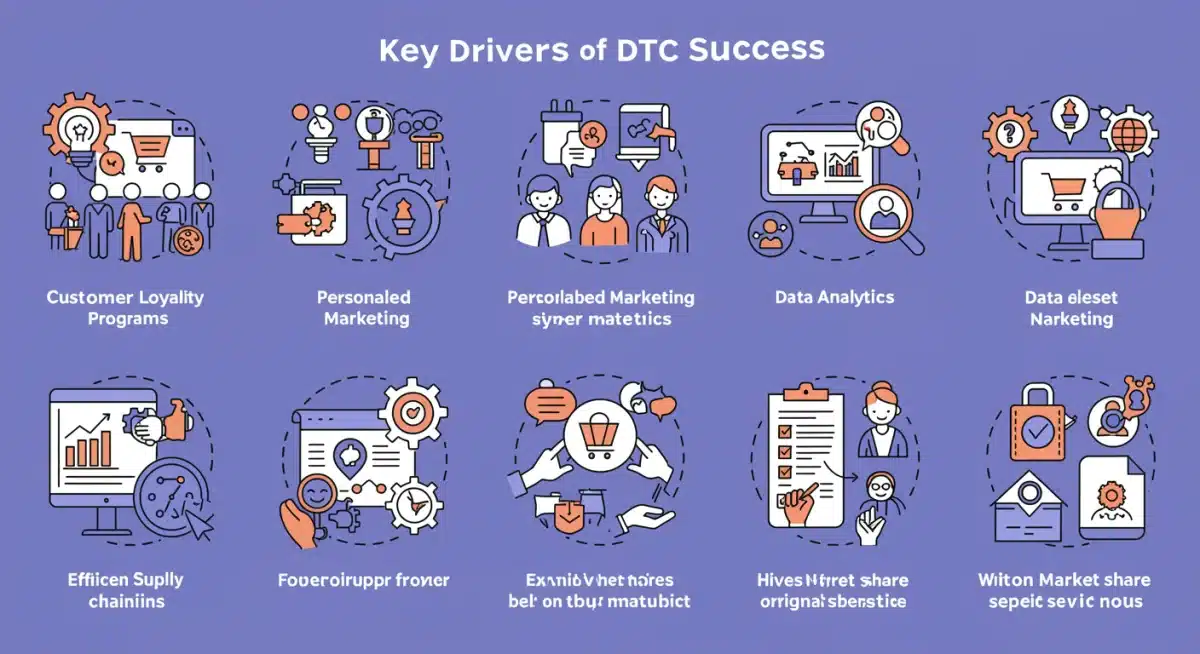
Several critical factors are propelling the significant market share expansion of DTC brands. These drivers are interconnected, creating a powerful ecosystem that enables brands to thrive outside conventional retail channels.
Personalized Customer Experiences
One of the most potent weapons in the DTC arsenal is the ability to offer highly personalized customer experiences. From tailored product recommendations to customized communication, DTC brands leverage data to make every interaction feel unique. This level of personalization builds strong customer loyalty and advocacy, which are invaluable in competitive markets.
- Data-driven insights for targeted marketing.
- Custom product offerings and subscription models.
- Direct feedback loops for continuous improvement.
- Seamless omnichannel experiences connecting digital and physical touchpoints.
Beyond personalization, the emphasis on community building plays a crucial role. Many DTC brands cultivate vibrant online communities around their products and values, turning customers into brand ambassadors. This organic growth strategy is highly effective and cost-efficient, contributing significantly to market penetration.
Innovating Supply Chains and Logistics for DTC Success
Efficient and innovative supply chain management is a cornerstone of DTC brand success, especially as they target a 30% market share increase in specific US niches by 2025. Unlike traditional retailers who rely on complex distribution networks, DTC brands often manage their logistics end-to-end, leading to greater control, cost-efficiency, and speed to market.
This direct control allows DTC brands to experiment with various fulfillment models, from in-house operations to partnerships with third-party logistics (3PL) providers specializing in e-commerce. The goal is always to optimize delivery times, reduce shipping costs, and enhance the unboxing experience, which is a critical touchpoint for building brand perception.
Technology Integration in Logistics
The adoption of advanced technologies is transforming DTC supply chains. AI-powered inventory management systems predict demand with greater accuracy, minimizing waste and ensuring product availability. Automation in warehouses speeds up order processing, while sophisticated tracking systems provide customers with real-time updates, enhancing transparency and trust.
- AI for demand forecasting and inventory optimization.
- Automated fulfillment centers for quicker processing.
- Real-time tracking and transparent delivery updates.
- Strategic partnerships with specialized 3PLs.
Furthermore, many DTC brands are exploring sustainable logistics practices, such as eco-friendly packaging and carbon-neutral shipping options, aligning with consumer values and bolstering their brand image. This commitment to sustainability can be a significant differentiator in crowded markets, attracting environmentally conscious consumers.
Leveraging Data and Analytics for Targeted Growth
Data and analytics are the lifeblood of modern DTC brands, providing the insights necessary to achieve ambitious growth targets. By collecting and analyzing vast amounts of customer data, DTC companies can make informed decisions about product development, marketing strategies, and customer engagement, directly contributing to their market share expansion.
Every interaction a customer has with a DTC brand, from website visits to purchase history and customer service inquiries, generates valuable data. This data is then used to create detailed customer profiles, segment audiences, and personalize marketing messages, ensuring that promotional efforts are highly targeted and effective. This precision minimizes wasted ad spend and maximizes conversion rates.
Beyond marketing, data analytics informs product innovation. By understanding what customers are buying, what they’re saying in reviews, and what trends are emerging, DTC brands can rapidly develop and launch new products that genuinely meet market demand. This agile approach to product development is a significant competitive advantage.
Strategic Data Utilization
- Predictive analytics for consumer behavior.
- A/B testing for website optimization and marketing campaigns.
- Customer lifetime value (CLV) analysis to prioritize retention efforts.
- Attribution modeling to understand marketing ROI.
The continuous feedback loop facilitated by data empowers DTC brands to constantly refine their offerings and strategies. This iterative process allows them to remain highly relevant and responsive to changing consumer preferences, a crucial factor in securing and expanding their market presence in specific US niches.
The Role of Brand Storytelling and Community Building
In a world saturated with choices, brand storytelling and community building have become indispensable tools for DTC brands aiming for a 30% market share increase in specific US niches by 2025. These elements go beyond mere transactions, fostering emotional connections and a sense of belonging among consumers.
A compelling brand story differentiates a DTC product from its competitors. It communicates the brand’s values, mission, and the unique journey behind its creation, resonating with consumers who increasingly seek authenticity and purpose in their purchases. This narrative helps to build trust and establishes a deeper relationship than mere product features ever could.
Furthermore, DTC brands excel at building vibrant communities around their products. Through social media, online forums, and even physical events, they create spaces where customers can connect with each other and with the brand directly. This community aspect transforms customers into advocates, who then spread the brand’s message through word-of-mouth, a powerful and credible form of marketing.
Cultivating Brand Loyalty
- Authentic narratives that resonate with target audiences.
- Engaging content across multiple platforms.
- Interactive online communities and loyalty programs.
- User-generated content as a testament to brand value.
By investing in storytelling and community, DTC brands create a loyal customer base that is less susceptible to price competition and more likely to make repeat purchases. This strong emotional bond is a key driver of sustainable growth and market share expansion, especially within niche markets where consumers often seek specific values and identities.
Challenges and Opportunities for Sustained DTC Growth
While the outlook for DTC brands is overwhelmingly positive, with projections of a 30% market share increase in specific US niches by 2025, they are not immune to challenges. Navigating these obstacles effectively will be crucial for sustained growth and long-term success.
One primary challenge is the escalating cost of customer acquisition. As the DTC space becomes more crowded, advertising costs on digital platforms are rising, making it harder and more expensive to stand out. Brands must innovate their marketing strategies, focusing on organic growth, influencer collaborations, and retargeting efforts to optimize their customer acquisition cost (CAC).
Another significant hurdle is managing customer expectations around shipping and returns. While DTC offers convenience, consumers now demand fast, free shipping and hassle-free returns, which can strain a brand’s logistics and profitability. Investing in robust logistics infrastructure and clear return policies is essential to maintain customer satisfaction.
Overcoming Growth Hurdles
- Optimizing customer acquisition costs through diverse channels.
- Streamlining logistics for efficient shipping and returns.
- Scaling operations without compromising product quality or customer experience.
- Adapting to evolving data privacy regulations and consumer expectations.
Despite these challenges, opportunities abound. The continued shift towards online shopping, the increasing desire for personalized products, and the growing importance of ethical and sustainable brand practices all play into the strengths of the DTC model. Brands that can effectively leverage these trends, adapt to market changes, and maintain a strong connection with their customers are best positioned not only to meet but to exceed their market share goals.
Future Outlook: Beyond 2025 for DTC Brands
Looking beyond the impressive target of a 30% market share increase in specific US niches by 2025, the future for Direct-to-Consumer brands remains exceptionally dynamic. The innovations and strategies currently being deployed are laying the groundwork for an even more integrated and consumer-centric retail environment.
One significant trend expected to accelerate is the convergence of online and offline experiences. While digital-first remains a core tenet, successful DTC brands will increasingly explore physical touchpoints, such as pop-up shops, showrooms, and strategic retail partnerships. These hybrid models offer consumers the best of both worlds: the convenience of online shopping coupled with the tangible experience of interacting with products in person.
Furthermore, technological advancements will continue to play a pivotal role. Augmented reality (AR) and virtual reality (VR) will offer immersive shopping experiences, allowing customers to virtually ‘try on’ products or visualize them in their homes before purchase. AI will become even more sophisticated in predicting consumer needs, enabling hyper-personalized product development and marketing at scale.
Emerging Trends and Innovations
- Increased adoption of hybrid online-offline retail models.
- Integration of AR/VR for enhanced shopping experiences.
- Advanced AI for predictive personalization and product innovation.
- Greater emphasis on circular economy principles and sustainable sourcing.
The regulatory landscape, particularly concerning data privacy, will also shape the future of DTC. Brands that prioritize transparency and ethical data practices will build greater trust and loyalty, reinforcing their market position. Ultimately, the DTC model’s inherent agility and direct relationship with consumers make it uniquely equipped to adapt to these evolving conditions, ensuring its continued prominence in the retail ecosystem.
| Key Point | Brief Description |
|---|---|
| Market Share Growth | DTC brands are projected to achieve a 30% market share increase in specific US niches by 2025. |
| Key Drivers | Personalization, efficient supply chains, data analytics, and strong brand storytelling fuel this growth. |
| Challenges Ahead | Rising customer acquisition costs and logistics demands require strategic innovation. |
| Future Outlook | Hybrid retail models, advanced tech, and sustainability will define DTC beyond 2025. |
Frequently asked questions about DTC market growth
The growth is primarily driven by direct customer relationships, enabling personalized experiences, efficient supply chains, and data-driven marketing. This direct model allows for quicker adaptation to consumer trends and stronger brand loyalty, bypassing traditional retail complexities and costs effectively.
Specific US niches experiencing significant DTC growth include beauty and wellness, sustainable fashion, specialized home goods, and innovative food and beverage products. These sectors benefit from strong consumer demand for authenticity, personalization, and unique product offerings that DTC brands are well-positioned to provide.
DTC brands utilize data to understand customer behavior, personalize marketing campaigns, and inform product development. This data-driven approach allows for targeted advertising, optimized customer acquisition, and the rapid introduction of products that precisely meet market demand, fostering efficiency and growth.
Key challenges include rising customer acquisition costs due to increased competition, managing complex logistics for shipping and returns, and scaling operations without compromising quality. Adapting to evolving data privacy regulations and maintaining customer satisfaction amidst high expectations are also critical for sustained success.
Beyond 2025, DTC brands are expected to further integrate online and offline experiences, leveraging technologies like AR/VR for immersive shopping. There will also be a greater emphasis on sustainability, ethical practices, and advanced AI for hyper-personalization, continually adapting to consumer demands and technological shifts.
Conclusion
The journey of Direct-to-Consumer brands towards achieving a 30% market share increase in specific US niches by 2025 is a testament to their innovative spirit and adaptability. By prioritizing direct customer relationships, leveraging advanced data analytics, optimizing supply chains, and crafting compelling brand narratives, DTC companies are not just competing; they are redefining the very essence of retail. While challenges remain, the inherent agility of the DTC model positions it strongly for continued evolution and dominance in a rapidly changing consumer landscape, promising a future where personalized and direct engagement become the norm.