DTC Model Evolution: Capturing 10% More Market Share by 2025

The Direct-to-Consumer (DTC) model is rapidly evolving, projected to capture an additional 10% market share by 2025 through strategic innovation in customer engagement, data utilization, and operational efficiency.
The landscape of commerce is undergoing a profound transformation, with the Direct-to-Consumer (DTC) model evolution at its forefront. This shift represents more than just a sales channel; it’s a fundamental rethinking of how brands connect with their customers. By bypassing traditional intermediaries, DTC brands gain unparalleled control over their narrative, product, and customer experience. This direct engagement is not merely a trend but a strategic imperative, driving significant market share gains and redefining competitive advantage. The ambition to capture an additional 10% market share by 2025 is not just aspirational; it’s a tangible goal fueled by innovation and a deep understanding of the modern consumer.
The foundational shift: understanding DTC’s core advantage
The Direct-to-Consumer (DTC) model has fundamentally reshaped retail by eliminating intermediaries, allowing brands to sell directly to their end-users. This direct relationship offers several intrinsic advantages that traditional retail models struggle to replicate, primarily centered around control, data, and customer intimacy. Brands adopting this model can craft a unique brand identity and ensure every touchpoint aligns with their vision, from product development to post-purchase support. This level of control is paramount in building strong, lasting customer relationships.
The ability to collect first-party data directly from consumers is perhaps the most powerful asset of the DTC model. This data provides invaluable insights into customer preferences, purchasing behaviors, and pain points, enabling brands to refine their offerings and marketing strategies with unprecedented precision. Furthermore, the direct feedback loop allows for rapid iteration and adaptation, keeping brands agile in a fast-changing market. This section explores these foundational advantages and how they serve as the bedrock for future market share expansion.
Uninterrupted brand narrative
One of the most significant benefits of the DTC model is the complete control over the brand narrative. In traditional retail, brands often cede some control to retailers, who might prioritize shelf space or promotions over a consistent brand message. DTC brands, however, manage every aspect of their communication, ensuring that their story, values, and product benefits are conveyed authentically and directly to the consumer.
- Consistent messaging: Ensures brand voice and values are maintained across all customer touchpoints.
- Direct engagement: Fosters a stronger emotional connection between brand and consumer.
- Authenticity: Builds trust and loyalty by presenting an unfiltered brand identity.
Data-driven insights for growth
The direct interaction inherent in the DTC model provides a rich stream of first-party data. This data is gold for brands looking to understand their customers better and drive informed decisions. From website analytics to purchase history and customer service interactions, every piece of information contributes to a holistic view of the customer. This enables highly targeted marketing, personalized product recommendations, and optimized customer journeys.
The continuous flow of data allows DTC brands to move beyond assumptions and base their strategies on concrete evidence. This iterative approach to understanding and serving the customer is a key differentiator, enabling a level of agility that is difficult for traditional models to match. The insights derived from this data are crucial for identifying emerging trends and proactively addressing customer needs.
In conclusion, the core advantage of the DTC model lies in its ability to foster a direct, controlled, and data-rich relationship with the customer. This foundation empowers brands to build stronger identities, offer highly personalized experiences, and make informed decisions that drive sustained growth and market share expansion. Understanding these fundamental shifts is essential for appreciating the broader evolution of the DTC landscape.
Leveraging personalization and customer experience for retention
In the evolving DTC landscape, personalization and an exceptional customer experience are no longer mere differentiators but essential pillars for sustained growth and market share capture. Consumers today expect brands to understand their individual needs and preferences, offering tailored interactions that feel unique and relevant. This goes beyond simply addressing a customer by their first name; it involves anticipating their desires, providing proactive support, and creating a seamless journey across all touchpoints.
The power of personalization lies in its ability to build deeper connections, fostering loyalty and reducing churn. When customers feel valued and understood, they are more likely to return, recommend the brand, and become advocates. This section delves into how DTC brands are strategically implementing personalization and refining customer experience to not only retain existing customers but also attract new ones, thereby contributing significantly to the goal of capturing an additional 10% market share by 2025.
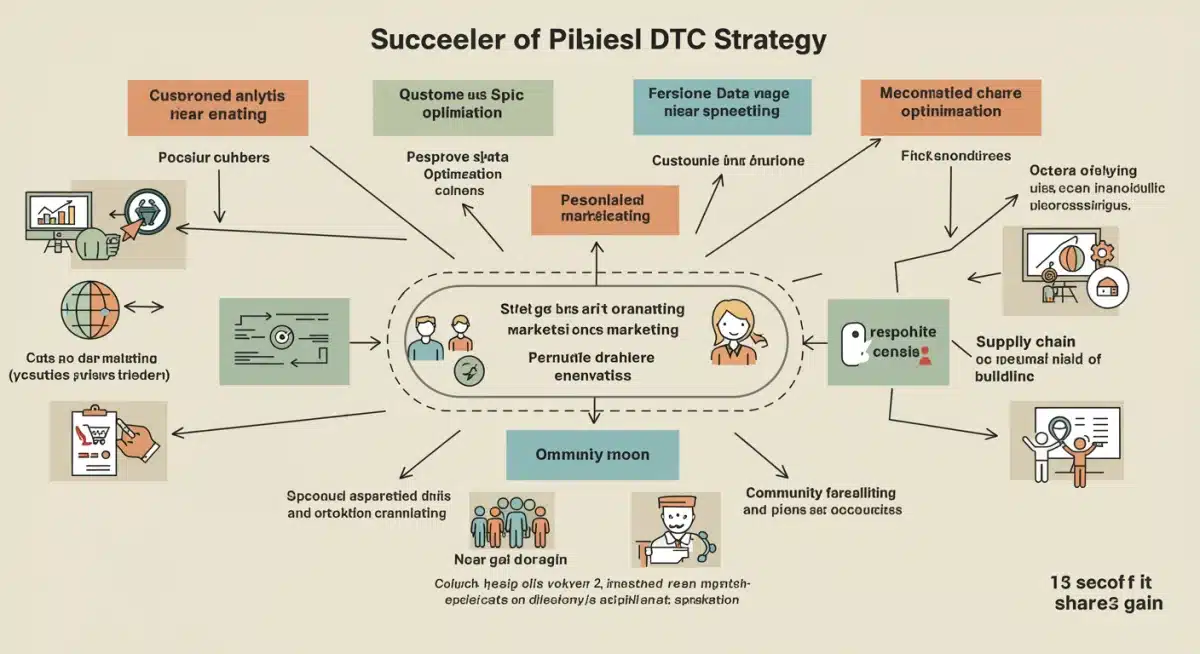
The integration of advanced analytics and AI-driven platforms allows DTC brands to move beyond basic segmentation, enabling hyper-personalization at scale. This includes dynamic website content, personalized product recommendations based on browsing and purchase history, and targeted email campaigns that resonate with individual customer segments. Such efforts create a perception of bespoke service, making each customer feel uniquely catered to.
Crafting seamless customer journeys
A truly exceptional customer experience encompasses every interaction a customer has with a brand, from initial discovery to post-purchase support. DTC brands are meticulously mapping these journeys, identifying potential friction points, and optimizing them for fluidity and satisfaction. This holistic approach ensures that each step is intuitive, enjoyable, and reinforces the brand’s commitment to its customers.
- Intuitive website design: Easy navigation and a clear path to purchase.
- Multi-channel support: Consistent and helpful assistance across email, chat, and social media.
- Efficient order fulfillment: Fast, reliable shipping and transparent tracking.
Beyond the transactional elements, DTC brands are increasingly focusing on creating emotional connections. This involves engaging storytelling, building vibrant online communities, and offering exclusive content or experiences that deepen customer loyalty. These efforts transform customers into brand ambassadors, driving organic growth through word-of-mouth referrals, which are invaluable for market share expansion.
In essence, by prioritizing deep personalization and an unwavering commitment to an outstanding customer experience, DTC brands are not just selling products; they are building relationships. This strategic focus is crucial for not only retaining valuable customers but also attracting new ones, securing their position in a competitive market and propelling them towards their ambitious market share goals.
Technological innovations powering DTC growth
The rapid evolution of the DTC model is inextricably linked to advancements in technology. From sophisticated data analytics tools to AI-powered personalization engines and streamlined e-commerce platforms, technology serves as the backbone, enabling brands to scale, optimize operations, and deliver superior customer experiences. These innovations are not just supporting growth; they are actively driving the ability of DTC brands to capture a larger slice of the market by 2025, offering capabilities that were once exclusive to large enterprises.
Modern DTC brands are leveraging a suite of digital tools to gain a competitive edge. This includes everything from CRM systems that provide a 360-degree view of the customer to automation platforms that streamline marketing and customer service. The strategic adoption of these technologies allows brands to operate with greater efficiency, personalize interactions at scale, and make data-driven decisions that directly impact their bottom line and market penetration.
AI and machine learning for hyper-personalization
Artificial intelligence (AI) and machine learning (ML) are revolutionizing how DTC brands understand and interact with their customers. These technologies enable brands to analyze vast amounts of data to predict customer behavior, personalize recommendations, and even tailor marketing messages in real-time. This level of hyper-personalization creates highly relevant experiences that significantly boost engagement and conversion rates.
- Predictive analytics: Foreseeing customer needs and preferences.
- Dynamic content: Tailoring website and app content to individual users.
- Automated customer service: Chatbots and AI assistants providing instant support.
Optimizing the supply chain with advanced logistics
Efficient supply chain management is critical for DTC brands, as they are often responsible for the entire fulfillment process. Technological innovations in logistics, such as advanced inventory management systems, automated warehousing, and predictive shipping analytics, are enabling brands to deliver products faster and more reliably. This operational excellence directly translates into higher customer satisfaction and repeat business.
Furthermore, blockchain technology is beginning to offer new levels of transparency and traceability within the supply chain, ensuring product authenticity and ethical sourcing. These advancements not only reduce costs and improve efficiency but also build trust with consumers who are increasingly concerned about the provenance of their purchases. The continuous refinement of these technological pillars ensures DTC brands remain competitive and poised for further market share gains.
In summary, technology is the engine behind the ongoing DTC model evolution. By embracing AI, advanced analytics, and sophisticated logistics, brands are not just keeping pace with consumer expectations; they are setting new standards for efficiency, personalization, and customer satisfaction, paving the way for significant market share expansion.
Building strong communities and brand loyalty
Beyond transactional relationships, the most successful DTC brands are cultivating strong, engaged communities around their products and values. This approach transforms customers into advocates, creating a powerful network effect that drives organic growth and strengthens brand loyalty. In an increasingly crowded market, community building serves as a crucial differentiator, helping brands stand out and secure a devoted customer base. The ability to foster such connections is vital for capturing and maintaining an additional 10% market share by 2025.
Community building involves more than just a social media presence; it’s about creating spaces where customers can connect with each other and with the brand on a deeper level. This can manifest in various forms, from online forums and exclusive groups to real-world events and collaborative product development. When customers feel a sense of belonging and ownership, their loyalty transcends mere product satisfaction, becoming a powerful force for brand advocacy.
Engaging through content and experiences
Content plays a pivotal role in community building, providing value beyond product promotion. Educational articles, inspiring stories, behind-the-scenes glimpses, and user-generated content all contribute to a richer brand experience. Similarly, exclusive events, workshops, or early access to new products can make customers feel like insiders, deepening their connection to the brand.
- User-generated content: Showcasing customer experiences and product use.
- Exclusive access: Offering special perks to loyal community members.
- Interactive platforms: Forums, groups, and live Q&A sessions.
Fostering two-way conversations
True community engagement is a two-way street. DTC brands that actively listen to their customers, solicit feedback, and involve them in decision-making processes build unparalleled trust and loyalty. This can range from product co-creation initiatives to directly addressing customer concerns and implementing suggestions. When customers feel heard and valued, they become invested in the brand’s success.
This direct channel for feedback also provides invaluable insights for product development and marketing strategies, ensuring that the brand remains aligned with its community’s evolving needs and desires. The stronger the community, the more resilient the brand becomes to market fluctuations and competitive pressures, solidifying its position and enabling continued market share expansion.
Ultimately, building strong communities and fostering deep brand loyalty are critical components of the DTC model evolution. By moving beyond transactional relationships to create meaningful connections, brands can cultivate a dedicated customer base that not only drives repeat purchases but also acts as a powerful engine for organic growth and market share capture.
The agile DTC business model: adapting to market dynamics
The inherent agility of the DTC business model is a significant factor in its ability to quickly adapt to market dynamics and capture increasing market share. Unlike traditional retail, which often involves lengthy product development cycles and complex distribution networks, DTC brands can pivot rapidly, responding to consumer trends, feedback, and competitive pressures with remarkable speed. This responsiveness is crucial in today’s fast-paced commercial environment, where consumer preferences can shift almost overnight.
This section explores how DTC brands leverage their direct connection to customers and streamlined operations to maintain a high degree of flexibility. This agility allows them to test new products, experiment with marketing strategies, and optimize their business model in real-time, ensuring they remain relevant and competitive. Such adaptability is key to their ambitious goal of expanding market share by an additional 10% by 2025.
Rapid product development and iteration
One of the hallmarks of an agile DTC model is its capacity for rapid product development and iteration. By directly engaging with customers, brands can quickly gather feedback on prototypes, test new features, and launch products in a fraction of the time it takes traditional companies. This lean approach minimizes risk and ensures that products are always aligned with market demand.
- Customer feedback loops: Integrating consumer input into product design.
- Minimum Viable Product (MVP) launches: Testing concepts with real users before full-scale production.
- A/B testing: Experimenting with product variations and features to optimize performance.
Flexible marketing and sales strategies
The direct nature of DTC also extends to its marketing and sales strategies, allowing for unparalleled flexibility. Brands can quickly adjust their digital campaigns based on real-time performance data, reallocate budgets, and experiment with new channels without the constraints of traditional advertising cycles. This ability to optimize campaigns on the fly ensures maximum impact and efficiency.
Furthermore, DTC brands can easily adapt their pricing strategies, promotions, and bundles in response to market conditions or competitor actions. This dynamic approach to sales and marketing enables them to seize opportunities and mitigate threats more effectively, contributing directly to their market share objectives. The continuous monitoring and adjustment are integral to maintaining a competitive edge.
In essence, the agile DTC business model is characterized by its capacity for rapid response and continuous optimization. This flexibility, driven by direct customer engagement and streamlined operations, allows brands to stay ahead of trends, deliver relevant products, and execute highly effective marketing strategies, all of which are critical for securing an increased market share in a dynamic marketplace.
The competitive landscape and future outlook for DTC
The competitive landscape for Direct-to-Consumer (DTC) brands is intensifying, with new players emerging constantly and traditional brands also adopting DTC strategies. This heightened competition necessitates continuous innovation and strategic differentiation for DTC brands to not only survive but thrive and achieve their goal of capturing an additional 10% market share by 2025. The future outlook for DTC is one of continued growth, but also one that demands greater sophistication and resilience from brands.
Success in this evolving environment will hinge on several key factors: the ability to maintain authentic customer relationships, leverage advanced technology, optimize supply chains for speed and sustainability, and build strong brand communities. Brands that can master these elements will be best positioned to navigate the competitive pressures and capitalize on the ongoing shift in consumer purchasing habits towards direct brand engagement.
Emerging challenges and opportunities
While the DTC model offers significant advantages, it also presents unique challenges. Scaling operations, managing logistics efficiently, and navigating increasingly complex digital advertising landscapes are common hurdles. However, these challenges also create opportunities for innovation, particularly in areas like sustainable sourcing, ethical production, and hyper-personalized niche markets. Brands that can address these concerns will resonate deeply with modern consumers.
- Supply chain complexity: Managing global logistics and fulfillment.
- Customer acquisition costs: Rising expenses in digital advertising.
- Data privacy concerns: Navigating evolving regulations and consumer expectations.
Strategic partnerships and omnichannel integration
As the DTC market matures, many brands are exploring strategic partnerships and omnichannel integration to expand their reach. This might involve selective retail partnerships, pop-up shops, or collaborations with complementary brands. The goal is not to abandon the direct model but to intelligently extend brand presence in ways that enhance customer accessibility and brand visibility, without compromising the direct relationship.
The future of DTC is likely to be less about pure-play online sales and more about a blended approach that leverages the strengths of both online and offline channels. This omnichannel strategy allows brands to meet customers wherever they are, providing a consistent and seamless experience across all touchpoints. By embracing these evolving strategies, DTC brands can further solidify their market position and exceed their market share ambitions.
In conclusion, the future of the DTC model evolution is bright but competitive. Brands that prioritize genuine customer connection, continually innovate with technology, and strategically expand their presence through intelligent partnerships will be the ones to successfully capture a greater share of the market and redefine the future of retail.
| Key Aspect | Impact on Market Share |
|---|---|
| Data-Driven Personalization | Enhances customer loyalty and conversion rates, directly boosting recurring revenue. |
| Seamless Customer Experience | Reduces churn and encourages positive word-of-mouth, attracting new customers organically. |
| Agile Business Model | Allows rapid adaptation to market changes and consumer trends, maintaining competitive edge. |
| Community Building | Fosters brand advocacy and organic growth, strengthening market presence and resilience. |
Frequently asked questions about DTC evolution
The current evolution of the DTC model is primarily driven by technological advancements like AI and big data, increasing consumer demand for personalized experiences, and the desire for brands to gain more control over their customer relationships and supply chains. This allows for greater agility and direct feedback loops.
DTC brands can leverage first-party data to create highly personalized marketing campaigns, optimize product development based on consumer insights, and enhance the overall customer journey. This data-driven approach leads to higher conversion rates, increased customer lifetime value, and ultimately, greater market share.
Exceptional customer experience is paramount in DTC market expansion. A seamless, personalized, and responsive customer journey builds loyalty, encourages repeat purchases, and generates positive word-of-mouth. This organic advocacy is crucial for attracting new customers and expanding market reach efficiently.
Yes, many traditional retailers are integrating DTC strategies to connect directly with consumers and gain valuable insights. This means pure-play DTC brands must continually innovate, focusing on niche markets, superior personalization, and community building to maintain their competitive edge and differentiate themselves in a hybrid retail landscape.
Key challenges include managing rising customer acquisition costs, scaling operations efficiently without compromising customer experience, navigating complex global supply chains, and adapting to evolving data privacy regulations. Overcoming these requires strategic investment in technology, talent, and sustainable practices.
Conclusion: The future of DTC is direct and dynamic
The Direct-to-Consumer (DTC) model evolution is not merely a passing trend but a fundamental reshaping of the retail landscape. The ambitious goal of capturing an additional 10% market share by 2025 is well within reach for brands that strategically leverage personalization, technological innovation, community building, and an agile business model. By prioritizing direct customer relationships, gathering and utilizing first-party data effectively, and continuously adapting to market dynamics, DTC brands are poised to redefine consumer engagement. The future of commerce is undeniably direct, dynamic, and centered around an authentic, value-driven connection between brands and their customers, promising sustained growth and disruption across various industries.