Gig Economy’s Retail Evolution: 7 Ways Reshaping Labor by 2025

The gig economy is fundamentally reshaping retail labor by 2025, introducing unprecedented flexibility and new operational models for businesses while redefining worker engagement and consumer expectations in the rapidly evolving market.
The landscape of retail is undergoing a seismic shift, driven significantly by the rise and maturation of the gig economy. By 2025, the influence of this flexible workforce will be undeniable, transforming how retailers operate and how individuals engage with work. Understanding gig economy retail labor is no longer optional; it’s essential for businesses striving to remain competitive and for workers seeking new opportunities in a dynamic market.
The Rise of Flexible Staffing Models
The traditional retail workforce, characterized by full-time, permanent employees, is steadily giving way to more agile and responsive staffing solutions. This evolution is largely fueled by the unpredictable nature of consumer demand and the need for businesses to scale operations quickly without incurring significant fixed labor costs.
Retailers are increasingly leveraging on-demand platforms to access a pool of talent for specific tasks or peak periods. This allows for greater efficiency and cost control, adapting labor to immediate needs rather than maintaining a static payroll.
On-Demand Workforce for Peak Periods
- Seasonal Surges: During holidays or major sales events, gig workers provide crucial support, handling increased customer traffic, restocking shelves, and fulfilling online orders.
- Unexpected Demand: Sudden spikes in local demand, perhaps due to a viral product or local event, can be met by quickly onboarding gig workers, preventing lost sales.
- Specialized Tasks: Beyond general sales, gig platforms offer access to individuals with specific skills, such as visual merchandisers for new store layouts or tech support for in-store digital displays.
This strategic deployment of labor ensures that stores are always adequately staffed without the overhead of full-time employees during slower periods. The agility offered by gig workers is a game-changer for retailers navigating an increasingly volatile market.
Enhanced Customer Experience Through Personalized Services
The gig economy isn’t just about filling gaps; it’s about elevating the customer journey. By providing access to a diverse range of skills and personalities, retailers can offer more personalized and specialized services that differentiate them from competitors.
Imagine a customer needing an expert opinion on a complex product. Instead of a general sales associate, a gig worker with deep product knowledge can be dispatched, providing a tailored consultation that enhances satisfaction and drives sales.
From Generalists to Specialists
- Personal Shoppers: Gig platforms enable retailers to offer on-demand personal shopping services, where customers can connect with stylists or product experts for bespoke advice.
- In-Home Consultations: For furniture, electronics, or home improvement, gig workers can provide expert consultations directly in the customer’s home, offering convenience and specialized guidance.
- Product Demonstrators: Brands can hire gig workers to conduct engaging in-store product demonstrations, bringing products to life and answering specific customer queries with expertise.
This shift toward specialized, on-demand services creates a more intimate and effective shopping experience, fostering customer loyalty and driving repeat business. The gig model allows for a level of customization that traditional staffing often struggles to provide economically. The ability to match customer needs with specific expertise in real-time is a significant competitive advantage.
The Evolution of Last-Mile Delivery and Fulfillment
Perhaps one of the most visible impacts of the gig economy on retail is in the realm of last-mile delivery. Consumer expectations for fast and flexible delivery have skyrocketed, and the gig model is perfectly positioned to meet this demand.
Retailers are no longer solely reliant on large logistics companies. They can now tap into a vast network of independent contractors for same-day or even hourly deliveries, transforming local stores into micro-fulfillment centers.
Key Shifts in Delivery Logistics
- Hyperlocal Delivery: Gig drivers enable stores to offer ultra-fast delivery within a small radius, competing effectively with online-only retailers.
- Returns Management: Gig workers can facilitate convenient at-home returns, picking up items directly from customers, streamlining the reverse logistics process.
- Click-and-Collect Enhancement: While not direct delivery, gig workers can assist with preparing and organizing click-and-collect orders, ensuring efficiency and speed for customers opting for in-store pickup.
This dynamic delivery ecosystem not only improves customer satisfaction but also optimizes inventory management by allowing stores to move products quickly from shelves to customers’ hands. The flexibility of gig delivery services means retailers can scale their delivery capabilities up or down as needed, responding to market fluctuations without fixed costs. This agility is crucial for maintaining profitability in a competitive e-commerce landscape. The integration of gig workers into the fulfillment process is becoming a standard expectation for many consumers.
New Opportunities for Workers and Skill Development
For individuals, the gig economy in retail offers unprecedented flexibility and diverse opportunities. It allows people to work on their own terms, fitting jobs around other commitments, and often provides a pathway to develop new skills or monetize existing ones.
This model appeals to a wide demographic, including students, parents, retirees, and those seeking supplementary income. It also lowers the barrier to entry for many, making retail work more accessible.
Benefits for the Gig Workforce
- Flexible Schedules: Workers can choose when and where they work, offering a level of autonomy rarely found in traditional employment.
- Diverse Task Options: From stocking shelves and customer service to personal shopping and local delivery, gig workers can select tasks that match their interests and skills.
- Skill Enhancement: Engaging in various retail tasks can help gig workers develop transferable skills, such as customer interaction, inventory management, and problem-solving, which are valuable in many sectors.
The gig economy fosters a culture of continuous learning and adaptation among workers. As they take on different assignments, they gain exposure to various retail environments and develop a broader skill set. This self-directed career path can be incredibly empowering, allowing individuals to shape their work life according to their personal and financial goals. The growth of platforms connecting workers with these diverse opportunities further solidifies this trend, offering a robust ecosystem for flexible labor. This model is particularly attractive to a younger demographic seeking work-life balance and immediate financial gratification.
Technological Integration and Automation
The gig economy’s growth in retail is inextricably linked to technological advancements. Digital platforms, AI-driven scheduling, and mobile applications are the backbone of this flexible labor model, enabling seamless connections between retailers and workers.
Automation also plays a crucial role, often complementing gig labor rather than replacing it. Routine tasks can be automated, freeing up gig workers to focus on more complex, customer-facing, or specialized duties.
How Technology Facilitates Gig Retail
- Matching Algorithms: AI-powered platforms efficiently match tasks with available and qualified gig workers, optimizing resource allocation and reducing wait times.
- Mobile Management: Apps allow gig workers to accept assignments, track progress, communicate with retailers, and manage payments, all from their smartphones.
- Data Analytics: Retailers can use data from gig platforms to predict demand, optimize staffing levels, and identify areas for operational improvement, leading to more intelligent labor deployment.
This technological infrastructure ensures that the gig ecosystem operates smoothly and efficiently. It minimizes administrative burdens for retailers and provides gig workers with clear instructions and immediate feedback. The synergy between technology and human labor in the gig economy creates a highly adaptable and responsive retail environment. As technology continues to evolve, we can expect even more sophisticated tools to emerge, further streamlining the integration of gig workers into daily retail operations. This continuous innovation is a key driver of the gig economy’s expansion and effectiveness.
Challenges and Regulatory Considerations
While the gig economy offers numerous advantages, it also presents significant challenges, particularly concerning worker classification, benefits, and regulatory frameworks. As the model matures, governments and businesses grapple with how to ensure fair treatment and protection for gig workers without stifling innovation.
The debate around whether gig workers are independent contractors or employees has profound implications for labor laws, taxes, and social safety nets. Finding a balance that supports both businesses and workers is crucial for sustainable growth.
Key Challenges
- Worker Classification: The legal distinction impacts minimum wage, overtime pay, and access to benefits like health insurance and paid time off.
- Benefits and Protections: Gig workers often lack traditional employee benefits, raising concerns about their financial security and well-being.
- Fair Compensation: Ensuring gig workers receive fair pay for their efforts, especially given variable demand and task complexity, remains a point of contention.
Addressing these challenges requires collaborative efforts from policymakers, businesses, and worker advocacy groups. Innovative solutions, such as portable benefits programs or new legal categories for gig workers, are being explored to create a more equitable system. The long-term success of the gig economy in retail hinges on its ability to navigate these complex issues responsibly and ethically. Without clear guidelines and protections, the gig model risks undermining worker morale and facing significant legal hurdles. A balanced approach is essential to harness the full potential of this evolving labor force. The discussion around these regulatory aspects will continue to shape the future of work.
Impact on Traditional Retail Employment and Training
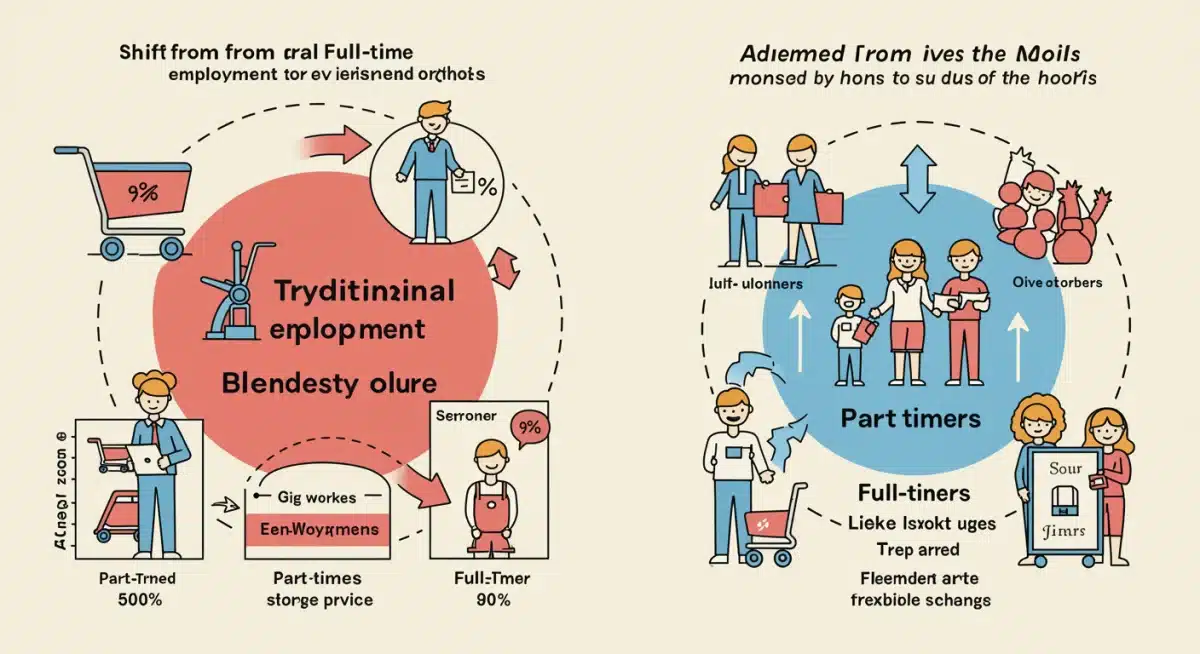
The proliferation of gig economy models inevitably influences traditional full-time retail employment. While some fear job displacement, a more nuanced view suggests a transformation of roles and a greater emphasis on specialized skills and management within traditional structures.
Retailers are increasingly focusing on training their core employees in areas that gig workers might not cover, such as strategic planning, complex problem-solving, and advanced customer relationship management. This creates a blended workforce where each segment plays a distinct, valuable role.
Shifting Roles and Training Needs
- Strategic Oversight: Full-time employees may transition to roles focusing on managing gig worker pools, platform integration, and overall operational strategy.
- Specialized Expertise: Core employees will likely receive more advanced training in areas like data analytics, digital marketing, and complex product knowledge to handle high-value customer interactions.
- Hybrid Roles: Some traditional roles may evolve to include elements of gig work management, requiring skills in coordination and performance evaluation of flexible staff.
This evolution necessitates a re-evaluation of current training programs, emphasizing adaptability and digital literacy. Retailers must invest in upskilling their permanent workforce to complement the flexibility offered by gig workers, creating a cohesive and efficient operational model. The goal is not to replace, but to integrate, creating a robust labor ecosystem that leverages the strengths of both traditional and flexible employment. This symbiotic relationship ensures that retail businesses can meet the diverse demands of the modern consumer while providing varied opportunities for workers. The future of retail labor will be defined by this intelligent blending of talent.
| Key Aspect | Impact on Retail Labor by 2025 |
|---|---|
| Flexible Staffing | Retailers will heavily rely on gig workers for seasonal surges and specialized tasks, optimizing costs and responsiveness. |
| Personalized Services | Gig workers will enable bespoke customer experiences through on-demand personal shopping and expert consultations. |
| Last-Mile Delivery | Gig drivers will be central to hyperlocal, same-day delivery, transforming stores into efficient fulfillment hubs. |
| Worker Opportunities | Increased flexibility and diverse task options will attract a broader range of individuals seeking supplementary income or skill development. |
Frequently Asked Questions About the Gig Economy in Retail
The gig economy provides retailers with unprecedented flexibility to scale their workforce up or down based on demand, reducing fixed labor costs and optimizing operational efficiency. It allows for quick adaptation to market changes and access to specialized skills on an as-needed basis.
Gig workers in retail often fill roles such as last-mile delivery drivers, in-store personal shoppers, merchandisers for promotions, inventory stockers during peak hours, and specialized consultants for product demonstrations or customer service.
Yes, challenges include issues with worker classification, lack of traditional employee benefits like health insurance and paid time off, and concerns about fair compensation due to variable work availability. Regulatory frameworks are still evolving to address these points.
Technology, through mobile apps, AI-driven matching algorithms, and data analytics, enables seamless connection between tasks and workers. It streamlines scheduling, communication, and payment, making the gig model highly efficient for both retailers and workers.
It is unlikely to replace them entirely. Instead, the gig economy is fostering a blended workforce. Traditional roles will likely evolve to focus on strategic oversight, advanced customer relationship management, and managing the gig workforce, creating symbiotic relationships rather than outright replacement.
Conclusion
The gig economy’s trajectory in retail is one of profound transformation, extending far beyond simple temporary staffing. By 2025, its influence will be deeply embedded in every facet of the retail labor market, from flexible staffing and personalized customer experiences to the very mechanics of last-mile delivery. While it introduces complexities regarding worker welfare and regulatory frameworks, the overarching trend points towards a more agile, responsive, and technologically integrated retail ecosystem. Businesses that embrace and strategically leverage gig economy models, while thoughtfully addressing their challenges, will be best positioned to thrive in this evolving landscape, offering both enhanced customer value and diverse opportunities for a dynamic workforce.