Micro-Fulfillment Centers: 20% Faster Delivery in Urban US by 2025
Micro-fulfillment centers are rapidly emerging as a critical solution for accelerating urban e-commerce delivery in the US, projected to achieve 20% faster delivery speeds by 2025 through localized inventory and automated processes.
The e-commerce landscape is constantly evolving, driven by consumer demands for speed and convenience. In this dynamic environment, The Rise of Micro-Fulfillment Centers: Capturing 20% Faster Delivery in Urban US Markets by 2025 represents a pivotal shift, promising to redefine urban logistics and last-mile delivery. This innovative approach is not just a trend; it’s a strategic imperative for retailers aiming to stay competitive and meet the ever-increasing expectations of their customers.
understanding micro-fulfillment centers
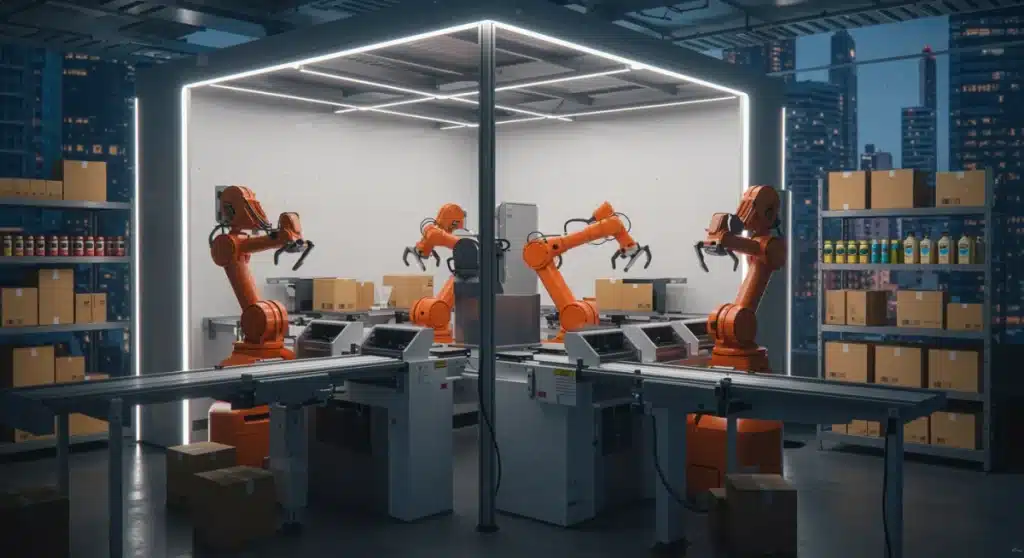
Micro-fulfillment centers (MFCs) are essentially smaller, highly automated warehouses strategically located in or near urban areas. Unlike traditional large-scale distribution centers, MFCs are designed to process orders quickly and efficiently, often leveraging automation to minimize space requirements and maximize throughput.
These facilities bridge the gap between large regional warehouses and the end consumer, enabling faster delivery times and reducing shipping costs. Their compact nature allows them to be integrated into existing retail spaces, back rooms of grocery stores, or even standalone urban units, bringing inventory closer to the customer.
the core concept of MFCs
- Proximity to Customers: Located in dense urban areas, significantly cutting down last-mile travel time.
- High Automation: Utilizing robotics and advanced software for picking, packing, and sorting.
- Optimized Space: Designed to operate efficiently in smaller footprints compared to traditional warehouses.
- Faster Order Processing: Streamlined operations for quicker turnaround from order placement to dispatch.
The strategic placement and technological sophistication of MFCs are what truly set them apart. By minimizing the distance goods need to travel for the final leg of their journey, they directly address one of the most significant challenges in e-commerce: rapid last-mile delivery. This localized approach not only speeds up delivery but also enhances customer satisfaction and reduces environmental impact through optimized routes.
the driving forces behind MFC adoption in the US
Several critical factors are propelling the rapid adoption of micro-fulfillment centers across urban US markets. The relentless growth of e-commerce, coupled with evolving consumer expectations, has created an urgent need for more agile and efficient fulfillment solutions.
Consumers today expect same-day or next-day delivery as a standard, not a luxury. This demand places immense pressure on traditional supply chains, which were not designed for such rapid turnaround times in dense urban environments. MFCs offer a viable pathway to meet these heightened expectations without incurring prohibitive costs.
e-commerce boom and consumer expectations
The pandemic further accelerated the shift to online shopping, making fast, reliable delivery a non-negotiable aspect of the retail experience. Retailers are realizing that their ability to compete hinges on their last-mile delivery capabilities.
- Increased Online Orders: A sustained surge in e-commerce volume necessitates faster fulfillment.
- Demand for Speed: Consumers prioritize same-day and next-day delivery options.
- Convenience is Key: Easy access to products without long waits is a major purchasing driver.
Beyond consumer demand, rising labor costs and the scarcity of suitable industrial land in urban centers also contribute to the appeal of MFCs. Their smaller footprint and reliance on automation help mitigate these challenges, making them an economically attractive option for retailers.
how MFCs achieve 20% faster delivery
The promise of 20% faster delivery in urban US markets by 2025 is not an arbitrary figure; it’s a direct outcome of the operational efficiencies inherent in micro-fulfillment centers. These facilities are engineered from the ground up for speed, integrating advanced robotics and data analytics to optimize every step of the fulfillment process.
By bringing inventory closer to the customer, MFCs drastically cut down transit times. This geographical advantage is compounded by highly automated internal processes that minimize human intervention and potential delays, ensuring orders are picked, packed, and dispatched with unparalleled speed.
automation and proximity
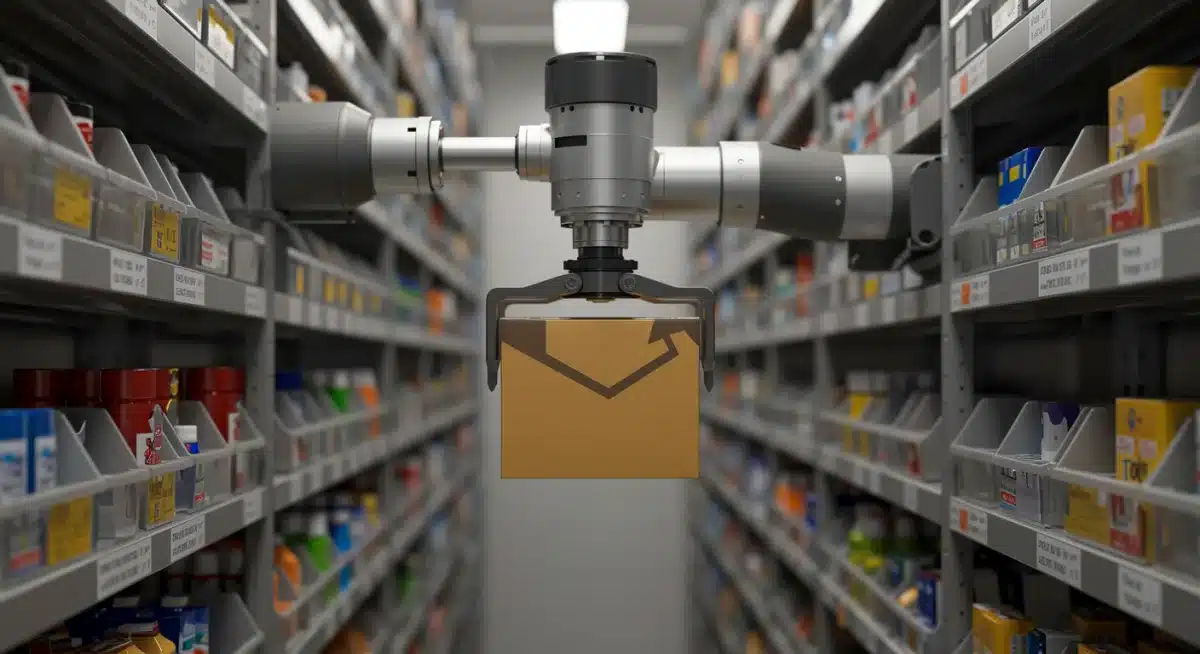
Robotics play a central role in MFCs, handling tasks such as inventory storage, retrieval, and sorting. This automation not only speeds up operations but also reduces errors and allows for 24/7 operation, further enhancing delivery capabilities.
Moreover, the strategic placement of MFCs within urban cores means that once an order is picked and packed, it has a significantly shorter distance to travel to its final destination. This reduction in the ‘last mile’ is critical, as it is often the most time-consuming and expensive part of the delivery chain.
- Automated Picking Systems: Robots efficiently retrieve items, reducing manual labor and time.
- Optimized Routing: Proximity enables shorter, more efficient delivery routes.
- Reduced Travel Time: Less time spent on the road directly translates to faster deliveries.
The combined effect of advanced automation and strategic urban placement allows MFCs to process and dispatch orders in a fraction of the time it would take a traditional fulfillment center, making the 20% faster delivery target a realistic and achievable goal for retailers.
challenges and considerations for MFC implementation
While the benefits of micro-fulfillment centers are compelling, their implementation is not without challenges. Retailers considering MFCs must navigate a complex landscape of technological, logistical, and financial considerations to ensure successful integration and operation.
One primary concern is the initial capital investment required for automation technology and urban real estate. Setting up a state-of-the-art MFC demands significant upfront costs, which can be a barrier for smaller businesses or those with limited access to capital. Additionally, the technical expertise required to manage and maintain these sophisticated systems is a critical factor.
overcoming operational hurdles
Finding suitable locations in densely populated urban areas can also be difficult and expensive. Space is at a premium, and zoning regulations may pose additional obstacles. Moreover, integrating MFCs seamlessly into existing supply chain networks requires careful planning and robust IT infrastructure.
- High Initial Investment: Significant capital needed for robotics, software, and urban real estate.
- Real Estate Availability: Securing suitable, compact urban locations can be challenging.
- Technological Integration: Ensuring MFC systems communicate effectively with existing inventory and order management platforms.
- Talent Gap: Needing skilled personnel to operate and maintain complex automation.
Despite these challenges, the long-term benefits in terms of customer satisfaction, competitive advantage, and operational efficiency often outweigh the initial hurdles. Strategic partnerships, modular designs, and a phased implementation approach can help mitigate some of these complexities, making MFCs a more accessible option for a wider range of businesses.
impact on urban retail and consumer experience
The widespread adoption of micro-fulfillment centers is set to profoundly reshape urban retail landscapes and elevate the consumer experience. Beyond just faster delivery, MFCs contribute to a more integrated and responsive retail ecosystem, blurring the lines between online and in-store shopping.
For consumers, the primary benefit is undeniable: immediate gratification. The ability to receive orders within hours, or even minutes, of purchase transforms expectations and fosters greater loyalty. This speed is particularly impactful for perishable goods, urgent necessities, and impulse buys, where quick delivery is paramount.
redefining convenience and local presence
MFCs also enable retailers to offer more flexible fulfillment options, such as curbside pickup or in-store collection, where orders are prepared by automated systems in the backroom. This hybrid approach caters to diverse consumer preferences and enhances the overall shopping journey.
- Enhanced Customer Satisfaction: Faster delivery leads to happier, more loyal customers.
- Increased Sales: Speed and convenience can drive higher conversion rates and repeat purchases.
- Local Store Reinvention: Stores can become hubs for both shopping and rapid online order fulfillment.
- Reduced Returns: Quicker delivery often means products arrive in better condition, potentially lowering return rates.
Ultimately, MFCs empower urban retailers to compete more effectively with e-commerce giants by offering comparable or even superior delivery speeds, while simultaneously strengthening their local presence. This creates a virtuous cycle where convenience fosters demand, and efficient fulfillment meets it, leading to a more dynamic and customer-centric urban retail environment.
the future outlook for micro-fulfillment in the US
Looking ahead to 2025 and beyond, the trajectory for micro-fulfillment centers in the urban US market appears exceptionally promising. The foundational trends driving their adoption – e-commerce growth, consumer demand for speed, and operational efficiency – are only expected to intensify, solidifying MFCs as an indispensable component of modern retail logistics.
We can anticipate further innovation in MFC technology, with advancements in AI, machine learning, and robotics making these facilities even more efficient, adaptable, and cost-effective. The modular nature of many MFC designs also suggests increased flexibility in deployment, allowing them to be scaled up or down based on market demand and specific urban needs.
expansion and integration
The integration of MFCs with other emerging technologies, such as drone delivery and autonomous vehicles for last-mile logistics, could unlock even greater efficiencies and faster delivery speeds. Imagine a future where an order processed by an MFC is picked up by a drone and delivered to a customer’s doorstep within minutes.
- Technological Advancements: Continuous improvement in AI, robotics, and automation.
- Broader Adoption: More retailers, including smaller businesses, leveraging MFC solutions.
- Seamless Integration: MFCs becoming integral parts of holistic, omnichannel retail strategies.
- Sustainability Focus: Potential for reduced carbon footprint through optimized local deliveries.
The competitive pressure to deliver quickly and affordably will continue to drive investment and innovation in this sector. As MFC solutions become more standardized and accessible, they will likely democratize fast delivery, enabling a wider range of businesses to offer premium fulfillment services and truly capture the potential for 20% faster delivery in urban US markets by 2025.
| Key Aspect | Brief Description |
|---|---|
| Urban Proximity | Strategically located in cities to minimize last-mile delivery distances. |
| High Automation | Utilizes robotics and AI for efficient order picking and packing. |
| Faster Delivery Target | Aims for 20% faster delivery in urban US markets by 2025. |
| Key Drivers | E-commerce growth, consumer demand for speed, and rising logistics costs. |
frequently asked questions about micro-fulfillment centers
An MFC is a compact, highly automated warehouse located strategically in urban areas. It’s designed to quickly process online orders, bringing inventory closer to customers and enabling significantly faster last-mile delivery compared to traditional large distribution centers.
MFCs achieve faster delivery by reducing the physical distance goods travel to customers (last-mile proximity) and by employing advanced automation like robotics for rapid picking, packing, and sorting. This combination drastically cuts down order processing and transit times in urban settings.
Retailers benefit from MFCs through enhanced customer satisfaction due to quicker delivery, reduced shipping costs, improved inventory management, and the ability to compete effectively in the rapidly evolving e-commerce market. They also enable more flexible fulfillment options like rapid curbside pickup.
Key challenges include significant upfront capital investment for automation and urban real estate, finding suitable locations in dense areas, and integrating complex technology with existing supply chain systems. Additionally, staffing for technical maintenance and operation can be a hurdle.
No, MFCs are unlikely to replace traditional large warehouses entirely. Instead, they serve as a complementary layer within the supply chain, handling rapid urban fulfillment while larger distribution centers manage bulk storage, inbound logistics, and regional distribution. They work in tandem for optimized efficiency.
conclusion
The advent and rapid expansion of micro-fulfillment centers are fundamentally transforming the landscape of urban logistics and e-commerce in the United States. By strategically placing automated facilities closer to consumers, MFCs are not merely accelerating delivery times but are redefining the very essence of convenience and efficiency in retail. The ambitious target of capturing 20% faster delivery in urban US markets by 2025 is well within reach, propelled by technological innovation and an unwavering consumer demand for speed. As retailers continue to invest in these agile solutions, MFCs will undoubtedly play a pivotal role in shaping the future of how goods move from seller to buyer, enhancing customer satisfaction and driving competitive advantage in an increasingly demanding market.