Personalized Marketing at Scale: Boost US E-commerce by 25% by 2025

Personalized marketing at scale is rapidly becoming the cornerstone for US e-commerce success, projected to deliver a 25% conversion rate improvement by 2025 through sophisticated data-driven strategies and technological integration.
The landscape of e-commerce is constantly evolving, and at its forefront is the undeniable power of personalized marketing at scale. This approach is not merely a trend; it’s a strategic imperative for businesses aiming to thrive in the competitive US market. By 2025, experts predict that companies effectively implementing personalized marketing strategies will see a remarkable 25% improvement in conversion rates. But what exactly does this entail, and how can businesses harness its potential?
Understanding the imperative of personalized marketing
In today’s digital age, consumers expect more than just products; they demand experiences tailored to their individual preferences. Generic advertising campaigns are increasingly ineffective, leading to diminishing returns on marketing investments. Personalized marketing shifts this paradigm by focusing on individual customer needs, behaviors, and desires, creating a more relevant and engaging interaction.
This isn’t just about addressing a customer by their first name in an email. It delves much deeper, utilizing sophisticated data analysis to understand purchasing patterns, browsing history, demographic information, and even real-time intent. The goal is to present the right product or message to the right person at the right time, fostering a sense of understanding and value.
The shift from mass marketing to individual engagement
Historically, mass marketing aimed to reach the broadest possible audience, assuming a one-size-fits-all approach would yield sufficient results. However, with the explosion of data and advanced analytics, this model is becoming obsolete. The modern consumer is empowered, informed, and inundated with choices, making generic appeals easy to ignore.
- Increased customer expectations: Consumers now anticipate brands will understand their needs.
- Data availability: Abundant data makes individualization feasible and effective.
- Competitive pressure: Brands must personalize to stand out in crowded markets.
- Technological advancements: AI and machine learning enable scalable personalization.
The move towards individual engagement is a direct response to these evolving market dynamics. Brands that embrace personalization build stronger relationships, cultivating loyalty and driving repeat purchases, which are critical for sustained growth in the US e-commerce sector.
In conclusion, understanding the imperative of personalized marketing means recognizing that relevance is the new currency in online commerce. It’s about moving beyond broad strokes to craft bespoke experiences that resonate deeply with each customer, laying the groundwork for significant conversion rate improvements.
Leveraging data and AI for hyper-personalization at scale
Achieving personalization at scale is impossible without the robust utilization of data and artificial intelligence. These technologies are the engine that drives the ability to process vast amounts of customer information, identify patterns, and deliver tailored experiences to millions of individuals simultaneously. The sheer volume of data generated by online interactions provides an unprecedented opportunity to understand customer behavior with granular detail.
AI algorithms, particularly machine learning, can analyze this data to predict future actions, recommend products, and even optimize messaging in real-time. This goes beyond simple segmentation; it allows for dynamic, evolving personalization that adapts as customer preferences change. The beauty of AI is its ability to learn and improve over time, making personalization increasingly effective.
The role of predictive analytics
Predictive analytics uses historical data to forecast future events. In personalized marketing, this translates to anticipating what a customer might want or need before they even express it. For instance, if a customer frequently buys athletic wear, predictive models can suggest new releases or complementary items, increasing the likelihood of a sale.
- Behavioral data analysis: Tracking clicks, views, and purchases to understand preferences.
- Purchase history insights: Identifying recurring needs and brand loyalties.
- Demographic and psychographic data: Understanding broader customer segments.
- Real-time interaction analysis: Adapting content based on current browsing sessions.
By effectively leveraging predictive analytics, e-commerce businesses can proactively engage customers with highly relevant offers, reducing friction in the buying process and improving the overall customer experience. This proactive approach is a cornerstone of achieving a 25% conversion rate improvement.
Ultimately, data and AI are not just tools; they are foundational elements for building a scalable personalized marketing strategy. They empower businesses to move beyond guesswork, making informed decisions that lead to more meaningful customer interactions and, critically, higher conversion rates.
Key strategies for implementing scalable personalization
Implementing personalized marketing at scale requires a multi-faceted approach that integrates various strategies across the customer journey. It’s not about isolated tactics but a cohesive ecosystem designed to deliver individualized experiences consistently. The core principle is to use technology to automate and optimize personalization without sacrificing authenticity.
One primary strategy involves creating dynamic customer profiles. These profiles are continuously updated with new data points, ensuring that the personalization efforts are always based on the most current information. This allows for real-time adjustments to marketing messages and product recommendations, maintaining relevance as customer behaviors evolve.
Personalized product recommendations and dynamic content
Product recommendations are perhaps the most visible aspect of personalization. E-commerce platforms can leverage AI to suggest products based on browsing history, purchase patterns, and even what similar customers have bought. This can significantly increase average order value and conversion rates.
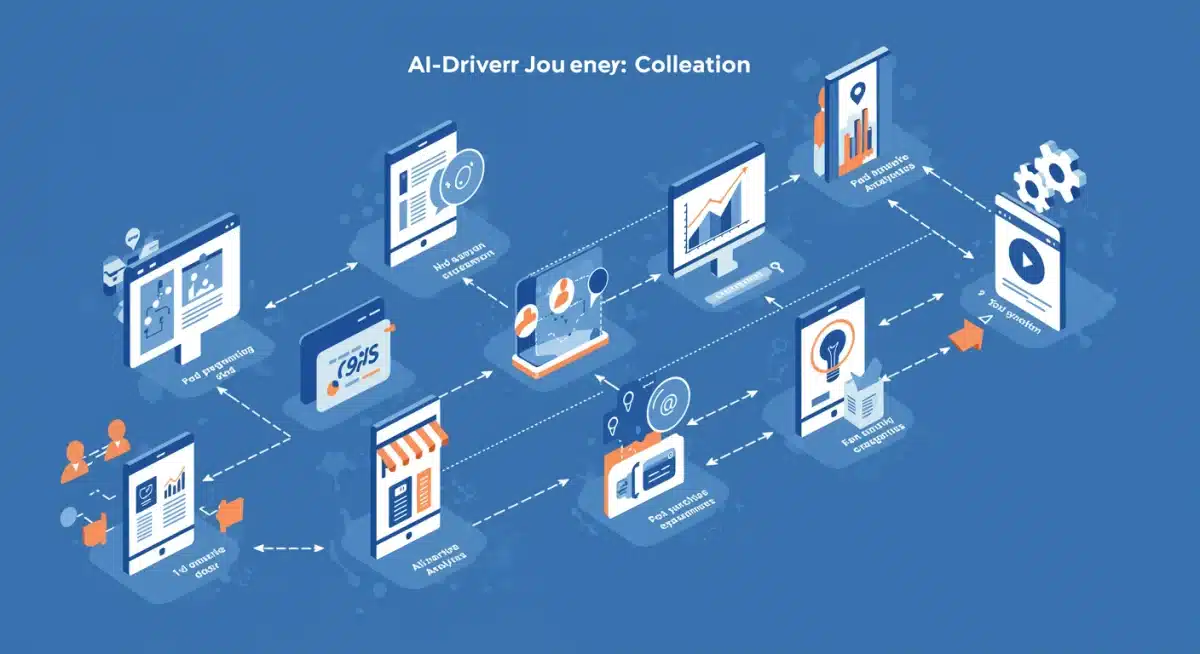

- Collaborative filtering: Recommending items based on what similar users liked.
- Content personalization: Dynamically changing website content based on user attributes.
- Email marketing segmentation: Sending tailored emails with relevant offers.
- Personalized search results: Customizing search outcomes to individual preferences.
Dynamic content extends beyond product recommendations to include personalized landing pages, email content, and even ad creatives. By presenting content that directly addresses a customer’s interests, businesses can significantly increase engagement and move them further down the sales funnel. This level of customization is crucial for achieving high conversion rates.
In essence, successful implementation of scalable personalization hinges on the intelligent application of these strategies, ensuring that every customer interaction feels unique and valuable, thus contributing to the 25% conversion rate improvement goal.
Overcoming challenges in large-scale personalization
While the benefits of personalized marketing at scale are clear, realizing them comes with its own set of challenges. The complexity of managing vast datasets, ensuring data privacy, and integrating disparate systems can be daunting for many organizations. Addressing these hurdles effectively is paramount for any business aiming to achieve significant conversion rate improvements.
One major challenge is data fragmentation. Customer data often resides in various systems—CRM, e-commerce platforms, marketing automation tools—making it difficult to create a unified customer view. Without a single, comprehensive profile, personalization efforts can be inconsistent and less effective. Overcoming this requires robust data integration strategies and platforms.
Data privacy and ethical considerations
With increasing data collection comes heightened concerns about privacy. Consumers are more aware of how their data is used, and regulations like GDPR and CCPA have set strict guidelines. Businesses must prioritize transparency and obtain explicit consent for data usage, building trust with their customer base.
- Consent management: Implementing clear processes for obtaining and managing user consent.
- Data security: Protecting customer data from breaches and unauthorized access.
- Transparency: Clearly communicating how customer data is used to enhance their experience.
- Ethical AI use: Ensuring algorithms are fair and do not perpetuate biases.
Beyond technical and ethical challenges, there’s also the organizational hurdle of fostering a data-driven culture. This involves training staff, aligning departments, and securing executive buy-in to fully embrace personalization as a core business strategy. Successfully navigating these challenges is key to unlocking the full potential of personalized marketing at scale.
In summary, overcoming the challenges in large-scale personalization demands a strategic approach to data management, a strong commitment to privacy, and a cultural shift within the organization. Addressing these areas will enable businesses to effectively leverage personalization for conversion growth.
Measuring success: KPIs for conversion rate improvement
To truly understand the impact of personalized marketing at scale, businesses must establish clear Key Performance Indicators (KPIs) and consistently measure their progress. Without proper measurement, it’s impossible to determine if personalization efforts are yielding the desired 25% conversion rate improvement by 2025. The right KPIs provide actionable insights, guiding ongoing optimization.
Conversion rate is, of course, the primary metric. However, it’s crucial to break this down further to understand which specific personalization tactics are most effective. This involves tracking conversions from personalized emails versus generic ones, or conversion rates on personalized landing pages compared to standard pages.
Beyond the conversion rate: holistic metrics
While conversion rate is central, a holistic view requires examining other metrics that contribute to overall business health and customer satisfaction. These secondary KPIs can often reveal underlying issues or highlight unexpected successes of personalization efforts.
- Average order value (AOV): Personalized recommendations often lead to larger purchases.
- Customer lifetime value (CLTV): Personalization fosters loyalty, increasing long-term value.
- Bounce rate: Relevant content keeps users engaged and reduces immediate exits.
- Email open and click-through rates: Indicators of engagement with personalized communications.
- Customer satisfaction (CSAT) scores: Directly reflects the positive impact of tailored experiences.
By monitoring these diverse KPIs, e-commerce businesses can gain a comprehensive understanding of their personalization strategy’s effectiveness. This data-driven approach allows for continuous refinement, ensuring that investments in personalized marketing at scale translate into tangible and sustainable conversion rate improvements.
In conclusion, measuring success in personalized marketing involves a blend of direct conversion metrics and broader indicators of customer engagement and loyalty. This comprehensive measurement framework is essential for achieving and sustaining the ambitious goal of a 25% conversion rate improvement.
The future of personalized marketing in US e-commerce
The trajectory of personalized marketing in US e-commerce points towards an even more sophisticated and integrated future. As technology advances and consumer expectations evolve, personalization will move beyond simple recommendations to encompass highly contextual, predictive, and even proactive customer experiences. The goal of a 25% conversion rate improvement by 2025 is just the beginning of this transformative journey.
Emerging technologies like augmented reality (AR) and virtual reality (VR) are set to play a significant role, offering immersive personalized shopping experiences. Imagine trying on clothes virtually or visualizing furniture in your home before purchase, all tailored to your specific preferences and dimensions. This level of interaction will redefine engagement.
AI-driven conversational commerce and proactive personalization
The rise of AI-powered chatbots and voice assistants is paving the way for conversational commerce, where personalized interactions occur in natural language. These tools will not only answer queries but also proactively offer personalized suggestions based on real-time context and historical data, making the shopping experience seamless and intuitive.
- Hyper-individualization: Moving from segments to truly unique experiences for each customer.
- Proactive engagement: Anticipating needs and offering solutions before customers even search.
- Cross-channel consistency: Ensuring a unified personalized experience across all touchpoints.
- Ethical AI and transparency: Building trust through responsible data usage and clear communication.
Furthermore, the integration of personalization across all channels—online, mobile, in-store, and even IoT devices—will create a truly unified customer journey. This omnichannel approach ensures that the personalized experience is consistent and continuous, regardless of how or where the customer chooses to interact with the brand.
Ultimately, the future of personalized marketing in US e-commerce is about creating a symbiotic relationship between brands and consumers, where technology facilitates deep understanding and delivers unparalleled value. This evolution will be instrumental in achieving and surpassing the ambitious conversion rate targets set for 2025 and beyond.
| Key Point | Brief Description |
|---|---|
| Conversion Rate Target | Aim for a 25% improvement in US e-commerce conversion rates by 2025 through personalization. |
| Data & AI Foundation | Leveraging vast data and AI for hyper-personalization is crucial for scalable success. |
| Strategic Implementation | Utilize dynamic profiles, personalized recommendations, and content across channels. |
| Overcoming Challenges | Address data fragmentation, privacy concerns, and foster a data-driven culture. |
Frequently asked questions about personalized marketing
Personalized marketing at scale involves using data and technology, primarily AI, to deliver highly individualized marketing messages and product recommendations to a large number of customers simultaneously, based on their unique preferences and behaviors.
By presenting highly relevant products and messages, personalized marketing increases customer engagement and reduces the effort required for them to find what they need. This relevance leads to a higher likelihood of purchase, directly boosting conversion rates.
Key technologies include AI and machine learning for data analysis and predictive analytics, Customer Data Platforms (CDPs) for data unification, and marketing automation tools for delivering personalized content across various channels efficiently.
Significant challenges include managing data fragmentation, ensuring robust data privacy and security, integrating complex systems, and fostering an organizational culture that fully embraces a data-driven approach to customer engagement.
The future points towards hyper-individualization, proactive engagement through AI-driven conversational commerce, and seamless cross-channel consistency, leveraging emerging technologies like AR/VR to create immersive, tailored shopping experiences.
Conclusion
The journey towards achieving a 25% conversion rate improvement in US e-commerce by 2025 through personalized marketing at scale is both ambitious and entirely attainable. It demands a strategic shift from generic campaigns to deeply individualized customer experiences, powered by sophisticated data analytics and artificial intelligence. While challenges in data management and privacy persist, the benefits of enhanced customer loyalty, increased average order values, and superior engagement far outweigh the complexities. Businesses that embrace this paradigm shift, investing in the right technologies and fostering a data-driven culture, will not only meet but likely exceed these targets, solidifying their position in the competitive digital marketplace. The future of e-commerce is personal, and the time to act is now.