2025 FTC Rule Changes: E-commerce Compliance Action Plan

The 2025 FTC rule changes necessitate a proactive 3-month action plan for e-commerce businesses to ensure timely compliance, mitigate risks, and maintain consumer trust.
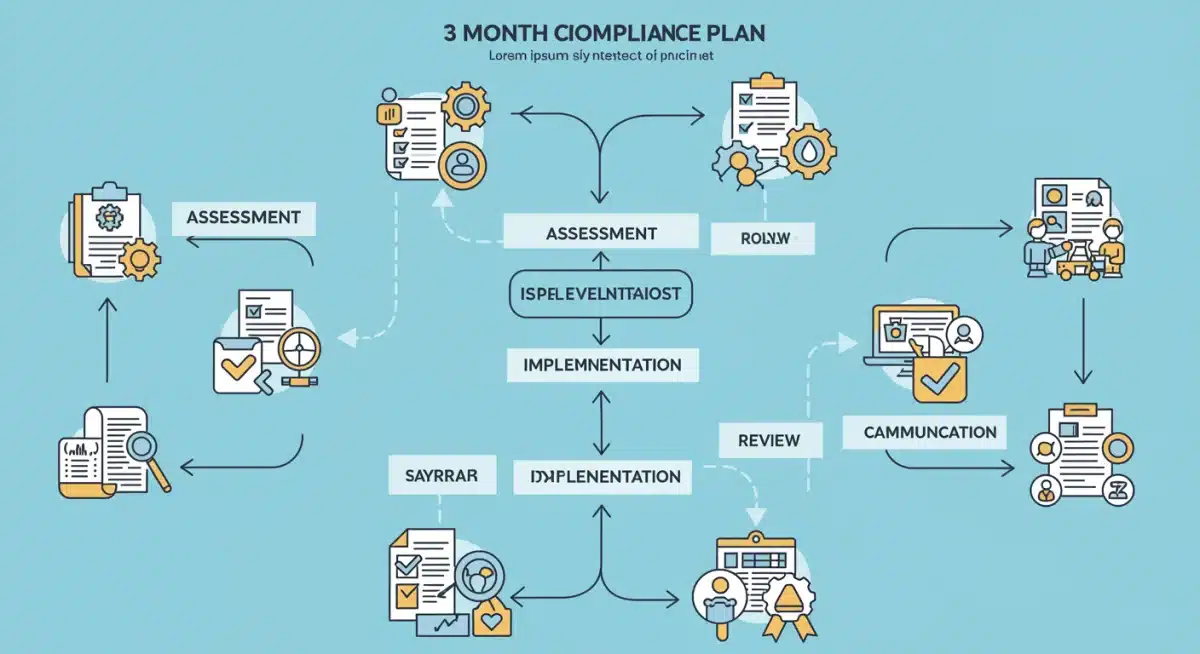
As the digital marketplace continues its rapid evolution, regulatory bodies like the Federal Trade Commission (FTC) are constantly adapting their guidelines to protect consumers and foster fair competition. The impending 2025 FTC rule changes are set to introduce significant shifts that e-commerce businesses simply cannot afford to overlook. Understanding these changes and preparing adequately is not merely a legal obligation but a strategic imperative for sustained success and consumer confidence in the online realm. This article outlines a comprehensive 3-month action plan designed to guide your e-commerce platform through the complexities of these new regulations, ensuring a seamless transition into compliance.
Understanding the Scope of 2025 FTC Rule Changes
The regulatory landscape for e-commerce is dynamic, with the FTC consistently refining its rules to address emerging challenges in consumer protection, data privacy, and fair advertising. The 2025 changes are anticipated to be broad, impacting various facets of online commerce from how businesses collect and use data to how they present product information and handle customer disputes. A thorough understanding of these revisions is the foundational step for any effective compliance strategy.
These upcoming regulations are not just minor adjustments; they often represent substantial shifts in legal interpretation and enforcement priorities. Businesses must move beyond a superficial reading of headlines and delve into the specifics of each new mandate. This involves analyzing how each rule might intersect with their current operational procedures, marketing strategies, and data handling practices. Ignoring these changes can lead to significant financial penalties, reputational damage, and a loss of consumer trust.
Key Areas of Focus for New Regulations
- Data Privacy and Security: Expect heightened scrutiny on how personal consumer data is collected, stored, and utilized. New rules might mandate more explicit consent mechanisms and stricter data breach notification protocols.
- Deceptive Advertising Practices: The FTC continues its crackdown on misleading claims, particularly concerning product efficacy, pricing, and environmental assertions (greenwashing). E-commerce sites will need to ensure all marketing is verifiable and transparent.
- Subscription Services and Dark Patterns: Regulations are likely to target auto-renewing subscription services and ‘dark patterns’ – user interface designs that trick consumers into making unintended purchases or sharing more data than desired. Clear cancellation policies and transparent pricing will be paramount.
- Customer Review Authenticity: Efforts to combat fake reviews are expected to intensify. Businesses must implement robust systems to verify the authenticity of customer feedback and disclose any incentivized reviews clearly.
In essence, the 2025 FTC rule changes are designed to fortify consumer rights in the digital age. For e-commerce businesses, this translates to a need for increased transparency, accountability, and ethical conduct across all operations. Proactive engagement with these changes, rather than reactive adjustments, will define successful transitions.
Month 1: Assessment and Strategic Planning
The initial month of your 3-month action plan is critical for laying a solid foundation. This phase involves a thorough assessment of your current operations against the backdrop of the anticipated 2025 FTC rule changes and developing a robust strategic plan. It’s about identifying gaps, understanding risks, and allocating resources effectively to ensure a smooth transition into compliance.
Begin by assembling a dedicated compliance team. This team should ideally comprise representatives from legal, marketing, IT, and customer service departments. Their collective expertise will be invaluable in dissecting the new regulations and mapping their impact across different business functions. A cross-functional approach ensures that all angles are considered and that the compliance strategy is holistic.
Conducting a Comprehensive Compliance Audit
Your first major task is to conduct a detailed audit of your existing policies, procedures, and website functionalities. This audit should specifically target areas likely to be affected by the new FTC rules. Think of it as a diagnostic check-up for your e-commerce health, pinpointing where adjustments are most urgently needed.
- Review Privacy Policies and Data Handling: Scrutinize how customer data is collected, stored, processed, and shared. Ensure current practices align with potential new consent requirements and data security standards.
- Evaluate Marketing and Advertising Content: Examine all product descriptions, advertisements, and promotional materials for any claims that could be deemed deceptive or misleading under stricter FTC guidelines.
- Assess User Interface and Checkout Flows: Look for any ‘dark patterns’ or unclear disclosures, especially regarding subscription services, pricing, and terms of service. Transparency should be the guiding principle.
- Examine Customer Review Management: Verify that your system for collecting and displaying customer reviews is compliant, ensuring authenticity and proper disclosure of any incentives.
Following the audit, prioritize the identified areas of non-compliance based on their potential risk and impact. Develop a detailed action plan with clear timelines, assigned responsibilities, and measurable objectives. This plan will serve as your roadmap for the subsequent two months, guiding all implementation efforts and ensuring nothing is overlooked in your preparation for the 2025 FTC rule changes.
Month 2: Implementation and Policy Revision
With a clear understanding of the regulatory landscape and a strategic plan in hand, Month 2 shifts focus to the active implementation of changes and the revision of internal policies. This is where the theoretical planning transforms into practical adjustments across your e-commerce operations. It requires meticulous attention to detail and coordinated efforts from your compliance team.
Start by updating all customer-facing documents. This includes your privacy policy, terms of service, and any disclaimers on product pages. These documents must clearly reflect the new FTC requirements, using plain language that is easily understandable by the average consumer. Ambiguity can be a significant liability, so clarity is paramount.
Updating Website Functionality and User Experience
Beyond policy documents, many 2025 FTC rule changes will necessitate direct modifications to your website’s functionality and user experience. This is particularly true for areas concerning data consent, subscription management, and transparent product presentation. Engaging your IT and UX/UI teams early in this process is crucial.
- Enhance Consent Mechanisms: Implement clear, unambiguous consent prompts for data collection and marketing communications. Avoid pre-checked boxes or confusing opt-out processes.
- Streamline Subscription Management: Ensure that canceling a subscription is as straightforward as signing up. Provide clear instructions and accessible links for managing or terminating recurring services.
- Improve Product Information Transparency: Update product pages to include all necessary disclosures, such as country of origin, potential allergens, or any disclaimers about product performance, especially for health or environmental claims.
- Refine Customer Review Submission: Implement technical solutions that help verify the authenticity of reviews, such as requiring a verified purchase or using third-party review platforms known for their integrity.
Simultaneously, conduct internal training sessions for your staff, particularly those in marketing, sales, and customer service. They are often the frontline representatives of your brand and must be fully aware of the new compliance requirements to avoid inadvertent violations. Proper training ensures that new policies are adhered to consistently throughout the organization, reinforcing your commitment to the 2025 FTC rule changes.
Month 3: Testing, Training, and Final Review
The final month of your action plan is dedicated to rigorous testing, comprehensive training, and a thorough final review. This phase is about validating all implemented changes, ensuring your team is fully prepared, and confirming that your e-commerce platform is robustly compliant with the 2025 FTC rule changes ahead of their effective date. It’s the last opportunity to fine-tune your operations.
Begin by conducting end-to-end testing of all revised processes and website functionalities. This includes simulating customer journeys, from browsing products to checkout and post-purchase interactions. Pay close attention to data collection points, consent forms, subscription cancellation flows, and the clarity of all disclosures. Identify and rectify any glitches or ambiguities immediately.
Comprehensive Staff Training and Awareness
No compliance plan is effective without a well-informed team. Month 3 should feature intensive training for all relevant employees, not just the core compliance team. Every individual who interacts with customers, handles data, or creates marketing content needs to understand their role in upholding the new FTC standards.
- Marketing and Sales Teams: Train them on permissible advertising claims, disclosure requirements, and avoiding deceptive practices. Emphasize the importance of substantiating all product benefits.
- Customer Service Representatives: Equip them with updated scripts and knowledge to handle inquiries related to data privacy, subscription cancellations, and dispute resolution in line with new regulations.
- IT and Data Management Teams: Ensure they are proficient in new data security protocols, breach notification procedures, and managing customer data access requests.
- Legal and Compliance Teams: Provide ongoing education on the nuances of the 2025 FTC rule changes and their enforcement, preparing them to monitor compliance continuously.
Finally, conduct a comprehensive legal review of all your updated policies, procedures, and website content. This should ideally be performed by external legal counsel specializing in e-commerce and regulatory compliance. Their independent assessment can provide an invaluable layer of assurance, identifying any remaining vulnerabilities before the new rules take effect. This final review is your ultimate safeguard against potential non-compliance with the 2025 FTC rule changes.
Beyond Compliance: Building Trust and Reputation
While the primary objective of this 3-month action plan is to achieve compliance with the 2025 FTC rule changes, the benefits extend far beyond merely avoiding penalties. Proactive and transparent adherence to these regulations is a powerful tool for building and maintaining consumer trust, which is an invaluable asset in the competitive e-commerce landscape. Trust can differentiate your brand and foster long-term customer loyalty.
Consumers are increasingly aware of their rights and the importance of data privacy. Businesses that demonstrate a genuine commitment to ethical practices and transparency will likely be favored over those perceived as cutting corners. Compliance, therefore, becomes a cornerstone of your brand’s reputation, signaling reliability and integrity to your target audience.
Cultivating a Culture of Ethical E-commerce
Embedding compliance into your company culture ensures that ethical considerations are not merely an afterthought but an integral part of every business decision. This proactive approach minimizes the risk of future regulatory issues and positions your business as a leader in responsible e-commerce.
- Regular Audits and Reviews: Establish a schedule for ongoing internal audits to ensure sustained compliance with the 2025 FTC rule changes and any subsequent regulatory updates.
- Feedback Mechanisms: Create clear channels for customer feedback regarding privacy, advertising, or subscription practices. Use this feedback to continuously improve your processes.
- Transparency as a Core Value: Make transparency a guiding principle in all customer interactions, from how you display pricing to how you communicate data usage.
- Employee Empowerment: Empower employees to flag potential compliance issues without fear of reprisal, fostering a collective responsibility for ethical conduct.
By embracing the spirit of the 2025 FTC rule changes, rather than just the letter of the law, e-commerce businesses can transform a regulatory challenge into an opportunity. It’s a chance to reinforce your brand’s values, deepen customer relationships, and secure a sustainable future in an increasingly regulated digital world. This strategic foresight ensures that your business thrives, not just survives, the evolving regulatory environment.
Anticipating Future Regulatory Landscape Shifts
The 2025 FTC rule changes are not the final word in e-commerce regulation; they are part of an ongoing evolution. Smart businesses understand that staying ahead means not just reacting to current mandates but also anticipating future shifts in the regulatory landscape. This forward-looking approach ensures continuous adaptability and minimizes the shock of new compliance requirements.
The digital economy is constantly innovating, and regulators are always playing catch-up. Emerging technologies like AI, virtual reality, and advanced data analytics will inevitably introduce new ethical and legal dilemmas. Proactively monitoring these trends and their potential regulatory implications is crucial for long-term strategic planning.
Strategies for Ongoing Regulatory Preparedness
- Subscribe to Regulatory Updates: Stay informed by subscribing to official FTC communications, legal journals, and industry-specific compliance newsletters.
- Engage with Industry Associations: Participate in trade groups and associations that lobby on behalf of e-commerce businesses. These platforms often provide early insights into potential regulatory changes.
- Invest in Legal Counsel: Maintain an ongoing relationship with legal experts specializing in e-commerce and consumer protection law. Their expertise is invaluable for navigating complex legal terrains.
- Scenario Planning: Conduct regular scenario planning exercises to assess how your business would respond to hypothetical new regulations, such as stricter data localization laws or expanded consumer rights.
By embedding a culture of continuous learning and adaptation, e-commerce businesses can transform the challenge of regulatory change into a competitive advantage. This preparedness allows for agility in response to new mandates, ensuring that compliance is a continuous process rather than a periodic scramble. The 2025 FTC rule changes serve as a powerful reminder that vigilance and foresight are indispensable for success in the digital marketplace.
| Key Action | Brief Description |
|---|---|
| Month 1: Assessment | Conduct comprehensive audit of current practices against anticipated 2025 FTC rule changes. |
| Month 2: Implementation | Revise policies, update website functionality, and adjust marketing content. |
| Month 3: Review & Train | Perform rigorous testing, conduct staff training, and finalize legal review for compliance. |
| Continuous Vigilance | Stay informed on future regulatory shifts and maintain ongoing compliance efforts. |
Frequently Asked Questions About FTC Compliance
The 2025 FTC rule changes are expected to significantly affect data privacy, deceptive advertising, subscription service disclosures, and the authenticity of customer reviews. Businesses must prepare for stricter guidelines in these key operational areas to ensure full compliance and avoid potential penalties.
A 3-month action plan provides a structured, phased approach to complex regulatory updates. It allows sufficient time for thorough assessment, implementation of necessary changes, comprehensive staff training, and a final legal review, minimizing rushed decisions and ensuring robust compliance before the effective date.
A ‘dark pattern’ refers to user interface designs that subtly manipulate or trick users into making unintended actions, such as signing up for subscriptions or sharing personal data. The FTC targets these to protect consumers from deceptive practices and ensure transparency and informed consent in online transactions.
To ensure compliant customer reviews, businesses should implement robust verification processes to confirm authenticity, avoid publishing fake reviews, and clearly disclose any instances where reviews were incentivized. Transparency and honesty in displaying customer feedback are crucial under the new FTC guidelines.
Non-compliance with the 2025 FTC rule changes can lead to significant financial penalties, including substantial fines. Beyond monetary costs, businesses risk severe reputational damage, loss of consumer trust, and potential legal action, all of which can severely impact long-term operational viability and market standing.
Conclusion
The upcoming 2025 FTC rule changes represent a pivotal moment for e-commerce businesses. Rather than viewing these as mere hurdles, successful enterprises will recognize them as opportunities to enhance consumer trust, strengthen operational integrity, and solidify their market position. The outlined 3-month action plan—encompassing diligent assessment, meticulous implementation, and rigorous review—provides a clear pathway to navigate these regulatory shifts effectively. By embracing transparency, accountability, and ethical practices, businesses can not only achieve compliance but also cultivate a resilient and reputable presence in the ever-evolving digital marketplace. Proactive engagement today ensures a secure and prosperous tomorrow.