Robotics in Warehousing: 40% Faster E-commerce Fulfillment by 2025
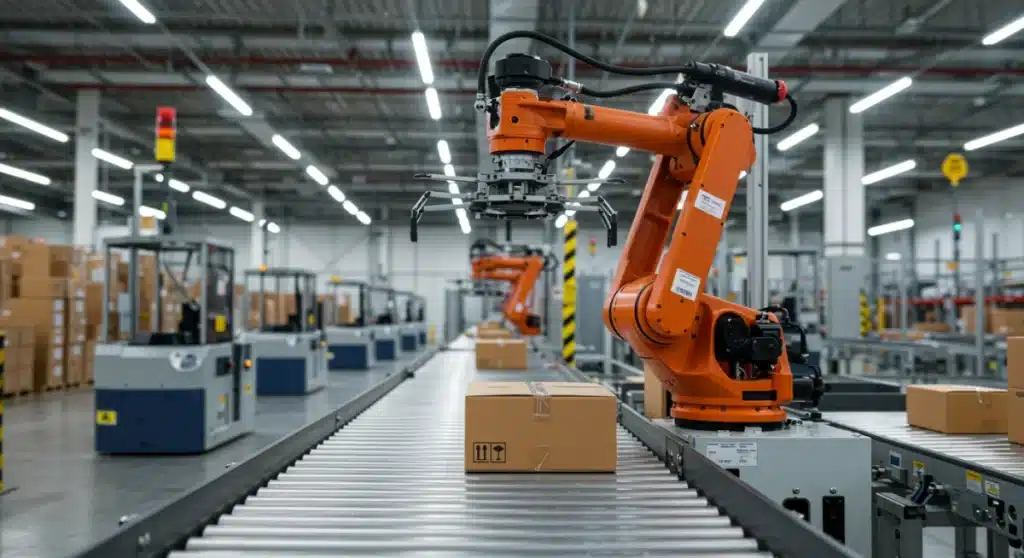
Robotics in warehousing is poised to dramatically accelerate e-commerce fulfillment, with projections indicating a 40% faster operational pace by 2025, driven by advanced automation and AI-powered systems.
The landscape of e-commerce is undergoing a foundational shift, driven by increasing consumer demands for speed and efficiency. Central to this transformation is the integration of robotics in warehousing: achieving 40% faster fulfillment times for e-commerce in 2025, a critical factor for businesses striving to remain competitive in a rapidly evolving market.
The urgent need for speed in e-commerce fulfillment
The relentless pace of e-commerce has set new benchmarks for customer expectations. Consumers now anticipate not just rapid delivery, but also flawless order accuracy and seamless returns, placing immense pressure on traditional warehousing operations. This demand for immediate gratification is pushing logistics providers to rethink their strategies, moving away from manual processes towards more agile and automated solutions.
The traditional warehouse, often reliant on human labor for picking, packing, and sorting, struggles to keep up with the fluctuating volumes and diverse product ranges characteristic of online retail. Labor shortages, rising operational costs, and the physical limitations of human workers further exacerbate these challenges. Consequently, businesses are actively seeking innovative approaches to optimize their fulfillment centers.
The imperative to accelerate fulfillment is not merely about speed; it’s about building resilience, reducing costs, and ultimately, enhancing the customer experience. Robotics offers a compelling solution, promising not only to meet these demands but to redefine what’s possible in the world of e-commerce logistics.
Understanding the core robotic technologies transforming warehouses
The revolution in warehousing is powered by a diverse array of robotic technologies, each designed to address specific operational bottlenecks and enhance overall efficiency. These systems are no longer futuristic concepts but integral components of modern fulfillment centers, working in concert to streamline processes from inbound receiving to outbound shipping.
At the heart of this transformation are autonomous mobile robots (AMRs) and automated guided vehicles (AGVs), which handle the heavy lifting and repetitive transport tasks. These robots navigate warehouse floors, transporting goods, and assisting human workers, dramatically reducing travel times and physical strain. Beyond movement, robotic arms and manipulators are becoming increasingly sophisticated, capable of precise picking, packing, and sorting a wide variety of items.
Strategic implementation: integrating robotics for maximum impact
Implementing robotics in a warehouse is not simply about acquiring new machines; it requires a strategic, holistic approach that considers the entire operational ecosystem. Successful integration hinges on careful planning, phased deployment, and a clear understanding of how these technologies will interact with existing infrastructure and human teams. The goal is to create a symbiotic relationship where robots augment human capabilities, rather than merely replacing them.
The initial phase often involves a thorough analysis of current workflows to identify pain points and areas where automation can yield the greatest returns. This might include repetitive tasks, long travel distances for human pickers, or bottlenecks in sorting and packing. Once these areas are identified, businesses can select the most appropriate robotic solutions and design layouts that optimize robot movement and interaction.
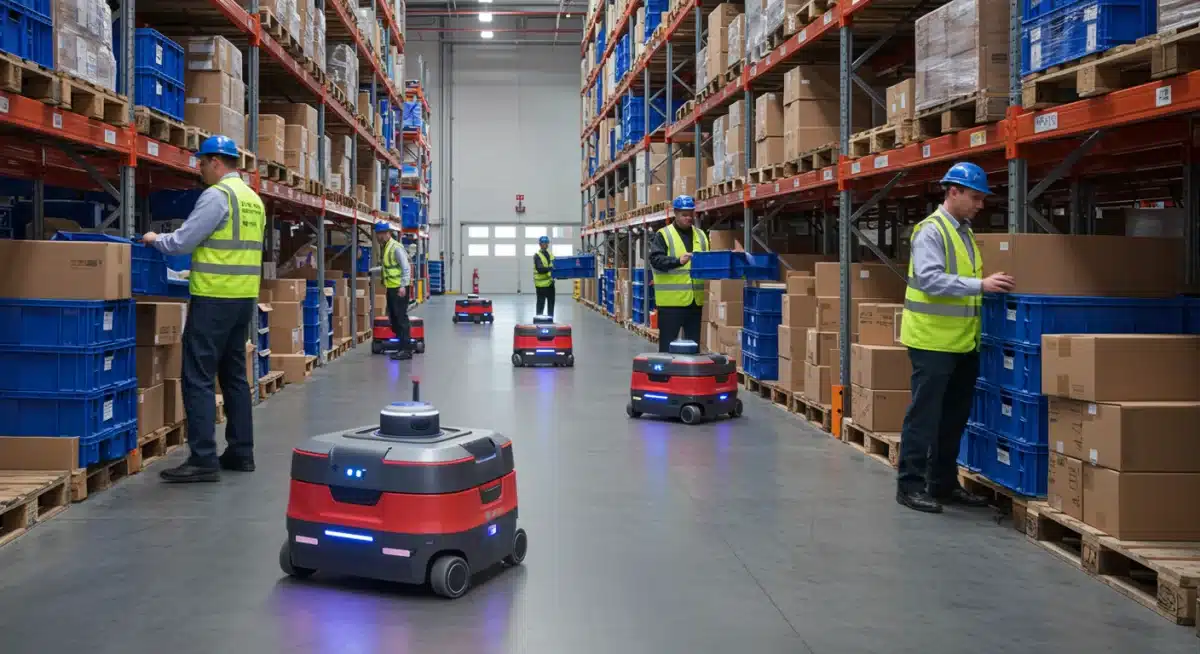
Effective integration also necessitates robust software systems that can orchestrate robot movements, manage inventory, and communicate with other warehouse management systems. This ensures a unified and efficient operation, where every component works in harmony to achieve faster fulfillment. The strategic implementation of robotics transforms a warehouse into an intelligent, adaptive hub capable of meeting the dynamic demands of e-commerce.
Measuring the gains: how robotics achieves 40% faster fulfillment
The promise of a 40% faster fulfillment time by 2025 is not an arbitrary figure; it’s a realistic projection based on the tangible benefits that robotics brings to warehousing operations. This accelerated pace is achieved through a combination of increased throughput, reduced error rates, and optimized resource utilization, all contributing to a more streamlined and responsive supply chain.
Robots can operate continuously without breaks, fatigue, or the need for environmental controls like lighting or heating, allowing for 24/7 operations. Their precision significantly reduces picking errors, which in turn minimizes costly returns and rework. Furthermore, by automating repetitive and physically demanding tasks, human workers can be reallocated to more complex, value-added roles, improving overall productivity and job satisfaction.
Overcoming challenges and ensuring future success
While the benefits of robotics in warehousing are clear, the path to widespread adoption is not without its challenges. Businesses must navigate initial capital expenditures, the complexities of integration with legacy systems, and the need for skilled personnel to manage and maintain these advanced technologies. Addressing these hurdles proactively is crucial for unlocking the full potential of robotic automation and securing long-term success.
The significant upfront investment in robotic systems can be a deterrent for some companies, particularly smaller enterprises. However, the long-term return on investment, driven by reduced labor costs, increased efficiency, and improved customer satisfaction, often justifies these initial outlays. Furthermore, flexible financing options and Robot-as-a-Service (RaaS) models are emerging, making automation more accessible.
The human element: collaboration between robots and workers
Despite the increasing sophistication of robotic systems, the human element remains indispensable in the modern warehouse. The goal of integrating robotics is not to eliminate human workers but to empower them, shifting their roles from repetitive, physically demanding tasks to more strategic, supervisory, and problem-solving functions. This collaboration creates a more efficient, safer, and ultimately more productive work environment.
In a robot-augmented warehouse, humans often oversee robot operations, handle exceptions, perform quality control, and manage complex tasks that require nuanced decision-making or creativity. For example, while robots might transport goods, human workers might be responsible for the final quality check before an item is packed, or for handling unique customer requests that fall outside standard robotic parameters.
The future of e-commerce fulfillment: beyond 2025
As we look beyond 2025, the trajectory of robotics in warehousing points towards even greater levels of automation, intelligence, and integration. The initial goal of achieving 40% faster fulfillment times is just a stepping stone towards a future where warehouses are hyper-efficient, self-optimizing ecosystems, capable of responding to market demands with unprecedented agility. Emerging technologies like advanced AI, machine learning, and the Internet of Things (IoT) will further enhance robotic capabilities, making fulfillment processes even more seamless.
Predictive analytics, powered by AI, will enable warehouses to anticipate demand more accurately, allowing for proactive inventory management and optimized robot deployment. Swarm robotics, where large numbers of simple robots collaborate to achieve complex tasks, could revolutionize picking and sorting operations, offering unparalleled scalability and flexibility. Furthermore, sustainable robotics, focusing on energy efficiency and recyclable materials, will become increasingly important as businesses prioritize environmental responsibility.
| Key Aspect | Brief Description |
|---|---|
| Fulfillment Speed Target | Achieve 40% faster e-commerce fulfillment times by 2025 through robotics. |
| Core Technologies | AMRs, AGVs, robotic picking, and AS/RS systems drive automation. |
| Strategic Integration | Phased deployment and human-robot collaboration are key for success. |
| Future Outlook | Continued innovation with AI, IoT, and sustainable robotics beyond 2025. |
Frequently asked questions about warehouse robotics
Conclusion
The integration of robotics into warehousing operations is no longer a futuristic concept but a present-day reality rapidly reshaping the e-commerce landscape. The ambitious target of achieving 40% faster fulfillment times by 2025 is well within reach, driven by continuous advancements in autonomous mobile robots, robotic picking systems, and intelligent automation. This shift not only addresses the escalating demands of modern consumers but also ushers in an era of unprecedented operational efficiency, cost reduction, and enhanced safety within fulfillment centers. As businesses continue to embrace these transformative technologies, the collaborative synergy between human expertise and robotic precision will define the future of logistics, ensuring a more agile, responsive, and competitive e-commerce ecosystem for years to come.