Automated Warehousing: 30% Cost Reduction for US Retailers
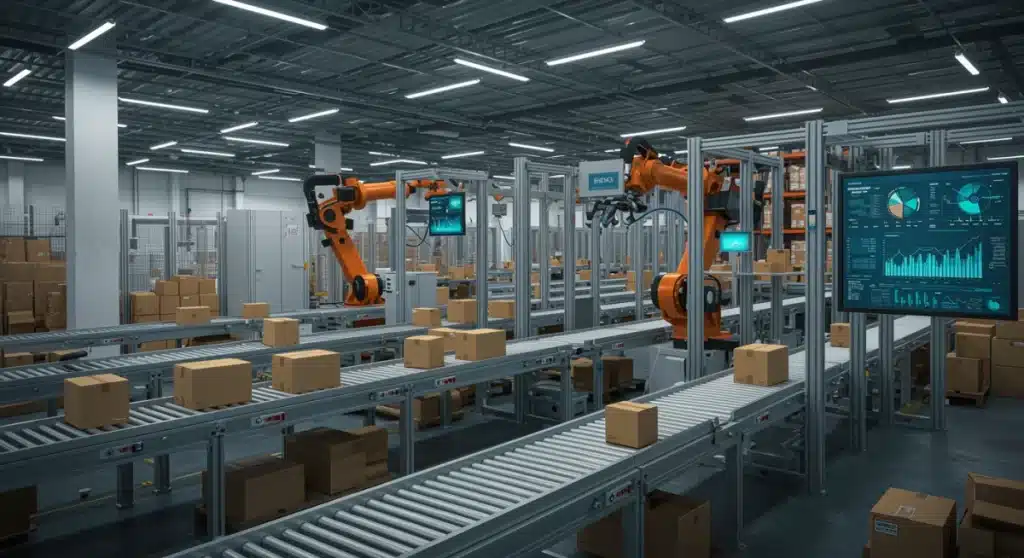
Automated warehousing offers US retailers a crucial pathway to reduce operational costs by an impressive 30% within the next 18 months, enhancing efficiency and market agility through advanced technological integration.
The retail landscape in the United States is undergoing a significant transformation, driven by consumer demands for faster delivery, wider product selections, and competitive pricing. In this dynamic environment, achieving a substantial reduction in operational costs is not merely an advantage but a necessity for survival and growth. This article explores how automated warehousing: reducing operational costs by 30% for US retailers in the next 18 months is becoming a tangible reality, outlining the strategies, technologies, and benefits that are reshaping the supply chain.
The imperative for automation in US retail logistics
US retailers face unprecedented pressures from rising labor costs, increasing real estate prices, and the relentless pace of e-commerce. Traditional warehousing models, heavily reliant on manual processes, are struggling to keep up with these demands, leading to inefficiencies and higher operational expenditures. The call for automation is growing louder, driven by a clear understanding that manual operations are no longer sustainable for competitive growth.
Automation in warehousing isn’t just about replacing human labor with machines; it’s about optimizing every facet of storage, retrieval, and order fulfillment. By streamlining these processes, retailers can significantly cut down on errors, improve throughput, and respond more quickly to market shifts. This strategic shift is proving vital for maintaining profitability and customer satisfaction in a fiercely competitive market.
Rising operational costs and their impact
- Labor expenses: Increased minimum wages and a tight labor market drive up personnel costs.
- Real estate: Premium prices for warehouse space, especially near urban centers, inflate fixed costs.
- Inefficiency: Manual processes often lead to bottlenecks, errors, and slower order fulfillment, impacting customer satisfaction and increasing return rates.
The cumulative effect of these factors is a squeeze on profit margins, making it challenging for retailers to invest in other areas of their business. Automation provides a much-needed reprieve, offering a pathway to not only reduce these costs but also reallocate resources more effectively.
For US retailers, embracing automation is no longer a futuristic concept but a present-day requirement to remain agile and financially robust. The journey towards automated warehousing is a critical step in securing a sustainable future, allowing businesses to adapt to evolving consumer expectations and market dynamics.
Key technologies driving warehouse automation
The rapid advancements in robotics, artificial intelligence (AI), and data analytics are the cornerstones of modern warehouse automation. These technologies are integrated to create intelligent, self-optimizing systems that handle tasks from inventory placement to order picking with minimal human intervention. Understanding these key technologies is crucial for any retailer considering this transformative shift.
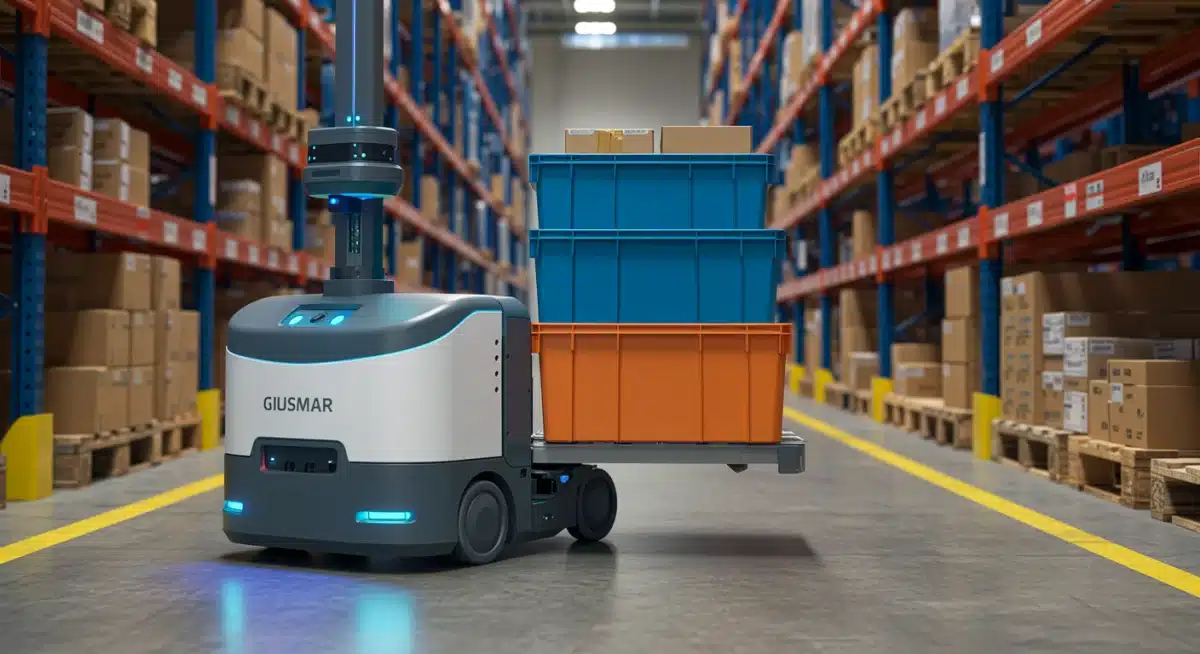
From autonomous mobile robots (AMRs) that transport goods to sophisticated automated storage and retrieval systems (AS/RS) that maximize space utilization, the array of tools available is vast. Each technology plays a specific role in enhancing efficiency and reducing the manual effort involved in warehouse operations.
Autonomous mobile robots (AMRs)
AMRs are perhaps the most visible aspect of modern warehouse automation. Unlike their older counterparts, automated guided vehicles (AGVs), AMRs navigate independently, adapting to changes in their environment. This flexibility allows them to work alongside human employees safely and efficiently, performing tasks such as moving inventory, sorting packages, and supporting order fulfillment.
- Increased flexibility: AMRs can dynamically adjust routes and tasks, making them highly adaptable to changing warehouse layouts or operational needs.
- Enhanced safety: Equipped with advanced sensors, AMRs avoid obstacles and safely interact with human workers, reducing workplace accidents.
- Scalability: Retailers can easily scale their AMR fleet up or down based on demand, providing a cost-effective solution for fluctuating workloads.
Automated storage and retrieval systems (AS/RS)
AS/RS are designed to store and retrieve products with precision and speed, often in high-density storage configurations that maximize vertical space. These systems dramatically reduce the physical footprint required for inventory, making them ideal for urban environments where space is at a premium. They can handle a wide range of product sizes and weights, ensuring efficient management of diverse inventories.
The integration of AS/RS with warehouse management systems (WMS) ensures real-time inventory visibility and accurate stock control, minimizing errors and speeding up order processing. This level of automation is essential for meeting the rapid fulfillment demands of today’s consumers.
Strategic implementation for maximum cost savings
Implementing automated warehousing is a complex undertaking that requires careful planning and a phased approach. Simply installing new technology without a clear strategy can lead to suboptimal results. Retailers must first assess their current operations, identify pain points, and define clear objectives for their automation initiatives. A well-executed strategy is paramount to realizing the promised 30% cost reduction.
The process often begins with a comprehensive analysis of existing workflows, inventory characteristics, and order profiles. This data-driven approach helps in selecting the most appropriate automation technologies and designing a system that aligns with specific business needs and growth projections.
Phased rollout approach
Instead of a complete overhaul, many successful implementations involve a phased rollout. This allows retailers to integrate automation incrementally, minimizing disruption to ongoing operations and providing opportunities to learn and adjust along the way. Starting with high-impact areas, such as order picking or put-away processes, can yield early wins and build internal confidence.
- Pilot projects: Begin with small-scale implementations in specific areas to test technologies and gather data.
- Integration with existing systems: Ensure seamless communication between new automation systems and current WMS or ERP platforms.
- Employee training: Invest in training staff to operate and maintain new technologies, fostering a collaborative environment between humans and machines.
Data-driven decision making
The success of automated warehousing hinges on effective data utilization. Automation systems generate vast amounts of data on inventory movement, order fulfillment times, and equipment performance. Analyzing this data provides valuable insights that can be used to continuously optimize operations, predict maintenance needs, and refine inventory strategies. This continuous feedback loop is vital for sustained cost reduction and efficiency gains.
Leveraging AI and machine learning algorithms can further enhance data analysis, allowing for predictive analytics that anticipate demand fluctuations and optimize resource allocation. This proactive approach helps retailers stay ahead of market trends and maximize their return on investment in automation.
Impact on labor and workforce adaptation
One of the most common concerns surrounding warehouse automation is its impact on the workforce. While automation undoubtedly changes the nature of work, it doesn’t necessarily lead to job elimination. Instead, it often shifts human roles from repetitive, physically demanding tasks to more supervisory, technical, and strategic functions. This transition requires proactive workforce adaptation strategies.
Retailers must invest in retraining and upskilling their existing employees to manage and maintain automated systems. This not only ensures a smooth transition but also empowers the workforce with new, valuable skills, creating a more engaged and capable team. The goal is to create a symbiotic relationship where humans and machines collaborate to achieve optimal efficiency.
Reskilling and upskilling initiatives
- Technical training: Programs focused on operating and troubleshooting robotic systems, software interfaces, and data analytics tools.
- Safety protocols: Training on how to safely interact with automated equipment and respond to potential incidents.
- Process optimization: Educating employees on how to identify inefficiencies and suggest improvements within automated workflows.
By investing in their people, retailers can transform their workforce into a highly skilled team capable of managing advanced automated environments. This approach mitigates concerns about job displacement and ensures that the human element remains integral to the success of automated operations.
The transition to automated warehousing presents an opportunity to create higher-value jobs within the logistics sector, fostering innovation and professional growth. This forward-thinking approach to labor management is crucial for a successful and socially responsible automation strategy.
Measuring ROI and achieving the 30% cost reduction
The promise of a 30% reduction in operational costs within 18 months is ambitious but achievable with a clear focus on measurable outcomes. Retailers must establish key performance indicators (KPIs) before implementation and continuously monitor them to track progress and quantify the return on investment (ROI). This systematic approach ensures that automation efforts translate directly into tangible financial benefits.
ROI calculations should go beyond direct cost savings to include benefits such as improved order accuracy, faster delivery times, reduced inventory shrinkage, and enhanced customer satisfaction. These indirect benefits contribute significantly to overall profitability and competitive advantage.
Key performance indicators (KPIs) for success
- Labor cost reduction: Direct savings on wages, benefits, and overtime.
- Throughput increase: Higher volume of orders processed per hour or day.
- Order accuracy: Reduction in picking errors and return rates.
- Space utilization: Maximizing storage density within the existing warehouse footprint.
- Inventory turnover: Faster movement of goods, reducing carrying costs.
By consistently tracking these KPIs, retailers can identify areas for further optimization and demonstrate the clear financial impact of their automation investments. The 18-month timeline provides a realistic window for initial implementation and the realization of significant cost reductions, as systems become fully operational and optimized.
Achieving the 30% cost reduction requires a commitment to continuous improvement and a willingness to adapt strategies based on performance data. The initial investment in automation is substantial, but the long-term benefits in terms of efficiency, cost savings, and competitive advantage far outweigh the upfront capital expenditure.
Future outlook: continuous innovation in retail logistics
The journey of automated warehousing is far from over; it’s a constantly evolving field driven by continuous innovation. Looking beyond the initial 18-month cost reduction, retailers can expect to see even more sophisticated technologies emerge, further enhancing efficiency and responsiveness. The future of retail logistics will be defined by intelligent, interconnected systems that can adapt to unforeseen challenges and opportunities.
Emerging technologies like advanced AI for demand forecasting, drone-based inventory management, and hyper-personalization in fulfillment are already on the horizon. These innovations will allow retailers to push the boundaries of operational efficiency and customer experience even further, solidifying their competitive position.
Emerging trends and technologies
- Predictive analytics and AI: More sophisticated algorithms for demand forecasting, inventory management, and route planning.
- Drone technology: For rapid inventory checks, internal transportation, and even last-mile delivery in certain contexts.
- Robotics as a Service (RaaS): A subscription-based model for deploying robotic solutions, reducing upfront capital investment.
- Sustainable automation: Focus on energy-efficient robots and environmentally friendly warehouse operations.
The integration of these future technologies will create highly resilient and agile supply chains, capable of navigating global disruptions and meeting increasingly complex consumer demands. For US retailers, staying abreast of these developments and planning for future automation phases will be crucial for long-term success and sustained competitive advantage.
The commitment to continuous innovation in automated warehousing ensures that retailers not only achieve initial cost savings but also build a foundation for future growth and adaptability in an ever-changing market landscape.
| Key Point | Brief Description |
|---|---|
| Operational Cost Reduction | Automated warehousing aims to cut US retail operational costs by 30% within 18 months through efficiency gains. |
| Key Technologies | AMRs and AS/RS are central to automating inventory management, picking, and retrieval processes. |
| Strategic Implementation | Phased rollouts and data-driven decisions are crucial for maximizing ROI and minimizing disruption. |
| Workforce Adaptation | Reskilling and upskilling employees are vital for managing new automated systems effectively. |
Frequently asked questions about automated warehousing
Automated warehousing involves using technology like robots, AI, and specialized systems to perform warehouse tasks with minimal human intervention. This includes automated storage, retrieval, sorting, and packing of goods, significantly enhancing efficiency and accuracy in logistics operations for retailers.
Cost reduction stems from several areas: lower labor expenses due to reduced manual tasks, optimized space utilization, fewer errors leading to less waste and returns, and faster order fulfillment. These combined efficiencies can lead to substantial savings, often reaching 30% within 18 months.
Key technologies include Autonomous Mobile Robots (AMRs) for transporting goods, Automated Storage and Retrieval Systems (AS/RS) for high-density storage, robotic arms for picking and packing, and advanced Warehouse Management Systems (WMS) integrated with AI for optimization and control.
While highly beneficial, the suitability depends on factors like warehouse size, inventory volume, product diversity, and budget. Small to mid-sized retailers can start with modular solutions, while larger enterprises might opt for comprehensive automation. A thorough assessment is crucial to determine the best fit.
Challenges include significant initial capital investment, the complexity of integrating new systems with existing infrastructure, potential disruption during implementation, and the need for workforce retraining. Addressing these proactively through careful planning and phased rollouts is key to success.
Conclusion
The promise of automated warehousing: reducing operational costs by 30% for US retailers in the next 18 months is not just a theoretical aspiration but a practical goal within reach. By strategically embracing advanced technologies like AMRs and AS/RS, carefully planning implementation, and proactively adapting their workforce, retailers can unlock significant efficiencies and cost savings. This transformation is vital for navigating the complexities of modern retail, ensuring competitive advantage, and fostering sustainable growth in a rapidly evolving market. The future of retail logistics is automated, agile, and poised for unprecedented levels of efficiency and profitability.