Circular Economy Models: US Retailers Redefining Product Lifecycle
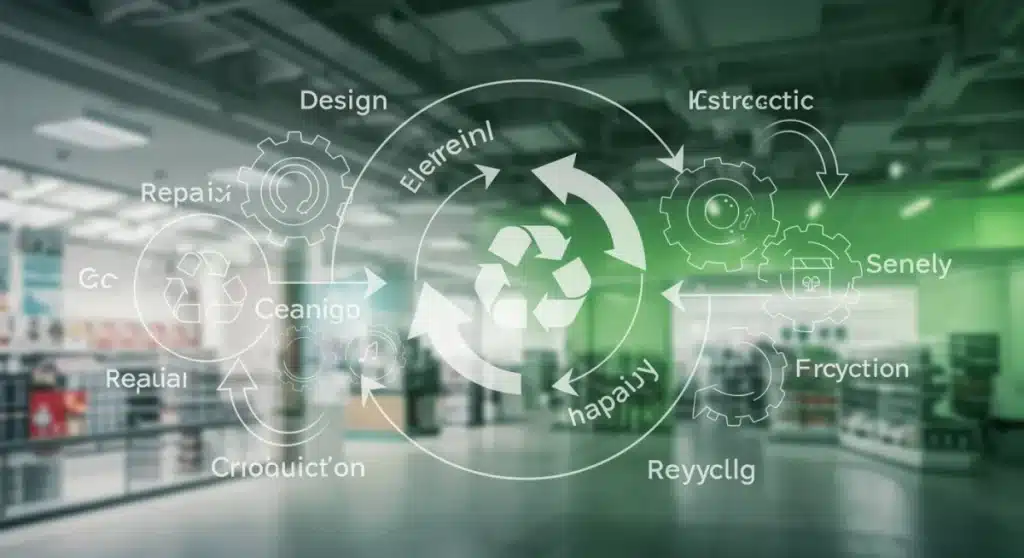
Leading US retailers are embracing circular economy models, fundamentally altering product lifecycles to minimize waste and maximize resource value, aiming for substantial reductions by 2025.
The concept of circular economy retailers is rapidly transforming how businesses operate, challenging the traditional linear ‘take-make-dispose’ model. This shift is not merely an environmental trend but a strategic imperative, with leading US retailers actively redefining product lifecycles to target a 20% reduction in waste by 2025. This commitment highlights a profound understanding that sustainability can drive innovation, create new revenue streams, and build stronger customer loyalty.
Understanding the Circular Economy in Retail
The circular economy represents a paradigm shift from our current linear economic model, which has long relied on extracting raw materials, manufacturing products, consuming them, and then disposing of them. In contrast, a circular economy aims to keep resources in use for as long as possible, extract the maximum value from them while in use, then recover and regenerate products and materials at the end of their service life. This fundamental change is particularly impactful in the retail sector, where product turnover is high and waste generation can be significant.
Retailers are uniquely positioned to influence consumption patterns and product lifecycles. By embracing circular principles, they can design out waste and pollution, keep products and materials in use, and regenerate natural systems. This involves everything from rethinking product design to implementing innovative business models that prioritize reuse, repair, and recycling. The goal is to move beyond mere recycling to a systemic approach where products are designed for durability, upgradability, and eventual return to the production cycle.
Key Pillars of Circular Retail
- Design for Durability: Creating products that last longer, reducing the need for frequent replacements.
- Repair and Maintenance: Offering services to extend product life, fostering a culture of care.
- Reuse and Resale: Facilitating second-hand markets and take-back programs for used items.
- Recycling and Regeneration: Ensuring materials can be effectively reprocessed into new products.
The transition to a circular economy in retail is not without its challenges, including supply chain complexities, consumer behavior shifts, and technological investments. However, the long-term benefits – economic resilience, environmental protection, and enhanced brand reputation – are proving to be powerful motivators for forward-thinking businesses. This section laid the groundwork for understanding why the circular economy is so crucial for the retail industry today.
Pioneering US Retailers and Their Circular Strategies
Several prominent US retailers are at the forefront of adopting circular economy principles, demonstrating that environmental responsibility can go hand-in-hand with business success. These companies are not just making minor adjustments; they are fundamentally rethinking their operations, supply chains, and customer engagement models to reduce waste and maximize resource utility. Their strategies often involve a combination of product design innovation, new service offerings, and robust take-back programs.
These pioneers are setting ambitious targets, driven by both consumer demand for sustainable options and an understanding of the long-term economic advantages. By investing in circular models, they aim to mitigate risks associated with resource scarcity, reduce operational costs, and enhance their brand image as responsible corporate citizens. Their initiatives serve as powerful case studies for the broader retail industry, showcasing the diverse ways in which circularity can be implemented.
Spotlight on Innovative Retailers
- Patagonia: Renowned for its ‘Worn Wear’ program, encouraging customers to repair and reuse clothing, and even buying back used gear.
- IKEA: Investing in furniture buy-back and resale services, and designing products for easy disassembly and recycling.
- Target: Implementing comprehensive recycling programs for various items, including car seats and plastic bags, and focusing on sustainable packaging.
- Walmart: Advancing sustainable sourcing, waste reduction in operations, and encouraging suppliers to adopt circular practices.
Other notable examples include Eileen Fisher, which offers a take-back and resale program for its clothing, and The North Face, with its ‘Renewed’ program for refurbished apparel. These retailers are demonstrating that circularity is not a one-size-fits-all solution but rather a multifaceted approach tailored to specific product categories and business models. Their collective efforts are significantly contributing to the overarching goal of reducing retail waste by 20% by 2025 across the US.
Redefining Product Lifecycles: From Design to End-of-Life
The core of the circular economy lies in a complete reimagining of the product lifecycle, moving away from a linear model to one that prioritizes longevity, reuse, and regeneration. This shift begins at the very first stage: design. Products are now being conceived with their entire lifespan in mind, considering not just their initial function but also how they can be repaired, upgraded, disassembled, and ultimately reintroduced into the production cycle.
This holistic approach requires collaboration across various departments and often with external partners, from material suppliers to waste management companies. Retailers are increasingly working with designers and manufacturers to select materials that are durable, non-toxic, and easily recyclable or compostable. They are also exploring modular designs that allow for easy component replacement, extending a product’s functional life significantly.
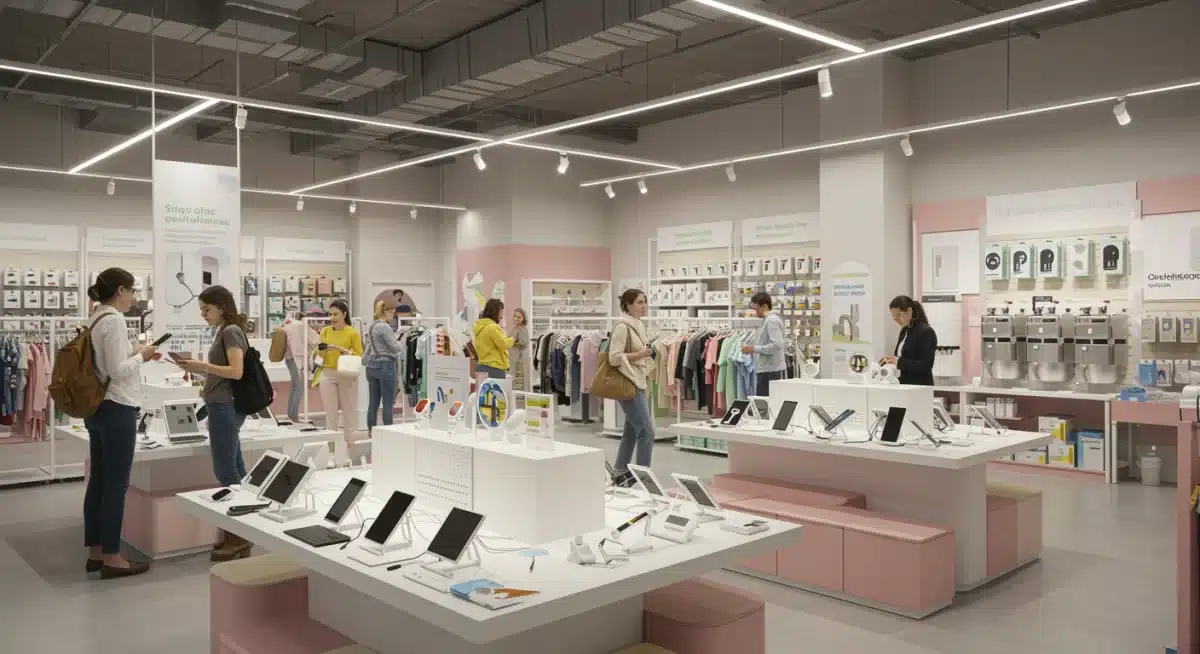
Beyond design, retailers are implementing strategies for the use and end-of-life phases. This includes offering repair services, establishing take-back programs for used products, and pioneering rental or subscription models. These initiatives not only reduce waste but also create new touchpoints for customer engagement and loyalty, transforming the relationship between consumer and product from ownership to access.
Circular Lifecycle Interventions
- Modular Design: Products built with easily replaceable parts to extend usability.
- Material Innovation: Utilizing recycled, renewable, or biodegradable materials.
- Product-as-a-Service: Shifting from selling products to offering their utility through rental or subscription.
- Reverse Logistics: Efficient systems for collecting, sorting, and processing used products for reuse or recycling.
The commitment to redefine product lifecycles is a testament to the growing understanding that true sustainability requires systemic change. By integrating circular principles at every stage, from initial concept to material recovery, retailers are not just managing waste; they are preventing its creation in the first place, paving the way for a more resource-efficient future.
The Role of Technology and Innovation in Circular Retail
Technology is an indispensable enabler of the circular economy in retail, providing the tools and platforms necessary to implement complex circular strategies efficiently. From advanced material science to sophisticated data analytics, innovation is driving the evolution of sustainable retail practices. Digital solutions, in particular, are playing a crucial role in enhancing transparency, optimizing logistics, and facilitating consumer participation in circular models.
One significant area is the use of blockchain for supply chain traceability, allowing retailers to track products and materials from their origin to their end-of-life. This transparency helps verify ethical sourcing, identify opportunities for material recovery, and build consumer trust. Artificial intelligence and machine learning are also being employed to optimize inventory management, predict demand for refurbished products, and improve sorting processes in recycling facilities.
Furthermore, e-commerce platforms are adapting to support circular models by integrating features for product rentals, second-hand sales, and take-back program sign-ups. These digital interfaces make it easier for consumers to engage with sustainable options, removing barriers that might otherwise deter participation. The synergy between technological advancement and circular principles is accelerating the transition towards a more sustainable retail landscape.
Technological Enablers
- Digital Product Passports: Providing detailed information about a product’s materials, manufacturing, and repair history.
- IoT for Asset Tracking: Monitoring the location and condition of products for rental or reuse models.
- AI-Driven Sorting: Improving the efficiency and accuracy of material recovery in recycling centers.
- Data Analytics: Informing design decisions, optimizing reverse logistics, and identifying circular opportunities.
The continuous development and adoption of these technologies are vital for scaling circular initiatives across the retail sector. By leveraging innovation, retailers can overcome operational hurdles, reduce costs, and ultimately make circularity a more accessible and attractive option for both businesses and consumers, moving closer to their waste reduction targets.
Consumer Engagement and Shifting Perceptions
A successful transition to a circular economy in retail hinges significantly on consumer engagement and a fundamental shift in purchasing behaviors and perceptions. Retailers are actively working to educate customers about the benefits of circular models and make participation in programs like repair, rental, and resale as convenient and appealing as possible. This involves clear communication, accessible services, and often, financial incentives.
Many consumers are increasingly aware of environmental issues and are seeking more sustainable options. However, convenience, cost, and perceived value remain critical factors in their purchasing decisions. Retailers are addressing this by highlighting the quality and longevity of circular products, promoting the cost-effectiveness of rental or refurbished items, and emphasizing the positive environmental impact of their choices.
Building trust is also paramount. Consumers need assurance that products in take-back programs are genuinely recycled or reused responsibly, and that refurbished items meet high-quality standards. Transparent reporting on environmental impact and clear certifications can help foster this trust. By making sustainability an integral part of the customer experience, retailers are not just selling products; they are selling a lifestyle centered around conscious consumption.
Strategies for Consumer Engagement
- Educational Campaigns: Informing consumers about the benefits of circular products and services.
- Incentive Programs: Offering discounts or rewards for participating in take-back or repair schemes.
- Convenient Access: Making rental, repair, and resale options easily accessible in-store and online.
- Storytelling: Sharing the journey of circular products and the positive impact on communities and the environment.
Ultimately, shifting consumer perceptions requires a concerted effort to demonstrate that circularity does not mean sacrificing quality, style, or affordability. As more retailers embrace these models and consumers experience their benefits, the collective impact on waste reduction and resource conservation will become increasingly significant, helping to achieve the ambitious 2025 goals.
Challenges and the Path Forward for Circular Retail
While the momentum towards circular economy models in US retail is undeniable, the path forward is not without its challenges. Implementing systemic change across vast and complex supply chains requires significant investment, technological upgrades, and a willingness to rethink established business practices. One major hurdle is the current infrastructure for recycling and material recovery, which often struggles with capacity and consistency across different regions.
Another challenge lies in standardizing metrics and reporting for circularity. Without clear, universally accepted methods for measuring progress, it can be difficult for retailers to track their impact accurately and communicate their achievements effectively to stakeholders and consumers. Policy and regulatory frameworks also need to evolve to better support circular initiatives, providing incentives for sustainable practices and disincentives for waste generation.
Despite these obstacles, the commitment from leading retailers and the growing consumer demand for sustainable products indicate a strong positive trajectory. Collaboration across industries, investment in new technologies, and continuous innovation in business models will be crucial for overcoming these challenges. The goal of a 20% waste reduction by 2025 is ambitious but achievable with sustained effort and strategic partnerships.
Overcoming Obstacles
- Infrastructure Investment: Developing more robust and efficient recycling and material recovery facilities.
- Standardized Reporting: Establishing clear metrics for circularity to track progress and ensure accountability.
- Policy Support: Advocating for governmental policies that promote circular economy principles.
- Cross-Industry Collaboration: Sharing best practices and pooling resources to address common challenges.
The journey towards a fully circular retail economy is an ongoing process of learning, adaptation, and continuous improvement. By proactively addressing these challenges and embracing a collaborative spirit, US retailers can not only meet their waste reduction targets but also establish a new standard for sustainable business practices that benefits both people and the planet.
| Key Aspect | Brief Description |
|---|---|
| Circular Design | Designing products for durability, repairability, and recyclability from inception. |
| Reuse & Repair | Implementing programs for product take-back, refurbishment, resale, and repair services. |
| Technology Integration | Utilizing AI, blockchain, and IoT for supply chain transparency and efficient resource management. |
| Consumer Engagement | Educating and incentivizing customers to participate in circular consumption models. |
Frequently Asked Questions About Circular Retail
The primary goal is to shift from a linear ‘take-make-dispose’ model to one where products and materials are kept in use for as long as possible, minimizing waste and maximizing resource value. Retailers aim for significant waste reduction targets, often by a specific year like 2025.
Retailers benefit through reduced operational costs, enhanced brand reputation, increased customer loyalty due to sustainable offerings, and mitigation of risks associated with resource scarcity. It also opens new revenue streams through repair, rental, and resale services.
Technology, including AI, blockchain, and IoT, enables supply chain transparency, optimizes logistics for reverse flows, and facilitates customer engagement with circular services. It helps track materials, predict demand for refurbished goods, and improve recycling processes.
Consumers are engaged through educational campaigns, incentive programs for returning items, convenient access to repair and rental services, and transparent communication about environmental impact. The goal is to make sustainable choices easy and appealing.
Challenges include the need for significant infrastructure investment in recycling, standardizing metrics for circularity, evolving policy frameworks, and adapting complex supply chains. Overcoming these requires collaboration and continuous innovation.
Conclusion
The embrace of circular economy models by leading US retailers marks a pivotal moment in the evolution of commerce. Their ambitious goals to redefine product lifecycles and significantly reduce waste by 2025 are not just environmental aspirations but strategic business decisions. By innovating in design, leveraging technology, and actively engaging consumers, these retailers are demonstrating that profitability and sustainability can coexist. While challenges remain, the collective commitment to circularity signals a fundamental shift towards a more resilient, resource-efficient, and responsible retail future, ultimately benefiting both businesses and the planet.