Experiential Retail: Boost US Customer Engagement by 20% with Digital Innovation
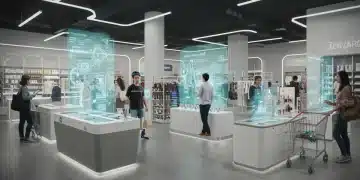
By 2025, US stores will see a 20% increase in customer engagement by leveraging digital innovations to create compelling experiential retail environments.
The retail landscape in the United States is undergoing a profound transformation. As consumers increasingly seek more than just transactions, the concept of Experiential Retail: Driving 20% Higher Customer Engagement in US Stores by Integrating Digital Innovations in 2025 has emerged as a critical differentiator. This shift is not merely a trend but a strategic imperative for retailers aiming to thrive in an evolving market.
The Evolution of Retail: From Transactional to Experiential
For decades, retail was primarily about product acquisition. Stores served as mere points of sale, emphasizing convenience and price. However, the digital age has fundamentally altered consumer expectations, pushing retailers to rethink their physical spaces. Today, a store must offer something beyond what e-commerce provides: an experience.
This evolution is fueled by a desire for connection, entertainment, and personalization. Shoppers are looking for reasons to visit a physical store, and a well-crafted experience provides that compelling incentive. It’s about creating memorable moments that foster loyalty and advocacy, turning a simple purchase into a journey.
Understanding Experiential Retail
Experiential retail moves beyond traditional selling by creating immersive environments where customers can engage with products and brands in meaningful ways. It transforms shopping into an event, an adventure, or an educational opportunity. This approach acknowledges that emotional connections drive purchasing decisions and brand affinity.
- Sensory Engagement: Utilizing sight, sound, smell, touch, and taste to create a holistic atmosphere.
- Interactive Elements: Incorporating activities that allow customers to participate, not just observe.
- Personalized Journeys: Tailoring experiences to individual preferences and needs.
- Community Building: Fostering a sense of belonging and shared values among customers.
Ultimately, the goal is to cultivate an environment where customers feel valued, entertained, and connected, making them more likely to spend time, and by extension, money, within the retail space. This foundational shift sets the stage for integrating digital innovations that amplify these experiences.
Digital Innovation: The Catalyst for Enhanced Engagement
Digital innovation is not just about adding screens to a store; it’s about strategically integrating technology to deepen customer engagement and streamline operations. In the context of experiential retail, digital tools act as powerful enablers, transforming mundane tasks into exciting interactions and providing valuable data insights.
The synergy between physical and digital realms allows retailers to offer a hybrid experience that leverages the strengths of both. This integration creates a seamless customer journey, whether they are browsing online, interacting in-store, or combining both channels. The aim is to remove friction and add delight at every touchpoint.
Key Digital Technologies Reshaping Retail
Several technologies are at the forefront of this digital transformation, each offering unique capabilities to enhance the experiential retail model. Understanding their potential is crucial for retailers looking to invest wisely.
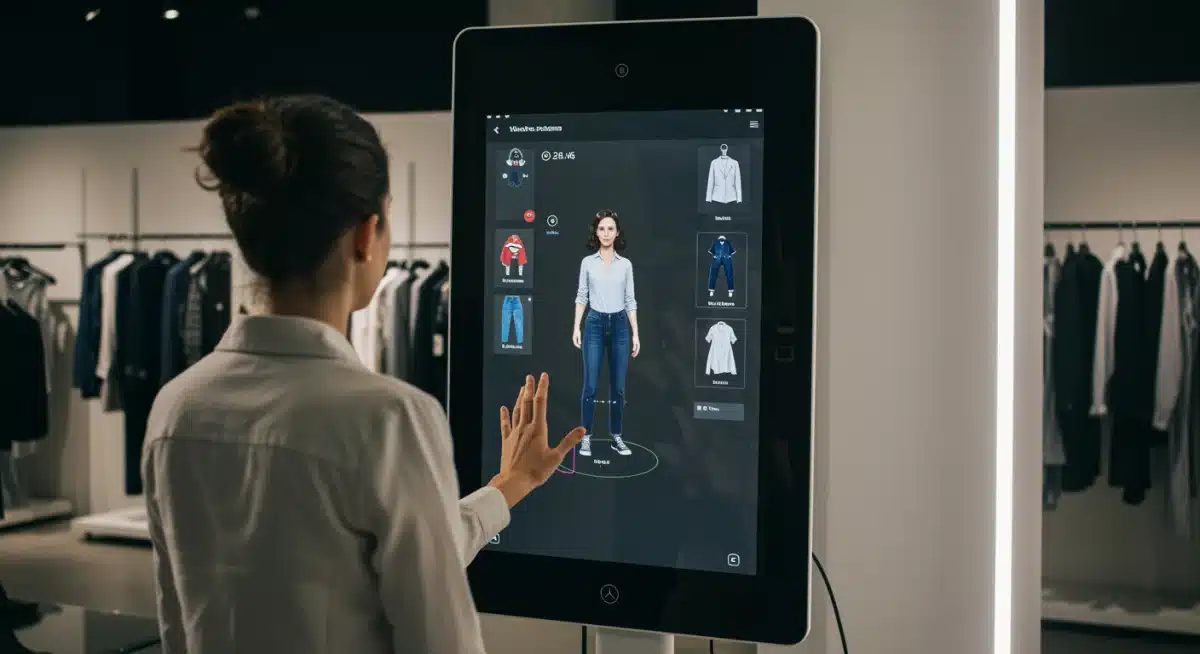
- Augmented Reality (AR): Overlays digital information onto the real world, allowing customers to virtually try on clothes, visualize furniture in their homes, or interact with product information in an immersive way. AR applications can transform fitting rooms and product displays into dynamic, personalized experiences.
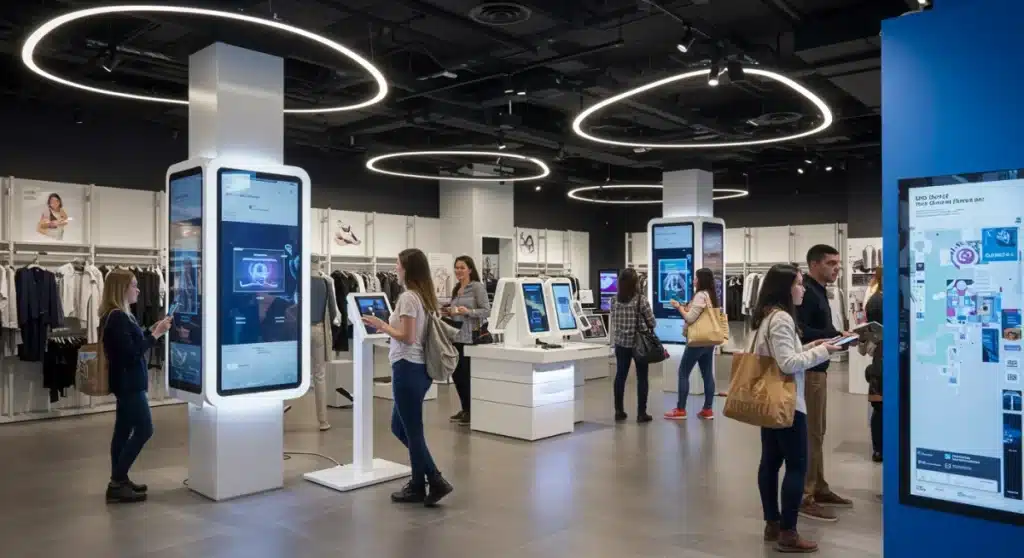
- Interactive Displays and Kiosks: Provide self-service options, product customization tools, and access to extended product catalogs. These digital touchpoints empower customers with information and control, reducing wait times and enhancing decision-making.
- Artificial Intelligence (AI) and Machine Learning (ML): Powers personalized recommendations, predictive analytics, and intelligent chatbots. AI can analyze customer behavior to offer tailored suggestions, optimize inventory, and provide highly relevant content.
- Internet of Things (IoT) Sensors: Enables smart shelving, real-time inventory tracking, and personalized store navigation. IoT can create responsive environments that adapt to customer presence and preferences, improving efficiency and personalizing the shopping path.
By carefully selecting and implementing these technologies, retailers can craft unique and compelling experiences that resonate with modern consumers, driving higher engagement and ultimately, increased sales.
Personalization at Scale: Tailoring Experiences with Data
In today’s competitive retail environment, a one-size-fits-all approach no longer suffices. Consumers expect personalized experiences that acknowledge their individual preferences, past purchases, and browsing behavior. Digital innovations make it possible to deliver this personalization at scale, transforming every customer interaction into a unique journey.
Data is the lifeblood of effective personalization. By collecting and analyzing customer data—always with privacy in mind—retailers can gain deep insights into what motivates their audience. This understanding then informs the design of bespoke experiences, from product recommendations to in-store events.
Leveraging Data for Hyper-Personalization
The ability to gather and interpret data from various sources allows retailers to create highly relevant and engaging interactions. This goes beyond simple demographic targeting to understand individual needs and desires.
- AI-Powered Recommendations: Utilizing machine learning algorithms to suggest products based on browsing history, purchase patterns, and even real-time in-store behavior.
- Personalized Digital Signage: Displaying tailored advertisements and product information on screens as specific customers approach them, based on loyalty program data or app interactions.
- Customized In-Store Paths: Guiding customers through the store with app-based navigation that highlights products relevant to their interests or pre-selected shopping lists.
- Targeted Promotions: Delivering personalized offers and discounts directly to customers’ mobile devices as they shop, enhancing perceived value and encouraging immediate purchase.
The integration of data-driven insights ensures that every digital innovation serves to enhance the individual customer’s experience, making them feel seen and understood. This level of personalization is a powerful driver of engagement and loyalty, fostering a deeper connection between the brand and the consumer.
Immersive Storytelling: Crafting Narratives Through Digital Touchpoints
Beyond transactional interactions, modern consumers seek emotional connections with brands. Experiential retail leverages digital innovation to tell compelling stories that resonate with customers, creating a more profound and memorable shopping journey. This storytelling transforms the store from a place of commerce into a narrative space.
Digital touchpoints become chapters in this brand story, drawing customers deeper into the world of the product and its values. Whether through interactive displays, virtual reality, or gamified experiences, the goal is to captivate the imagination and build an emotional bond.
Digital Tools for Engaging Narratives
Retailers are employing a variety of digital technologies to weave intricate and engaging narratives within their physical spaces. These tools turn passive observation into active participation.
- Virtual Reality (VR) Experiences: Transporting customers to different environments, such as a product’s origin, a fashion show, or an immersive brand world, allowing them to experience the brand story firsthand.
- Interactive Product Demonstrations: Using touchscreens and sensors to allow customers to explore product features, customization options, and usage scenarios in a dynamic and engaging way.
- Gamification: Integrating game-like elements into the shopping experience, such as loyalty programs with points and levels, in-store scavenger hunts, or interactive challenges that reward participation.
- Digital Art Installations: Creating visually stunning and interactive digital art pieces that reflect the brand’s aesthetic and values, turning the store into a cultural destination.
Through immersive storytelling, experiential retail transcends mere product presentation, offering a richer, more engaging encounter that leaves a lasting impression. This emotional resonance is key to driving higher customer engagement and building a loyal customer base.
Seamless Integration: Bridging Online and Offline Experiences
The modern consumer journey rarely follows a linear path. It often involves jumping between online research, social media engagement, and in-store visits. Experiential retail, supported by digital innovation, excels at creating a seamless bridge between these online and offline touchpoints, ensuring a consistent and fluid brand experience.
This integration eliminates friction points that often arise when channels are siloed, providing customers with flexibility and convenience. Whether they start their journey online or in-store, digital tools ensure that their progress and preferences are recognized and carried across all interactions.
Strategies for Omnichannel Harmony
Achieving true omnichannel harmony requires a deliberate strategy that prioritizes the customer’s journey above individual channel performance. Digital tools are instrumental in making this a reality.
- Click-and-Collect (BOPIS): Allowing customers to purchase online and pick up in-store, combining the convenience of e-commerce with the immediate gratification of physical retail.
- Endless Aisle: Providing in-store access to a brand’s full online catalog via digital kiosks, ensuring customers can find any product, even if it’s not physically stocked.
- Personalized Mobile Apps: Offering in-store navigation, personalized offers, loyalty program access, and even mobile checkout capabilities to enhance the physical shopping experience.
- Unified Customer Profiles: Consolidating customer data from all touchpoints (online, in-store, social) to create a single, comprehensive view that informs personalized interactions across channels.
By ensuring a cohesive experience across all channels, retailers can significantly enhance customer satisfaction and engagement. This seamless integration reinforces brand consistency and caters to the modern consumer’s expectation of effortless transitions between digital and physical worlds.
Measuring Success: Analytics and Iteration in Experiential Retail
While the allure of creating captivating experiences is strong, the true value of experiential retail lies in its measurable impact on customer engagement and business outcomes. Digital innovations not only enable rich experiences but also provide the tools to meticulously track, analyze, and optimize these efforts.
Without robust analytics, even the most innovative experiences risk becoming costly experiments rather than strategic investments. Continuous measurement and iteration are crucial for understanding what resonates with customers and refining the experiential offering over time.
Key Metrics and Analytical Tools
Retailers need to identify the right metrics and deploy appropriate analytical tools to gauge the effectiveness of their experiential strategies. This data-driven approach ensures that investments yield tangible returns.
- Dwell Time: Measuring how long customers spend in different areas of the store, indicating engagement with specific exhibits or interactive displays.
- Conversion Rates: Tracking the percentage of visitors who make a purchase after engaging with an experiential element.
- Customer Feedback: Collecting direct input through surveys, interactive kiosks, or sentiment analysis of social media mentions.
- Foot Traffic Analytics: Using sensors and cameras to understand customer flow, popular zones, and bottlenecks within the store.
- Return on Experience (ROX): A comprehensive metric that evaluates the impact of experiential investments on customer loyalty, brand perception, and ultimately, financial performance.
By diligently analyzing these metrics, retailers can gain actionable insights, identify areas for improvement, and continually refine their experiential offerings. This iterative process is fundamental to ensuring that digital innovations consistently drive higher customer engagement and contribute to long-term business success.
The Future Outlook: Sustaining Engagement Beyond 2025
As we look beyond 2025, the principles of experiential retail and digital innovation will only become more entrenched in the US retail landscape. The expectation for engaging, personalized, and seamless shopping experiences will continue to rise, pushing retailers to constantly evolve and innovate.
Sustaining high levels of customer engagement will require not just adopting new technologies but fostering a culture of continuous experimentation and customer-centricity. The retailers who succeed will be those who view their physical stores as dynamic, evolving platforms for brand interaction and community building.
Emerging Trends and Future Considerations
Several emerging trends suggest the direction experiential retail will take in the coming years, requiring forward-thinking strategies from retailers.
- Metaverse Integration: Exploring virtual storefronts and digital twin experiences that extend the brand’s physical presence into immersive online worlds.
- Hyper-Personalized Physical Spaces: Stores that dynamically reconfigure layouts or product displays based on the real-time presence and preferences of specific customers.
- AI-Powered Conversational Commerce: Advanced AI assistants that offer intelligent, natural language interactions both online and in-store, providing expert advice and support.
- Sustainability and Ethical Storytelling: Integrating digital experiences that highlight a brand’s commitment to sustainability, ethical sourcing, and social responsibility, resonating with values-driven consumers.
The journey to sustained customer engagement is ongoing. By embracing digital innovation as a core component of their experiential retail strategy, US stores can not only meet but exceed consumer expectations, securing their relevance and profitability well into the future.
| Key Aspect | Brief Description |
|---|---|
| Engagement Goal | Achieve 20% higher customer engagement in US stores by 2025. |
| Core Strategy | Integrate digital innovations into experiential retail models. |
| Key Technologies | AR, AI, IoT, interactive displays for personalized experiences. |
| Benefit | Transforms shopping into immersive narratives, fostering loyalty. |
Frequently Asked Questions About Experiential Retail
Experiential retail involves creating immersive, engaging, and memorable in-store environments that go beyond simple product transactions. It focuses on providing unique experiences, fostering emotional connections, and building brand loyalty rather than just selling goods.
Digital innovations like AR, AI, IoT, and interactive displays transform experiential retail by enabling personalization, immersive storytelling, and seamless online-to-offline journeys. They make experiences more interactive, tailored, and efficient for customers.
Examples include augmented reality try-on mirrors, AI-powered personalized recommendations on digital kiosks, smart shelves that track inventory, and mobile apps offering in-store navigation and exclusive offers. These technologies create dynamic and responsive retail spaces.
High customer engagement leads to increased dwell time, higher conversion rates, stronger brand loyalty, and positive word-of-mouth. Engaged customers are more likely to return, spend more, and become advocates for the brand, driving long-term success.
Success can be measured through metrics such as dwell time, conversion rates, customer feedback, foot traffic analytics, and Return on Experience (ROX). These data points help retailers understand the impact of their investments and optimize future experiential strategies.
Conclusion
The imperative for US retailers to embrace Experiential Retail: Driving 20% Higher Customer Engagement in US Stores by Integrating Digital Innovations in 2025 is clearer than ever. By moving beyond traditional transactional models and strategically embedding digital technologies, stores can transform into vibrant hubs of interaction, personalization, and storytelling. This evolution is not just about attracting customers; it’s about fostering deep, lasting relationships that translate into sustained loyalty and growth. As consumer expectations continue to rise, the fusion of compelling physical experiences with cutting-edge digital innovation will define the future of successful retail.