Reimagining Customer Service: 90% US Retail Satisfaction

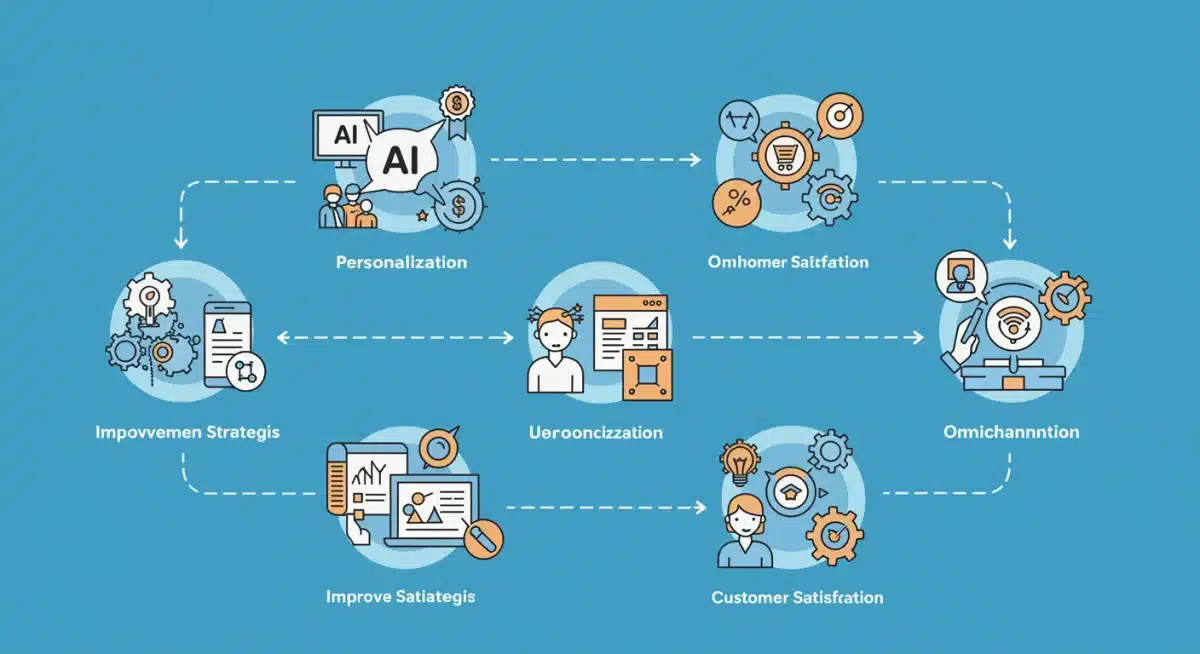
Achieving a 90% customer satisfaction rate in US retail is attainable by strategically implementing AI-powered solutions, hyper-personalization, and seamless omnichannel integration, transforming the customer experience.
In today’s competitive landscape, reimagining customer service: achieving a 90% satisfaction rate in US retail by implementing 3 key technologies is no longer a luxury but a necessity for survival and growth. Retailers are constantly seeking innovative ways to not only meet but exceed customer expectations. This pursuit of excellence drives a fundamental shift in how businesses approach their interactions, demanding a proactive and technologically advanced strategy. The goal is clear: create memorable experiences that foster loyalty and drive repeat business in an increasingly digital world.
the evolving landscape of US retail customer service
The US retail sector has undergone a seismic shift, propelled by changing consumer behaviors and technological advancements. Customers today expect instant gratification, personalized interactions, and seamless experiences across all touchpoints, whether online or in-store. This heightened expectation has made traditional customer service models largely obsolete, prompting retailers to seek more dynamic and responsive solutions.
Understanding these evolving demands is crucial for any retailer aiming to thrive. The rise of e-commerce has blurred the lines between physical and digital shopping, creating a need for integrated strategies that cater to a hybrid consumer journey. Moreover, social media and online reviews have amplified customer voices, making every interaction a public statement about a brand’s commitment to service excellence. This environment necessitates continuous adaptation and innovation.
To truly excel, retailers must move beyond reactive problem-solving and embrace a proactive approach that anticipates needs and personalizes every step of the customer journey. This means leveraging data, understanding individual preferences, and deploying tools that empower both customers and service representatives. The ultimate aim is to build lasting relationships through exceptional experiences, where convenience, efficiency, and empathy converge.
leveraging artificial intelligence for enhanced interactions
Artificial intelligence (AI) is rapidly transforming customer service, offering unprecedented opportunities to enhance efficiency and personalization. From intelligent chatbots handling routine inquiries to sophisticated AI-driven analytics predicting customer needs, AI technologies are proving indispensable for retailers aiming for a 90% satisfaction rate. These tools free up human agents to focus on more complex, high-value interactions, thereby optimizing resource allocation and improving overall service quality.
AI-powered chatbots and virtual assistants
Chatbots and virtual assistants are often the first point of contact for many customers, providing immediate support and information. Their ability to operate 24/7 and handle multiple queries simultaneously significantly boosts responsiveness.
- Instant support: Resolve common issues without human intervention.
- 24/7 availability: Provide assistance around the clock, improving convenience.
- Scalability: Handle high volumes of inquiries during peak seasons.
- Data collection: Gather valuable insights into customer pain points and preferences.
These AI tools are not just about automation; they are about intelligent automation. Modern chatbots can understand natural language, learn from past interactions, and even escalate complex cases to human agents seamlessly, ensuring a consistent and satisfactory experience.
predictive analytics and personalized recommendations
AI’s capability to analyze vast amounts of customer data allows retailers to predict future behaviors and offer hyper-personalized recommendations. This proactive approach delights customers by anticipating their needs before they even express them.
By analyzing purchase history, browsing patterns, and demographic information, AI algorithms can suggest relevant products, special offers, or even optimal times for engagement. This leads to a more tailored shopping experience, making customers feel understood and valued, which is a significant driver of satisfaction and loyalty.
The integration of AI in customer service is not merely a trend; it is a fundamental shift towards a more intelligent, efficient, and customer-centric approach. By automating routine tasks and providing actionable insights, AI empowers retailers to deliver superior service that resonates with today’s discerning consumers.
the power of personalization in customer journeys
Personalization has emerged as a cornerstone of modern customer service, moving beyond mere name recognition to deeply understanding individual preferences and behaviors. In US retail, achieving a 90% satisfaction rate hinges on making each customer feel uniquely valued, which is where advanced personalization strategies come into play. This involves tailoring recommendations, communications, and even in-store experiences to suit specific needs, creating a more engaging and relevant journey for every shopper.
Modern consumers are inundated with choices, and generic interactions often fail to capture their attention. Personalized experiences, however, cut through the noise, fostering a stronger connection between the customer and the brand. This approach not only boosts satisfaction but also drives sales and builds long-term loyalty, as customers are more likely to return to retailers who consistently demonstrate an understanding of their individual tastes.
tailored product recommendations and offers
Moving beyond simple ‘customers who bought this also bought…’ suggestions, advanced personalization leverages AI and machine learning to deliver highly accurate and relevant product recommendations. This includes:
- Behavioral targeting: Suggesting products based on browsing history, past purchases, and even items viewed but not bought.
- Demographic segmentation: Offering products and promotions relevant to age, location, and lifestyle.
- Real-time adjustments: Adapting recommendations instantly based on current browsing sessions or in-store interactions.
These tailored offers make the shopping experience more efficient and enjoyable, helping customers discover items they genuinely desire, thus enhancing their overall satisfaction.
customized communication channels
Personalization extends to how retailers communicate with their customers. Understanding preferred communication channels and content types is key to effective engagement.
Some customers might prefer email updates, while others respond better to SMS alerts or in-app notifications. Retailers can use data to determine the optimal channel and frequency for each individual, ensuring messages are not only relevant but also delivered in a way that is convenient for the customer. This respect for individual preferences significantly improves engagement and reduces the likelihood of customers feeling overwhelmed or ignored.
Ultimately, personalization transforms a transactional relationship into a meaningful dialogue, making customers feel heard, understood, and appreciated. This deep level of connection is vital for achieving and sustaining high satisfaction rates in the dynamic retail environment.
seamless omnichannel experiences for ultimate convenience
The modern retail journey is rarely linear; customers frequently move between online and offline channels. To achieve a 90% satisfaction rate in US retail, providing a truly seamless omnichannel experience is paramount. This means integrating all customer touchpoints – physical stores, e-commerce websites, mobile apps, social media, and customer service centers – into a cohesive and consistent ecosystem. The goal is to ensure that a customer’s interaction with a brand feels continuous and effortless, regardless of the channel they choose at any given moment.
A disjointed experience, where information isn’t shared across platforms or where customers have to repeat themselves, is a major source of frustration. Omnichannel excellence eliminates these pain points, allowing customers to start a purchase online, pick it up in-store, or return an item purchased via a mobile app to a physical location without any hitches. This level of integration signals a deep understanding of customer needs and a commitment to convenience, which are critical drivers of satisfaction.
integrated inventory and customer data
At the heart of a seamless omnichannel experience lies the integration of inventory and customer data across all platforms. This ensures that accurate information is always available, preventing common frustrations.
- Real-time inventory: Customers can check product availability online for specific store locations.
- Unified customer profiles: Service agents have access to complete purchase history and preferences, regardless of where the interaction originated.
- Consistent pricing: Prices and promotions are identical across all channels, avoiding confusion.
This data unification empowers both customers and staff, making every interaction more efficient and informed. Knowing that a product is in stock before visiting a store, or that a customer service representative understands their entire purchase history, significantly enhances trust and satisfaction.
click-and-collect and in-store returns
Services like click-and-collect (buy online, pick up in-store) and hassle-free in-store returns are prime examples of effective omnichannel implementation. These options cater to customer preferences for convenience and flexibility.
Click-and-collect combines the speed of online shopping with the immediacy of physical pickup, appealing to busy consumers. Similarly, allowing returns to be processed easily in-store, even if the item was bought online, removes a significant barrier to purchase and showcases a customer-centric approach. These features, when executed flawlessly, not only boost satisfaction but also drive foot traffic to physical stores.
Ultimately, a seamless omnichannel strategy is about putting the customer at the center of every decision, removing friction, and providing a consistent, high-quality experience across all touchpoints. This holistic approach is essential for retailers aspiring to achieve and maintain a 90% customer satisfaction rate in today’s dynamic market.
implementing these technologies: a strategic roadmap
Successfully integrating AI, personalization, and omnichannel strategies requires a well-defined strategic roadmap, not just a piecemeal adoption of tools. Retailers aiming for a 90% customer satisfaction rate must approach implementation with a clear vision, phased execution, and a focus on measurable outcomes. This involves careful planning, investment in the right infrastructure, and a commitment to continuous improvement, ensuring that technology serves the overarching goal of enhancing the customer experience.
One of the initial steps involves a thorough assessment of current customer service pain points and existing technological capabilities. Understanding where the gaps lie will help prioritize which technologies to implement first and how to integrate them effectively with current systems. It’s not about replacing human interaction entirely but augmenting it with intelligent tools that streamline processes and provide richer insights.
phased implementation and pilot programs
Rather than attempting a full-scale overhaul at once, a phased implementation strategy is often more successful. This allows retailers to test new technologies, gather feedback, and make necessary adjustments before a wider rollout.
- Start small: Begin with a pilot program in specific departments or locations.
- Gather feedback: Collect input from both customers and employees.
- Iterate and refine: Make improvements based on initial results before scaling up.
Pilot programs help in identifying potential challenges early on and fine-tuning the implementation process, ensuring a smoother transition and greater acceptance from both staff and customers. This iterative approach minimizes disruption and maximizes the chances of success.
employee training and cultural shift
Technology alone cannot drive customer satisfaction; it must be supported by well-trained employees and a customer-centric culture. Investing in comprehensive training programs is crucial to ensure staff can effectively leverage new tools and adapt to evolving service models.
Training should not only cover the technical aspects of using new systems but also focus on how these technologies enhance the human element of customer service. Employees need to understand how AI assists them, how personalization improves customer interactions, and how omnichannel tools create a more efficient workflow. Fostering a culture where technology is seen as an anabler, rather than a replacement, is vital for long-term success.
By strategically planning the implementation, conducting pilot programs, and investing in employee training, retailers can effectively integrate these key technologies to elevate their customer service and achieve outstanding satisfaction rates.
measuring success: key metrics for customer satisfaction
Achieving a 90% customer satisfaction rate is an ambitious goal, and its success must be rigorously measured through relevant metrics. Beyond anecdotal evidence, retailers need robust data to understand the impact of their technology investments and identify areas for further improvement. A comprehensive measurement strategy involves tracking customer feedback, operational efficiency, and overall business outcomes, providing a holistic view of performance.
Measuring success also helps in justifying further investments in technology and training. By clearly demonstrating the return on investment (ROI) from AI, personalization, and omnichannel strategies, retailers can secure ongoing support for their customer service initiatives. This data-driven approach ensures that decisions are informed and that resources are allocated effectively to maximize customer delight.
customer satisfaction score (csat) and net promoter score (nps)
These are fundamental metrics for gauging direct customer sentiment. CSAT measures satisfaction with a specific interaction, while NPS assesses overall loyalty and willingness to recommend the brand.
- CSAT: Typically collected immediately after an interaction, often through a simple rating scale.
- NPS: Measures customer loyalty by asking how likely they are to recommend the company to others.
- Sentiment analysis: AI tools can analyze text from reviews and social media to gauge overall sentiment.
Regularly monitoring these scores provides immediate feedback on service quality and helps pinpoint specific areas where improvements are needed. High CSAT and NPS scores are strong indicators of effective customer service strategies.
first contact resolution (fcr) and average resolution time (art)
These operational metrics directly reflect the efficiency and effectiveness of customer service processes, particularly those involving AI and omnichannel integration.
FCR measures the percentage of customer issues resolved during the first interaction, which is a significant driver of satisfaction. ART tracks the average time it takes to resolve a customer’s issue from start to finish. Improving these metrics often correlates with higher customer satisfaction, as customers value quick and efficient problem-solving. Technologies like AI-powered knowledge bases and integrated omnichannel platforms play a crucial role in enhancing both FCR and ART.
By focusing on these key metrics, retailers can gain actionable insights into the effectiveness of their customer service initiatives, ensuring they are on track to achieve and maintain a 90% satisfaction rate.
| Key Technology | Impact on Customer Satisfaction |
|---|---|
| Artificial Intelligence (AI) | Automates routine queries, provides 24/7 support, and offers predictive insights for proactive service. |
| Personalization | Tailors product recommendations, offers, and communications, making customers feel valued and understood. |
| Omnichannel Integration | Ensures seamless, consistent experiences across all touchpoints (online, in-store, mobile), enhancing convenience. |
frequently asked questions about retail customer service
AI improves satisfaction by providing instant 24/7 support through chatbots, offering personalized product recommendations based on data analytics, and automating routine tasks, allowing human agents to focus on complex issues and deliver more empathetic service.
Personalization makes customers feel recognized and valued. By tailoring product suggestions, communication channels, and offers to individual preferences, retailers can create highly relevant and engaging experiences, significantly boosting satisfaction and loyalty.
Omnichannel integration ensures a consistent and seamless customer journey across all touchpoints, whether online or in-store. This eliminates friction, enhances convenience, and provides a unified brand experience, which is vital for meeting today’s customer expectations.
Retailers should start by assessing current pain points and technological gaps. A phased implementation strategy, beginning with pilot programs, followed by gathering feedback and comprehensive employee training, is recommended for successful adoption and integration.
Success is measured using metrics like Customer Satisfaction Score (CSAT), Net Promoter Score (NPS), First Contact Resolution (FCR), and Average Resolution Time (ART). These metrics provide actionable insights into performance and help identify areas for continuous improvement.
conclusion
Achieving a 90% customer satisfaction rate in US retail is an ambitious yet entirely attainable goal for businesses willing to embrace technological innovation. By strategically implementing AI, personalization, and seamless omnichannel experiences, retailers can transform their customer service from a reactive function into a proactive differentiator. These three key technologies, when integrated thoughtfully, create a powerful synergy that not only meets but exceeds contemporary customer expectations, fostering loyalty and driving sustainable growth in an increasingly competitive market. The future of retail customer service is intelligent, personal, and profoundly connected, promising a more satisfying experience for everyone involved.