Ethical Sourcing: Boost US Retail Sales by 7% This Year

Ethical sourcing is a pivotal strategy for US retailers, directly addressing evolving consumer values and poised to increase sales by an estimated 7% this year by fostering trust and brand loyalty.
In today’s dynamic retail landscape, consumers are increasingly scrutinizing the origins of their purchases. This growing awareness has propelled ethical sourcing retail into the spotlight, transforming it from a niche concern into a mainstream imperative for businesses across the United States. Retailers who embrace transparent and responsible supply chains are not only meeting this rising demand but are also experiencing tangible benefits, including significant sales growth.
The rise of the conscious consumer in the US market
The American consumer base is undergoing a profound shift, with purchasing decisions increasingly influenced by ethical considerations. This isn’t merely a passing trend; it’s a fundamental change in values, driven by greater access to information and a desire to support businesses that align with their personal principles. Retailers who acknowledge and adapt to this shift are better positioned for long-term success.
Consumers are no longer just looking for quality and price; they want to know that the products they buy were made under fair labor conditions, with minimal environmental impact, and without exploitation. This demand for transparency extends across various sectors, from apparel and electronics to food and home goods.
Understanding consumer expectations for ethical products
- Transparency: Consumers expect clear information about product origins, manufacturing processes, and labor practices.
- Fair Labor: Assurance that workers involved in production receive fair wages and work in safe conditions.
- Environmental Stewardship: Products should be made with sustainable materials and processes that minimize ecological harm.
- Animal Welfare: For products involving animals, ethical treatment and humane practices are paramount.
This evolving consumer mindset provides a compelling opportunity for US retailers. By genuinely committing to ethical sourcing, companies can build deeper trust and loyalty, distinguishing themselves in a crowded marketplace. Ignoring these expectations, however, carries significant risks, including reputational damage and lost sales.
The conscious consumer movement is a powerful force that retailers must understand and integrate into their core business strategies. It signifies a move beyond transactional relationships to a more values-driven engagement, where ethical practices become a cornerstone of brand identity and customer connection.
Defining ethical sourcing: more than just a buzzword
Ethical sourcing, at its core, refers to the practice of ensuring that products are obtained in a responsible and sustainable way, considering social, environmental, and economic factors. It goes far beyond simply avoiding illegal practices; it’s about actively seeking out suppliers who uphold high standards of integrity and sustainability.
This comprehensive approach means examining every stage of the supply chain, from the raw materials to the final product. It involves rigorous due diligence, continuous monitoring, and a commitment to continuous improvement. For US retailers, embracing ethical sourcing translates into a promise to their customers and a responsibility to the global community.
Key pillars of ethical sourcing in practice
- Social Responsibility: Ensuring fair wages, safe working conditions, no child labor, and respect for human rights.
- Environmental Sustainability: Minimizing ecological footprint, reducing waste, conserving resources, and using eco-friendly materials.
- Economic Viability: Supporting local economies, promoting fair trade, and fostering long-term, equitable partnerships with suppliers.
Implementing ethical sourcing requires a proactive and holistic strategy. It’s not a one-time audit but an ongoing commitment to evaluating and improving supply chain practices. This dedication helps mitigate risks, enhances brand reputation, and ultimately resonates with a growing segment of consumers who prioritize responsible consumption.
The true power of ethical sourcing lies in its ability to create a positive ripple effect throughout the entire value chain. When retailers commit to these principles, they empower their suppliers, protect vulnerable communities, and contribute to a healthier planet, all while strengthening their own business foundation.
The financial returns: boosting sales by 7% in US retail
The notion that ethical practices can lead to increased profitability is gaining significant traction, and recent projections suggest a compelling 7% boost in sales for US retailers prioritizing ethical sourcing this year. This isn’t just about good publicity; it’s about a tangible return on investment driven by shifting consumer preferences and enhanced brand loyalty. Consumers are increasingly willing to pay a premium for products they perceive as ethically made.
This sales growth is a direct reflection of heightened consumer awareness and their desire to align their spending with their values. Brands that communicate their ethical commitments effectively are seeing a positive impact on their bottom line, demonstrating that doing good can also mean doing well.
Beyond direct sales, ethical sourcing contributes to several other financial benefits:
- Enhanced Brand Reputation: A strong ethical stance builds trust and positive perception, attracting new customers.
- Reduced Risk: Mitigating risks associated with supply chain disruptions, labor disputes, and environmental violations.
- Improved Employee Morale: Employees are often more engaged and proud to work for ethically responsible companies.
- Access to New Markets: Meeting ethical standards can open doors to partnerships and markets that prioritize sustainability.
The 7% sales increase is a powerful indicator that ethical sourcing is not merely a cost center but a strategic investment that yields significant financial rewards. Retailers who embed these practices into their operations are positioning themselves for sustained growth and a resilient future in a rapidly evolving market.
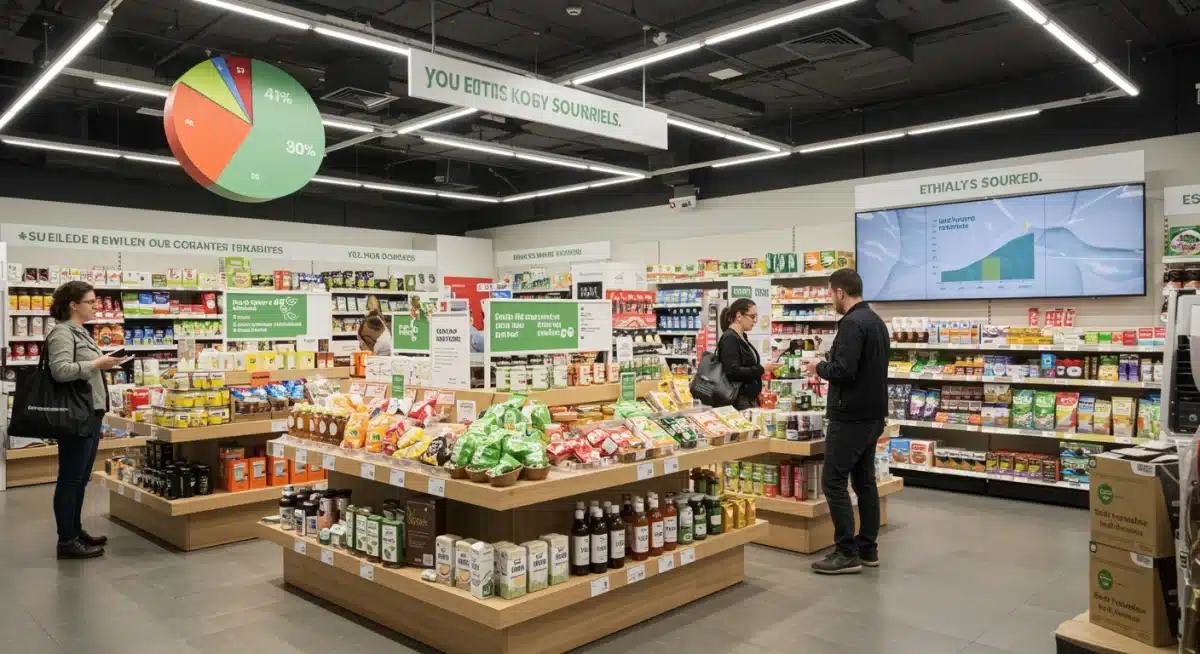
Implementing ethical sourcing strategies: practical steps for retailers
For US retailers looking to capitalize on the ethical sourcing trend, implementing effective strategies is crucial. This involves a systematic approach to evaluating, selecting, and managing suppliers, coupled with clear communication to consumers. It’s a journey that requires commitment from leadership and integration across all business functions.
Starting small and scaling up can be an effective way to begin. Focus on key product categories or suppliers where ethical risks are highest or where consumer interest is most pronounced. Building strong, long-term relationships with suppliers who share your values is also fundamental to success.
Key steps for effective ethical sourcing implementation
- Supplier Audits and Assessments: Conduct regular evaluations of suppliers’ labor practices, environmental impact, and compliance with ethical standards.
- Code of Conduct: Establish a clear and comprehensive code of conduct for all suppliers, outlining expectations for ethics and sustainability.
- Traceability and Transparency: Implement systems to track products from raw material to retail shelf, providing transparency to consumers.
- Capacity Building: Work with suppliers to help them improve their ethical and sustainable practices, offering support and resources.
Effective implementation also involves training internal teams on the importance of ethical sourcing and how to integrate it into their daily operations. This ensures that the commitment to ethics is deeply embedded within the company culture, rather than being a superficial marketing ploy.
By taking these practical steps, retailers can move beyond declarations of intent to tangible actions that demonstrate a genuine commitment to ethical sourcing. This not only meets consumer demand but also strengthens the entire supply chain, making it more resilient and responsible.
Overcoming challenges in ethical supply chains
While the benefits of ethical sourcing are clear, implementing and maintaining an ethical supply chain presents its own set of challenges. These can range from complex global supply networks to varying regulatory environments and the sheer effort involved in monitoring thousands of suppliers. Retailers must be prepared to address these hurdles proactively.
Often, the biggest challenge lies in gaining full visibility into multi-tiered supply chains, where sub-suppliers may operate without direct oversight. This requires innovative solutions and a collaborative approach with primary suppliers to extend ethical standards throughout the entire network.
Common hurdles and solutions in ethical sourcing
- Lack of Transparency: Utilize blockchain technology or advanced data analytics to improve traceability and visibility.
- Cost Implications: View ethical sourcing as a long-term investment, recognizing that initial costs can lead to greater returns and brand loyalty.
- Cultural Differences: Engage in open dialogue and provide training to bridge cultural gaps and ensure understanding of ethical standards.
- Supplier Resistance: Build strong partnerships by demonstrating the mutual benefits of ethical practices and offering support for improvements.
Addressing these challenges requires a strategic and persistent effort. It’s about fostering a culture of continuous improvement and recognizing that ethical sourcing is an ongoing journey, not a destination. Retailers who successfully navigate these complexities will emerge stronger and more reputable.
Overcoming these obstacles is not just about compliance; it’s about building a robust and resilient supply chain that can withstand scrutiny and deliver consistent value to both consumers and the business. It solidifies the retailer’s position as a responsible market leader.
The future of retail: ethical sourcing as a competitive advantage
Looking ahead, ethical sourcing is poised to become an even more critical differentiator in the US retail market. As consumers become increasingly informed and environmentally conscious, companies that genuinely embed ethical practices into their business model will gain a significant competitive edge. This isn’t just about avoiding negative press; it’s about proactively shaping a positive brand narrative.
The future of retail will be defined by authenticity and purpose. Brands that can tell a compelling story about their ethical journey, backed by verifiable actions, will resonate deeply with modern consumers and build enduring relationships. This moves beyond mere marketing to a fundamental shift in business philosophy.
Emerging trends in ethical sourcing for retailers
- Circular Economy Principles: Emphasis on product longevity, repairability, and recyclability to minimize waste.
- Data-Driven Ethics: Using technology and data to monitor, verify, and communicate ethical performance across the supply chain.
- Collaborative Initiatives: Retailers partnering with NGOs, industry groups, and even competitors to drive systemic change.
- Hyper-Local Sourcing: Increased focus on sourcing from local communities to reduce carbon footprint and support regional economies.
Retailers who embrace these emerging trends will not only meet future consumer demands but will also contribute to a more sustainable and equitable global economy. Ethical sourcing is no longer an optional add-on; it is an integral component of a forward-thinking and successful retail strategy.
The competitive advantage derived from ethical sourcing extends beyond sales figures, encompassing brand resilience, talent attraction, and investor confidence. It signifies a holistic approach to business that prioritizes people and planet alongside profit, ensuring long-term viability and positive societal impact.
| Key Point | Brief Description |
|---|---|
| Conscious Consumer Rise | US consumers increasingly prioritize ethical and sustainable practices in purchasing decisions. |
| Sales Growth Potential | Ethical sourcing is projected to boost US retail sales by 7% this year, reflecting consumer willingness to pay a premium. |
| Implementation Strategies | Requires supplier audits, codes of conduct, traceability, and capacity building for effective integration. |
| Competitive Advantage | Ethical practices are becoming a key differentiator, enhancing brand reputation and attracting loyal customers. |
Frequently asked questions about ethical sourcing in retail
Ethical sourcing for US retailers means procuring goods and services in a way that respects human rights, ensures fair labor practices, minimizes environmental impact, and promotes economic development across the supply chain. It involves transparency and accountability at every stage of production.
Consumers are increasingly value-driven, and ethical sourcing directly influences their choices. Many are willing to pay more for products from brands that demonstrate strong ethical and sustainable practices, leading to increased loyalty and sales growth for responsible retailers.
Beyond meeting consumer demand and boosting sales, benefits include enhanced brand reputation, reduced supply chain risks, improved employee morale, and access to new markets. It fosters a more resilient and responsible business model.
Challenges include achieving full transparency across complex global supply chains, managing initial costs, navigating diverse cultural contexts, and gaining supplier compliance. Overcoming these requires dedication, technology, and strong partnerships.
Ethical sourcing is a fundamental, long-term shift in consumer values and business practices, not a fad. It’s becoming an essential component of brand identity and competitive strategy, reflecting a global movement towards greater sustainability and corporate responsibility.
Conclusion
The imperative for US retailers to embrace ethical sourcing is clearer than ever. With consumer demand for transparent and responsible products on a consistent upward trajectory, integrating ethical practices into the core of retail operations is no longer optional but a strategic necessity. The projected 7% sales boost underscores the tangible financial rewards awaiting those who commit to this path. Beyond the numbers, ethical sourcing builds invaluable trust, enhances brand reputation, and fosters a more sustainable future for both businesses and the communities they impact. Retailers who lead with integrity and purpose will undoubtedly be the ones to thrive in this evolving market, demonstrating that profitability and principles can, and should, go hand in hand.