
Navigating the New FTC Guidelines for Digital Advertising in 2026: What 3 Key Changes Mean for Your E-commerce Compliance
The digital landscape is constantly evolving, and with it, the regulatory frameworks designed to protect consumers. As an e-commerce business owner, staying ahead of these changes isn’t just good practice; it’s essential for survival and growth. The year 2026 is poised to bring significant shifts with the introduction of new Federal Trade Commission (FTC) guidelines concerning digital advertising. These impending changes are not merely minor tweaks; they represent a fundamental reevaluation of how businesses interact with consumers online, particularly in the realm of advertising claims, data privacy, and influencer marketing. Understanding these shifts and preparing your business for robust FTC e-commerce compliance is paramount.
The FTC’s role has always been to prevent business practices that are anticompetitive, deceptive, or unfair to consumers. In an increasingly complex digital world, where personal data is currency and advertising can be highly targeted and persuasive, the need for clearer, more stringent regulations has become apparent. The new guidelines aim to address emerging challenges, ensuring that digital advertising remains transparent, honest, and respectful of consumer rights. For e-commerce businesses, this translates into a heightened responsibility to scrutinize their marketing strategies, data handling practices, and relationships with third-party promoters.
Ignoring these updates is not an option. Non-compliance can lead to severe penalties, including hefty fines, mandatory corrective advertising, and reputational damage that can be difficult, if not impossible, to recover from. Therefore, a proactive approach to understanding and implementing the necessary changes for FTC e-commerce compliance is not just advisable, but critical. This comprehensive guide will delve into three pivotal changes expected in the 2026 FTC guidelines, providing actionable insights to help your e-commerce business navigate this new regulatory environment successfully.
We’ll explore enhanced transparency requirements for advertising claims, stricter rules around consumer data privacy and security, and updated mandates for influencer and affiliate marketing disclosures. Each section will break down the specifics of the changes, discuss their implications for e-commerce, and offer practical steps you can take to ensure your business is fully compliant before the guidelines take effect. By the end of this article, you will have a clear roadmap to bolster your FTC e-commerce compliance strategy and safeguard your business’s future.
Key Change 1: Enhanced Transparency in Advertising Claims
One of the most significant shifts coming with the 2026 FTC guidelines is a heightened emphasis on transparency in advertising claims. The FTC has long required that advertising be truthful and non-deceptive, but the new guidelines are expected to introduce more granular requirements, especially concerning substantiation of claims and the clarity of disclosures. This change is particularly relevant for e-commerce, where product descriptions, testimonials, and promotional offers are central to the sales process.
What’s Changing?
The new guidelines are anticipated to demand more robust evidence for any claims made about product performance, health benefits, or comparative advantages. This means that vague or exaggerated statements will be scrutinized more heavily. Businesses will likely need to have readily available, competent, and reliable scientific evidence to back up any objective claims made in their digital advertisements. Furthermore, disclaimers and disclosures that qualify claims will need to be more prominent, clear, and unavoidable. No longer will small, hidden text suffice. The FTC is moving towards a standard where consumers should not have to actively search for qualifying information; it should be immediately apparent.
Implications for E-commerce Businesses
For e-commerce, this translates into a need for a thorough audit of all existing marketing materials. Every product page, ad copy, email campaign, and social media post that makes a specific claim will need to be reviewed. Businesses selling health products, supplements, or items with performance-based claims (e.g., ‘removes stains 50% faster’) will face particular scrutiny. The burden of proof will clearly rest on the advertiser. If you claim your product is ‘the best on the market,’ you’ll need to be able to demonstrate why, with verifiable data or studies. The days of making broad, unsubstantiated claims are numbered.
Steps to Ensure FTC E-commerce Compliance for Advertising Claims:
- Audit All Marketing Content: Conduct a comprehensive review of all product descriptions, ad copy, promotional emails, and social media content for any claims. Identify subjective claims versus objective claims that require substantiation.
- Strengthen Substantiation Practices: For every objective claim, ensure you have competent and reliable scientific evidence or other verifiable data to back it up. If you don’t, either remove the claim or conduct the necessary research. Consider third-party testing or certification where appropriate.
- Enhance Disclosure Prominence: Any necessary disclaimers (e.g., ‘results may vary,’ ‘based on internal testing’) must be prominently displayed. This means using larger fonts, contrasting colors, or placing them directly adjacent to the claim they qualify, rather than in footnotes or fine print.
- Train Marketing Teams: Educate your marketing and copywriting teams on the new standards. Foster a culture of truthfulness and transparency in all advertising efforts.
- Review User-Generated Content: If you feature customer testimonials or reviews, ensure they reflect the typical experience of your customers and are not cherry-picked. If a testimonial makes a specific claim, you might need to ensure its substantiation as well.
Proactive attention to these details will not only ensure FTC e-commerce compliance but also build greater trust with your customer base, leading to long-term brand loyalty.
Key Change 2: Stricter Rules for Consumer Data Privacy and Security
The second major area of focus for the 2026 FTC guidelines is consumer data privacy and security. In an era of increasing data breaches and growing public concern over how personal information is collected, used, and shared, the FTC is expected to introduce more stringent requirements. This will significantly impact how e-commerce businesses manage customer data, from collection to storage and sharing.
What’s Changing?
While the specifics are still being finalized, it’s anticipated that the new guidelines will lean towards a more explicit ‘opt-in’ consent model for data collection and usage, moving away from implied consent or opt-out mechanisms. Consumers will likely have enhanced rights to access, correct, and delete their data, similar to regulations like GDPR and CCPA. Furthermore, businesses will be held to higher standards regarding data security measures, with an emphasis on protecting sensitive customer information from unauthorized access or breaches. The FTC may also introduce stricter rules on how data collected for one purpose can be used for another, requiring separate and clear consent for each distinct use.
Implications for E-commerce Businesses
For e-commerce businesses, these changes necessitate a complete overhaul of data privacy policies and practices. Your current privacy policy might become obsolete, requiring significant updates to reflect the new consent requirements and consumer rights. Data mapping – understanding what data you collect, where it’s stored, and who has access to it – will become crucial. Businesses that rely heavily on third-party data analytics or advertising platforms will need to ensure these partners are also compliant, as the liability might extend to your business. Any data breach could lead to severe penalties, making robust security infrastructure a non-negotiable aspect of FTC e-commerce compliance.
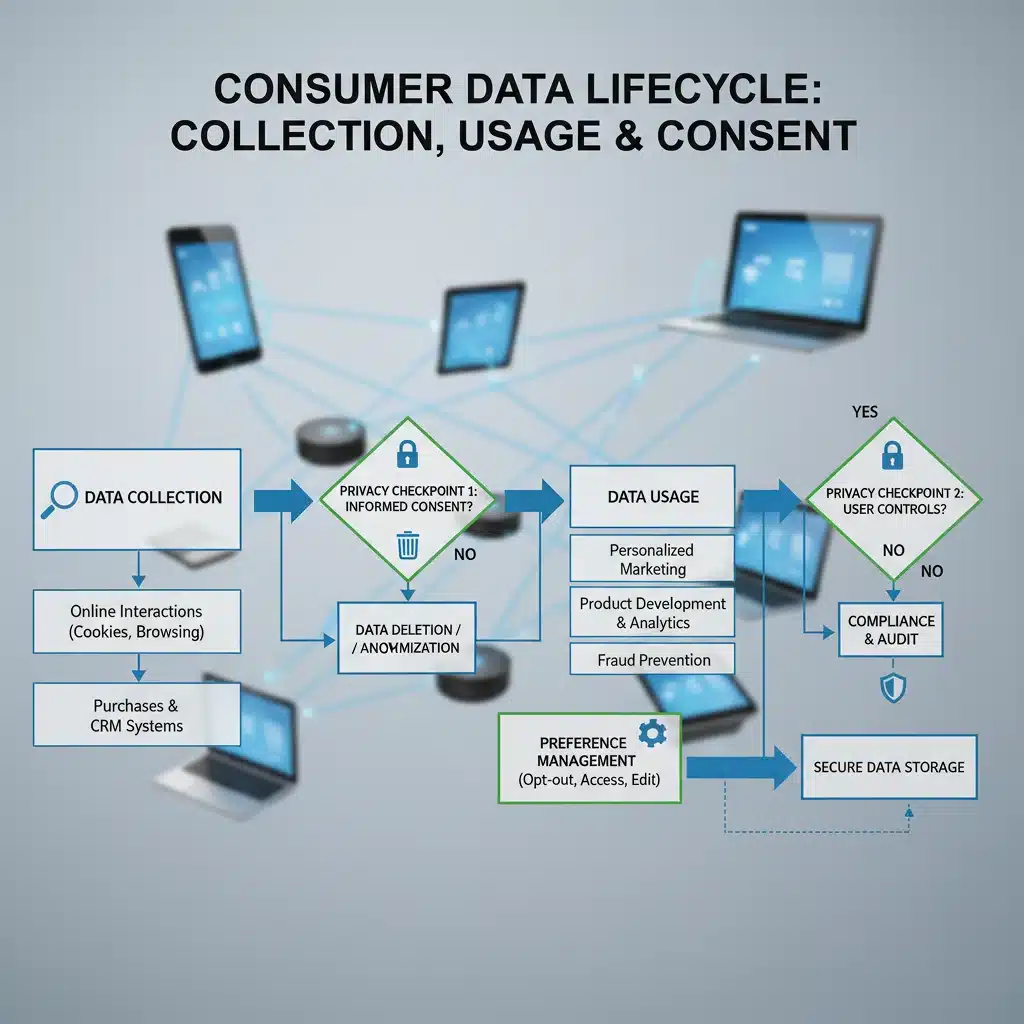
Steps to Ensure FTC E-commerce Compliance for Data Privacy:
- Update Privacy Policies and Terms of Service: Revise your privacy policy to clearly articulate what data is collected, why it’s collected, how it’s used, and with whom it’s shared. Ensure it outlines consumers’ rights regarding their data.
- Implement Granular Consent Mechanisms: Move towards explicit opt-in consent for different types of data collection and usage. For example, separate consent for marketing emails, personalized advertising, and data sharing with third parties. This might involve redesigning website pop-ups, forms, and checkout processes.
- Strengthen Data Security: Invest in robust cybersecurity measures, including encryption, multi-factor authentication, regular security audits, and employee training on data protection best practices. Develop a comprehensive data breach response plan.
- Conduct Data Audits and Mapping: Understand exactly what personal data your business collects, where it’s stored, for how long, and who has access. This will help identify potential vulnerabilities and ensure adherence to data retention policies.
- Vet Third-Party Partners: Ensure any third-party services you use (e.g., payment processors, marketing automation platforms, analytics providers) are also compliant with the new data privacy standards. Review their data handling practices and contractual agreements.
- Establish Consumer Data Request Procedures: Set up clear, accessible procedures for consumers to exercise their rights to access, correct, or delete their personal data.
By prioritizing data privacy and security, e-commerce businesses can not only meet FTC e-commerce compliance requirements but also foster greater consumer trust, which is invaluable in today’s digital marketplace.
Key Change 3: Updated Mandates for Influencer and Affiliate Marketing Disclosures
The third crucial area that the 2026 FTC guidelines are expected to address with increased rigor is influencer and affiliate marketing. As these forms of digital advertising continue to grow in popularity and impact, the lines between authentic content and paid promotion can become blurred. The FTC aims to ensure that consumers are always aware when they are viewing a sponsored message.
What’s Changing?
While existing guidelines require disclosures of material connections between advertisers and endorsers, the new mandates are likely to make these requirements even stricter and more explicit. This could include specifying the exact language to be used for disclosures (e.g., ‘Ad,’ ‘Sponsored,’ ‘Paid Partnership’), mandating their placement (e.g., at the very beginning of a post or video, verbally and visually), and ensuring their prominence (e.g., not buried in a string of hashtags or spoken quickly in a video). The responsibility for ensuring disclosures will likely extend more explicitly to the brands themselves, not just the influencers or affiliates. There may also be specific rules for emerging platforms and formats, such as short-form video content or interactive live streams, where disclosures can be easily overlooked.
Implications for E-commerce Businesses
E-commerce businesses that engage in influencer marketing or run affiliate programs will need to re-evaluate their contracts, training, and monitoring processes. It will no longer be sufficient to simply tell influencers to disclose; businesses will need to actively ensure that disclosures are made correctly and consistently. This could involve providing specific disclosure language, reviewing content before it goes live, and implementing stricter penalties for non-compliance within contracts. The risk of an influencer failing to disclose a material connection could now fall more heavily on the brand, making robust oversight essential for FTC e-commerce compliance.
Steps to Ensure FTC E-commerce Compliance for Influencer/Affiliate Marketing:
- Update Influencer/Affiliate Contracts: Revise all agreements to explicitly detail disclosure requirements, including specific language, placement, and frequency. Clearly state the consequences of non-compliance.
- Provide Clear Disclosure Training: Educate all influencers and affiliates on the new FTC guidelines and your specific disclosure expectations. Provide examples of compliant and non-compliant disclosures.
- Implement Robust Monitoring Systems: Actively monitor influencer and affiliate content to ensure disclosures are being made correctly and consistently. This might involve manual checks, AI-powered tools, or requiring influencers to submit content for approval.
- Emphasize Prominence and Clarity: Stress that disclosures must be clear, unambiguous, and easily noticeable by the average consumer. For video content, this means both verbal and on-screen disclosures. For social media posts, it means placing disclosures at the very beginning, not just in hashtags.
- Understand Your Liability: Recognize that your brand can be held responsible for inadequate disclosures by your partners. This underscores the importance of stringent oversight and clear contractual terms.
- Review Platform-Specific Guidelines: Stay updated on how different social media platforms (e.g., Instagram, TikTok, YouTube) implement their own disclosure tools and ensure your partners are utilizing them correctly.
By taking these steps, e-commerce businesses can leverage the power of influencer and affiliate marketing while maintaining full FTC e-commerce compliance and upholding consumer trust.
Preparing Your E-commerce Business for 2026: A Holistic Approach to Compliance
The impending 2026 FTC guidelines represent a significant evolution in consumer protection within the digital advertising space. While the three key changes discussed above – enhanced transparency in advertising claims, stricter rules for consumer data privacy and security, and updated mandates for influencer and affiliate marketing disclosures – are distinct, they are interconnected. A truly robust FTC e-commerce compliance strategy requires a holistic approach that integrates these areas across all facets of your business operations.
Beyond the Three Key Changes: General Compliance Best Practices
While focusing on these three critical shifts, it’s also important to remember that general principles of fair advertising and consumer protection will continue to apply. This includes avoiding bait-and-switch tactics, clearly stating pricing and shipping information, and handling customer complaints fairly. Regularly reviewing your entire customer journey, from initial ad impression to post-purchase support, through the lens of consumer fairness and transparency, will serve you well.
The Importance of Legal Counsel and Continuous Education
Navigating complex legal frameworks like the FTC guidelines is not a task to be taken lightly. Engaging with experienced legal counsel specializing in advertising and e-commerce law is highly advisable. Legal professionals can provide tailored advice, review your current practices, and help draft compliant policies and contracts. Furthermore, the regulatory landscape is dynamic. What is compliant today might not be tomorrow. Therefore, continuous education and staying informed about future FTC pronouncements and industry best practices are crucial for maintaining long-term FTC e-commerce compliance.
Building Consumer Trust Through Compliance
While the immediate motivation for compliance is to avoid penalties, the long-term benefit extends far beyond that. Businesses that prioritize transparency, respect consumer privacy, and ensure honest advertising build a foundation of trust with their customers. In a competitive e-commerce market, trust is a powerful differentiator. Consumers are increasingly savvy and concerned about how their data is used and whether they are being genuinely informed. A reputation for ethical practices and strong FTC e-commerce compliance can lead to increased customer loyalty, positive word-of-mouth, and ultimately, sustainable business growth.
Developing an Internal Compliance Framework
To effectively manage the new guidelines, consider developing an internal compliance framework. This framework should include:
- Designated Compliance Officer: Appoint an individual or team responsible for overseeing compliance efforts.
- Regular Audits: Schedule periodic internal and external audits of your advertising, data handling, and marketing practices.
- Employee Training: Implement ongoing training programs for all employees involved in marketing, sales, customer service, and data management.
- Documentation: Maintain meticulous records of all compliance efforts, including policy updates, training materials, audit results, and communication with influencers/affiliates. This documentation can be invaluable if your business ever faces an inquiry.
- Feedback Mechanisms: Establish channels for employees to report potential compliance issues or ask questions, fostering a culture of accountability.
By institutionalizing compliance, e-commerce businesses can ensure that adherence to FTC guidelines becomes an integral part of their operational DNA, rather than a reactive measure.
Conclusion: Proactive Compliance for a Secure E-commerce Future
The 2026 FTC guidelines for digital advertising are set to redefine the landscape for e-commerce businesses. The enhanced focus on transparency in advertising claims, stricter rules for consumer data privacy and security, and updated mandates for influencer and affiliate marketing disclosures demand immediate and comprehensive attention. These changes are not just regulatory hurdles; they are opportunities to strengthen your business practices, build deeper consumer trust, and differentiate yourself in a crowded market.
Embracing these new standards for FTC e-commerce compliance requires more than just a quick fix. It necessitates a strategic, proactive, and continuous effort involving legal review, operational adjustments, and a commitment to ethical conduct. By auditing your marketing content, fortifying your data privacy protocols, and meticulously managing your influencer and affiliate relationships, you can navigate these upcoming changes with confidence.
Remember, compliance is an ongoing journey, not a destination. Staying informed, seeking expert advice, and fostering a culture of transparency and accountability within your organization will be your strongest assets. By taking decisive action now, your e-commerce business can not only avoid potential pitfalls but also thrive in the evolving digital economy of 2026 and beyond, securing a reputation for integrity and reliability that resonates with consumers.