Combatting Retail Shrinkage: New Tech Reduces US Losses 8% by 2025
New technologies are set to reduce US retail shrinkage by 8% by 2025, leveraging innovations like AI, advanced analytics, and RFID to optimize inventory visibility and bolster security measures.
In the dynamic landscape of American retail, the battle against loss is perpetual. Businesses across the United States are increasingly turning to cutting-edge solutions for combatting retail shrinkage: new technologies reducing losses by 8% for US businesses in 2025. This shift represents a significant evolution in loss prevention, moving beyond traditional methods to embrace intelligent systems that promise not only to mitigate financial drain but also to enhance operational efficiency and customer experience.
Understanding the Scope of Retail Shrinkage in the US
Retail shrinkage, encompassing theft, administrative errors, vendor fraud, and damage, continues to be a formidable challenge for businesses nationwide. Its pervasive nature impacts profitability and operational stability, making effective countermeasures essential for sustained growth. The financial implications are staggering, with billions of dollars lost annually across various retail sectors.
Historically, retailers have relied on reactive measures, often identifying losses long after they have occurred. This approach, while necessary, lacked the proactive foresight demanded by modern retail environments. The complexity of today’s supply chains and the sheer volume of transactions further complicate traditional loss prevention strategies, underscoring the urgent need for innovative solutions.
The Economic Impact on US Businesses
The economic toll of shrinkage extends beyond direct financial loss. It affects pricing strategies, employee morale, and ultimately, consumer trust. For many US businesses, especially small and medium-sized enterprises (SMEs), even a slight reduction in shrinkage can translate into substantial improvements in their bottom line. The drive to reduce these losses is not just about protection; it’s about fostering a more resilient and profitable retail ecosystem.
- Billions in Annual Losses: Shrinkage accounts for a significant percentage of total retail sales, representing billions of dollars lost each year.
- Operational Inefficiencies: Manual inventory checks and reactive security measures consume valuable time and resources.
- Impact on Pricing: Losses can force retailers to increase prices, potentially alienating customers.
- Supply Chain Vulnerabilities: Gaps in the supply chain often contribute to undetected shrinkage.
The imperative to address retail shrinkage effectively is stronger than ever. As the retail sector evolves, so too must its defense mechanisms. The integration of advanced technologies offers a promising pathway to not only curb current losses but also to build a more secure and efficient future for US businesses.
Artificial Intelligence and Machine Learning in Loss Prevention
Artificial Intelligence (AI) and Machine Learning (ML) are revolutionizing loss prevention by offering unprecedented capabilities in data analysis and predictive modeling. These technologies move beyond simple surveillance, enabling retailers to identify patterns, detect anomalies, and even predict potential shrinkage events before they occur. This proactive approach significantly shifts the paradigm of security.
AI-powered systems can sift through vast quantities of transactional, inventory, and video data much faster and more accurately than human analysts. By recognizing subtle deviations from normal behavior or inventory discrepancies, these systems provide early warnings that allow retailers to intervene promptly. This capability is critical in preventing losses rather than merely reacting to them.
Predictive Analytics for Anomaly Detection
One of the most impactful applications of AI is in predictive analytics. Algorithms can learn from historical data to establish baseline behaviors for customers, employees, and inventory flow. When current activities deviate from these baselines, the system flags them as potential risks. This can range from unusual transaction patterns at the point-of-sale to suspicious movements in stockrooms.
- Behavioral Pattern Recognition: AI identifies unusual customer or employee behaviors that may indicate theft or fraud.
- Transaction Anomaly Detection: Flags suspicious sales, returns, or voids that deviate from typical patterns.
- Inventory Discrepancy Alerts: Automatically highlights inconsistencies between recorded and actual stock levels.
- Predictive Risk Scoring: Assigns risk scores to various operational areas based on integrated data analysis.
The integration of AI and ML transforms loss prevention from a purely reactive function into a strategic, data-driven discipline. By providing actionable insights, these technologies empower US businesses to make informed decisions that effectively reduce shrinkage and enhance overall security protocols.
RFID and IoT for Precision Inventory Management
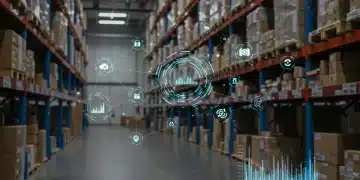
Radio-Frequency Identification (RFID) and the Internet of Things (IoT) are fundamentally changing how retailers manage inventory, offering unparalleled visibility and accuracy. These technologies provide real-time tracking of products from the moment they enter the supply chain until they are purchased, creating a transparent and highly efficient inventory ecosystem.
With RFID tags embedded in products, retailers can conduct instantaneous and highly accurate inventory counts, drastically reducing the time and labor associated with manual methods. This not only minimizes human error but also ensures that stock levels are always precise, a critical factor in preventing losses due to misplaced items or undetected theft.
Real-time Inventory Tracking
IoT devices, such as smart shelves and sensors, complement RFID by continuously monitoring product location and movement. This creates a dynamic, real-time map of inventory, making it virtually impossible for items to disappear without immediate detection. The ability to know exactly where every product is at any given moment is a game-changer for loss prevention.


- Enhanced Accuracy: RFID reduces inventory discrepancies to near zero, providing a true picture of stock.
- Automated Audits: Eliminates manual counting, freeing up staff for customer-facing roles.
- Loss Identification: Pinpoints the exact location and time of inventory discrepancies, aiding investigation.
- Supply Chain Optimization: Improves efficiency by tracking goods through every stage of the supply chain.
The synergy between RFID and IoT creates a powerful defense against shrinkage by establishing a robust, transparent, and highly responsive inventory management system. For US businesses, this means fewer lost items, better stock control, and a significant step towards achieving the 8% reduction in losses by 2025.
Advanced Video Surveillance and Analytics
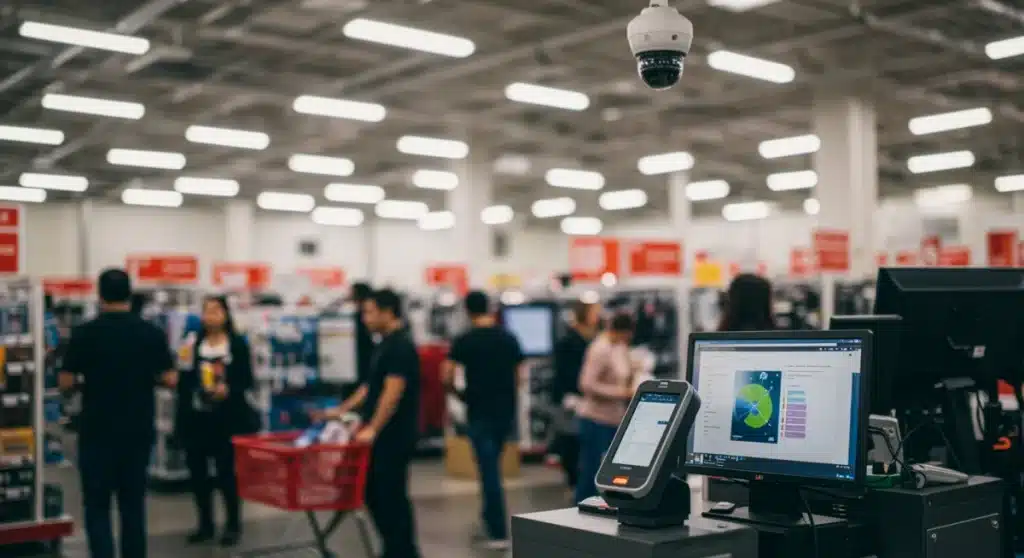
Modern video surveillance systems, coupled with advanced analytics, are far more sophisticated than the traditional CCTV cameras of the past. These intelligent systems leverage high-definition imaging, facial recognition, and behavioral analytics to provide comprehensive security coverage and actionable insights, moving beyond mere recording to active prevention.
These advanced cameras can detect suspicious activities, such as loitering, unusual movements, or attempts to tamper with merchandise, and immediately alert security personnel. This proactive alerting capability allows for timely intervention, often preventing theft before it can be completed, and significantly enhancing the overall security posture of retail establishments.
Facial Recognition and Object Detection
The integration of facial recognition technology allows for the identification of known shoplifters or individuals associated with previous incidents, providing an early warning as soon as they enter a store. Object detection capabilities can identify when items are removed from shelves in unusual ways or when multiple items are taken without scanning, providing critical evidence for loss prevention teams.
- High-Resolution Monitoring: Captures clear images, essential for identification and evidence.
- Real-time Anomaly Alerts: Notifies staff of unusual activities, enabling rapid response.
- Post-Incident Analysis: Provides detailed footage for investigations and evidence collection.
- Integration with POS Systems: Links video data with transaction data to identify suspicious sales activities.
By transforming surveillance from a passive recording tool into an active, intelligent security system, advanced video analytics are proving indispensable in the fight against retail shrinkage. US businesses adopting these technologies are finding them to be powerful allies in securing their assets and reducing losses.
Enhancing Supply Chain Security with Blockchain
The complexities of global supply chains often create vulnerabilities that contribute significantly to retail shrinkage. Blockchain technology offers a transformative solution by providing an immutable, transparent, and secure ledger for tracking goods at every stage of their journey, from manufacturer to retail shelf.
Each transaction and movement of a product within the supply chain can be recorded as a block on the blockchain, creating a verifiable and tamper-proof history. This level of transparency makes it incredibly difficult for products to be diverted, stolen, or counterfeited without immediate detection, thereby greatly reducing losses due to supply chain fraud and inefficiency.
Immutable Tracking and Verification
The decentralized nature of blockchain means that no single entity controls the data, making it highly secure and resistant to manipulation. Retailers can instantly verify the authenticity and provenance of products, ensuring that only legitimate goods enter their inventory. This not only prevents shrinkage but also builds consumer trust by guaranteeing product integrity.
- End-to-End Visibility: Tracks products from origin to destination with complete transparency.
- Fraud Prevention: Makes it nearly impossible to introduce counterfeit goods or tamper with shipments.
- Audit Trail: Provides a secure and verifiable record of every product movement.
- Reduced Human Error: Automates data entry and verification, minimizing manual errors that lead to loss.
For US businesses, blockchain represents a strategic investment in securing their supply chains, directly contributing to the ambitious goal of reducing retail shrinkage by 8% by 2025. Its ability to create trust and transparency across complex networks is unparalleled in modern logistics.
Integrated Solutions and Future Outlook
The most effective strategy for combatting retail shrinkage involves the integration of multiple advanced technologies into a cohesive and intelligent ecosystem. No single solution is a silver bullet; rather, it is the synergistic combination of AI, RFID, IoT, advanced surveillance, and blockchain that yields the most significant results. This holistic approach creates multiple layers of defense, making it exceedingly difficult for shrinkage to occur undetected.
Retailers are increasingly adopting platforms that allow for seamless data exchange and analysis across various systems. For example, AI can analyze data from RFID tags, video feeds, and point-of-sale systems to identify complex patterns of loss that individual technologies might miss. This integrated intelligence provides a comprehensive view of potential vulnerabilities and enables a more targeted response.
The Role of Data Fusion and Analytics
Data fusion, the process of combining data from disparate sources to achieve a more accurate and comprehensive understanding, is at the heart of these integrated solutions. Advanced analytics then transform this fused data into actionable insights, helping retailers to optimize store layouts, refine security protocols, and even train staff more effectively in loss prevention techniques.
- Holistic Security View: Combines data from various systems for a complete picture of security.
- Enhanced Decision Making: Provides actionable insights to optimize loss prevention strategies.
- Proactive Risk Mitigation: Identifies emerging threats and vulnerabilities before they escalate.
- Operational Efficiency Gains: Streamlines security processes and reduces manual oversight.
The future of loss prevention for US businesses lies in these sophisticated, integrated technological frameworks. By embracing these advancements, retailers are not just reacting to losses but actively shaping a more secure, efficient, and profitable retail landscape, confidently moving towards the 8% reduction target by 2025.
| Key Technology | Impact on Shrinkage Reduction |
|---|---|
| AI/Machine Learning | Predictive analytics, anomaly detection, and behavioral pattern recognition to prevent theft and fraud. |
| RFID/IoT | Real-time, precise inventory tracking, reducing losses from misplaced items and errors. |
| Video Analytics | Intelligent surveillance, facial recognition, and object detection for proactive theft deterrence. |
| Blockchain | Secure, transparent supply chain tracking to prevent fraud and diversion of goods. |
Frequently asked questions about retail shrinkage and new technologies
Retail shrinkage refers to the loss of inventory due to factors like theft, administrative errors, vendor fraud, and damage. It’s a major concern for US businesses because it directly impacts profitability, operational efficiency, and can lead to increased prices for consumers, costing billions annually.
AI and Machine Learning analyze vast datasets to identify unusual patterns in transactions, inventory, and behavior. This allows for predictive anomaly detection, enabling retailers to anticipate and prevent potential theft or fraud before it occurs, providing a proactive defense against shrinkage.
RFID and IoT provide real-time, precise tracking of products throughout the supply chain. RFID tags enable accurate and instant inventory counts, while IoT sensors monitor product movement, minimizing errors and quickly identifying misplaced or stolen items, thereby significantly improving inventory accuracy and reducing losses.
Advanced video surveillance with analytics moves beyond just evidence collection. It uses facial recognition and behavioral analysis to detect suspicious activities in real-time, alerting staff to potential threats. This enables proactive intervention, often preventing theft before it happens, in addition to providing crucial evidence post-incident.
By integrating AI, RFID, IoT, advanced surveillance, and blockchain, US businesses can create a multi-layered defense. This synergy provides unparalleled visibility, predictive capabilities, and real-time alerts across operations and supply chains, collectively driving down various forms of shrinkage to reach the 8% reduction target by 2025.
Conclusion
The journey towards effectively combatting retail shrinkage in the US is undergoing a profound transformation, driven by an array of sophisticated new technologies. From the predictive power of AI and Machine Learning to the real-time precision of RFID and IoT, the enhanced vigilance of advanced video analytics, and the immutable security of blockchain in supply chains, retailers now possess an unprecedented arsenal against loss. The projected 8% reduction in losses for US businesses by 2025 is not merely an optimistic forecast but a tangible goal achievable through strategic adoption and integration of these innovative solutions. By moving towards a proactive, data-driven, and seamlessly interconnected security framework, the retail sector is poised to secure its assets, optimize operations, and foster a more resilient and profitable future.