US Customer Segmentation 2025: Advanced Clustering for Marketing

Advanced US customer segmentation, powered by sophisticated clustering techniques, is essential for marketers in 2025 to precisely target diverse consumer groups and optimize campaign effectiveness.
In the dynamic landscape of 2025, understanding US customer segmentation is no longer a luxury but a fundamental necessity for any business aiming for sustainable growth. The American consumer base is incredibly diverse, influenced by a myriad of factors ranging from evolving digital behaviors to shifting economic landscapes. Simply put, a one-size-fits-all marketing approach is destined for mediocrity. This article delves into how advanced clustering techniques can revolutionize your marketing strategies, enabling a more nuanced and effective engagement with your target audience.
The evolving landscape of US consumer behavior
The US consumer market is a constantly shifting entity, influenced by technological advancements, socio-economic changes, and cultural trends. What resonated with consumers five years ago might fall flat today. Businesses must adapt quickly to these evolving preferences and expectations to remain competitive and relevant.
Understanding these shifts requires more than just demographic data; it demands a deep dive into psychographics, behavioral patterns, and emerging trends. The rise of Gen Z as a significant economic force, the increasing influence of digital-native behaviors across all age groups, and a heightened demand for personalized experiences are just a few examples of the complexities marketers face. Ignoring these nuances can lead to misdirected campaigns and wasted resources, making sophisticated segmentation indispensable.
Digital transformation and consumer expectations
The ubiquity of digital platforms has fundamentally altered how US consumers interact with brands. They expect seamless, personalized experiences across all touchpoints, from social media to e-commerce. This digital fluency means that generic messaging is often ignored, while highly relevant content captures attention.
- Personalized experiences: Consumers increasingly expect brands to understand their individual needs and preferences.
- Omnichannel presence: A consistent and integrated experience across online and offline channels is paramount.
- Data privacy concerns: While demanding personalization, consumers are also more aware of and concerned about how their data is used.
Socio-economic and cultural shifts
Beyond digital, broader societal changes profoundly impact consumer behavior. Economic uncertainties, evolving family structures, and increasing diversity within the US population create a complex tapestry of consumer needs and values. Marketers must be sensitive to these shifts to craft messages that genuinely resonate.
In conclusion, the modern US consumer is informed, discerning, and expects relevance. Navigating this complexity without a robust segmentation strategy is akin to sailing without a compass. Advanced clustering techniques offer the precision needed to chart a successful course through this intricate market.
Foundations of customer segmentation: beyond demographics
Traditional customer segmentation often relies heavily on basic demographic data such as age, gender, income, and location. While these factors provide a foundational understanding, they are increasingly insufficient for capturing the true complexity of modern consumer behavior. To achieve truly targeted marketing, businesses must move beyond these surface-level attributes and embrace more sophisticated methodologies.
The goal is to create segments that are not only distinct but also actionable, meaning they represent groups of customers who will respond similarly to specific marketing interventions. This requires incorporating a richer array of data points, including behavioral, psychographic, and transactional information. By doing so, marketers can uncover hidden patterns and motivations that demographic data alone would never reveal.
Behavioral segmentation dimensions
Behavioral data offers invaluable insights into how customers interact with a brand, products, and services. This includes purchase history, website browsing patterns, engagement with marketing communications, and product usage frequency.
- Purchase behavior: Frequency, recency, monetary value (RFM analysis), product categories purchased.
- Website engagement: Pages visited, time spent on site, click-through rates, abandoned carts.
- Content consumption: Types of content engaged with, preferred channels (email, social media, blog).
Psychographic segmentation insights
Psychographic segmentation delves into customers’ psychological attributes, including their values, attitudes, interests, and lifestyles. This type of data helps marketers understand the ‘why’ behind consumer choices, allowing for more emotionally resonant messaging.
For example, knowing a customer’s interest in environmental sustainability allows a brand to highlight its eco-friendly initiatives. Similarly, understanding their lifestyle preferences can inform product development and brand positioning. Combining psychographic insights with behavioral data creates a powerful, multi-dimensional view of the customer.
Ultimately, laying a strong foundation for customer segmentation means moving beyond simple categories. It involves diligently collecting and analyzing diverse data points to construct rich, detailed customer profiles that serve as the bedrock for advanced clustering and truly personalized marketing efforts.
Introduction to advanced clustering techniques
Advanced clustering techniques are powerful analytical tools that allow businesses to identify natural groupings within their customer data without prior knowledge of those groups. Unlike traditional rule-based segmentation, which relies on predefined criteria, clustering algorithms discover inherent patterns and similarities, revealing segments that might otherwise remain hidden. This data-driven approach is crucial for uncovering nuanced customer behaviors and preferences in the complex US market of 2025.
These techniques move beyond simple averages or predetermined categories, instead looking for statistical proximity among data points. The result is a set of distinct customer clusters, each representing a unique group with shared characteristics. Identifying these groups enables marketers to tailor strategies with a level of precision that drives significantly higher engagement and conversion rates.
K-Means clustering: A foundational approach
K-Means is one of the most widely used clustering algorithms due to its simplicity and efficiency. It partitions data into ‘k’ distinct clusters, where ‘k’ is a predefined number of clusters. The algorithm iteratively assigns data points to the nearest cluster centroid and then recomputes the centroids based on the new cluster members.
- How it works: Randomly selects ‘k’ initial centroids, assigns data points to the closest centroid, and updates centroids iteratively until convergence.
- Use cases: Identifying groups of customers with similar purchasing habits, segmenting website visitors based on browsing behavior.
- Considerations: Requires specifying the number of clusters (‘k’) beforehand, sensitive to initial centroid placement and outliers.
Hierarchical clustering: Building a tree of segments
Hierarchical clustering builds a hierarchy of clusters, represented as a dendrogram. It can be agglomerative (bottom-up, starting with individual data points and merging them) or divisive (top-down, starting with all data points in one cluster and splitting them). This method doesn’t require specifying the number of clusters in advance, offering flexibility in exploring different levels of granularity.
The visual representation of a dendrogram helps marketers understand the relationships between different customer groups, allowing them to choose the optimal number of clusters based on business objectives. This approach is particularly useful when the optimal number of segments isn’t immediately clear, providing a more exploratory view of customer relationships.
In essence, advanced clustering techniques provide the analytical horsepower to transform raw customer data into actionable insights. By moving beyond basic segmentation, businesses can unlock a deeper understanding of their US customer base, paving the way for truly targeted and impactful marketing campaigns.
Implementing clustering for targeted marketing in 2025
The transition from theoretical clustering knowledge to practical application in targeted marketing is where the real value lies. For businesses operating in the US market in 2025, implementing advanced clustering techniques means fundamentally reshaping how they approach customer engagement. It’s not just about identifying segments; it’s about leveraging those insights to craft highly personalized and effective marketing campaigns that resonate deeply with each specific group.
This implementation involves a systematic process, from data preparation and algorithm selection to campaign execution and continuous optimization. The goal is to move away from broad, generic messaging and towards hyper-targeted communication that speaks directly to the needs, preferences, and behaviors of each identified customer cluster. This precision minimizes wasted marketing spend and maximizes return on investment.
Data preparation and feature engineering
Before applying any clustering algorithm, data must be meticulously prepared. This involves cleaning, transforming, and selecting relevant features that will define the customer segments. The quality of the input data directly impacts the quality and actionability of the resulting clusters.
- Data cleaning: Handling missing values, removing duplicates, correcting inconsistencies.
- Feature selection: Choosing variables that are most relevant to segmentation objectives (e.g., purchase frequency, average order value, browsing categories).
- Feature engineering: Creating new variables from existing ones to capture more complex relationships (e.g., recency of last purchase, total time spent on site).
Algorithm selection and validation
Choosing the right clustering algorithm depends on the nature of your data and your business objectives. While K-Means and Hierarchical clustering are popular, other methods like DBSCAN (for density-based clustering) or Gaussian Mixture Models (for probabilistic clustering) might be more suitable for certain datasets.
Once clusters are formed, it’s crucial to validate their quality and interpretability. This involves evaluating metrics like silhouette score, elbow method, or visual inspection to ensure the segments are distinct, stable, and make business sense. A well-validated segmentation provides confidence in subsequent marketing actions.
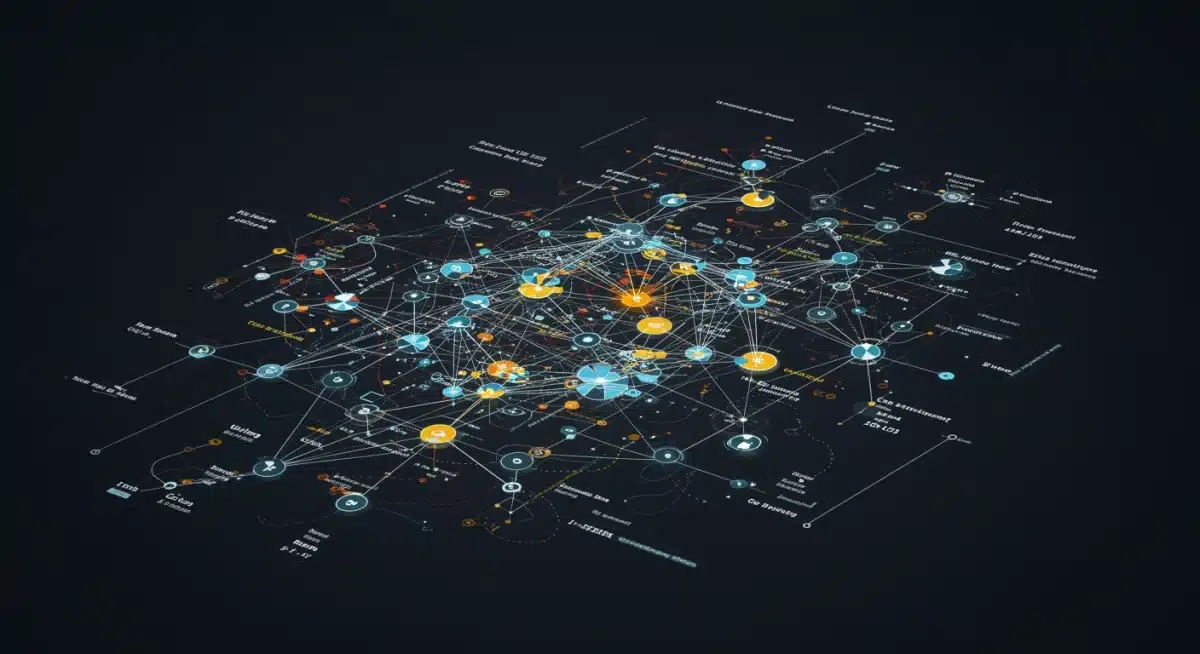
Crafting segment-specific marketing strategies
With well-defined customer clusters, marketers can develop tailored strategies. This could involve creating unique product recommendations, personalizing website content, customizing email campaigns, or even designing specific promotional offers for each segment.
For instance, a ‘value-conscious’ segment might respond well to discount promotions, while a ‘premium’ segment might prefer exclusive access to new products or personalized styling advice. By aligning marketing efforts with the specific characteristics of each cluster, businesses can significantly improve customer satisfaction and drive stronger business outcomes. The continuous monitoring and refinement of these strategies based on performance data are key to long-term success.
Challenges and considerations in US market segmentation
While advanced customer segmentation offers immense opportunities, its implementation in the diverse US market comes with its own set of challenges. Navigating these obstacles effectively is crucial for maximizing the benefits of clustering techniques and ensuring that marketing efforts are genuinely impactful. Ignoring these considerations can lead to inaccurate segments, ineffective campaigns, and wasted resources.
The sheer scale and heterogeneity of the US consumer base mean that data collection, processing, and interpretation must be approached with precision and cultural sensitivity. Furthermore, the rapid pace of technological change and evolving consumer expectations demand continuous adaptation and refinement of segmentation models.
Data privacy and compliance
In 2025, data privacy remains a paramount concern for US consumers and businesses alike. Regulations like the California Consumer Privacy Act (CCPA) and other state-level initiatives mandate strict guidelines for collecting, storing, and using customer data. Marketers must ensure their segmentation efforts are fully compliant.
- Consent management: Obtaining explicit consent for data collection and usage is critical.
- Data anonymization: Implementing techniques to protect individual identities within aggregated data.
- Transparency: Clearly communicating data practices to build trust with consumers.
Dynamic nature of consumer behavior
US consumer behavior is not static; it evolves constantly due to economic shifts, social trends, and technological advancements. A segmentation model that is highly effective today might become outdated in a few months. This necessitates a dynamic approach to segmentation.
Continuous monitoring, regular model retraining, and the ability to adapt to new data streams are essential. Marketers must treat segmentation as an ongoing process rather than a one-time project, ensuring that their understanding of customer groups remains current and relevant. This agility allows businesses to respond promptly to market changes and maintain the effectiveness of their targeted campaigns.
Addressing these challenges proactively ensures that advanced clustering techniques are not only powerful but also sustainable and ethically sound. By prioritizing data privacy, maintaining data quality, and embracing a dynamic approach, businesses can successfully leverage segmentation to thrive in the competitive US market.
Measuring the impact of segmented marketing
The true measure of any marketing strategy lies in its tangible impact on business outcomes. For advanced US customer segmentation, this means going beyond the creation of segments to rigorously evaluating how these targeted efforts translate into improved performance. Measuring the impact is critical for demonstrating ROI, optimizing future campaigns, and continually refining segmentation models.
Without clear metrics and robust analytical frameworks, even the most sophisticated segmentation can become an academic exercise rather than a strategic advantage. It’s imperative to establish key performance indicators (KPIs) before launching segmented campaigns and to track them diligently, allowing for data-driven adjustments and continuous improvement.
Key performance indicators for segmentation success
Several KPIs can help quantify the effectiveness of segmented marketing. These metrics provide insights into how different customer segments respond to tailored communications and offers.
- Conversion rates: Comparing conversion rates across different segments for specific campaigns.
- Customer lifetime value (CLTV): Analyzing whether segmented approaches lead to higher long-term value from specific customer groups.
- Engagement metrics: Tracking open rates, click-through rates, and time spent on content for each segment.
- Reduced churn: Observing if targeted retention strategies reduce customer attrition within vulnerable segments.
Attribution models and ROI calculation
Attribution models help understand which marketing touchpoints contribute to conversions within each segment. This allows marketers to allocate resources more effectively and understand the true cost-effectiveness of their segmented campaigns.
Calculating the return on investment (ROI) for segmented marketing involves comparing the revenue generated from targeted campaigns against the costs associated with data analysis, strategy development, and personalized messaging. A positive ROI validates the segmentation approach and justifies further investment in sophisticated analytics.
By systematically measuring the impact of segmented marketing, businesses can gain a clear understanding of what works and what doesn’t. This data-driven feedback loop is essential for continuous optimization, ensuring that advanced clustering techniques consistently deliver superior results in the competitive US market.
The future of US customer segmentation: AI and predictive analytics
As we look towards the horizon of 2025 and beyond, the future of US customer segmentation is inextricably linked with advancements in artificial intelligence (AI) and predictive analytics. These technologies are poised to elevate segmentation from static groupings to dynamic, real-time insights, allowing businesses to anticipate customer needs and behaviors with unprecedented accuracy. The integration of AI will enable a more nuanced understanding of individual customers, moving closer to true one-to-one personalization at scale.
The sheer volume and velocity of data generated by modern consumers make manual segmentation increasingly impractical. AI-driven algorithms can process vast datasets, identify complex patterns, and even predict future actions, providing marketers with a significant competitive edge. This shift means more proactive strategies, where marketing interventions are not just targeted but also timely and highly relevant.
Machine learning for dynamic segmentation
Machine learning (ML) algorithms can continuously learn from new data, automatically refining customer segments as behaviors evolve. This dynamic approach ensures that segments remain relevant and actionable, adapting to the ever-changing US consumer landscape.
- Real-time adjustments: ML models can update segments based on immediate customer interactions, allowing for instant personalization.
- Anomaly detection: Identifying unusual customer behaviors that might indicate new trends or emerging segments.
- Automated insights: ML can highlight key drivers of segment behavior, automating the interpretation of complex data patterns.
Predictive analytics for proactive marketing
Predictive analytics leverages historical data and statistical algorithms to forecast future customer actions. For segmentation, this means being able to predict which customers are likely to churn, which are ready for an upsell, or which will respond best to a particular offer.
By anticipating customer needs, businesses can proactively engage with tailored messages, preventing problems before they arise and capitalizing on opportunities as they emerge. This moves marketing beyond reactive responses to truly strategic, forward-looking initiatives, driving efficiency and effectiveness in the highly competitive US market.
The synergy of AI and predictive analytics will transform customer segmentation into an intelligent, adaptive system. This will empower businesses to not only understand their US customers deeply but also to anticipate their needs, creating a truly personalized and impactful marketing experience in the years to come.
| Key Aspect | Brief Description |
|---|---|
| Evolving US Consumers | Digital fluency, personalization demands, and socio-economic shifts define modern US buyers. |
| Advanced Clustering | Data-driven techniques like K-Means and Hierarchical clustering uncover hidden customer groups. |
| Targeted Marketing | Leveraging segments for personalized campaigns, optimized ROI, and enhanced customer experience. |
| Future Trends | AI and predictive analytics will enable dynamic, real-time segmentation and proactive engagement. |
Frequently asked questions about US customer segmentation
Advanced segmentation is vital because the US consumer market is highly diverse and constantly evolving. Generic marketing approaches are ineffective, making precise targeting through clustering essential for personalizing experiences, optimizing resources, and achieving significant ROI in a competitive landscape.
Beyond traditional demographics, advanced clustering utilizes behavioral data (purchase history, website interactions), psychographic data (values, interests, lifestyle), and transactional information. This multi-dimensional data provides a richer, more actionable understanding of customer groups than demographics alone.
K-Means clustering helps identify distinct groups of customers with similar characteristics, allowing marketers to tailor messages, product recommendations, and promotions specifically for each segment. This precision leads to higher engagement rates, improved conversion, and more efficient marketing spend.
Key challenges include ensuring data quality and privacy compliance (e.g., CCPA), managing the dynamic nature of consumer behavior requiring continuous model updates, and selecting the most appropriate clustering algorithms for specific business objectives. Overcoming these ensures effective segmentation.
AI and predictive analytics will enable dynamic, real-time segmentation, continuously learning from new data to refine customer groups. This allows for proactive marketing, anticipating customer needs and behaviors, leading to highly personalized and timely engagements at scale, transforming marketing effectiveness.
Conclusion
In the rapidly evolving US market of 2025, mastering US customer segmentation through advanced clustering techniques is no longer an option but a strategic imperative. Businesses that embrace these sophisticated analytical methods will gain a profound understanding of their diverse customer base, enabling them to craft highly personalized and impactful marketing campaigns. By moving beyond traditional demographics and leveraging behavioral, psychographic, and transactional data, companies can unlock new levels of engagement, optimize resource allocation, and drive superior returns on investment. The future promises even greater precision with the integration of AI and predictive analytics, ensuring that marketing efforts are not just targeted but also dynamic, proactive, and deeply resonant with individual customer needs.