Voice Commerce Adoption: 30% Growth for US Retailers by 2025
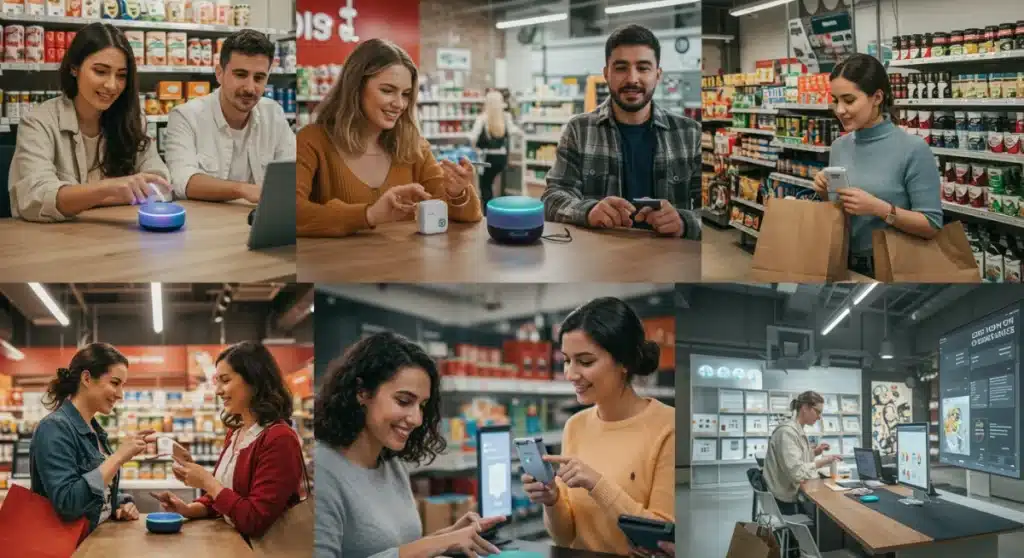
Voice commerce adoption is projected to surge by 30% among US retailers by 2025, driven by advanced AI and changing consumer behaviors, fundamentally reshaping the retail landscape and offering new avenues for customer engagement and sales.
The retail landscape in the United States is on the cusp of a significant transformation, with projections indicating a robust 30% growth in voice commerce adoption among US retailers by 2025. This isn’t merely a technological fad; it represents a fundamental shift in how consumers interact with brands and make purchases, demanding that retailers adapt swiftly to remain competitive and relevant in an increasingly voice-first world.
The rise of voice commerce: a new retail frontier
Voice commerce, the act of purchasing goods and services using voice commands through smart devices, is rapidly moving from a niche technology to a mainstream retail channel. This evolution is fueled by advancements in artificial intelligence, natural language processing, and the ubiquitous presence of smart speakers and voice assistants in American households. Retailers who embrace this shift early stand to gain a significant competitive advantage.
Understanding the underlying technology
At its core, voice commerce relies on sophisticated AI algorithms that can understand and process human speech. These systems are becoming increasingly adept at interpreting complex commands, recognizing nuances in tone, and even differentiating between speakers. This technological maturity is making voice interactions more reliable and user-friendly, paving the way for broader adoption.
- Natural language processing (NLP): Enables devices to understand conversational language.
- Artificial intelligence (AI): Powers personalized recommendations and efficient transaction processing.
- Machine learning (ML): Continuously improves voice assistant accuracy and responsiveness over time.
The integration of these technologies allows for a seamless shopping experience, where customers can simply speak their desires, and the system handles the complexities of product search, selection, and payment. This level of convenience is a major draw for today’s time-strapped consumers, who are constantly seeking ways to simplify their daily routines.
Furthermore, the data collected from voice interactions provides retailers with invaluable insights into consumer preferences and purchasing patterns. This data can be leveraged to refine product offerings, personalize marketing efforts, and enhance the overall customer journey, creating a virtuous cycle of improvement and engagement.
Drivers of voice commerce growth in the US market
Several key factors are converging to accelerate the adoption of voice commerce across the United States. Understanding these drivers is crucial for retailers looking to capitalize on this burgeoning market segment. The convenience factor, technological advancements, and evolving consumer habits are among the most prominent.
Convenience as a primary motivator
In a fast-paced society, convenience reigns supreme. Voice commerce offers unparalleled ease of use, allowing consumers to multitask while shopping. Whether preparing dinner, driving, or simply relaxing, a quick voice command can initiate a purchase, check an order status, or reorder a frequently bought item. This hands-free, eyes-free experience is a powerful draw.
The ability to shop without needing to navigate websites or apps removes significant friction from the buying process. This frictionless experience aligns perfectly with modern consumer expectations for instant gratification and effortless transactions. Retailers who can deliver this level of convenience will undoubtedly attract and retain a loyal customer base.
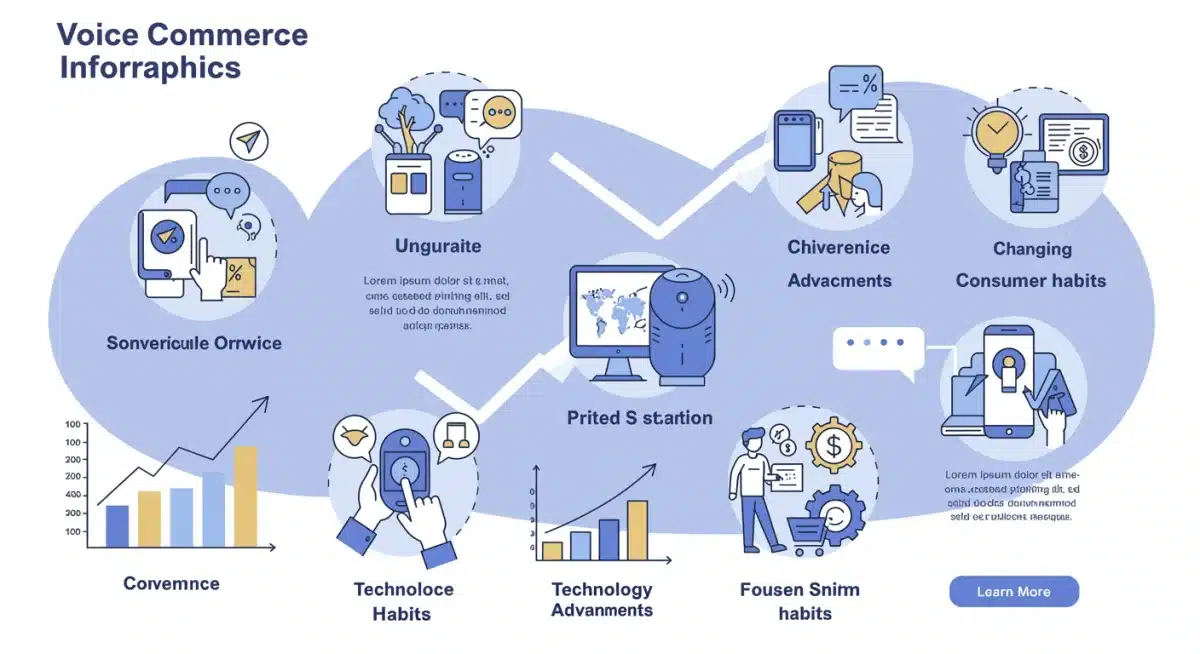
The increasing sophistication of voice assistants also plays a vital role. As these assistants become more adept at understanding complex queries and providing accurate responses, consumer trust and reliance on them for shopping tasks will only grow. This growing trust is a critical component in driving widespread adoption.
Strategic implications for US retailers
The projected 30% growth in voice commerce adoption by 2025 presents both significant opportunities and challenges for US retailers. Strategic planning and investment are essential to navigate this evolving landscape successfully. Retailers must consider how voice commerce will integrate into their existing omnichannel strategies and what new capabilities they will need to develop.
Integrating voice into omnichannel strategies
Voice commerce should not be viewed as a standalone channel but rather as an integral part of a retailer’s broader omnichannel strategy. A seamless customer experience means that a consumer can start a shopping journey via voice, continue on a mobile app, and complete the purchase in-store, with all interactions harmonized. This requires robust backend integration and a unified customer data platform.
- Unified customer profiles: Ensure consistent experiences across all touchpoints.
- Inventory synchronization: Real-time updates for accurate product availability.
- Personalized recommendations: Leverage data from all channels, including voice.
Retailers need to invest in technologies that allow for this level of integration. This includes upgrading their e-commerce platforms, enhancing their CRM systems, and developing voice-specific interfaces that can communicate effectively with popular voice assistants. The goal is to create a fluid and intuitive shopping journey, regardless of the channel chosen by the customer.
Moreover, training customer service teams to handle voice-initiated queries and issues will be crucial. As more transactions occur through voice, so too will the need for voice-based customer support, requiring a new set of skills and tools for frontline staff.
Challenges and considerations for implementation
While the potential of voice commerce is undeniable, its implementation comes with its own set of challenges. Retailers must carefully consider these hurdles to develop effective strategies and ensure a smooth transition into the voice-first era. Addressing these challenges proactively will be key to successful adoption.
Ensuring data privacy and security
Consumer trust is paramount, and concerns around data privacy and security are significant in the voice commerce space. Retailers must implement stringent measures to protect sensitive customer information, including payment details and personal data shared through voice interactions. Transparency about data usage and robust encryption protocols are non-negotiable.
- Secure payment gateways: Protect financial transactions.
- Clear privacy policies: Inform customers how their data is used.
- Compliance with regulations: Adhere to data protection laws like GDPR and CCPA.
Another challenge lies in optimizing product listings for voice search. Unlike traditional text-based searches, voice queries are often more conversational and natural. Retailers need to adapt their SEO strategies to account for these differences, focusing on long-tail keywords and natural language phrases that consumers are likely to use when speaking to a voice assistant. This requires a deep understanding of customer linguistics and search behavior.
Furthermore, the lack of visual cues in voice commerce can make product discovery and comparison more difficult. Retailers need to find innovative ways to convey product information effectively through audio, perhaps through detailed descriptions, customer reviews read aloud, or intelligent filtering options that narrow down choices based on spoken preferences.
Innovations shaping the voice commerce landscape
The rapid evolution of technology continues to bring new innovations to the voice commerce landscape, promising even more sophisticated and personalized shopping experiences. These advancements are not only improving the functionality of voice assistants but also expanding the possibilities for how retailers can engage with their customers.
Advanced personalization and AI-driven recommendations
Future voice commerce will be characterized by highly personalized experiences, driven by advanced AI and machine learning. Voice assistants will not only understand spoken commands but also anticipate needs, suggest relevant products based on past purchases and preferences, and even proactively remind customers about recurring orders. This level of personalization will foster stronger customer loyalty.
Imagine a voice assistant that knows your dietary restrictions, preferred brands, and even your schedule, then suggests a week’s worth of groceries tailored to your needs, all with a simple voice confirmation. This is the future that AI is enabling, moving beyond simple transactions to genuinely helpful and integrated shopping assistance. Retailers who invest in these predictive analytics and AI capabilities will be at the forefront.
Another significant innovation is the integration of voice commerce with augmented reality (AR) and virtual reality (VR). While voice itself is audio-based, combining it with immersive visual experiences could create a powerful new way to shop. For example, a customer could use voice to describe a piece of furniture they want, and then see it virtually placed in their living room via AR, all guided by voice commands.
Preparing for the voice-first retail future
As the 2025 projection for 30% growth in voice commerce adoption quickly approaches, US retailers must proactively prepare for a voice-first retail future. This involves not only technological upgrades but also a fundamental shift in mindset regarding customer interaction and service delivery. Waiting to adapt could mean falling significantly behind competitors.
Developing a comprehensive voice strategy
A successful transition requires a well-defined voice strategy that encompasses technology, marketing, customer service, and product optimization. This strategy should outline how voice commerce will integrate with existing channels, what new skill sets will be needed, and how performance will be measured. It’s not just about enabling voice, but optimizing for it.
- Invest in voice-optimized platforms: Ensure compatibility with major voice assistants.
- Rethink SEO for voice: Focus on conversational queries and natural language.
- Educate customers: Promote the benefits and ease of voice shopping.
Retailers should also consider developing their own voice applications or skills for platforms like Amazon Alexa and Google Assistant. This allows for greater control over the customer experience and provides an opportunity to build brand-specific voice interactions. Such proprietary voice experiences can differentiate a retailer in a crowded market.
Finally, continuous monitoring and iteration will be crucial. The voice commerce landscape is dynamic, with new technologies and consumer behaviors emerging constantly. Retailers must be prepared to analyze data, gather feedback, and adapt their strategies regularly to stay ahead of the curve and maintain their competitive edge in this rapidly evolving market.
| Key Aspect | Brief Description |
|---|---|
| Growth Projection | US retailers expected to see 30% growth in voice commerce adoption by 2025. |
| Key Drivers | Convenience, AI advancements, and changing consumer habits are fueling adoption. |
| Strategic Imperative | Retailers must integrate voice into omnichannel strategies and optimize for voice search. |
| Challenges | Data privacy, security, and product optimization for audio interactions remain key hurdles. |
Frequently asked questions about voice commerce
Voice commerce refers to the act of purchasing products or services using voice commands through smart devices like smart speakers or voice assistants. It enables hands-free shopping, check order statuses, and reordering items, enhancing convenience for consumers in their daily lives.
Growth is driven by increased consumer demand for convenience, significant advancements in AI and natural language processing, and the widespread ownership of smart speakers. These factors combine to make voice-activated shopping more accessible and reliable for users.
Retailers should integrate voice capabilities into their omnichannel strategies, optimize product listings for conversational voice search, and ensure robust data privacy and security measures. Investing in AI and machine learning for personalization is also crucial for future success.
Key challenges include ensuring data privacy and security for sensitive information, optimizing product discovery without visual cues, and adapting SEO strategies to conversational queries. Retailers must also manage the integration of new technologies with existing systems.
While voice commerce is growing rapidly, it is more likely to complement rather than fully replace traditional online shopping. It offers a convenient alternative for specific tasks and quick purchases, enriching the overall omnichannel experience rather than becoming the sole purchasing method.
Conclusion
The projected 30% growth in voice commerce adoption among US retailers by 2025 signifies a pivotal moment in the evolution of retail. This shift underscores the increasing importance of convenience, personalization, and seamless integration across all customer touchpoints. Retailers who proactively embrace voice commerce, address its inherent challenges, and strategically embed it within their broader business models will be well-positioned to thrive in this new era. The future of retail is increasingly conversational, and those who speak its language will undoubtedly lead the way.